What Texas Requires of Riders Under 14
A child under 14 may be able to ride an ATV or UTV in Texas, but age alone does not settle the question. The key issue is direct supervision by a qualified adult, alongside separate rules for safety certificates, OHV decals, and the place where the ride happens. Here’s how to sort those requirements out before heading out.
The under-14 rule: direct supervision is essential
Texas sets 14 as the minimum age for obtaining its OHV safety certificate. A rider younger than 14 therefore cannot meet a certificate requirement by taking the course; instead, when riding where the state certificate rule applies, the child must be under the direct supervision of a qualified adult who holds a safety certificate.
That distinction matters. The rule is not simply “a parent must be nearby,” and a child’s lack of a certificate does not automatically prevent every ride. The supervision requirement is the route that allows a younger rider to operate an OHV in situations covered by the state rule. For more on the certificate itself, see Texas ATV Safety Certificate Explained and Texas Minimum Age for a Safety Certificate.
A few points to keep straight:
- The child does not receive an under-14 certificate. Texas’s safety course and certificate have a minimum age.
- The supervising adult needs the required certificate. An adult’s riding experience, driver’s license, or ownership of the ATV is not a substitute.
- The supervision needs to be direct. Plan for close, active oversight, not an adult waiting elsewhere or relying on a phone call.
- The rule does not make every machine or trail suitable for a child. Land managers, parks, manufacturers, and other applicable rules can add restrictions.
For a practical interpretation of the supervision requirement, see Texas Supervision Rules for Young Riders. The safest approach is to confirm the rule with the land manager before riding, especially when the ride is on public land or at a privately operated park.
Where the state certificate rule matters
Texas’s OHV safety certificate requirement is tied to riding in settings covered by state law, particularly public riding areas. It should not be treated as a universal permission slip for every place or every machine. A public trail, a private ranch, and a commercial park may each have different entry conditions.
A private landowner may set rules for guests, and an OHV park may require its own waiver, age limits, adult-to-child supervision arrangement, or machine restrictions. Those conditions can be stricter than the baseline state rule. A child who can ride under the state supervision rule is not automatically entitled to ride at every facility.
When the riding location is public land, check the land manager’s rules as well as the state requirements. Start with Texas Rules for Riding Public Land if you need to distinguish statewide rules from site-specific ones.
Safety certificates, decals, and park requirements are separate
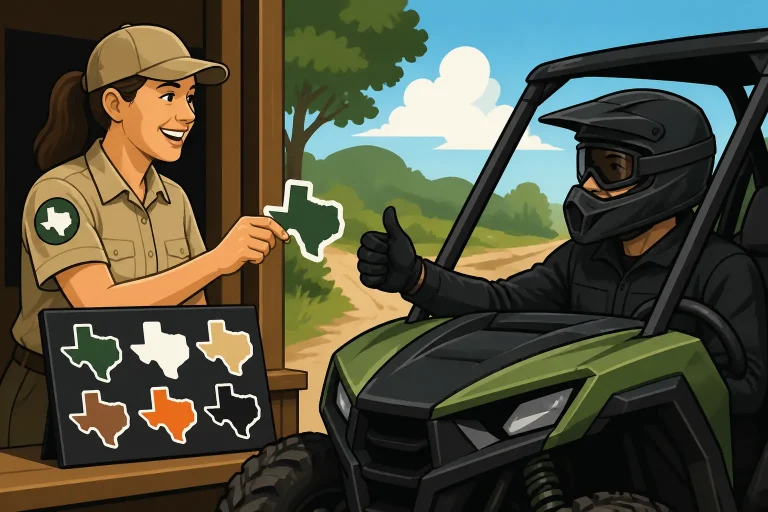
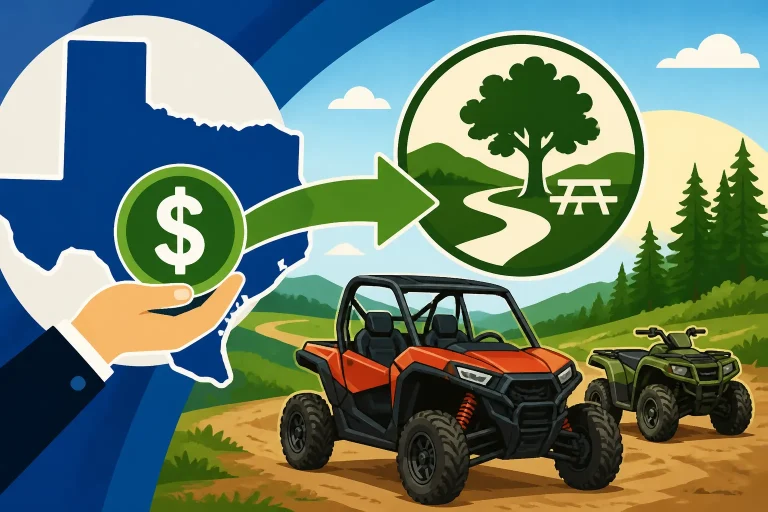
Families often hear about a certificate, an OHV decal, and a park fee in the same conversation. They serve different purposes. A certificate relates to rider education and the under-14 supervision requirement. A decal is tied to the machine and may be required for riding on public land. A park or trailhead may also collect an entry or day-use fee.
| Requirement | What it applies to | What an under-14 rider should know |
|---|---|---|
| OHV safety certificate | The rider | A child under 14 cannot obtain the Texas certificate; where required, the child rides under direct supervision of a qualified certificate holder. |
| Texas OHV decal | The machine | It is not a child’s certificate and does not replace adult supervision. Check whether the riding area requires it. |
| Park or trail fee | The visit or facility | The land manager sets entry procedures; a state decal may not cover a separate fee. |
| Site-specific age or machine rules | The rider, machine, or both | A park may impose its own limits in addition to statewide rules. |
The decal question is easy to misunderstand because it is displayed on the machine, while the safety certificate belongs to the rider. One does not stand in for the other. Review Texas OHV Decal Requirement Explained and confirm the specific site’s instructions before loading the machine.
What the adult should carry
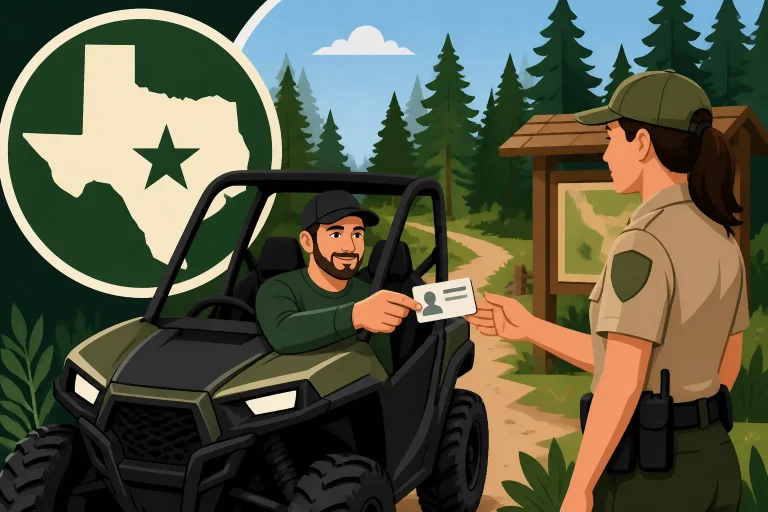
The supervising adult should have the safety certificate available while riding, rather than assuming that being an experienced rider will be enough if asked to show proof. If the certificate was issued by another state, Texas may recognize it, but confirm that it meets the relevant requirements. See Does Texas Accept an Out-of-State Safety Certificate? for the reciprocity question.
A child’s age also does not eliminate other site paperwork. A park may require a parent or guardian to complete a waiver, provide contact details, or accompany the child at check-in. Those are facility procedures, not a replacement for the certificate rule.
A decal does not mean the machine is allowed everywhere
A valid decal does not grant access to a closed trail, a private property, or a route that does not allow that kind of OHV. Nor does it guarantee that a machine meets a particular trail’s width or equipment limits. Check the trail’s current conditions and restrictions before setting out.
If the ride involves a rental, ask the rental business what it provides and what the adult needs to bring. Do not assume a rental machine’s decal or paperwork covers the rider’s age and supervision obligations. Texas Rules for a Rented Machine is a useful next step for that situation.
Who can supervise a rider under 14
For a ride governed by the Texas certificate rule, the supervising person must be an adult who has the required OHV safety certificate. A parent or guardian can fill that role if qualified, but being the child’s parent is not enough by itself. Another responsible adult may be able to supervise if they meet the requirements and the location allows it.
The certificate requirement and the facility’s rules are separate checks. A park might require a parent or legal guardian to stay with a minor even if a different adult holds the certificate. Before a trip where another adult is taking the child, ask the park or land manager exactly what it requires. For more detail on that arrangement, see Letting Another Adult Supervise Your Child’s Ride.
Treat direct supervision as active oversight
The phrase “direct supervision” should not be treated as permission to let a child ride out of sight while the adult waits at a staging area. Plan to remain close enough to see what the child is doing and respond promptly. The supervising adult should be focused on the child, the route, and changing conditions—not riding ahead beyond view or managing a separate activity.
A cautious plan usually means:
- Ride together on the same route and keep the child within sight.
- Choose terrain where the adult can intervene or stop the ride if needed.
- Avoid splitting the group or sending the child ahead around a blind corner.
- Stop if dust, vegetation, hills, or other riders make close oversight difficult.
- Make sure the child knows to stop and wait if separated from the adult.
These are sensible ways to put direct oversight into practice, not a substitute for checking the precise legal and facility requirements. A site can set a more specific supervision condition.
Make sure the supervising adult is actually qualified
Before the trip, confirm that the adult’s certificate is current and recognized for the ride. If it was issued outside Texas, verify the acceptance question rather than assuming every course card is interchangeable. Carry the certificate in the way the site expects, and keep a parent or guardian involved in the planning even when another adult is supervising.
If nobody in the group holds a qualifying certificate, do not count on a child under 14 being able to take the Texas course as a workaround. The certificate has a minimum age. Arrange for a qualified adult to accompany the child, or choose an activity and location where the applicable riding rules are different.
Choose the machine and riding area for the child
Meeting the supervision rule is only one part of deciding whether a child should ride. An ATV or UTV that is too large, powerful, or difficult for the child to control can create risk even on a legal route. Follow the manufacturer’s age and size guidance, and consider whether the child can operate the controls, reach what needs to be reached, and stop or steer predictably.
A UTV is not automatically a safer choice just because it has a seat belt or roll cage. The child still needs to fit the seating position, use the available restraint correctly, and follow the machine’s passenger and operator instructions. An ATV requires the rider to manage balance and body position; those demands can be challenging for a child who is still growing or has limited experience.
Check both age limits and machine limits
The riding location may set a minimum age, require a certain kind of adult accompaniment, or limit machines by width, type, or intended use. Some trails are not suitable for full-size UTVs, while a child’s machine may not meet the site’s requirements either. A machine that is permitted on one trail is not necessarily permitted on another.
Before leaving home, check:
- Whether the site allows children under 14 to ride.
- Whether it requires a parent or guardian, a certified adult, or both.
- Whether the child may operate the machine or only ride as a passenger.
- Any age, height, width, equipment, or machine-type limits.
- Whether the OHV decal, entry fee, reservation, or other paperwork is required.
- Whether trails are open and suitable for the machine and the child’s ability.
If the site’s written rules are unclear, contact the operator before the trip. A quick confirmation can prevent a long drive ending with a child unable to ride.
Start with conditions the child can manage
Choose a route that matches the child’s current skill, not the adult’s preferred difficulty. A novice rider may need a broad, low-traffic route with good visibility and room to stop. Mud, steep slopes, loose sand, rocks, deep ruts, and crowded trails can raise the demands quickly. Conditions can change during a ride, so be ready to turn back.
Keep the group small enough for the supervising adult to maintain attention. Set a pace the child can control, stop often, and agree on a simple signal for “slow down” or “stop.” Explain that the child should not follow another rider who moves ahead or leave the route to explore.
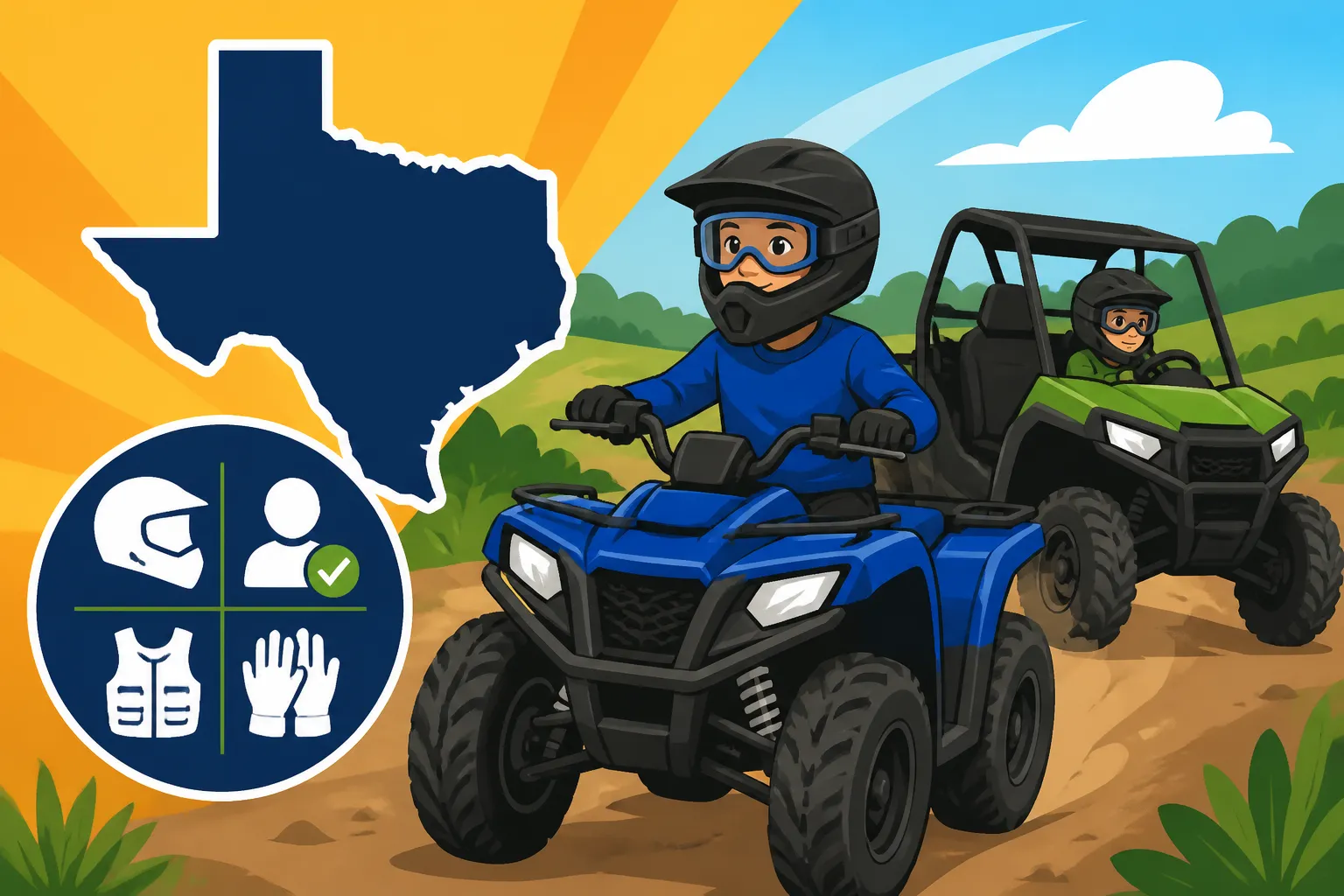
Protective equipment matters too. Use a properly fitted helmet and any additional protective gear recommended for the machine and riding conditions. For a UTV, make sure the child uses the seat belt and remains in a manufacturer-designed seat. These precautions do not replace supervision, but they make a careful ride safer.
Common situations and a pre-ride checklist
The same basic rule can look different depending on where and how a family rides. These examples help separate the state certificate question from a park’s own requirements.
A 13-year-old riding on a public trail
A 13-year-old cannot obtain the Texas OHV safety certificate. Where the state certificate rule applies, the child must ride under the direct supervision of a qualified adult certificate holder. The adult should also check the trail’s rules, the machine’s eligibility, and any decal or day-use requirements.
The child’s age does not by itself establish that every public trail is open to them. A land manager may have additional restrictions, and some public riding areas may not permit the child’s machine.
A child riding at a private park
Do not assume that private ownership means there are no rules. The park may require a parent or guardian to sign paperwork, set age limits, require a specific adult-to-child arrangement, or restrict certain machines from particular trails. Ask the park directly how it handles riders under 14 and what certificate or supervision it expects.
A child riding on private family land
The statewide certificate rule may not apply in the same way to a private-land ride, but that does not make every activity safe or automatically allowed. The landowner’s permission, the machine’s manufacturer guidance, and any applicable local requirements still matter. Keep a qualified adult close and choose a controlled area with no unexpected traffic or hazards.
An adult from another state supervising
A certificate from another state may be accepted under Texas reciprocity rules. Verify that the credential qualifies before relying on it, and check whether the riding area has additional requirements. Details are covered in Does Texas Accept an Out-of-State Safety Certificate?.
A parent is present but has no certificate
Presence alone does not satisfy a certificate-based supervision rule. If a child under 14 is riding in a setting where the rule applies, arrange for a qualified adult to supervise or choose a different ride that complies with the applicable rules. A parent should not assume the child can take the course early; Texas’s minimum age is 14.
Before any ride, use this short checklist:
- Confirm the child’s age and the site’s rules for riders under 14.
- Identify the adult who will provide direct supervision.
- Check that the adult holds an accepted safety certificate and can show it.
- Confirm whether the machine needs a Texas OHV decal or other site permit.
- Review the park’s entry, waiver, and minor-supervision requirements.
- Match the machine and route to the child’s size, ability, and experience.
- Check trail status and conditions before departure.
- Set clear boundaries, signals, and a plan if the group gets separated.
The central point is straightforward: Texas does not issue its OHV safety certificate to riders under 14, so a younger child must rely on the direct supervision arrangement where that certificate rule applies. The adult’s certificate, the machine’s decal, and the riding area’s rules each answer a different question. Check all three rather than treating one as permission for the whole trip.
Frequently Asked Questions
Can a child under 14 get a Texas OHV safety certificate?
No. Texas sets a minimum age of 14 for obtaining the certificate. Where the certificate rule applies, a younger rider must be under the direct supervision of a qualified adult certificate holder.
Does a parent have to supervise the child?
The supervising adult must meet the certificate requirement, but that does not necessarily mean the adult must be the child’s parent. A park or land manager may separately require a parent or guardian to be present or complete paperwork, so check its rules.
Does the child need an OHV decal?
The decal requirement applies to the machine, not the child. Whether it is needed depends on where the machine will be ridden and the applicable land rules. A decal does not replace adult supervision or a rider certificate.
Can a 13-year-old ride at any Texas ATV park with an adult?
Not necessarily. State supervision requirements do not override a park’s age, machine, waiver, or trail rules. Ask the park before traveling.
Disclaimer
This article is for general informational purposes only and does not constitute professional advice. Laws, prices and regulations vary by location and change over time. Consult a qualified professional for guidance on your specific situation.