Texas Rules for Carrying Fuel
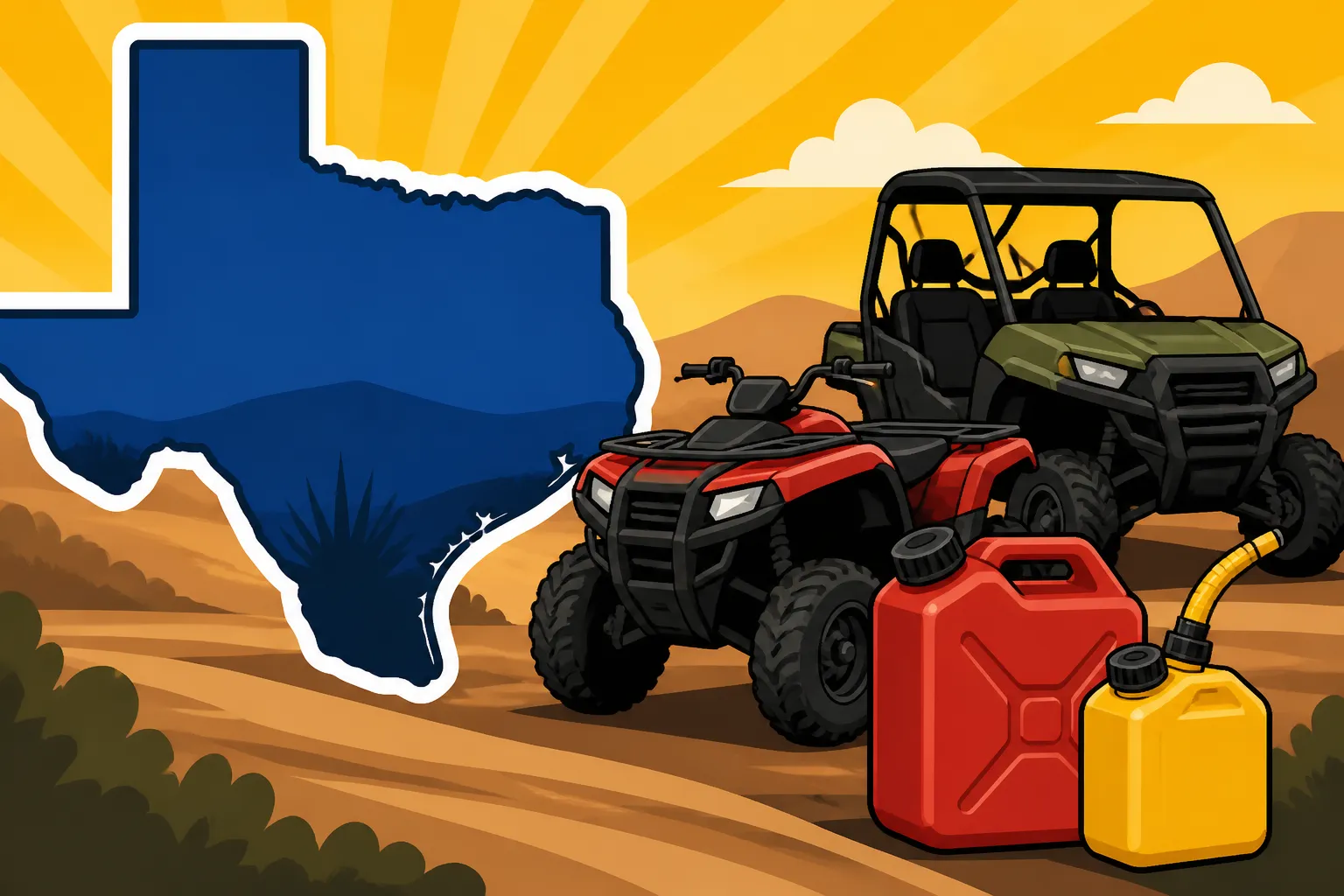
Carrying spare gasoline can keep an ATV or UTV ride from ending early, but a fuel can that is loose, leaking or prohibited by the land manager can create bigger problems. In Texas, the rules depend partly on where you ride. Use a suitable container, secure it away from heat and confirm site-specific restrictions before heading out.
What Texas rules apply to carrying fuel
There is not one simple rule that answers every question about carrying extra fuel on every Texas trail. The applicable requirements can depend on the land manager, park or event, along with general fire-safety and transportation rules. A state decal or permit does not automatically give permission to bring fuel onto a particular property.
That distinction matters because an ATV or UTV may be used on private land, a public trail, a managed recreation area or a privately operated park. Each can have different rules for fuel containers, refueling and fire prevention. Before a trip, check the rules for the exact riding area, rather than assuming a policy at one park applies elsewhere. Texas Rules for Riding Public Land explains why the land manager matters.
For public land, confirm the current requirements with the agency managing the trail. For a privately operated park, read its visitor rules or call ahead. A race, organized ride or campground may have additional conditions. Some sites may restrict spare fuel, require an approved container, limit where refueling can happen or prohibit fuel storage in certain areas. Conditions can also change during dry or high-fire-risk periods.
Use the same cautious approach on private land. A landowner or hunting lease can set conditions for visitors, and an open gate is not permission to leave fuel behind or refuel wherever convenient. If the machine is being used for work on a ranch or lease, check the property’s directions as well as any rules that apply to the specific route or public land involved. Texas Rules for Riding a Hunting Lease covers the importance of landowner permission.
| Situation | What to check before you ride |
|---|---|
| Public trail or recreation area | The managing agency’s current rules for fuel, refueling and fire restrictions |
| Private OHV park | Park rules, permitted container types, refueling locations and any event requirements |
| Organized ride or race | Organizer instructions, fuel-storage limits and any fire-safety requirements |
| Ranch or hunting lease | Landowner permission, safe storage and restrictions on where fuel can be carried or used |
| Public-land trail with a fire restriction | Whether carrying or handling fuel is affected by current site rules |
Do not assume that a fuel can is allowed just because the machine itself is allowed. The same goes for portable fuel tanks and fuel bladders: the fact that a product is sold for motorsports does not mean a particular land manager accepts it.
Fuel rules are only part of trip preparation. Some public land also has requirements for permits, decals, vehicle dimensions or equipment. Review the applicable Texas National Forest Permits information and Texas Rules for Riding a Machine Over 50 Inches if those details affect your machine or route. If fuel restrictions are not clear, ask the site manager before loading up.
Choose a container and mounting location carefully
Gasoline is a volatile liquid. A proper container helps limit leaks and vapor release, but it does not make careless transport safe. Use a container specifically designed and labeled for gasoline, with an intact cap and seal. Do not reuse a drink bottle, household jug or an unmarked container. Avoid any can with cracks, a damaged spout, a loose cap or a strong gasoline smell when it is closed.
Follow the container maker’s instructions for filling, closing, venting and transport. Do not fill it beyond the marked capacity, and leave the expansion space the manufacturer specifies. A container that is overfilled can leak when fuel warms and expands. Keep its outside clean and dry before securing it to the machine.
A gas can should be held firmly in an approved mount or a secure cargo area. It must not shift, bounce, rub against sharp edges or come loose over rough terrain. Check the mount before the ride and again after the first short stretch. A can that seems secure in a driveway may move when an ATV hits ruts or a UTV travels over rocks.
Keep fuel away from the exhaust, engine, hot surfaces, electrical sparks and moving parts. Never place a can where it can block the rider’s movement, controls, sight lines or access to an exit. On a UTV, secure it in a suitable cargo area and keep it separated from passengers. On an ATV, carrying extra weight high or far to one side can affect handling; follow the machine manufacturer’s guidance about cargo limits and placement. If there is no safe mounting location, carrying spare fuel on that machine may not be a good option.
A fuel container sold online is not automatically suitable for your setup. If shopping through Amazon or another retailer, verify that the container is intended for gasoline and that its mount is made for the machine and riding conditions. Check the manufacturer’s installation instructions rather than relying only on a product photo or a general claim that it fits an ATV or UTV.
Before riding, test the loaded machine at low speed in a safe area. Confirm that the can remains fixed and does not interfere with suspension travel, tires, bodywork or access to the fuel cap. Recheck it after rough sections and stop immediately if you notice a leak, strong fuel odor or a loose mount. Do not keep riding with a damaged container.
Refuel without creating a fire or spill
Refueling is a higher-risk moment than simply carrying a closed container. Stop in a stable, well-ventilated location away from flames, smoking, hot exhausts and other ignition sources. Follow the machine and fuel-container instructions. Shut the engine off and allow hot components to cool before opening a fuel container or refueling.
Never refuel while the engine is running, and do not balance a container over a hot machine. Keep the container steady, use the correct spout or nozzle and avoid splashing fuel onto the engine, exhaust, tires or ground. If fuel spills, stop work and follow the site’s instructions for handling it. Do not start the machine until you have dealt with the spill safely and any fuel on hot or electrical components has been addressed.
Keep riders and passengers clear of the refueling area. Do not refuel in a crowded staging area, inside an enclosed trailer or in another confined space where vapors can collect. If a park designates a particular location for refueling, use it. Some parks may prohibit refueling on trails or near campsites, so check before the ride rather than improvising at the trailhead.
Do not leave a fuel can sitting in direct sun or beside a hot engine while you ride. When you are not using it, close it as directed and keep it upright in its secured location. Do not leave fuel behind at a trailhead, campsite or staging area unless the site specifically allows that kind of storage. Fuel should not be poured onto the ground or into a drain.
Plan for the container to remain secure during the entire trip, including stops and transport to and from the riding area. If you need to carry fuel in a tow vehicle or trailer, follow the vehicle, container and site instructions. Do not put a leaking can in a passenger compartment. Keep fuel away from people, food and heat sources, and do not assume that an enclosed trailer is safe for storing fuel just because it is used to haul the ATV.
Fire conditions deserve special attention in Texas. Dry vegetation, wind and hot equipment can turn a small spill or spark into a serious hazard. Check for current site closures and fire restrictions before traveling. Texas Trail Closures to Check First and Texas Rules for Campfires at a Park can help you think through related restrictions, but neither replaces checking the riding site’s fuel policy.
Build a fuel plan around the ride
Carrying extra fuel is not always the best solution. First estimate the ride’s distance, terrain, machine consumption and access to fuel. Sand, mud, steep terrain, heavy loads and frequent stops can use more fuel than an easy route. Keep a conservative reserve and avoid planning a ride that depends on reaching the last possible drop in the tank.
When possible, fill up before entering the riding area and identify a permitted place to refuel. Ask whether fuel is sold at or near the site, but confirm availability rather than assuming it. For a long ride, consider whether the group can return to a staging area before anyone runs low. A route plan and a turnaround point can be safer than carrying an improvised container.
For group rides, agree in advance on who is carrying fuel and how the group will respond to a spill or mechanical problem. Do not overload one machine with several cans simply because other riders have no mounting space. Every rider should know how to stop, where the group will meet and who to contact if a machine has to be left behind. See [Texas Rules for a Group Ride] for other planning considerations.
Use this checklist before departure:
- Confirm that the land manager or park permits the container and the intended refueling method.
- Inspect the container, cap, spout and mount for damage or leaks.
- Secure the can upright, away from heat, sharp edges, moving parts and passengers.
- Check that the loaded machine remains within the manufacturer’s cargo guidance and handles normally.
- Review fire restrictions, trail closures and any event-specific instructions.
- Carry only the amount needed for the planned ride, and do not leave fuel behind.
If a rule is unclear, contact the site before the trip and describe the container and how you plan to carry it. That is more reliable than inferring permission from a photo, an old social-media post or a rule at a different park. Conditions and policies can change, so check again when fire restrictions or seasonal closures may apply.
Disclaimer
This article is for general informational purposes only and does not constitute professional advice. Laws, prices and regulations vary by location and change over time. Consult a qualified professional for guidance on your specific situation.