Texas OHV Decal for Each Rider
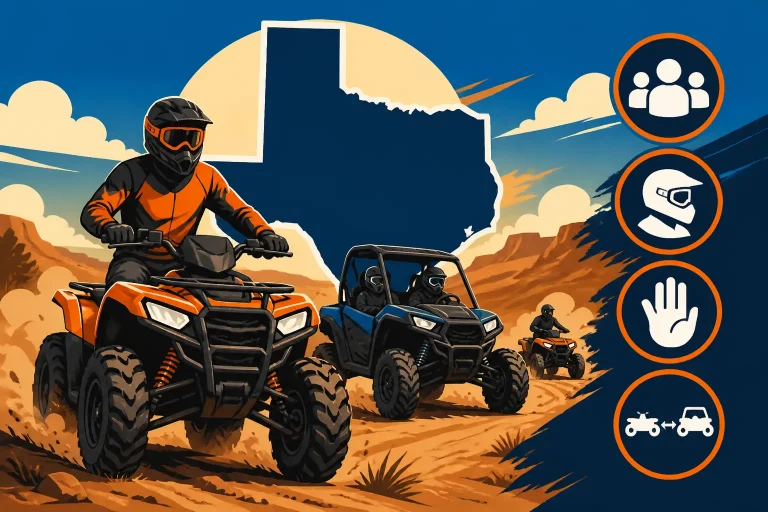
A Texas OHV decal is not a pass that each person in a riding group carries. It is tied to the off-highway vehicle, which can make group rides, rentals and borrowed machines confusing. The practical rule is straightforward: check the decal on every machine, then check separately whether each rider meets the applicable safety and land-access requirements.
The Texas OHV decal belongs to the machine
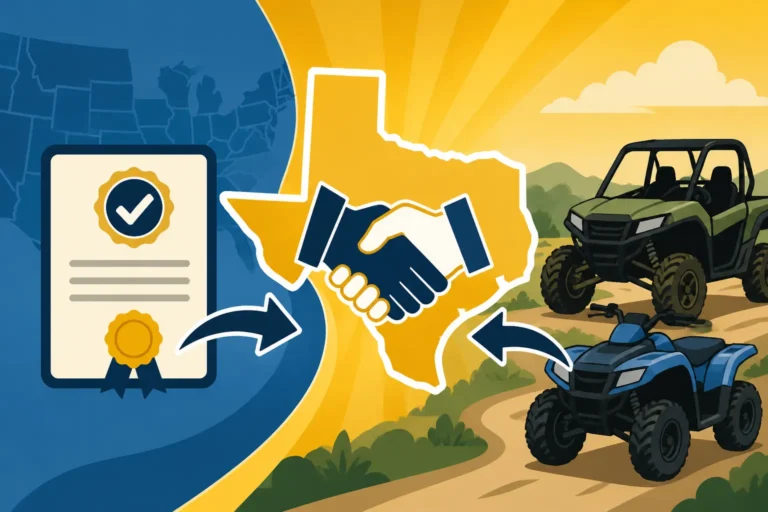
The Texas OHV decal is associated with the vehicle, not the person riding it. If several people take turns on one machine, they do not each need a separate decal for that machine. If a group brings several machines, each machine generally needs its own decal when one is required for the ride location.
That distinction matters because a decal does not act like a rider permit. It identifies a vehicle for applicable off-highway use requirements; it does not establish that every person operating the vehicle meets age, supervision or safety-education rules. Those requirements apply to people and should be checked independently.
| Situation | What to check |
|---|---|
| Several riders share one machine | Check that the machine has the required decal; check rider-specific rules separately |
| One rider brings several machines | Check each machine individually |
| A group ride includes multiple machines | Do not assume one decal covers the group |
| A machine is borrowed or rented | Check the decal on that machine and confirm the riding site’s rules |
| A rider has a safety certificate | Treat it as a separate rider credential, not a substitute for a vehicle decal |
The rule is easiest to remember this way: one decal per covered machine, not one decal per rider. The same basic distinction is explained in Every Machine in the Group Needs Its Own Decal. A vehicle with two people aboard does not need two decals just because it has two occupants; two separate vehicles do not share one decal simply because they travel together.
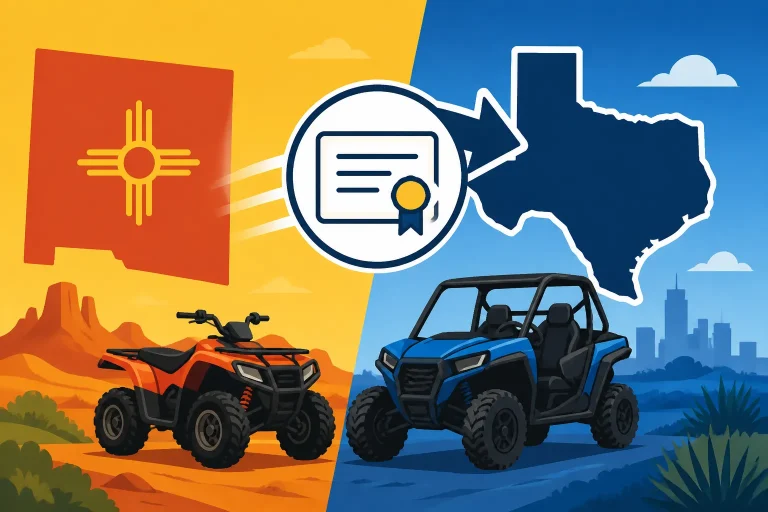
A decal also does not turn an ATV or UTV into a road-registered vehicle. Texas titling, off-highway decals and permission to ride at a particular site are separate matters. If you are sorting out what the decal does and where it applies, see The Texas OHV Decal Requirement Explained and Where a Texas OHV Decal Is Required.
What riders still need to check
Because the decal is attached to the machine, it cannot satisfy a rule that applies to the rider. Before a trip, check the requirements for the operator’s age, safety education, supervision and any site-specific conditions. A machine can have the correct decal and still be operated by someone who is not allowed to ride there or who does not meet the applicable rider rules.
Safety certificates are a good example. A certificate is a rider credential; it is not shared among everyone in a group and it does not replace the decal on the ATV or UTV. Texas rules can depend on the rider’s age and the place where the machine is operated, so confirm the details before heading out. Texas OHV Safety Certificates explains the separate certificate issue, while Texas Rules for Riders Under 14 covers the age-related question.
A useful pre-ride check is:
- Identify every ATV or UTV that will be used.
- Check whether the riding location requires a Texas OHV decal.
- Look for a valid decal on each covered machine, not just on the first machine in the group.
- Check rider age, supervision and safety-certificate requirements separately.
- Confirm any additional access rules with the park or land manager.
The location matters. A Texas OHV decal is not a universal pass to ride anywhere, and having one does not grant permission to use private property or a closed trail. Public-land requirements can vary with the managing agency and the specific area. Review Texas Rules for Riding Public Land and the site’s current instructions before relying on a decal alone.
A street-legal vehicle may be treated differently from an OHV for decal purposes, but that does not make every road open to ATV or UTV travel. Confirm both the vehicle’s classification and the rules for the route. The decal question and the road-use question are separate; Why a Street-Legal Machine Skips the Texas Decal discusses the decal distinction.
Borrowed, rented and group machines
If you borrow a machine, inspect that machine’s decal before the ride. Do not assume the owner’s other ATV, your own vehicle’s decal or a riding companion’s decal covers it. A borrowed vehicle is still its own machine, and the riding location may require it to display its own decal.
For a rental, ask the rental business what the machine already has and what you are responsible for. A rental operator may explain the park’s requirements, but it is sensible to check the decal on the actual vehicle and confirm the site rules yourself. Requirements can differ by land manager, and a rental’s paperwork is not necessarily proof that every access condition has been met. See Texas OHV Decal for a Rented Machine for the rental-specific question.
For a group ride, make a vehicle-by-vehicle list before departure. This helps when machines are loaded onto several trailers or when riders swap vehicles during the day. The decal follows the machine’s requirements, not the person who brought it or the person currently operating it. If someone changes from one ATV to another, check the decal on the second ATV as well.
A decal should be treated as belonging with the machine on which it is displayed, rather than as a transferable pass to move between vehicles. If a machine changes hands, the new operator should verify what is displayed and whether it is acceptable for the planned riding location. The details of a purchase or transfer do not remove the need to check current site rules.
The decal period also matters when planning a trip. Texas uses a decal year that runs from September into August, so a decal that worked for an earlier outing may not cover a later one. Check the period and any current purchase or display instructions instead of assuming a decal remains valid indefinitely. A Texas Decal Year From September to August gives more detail on the cycle.
A simple way to avoid a decal mix-up
Before loading up, separate the checks into two categories: the machine and the rider. For the machine, confirm whether its riding location requires a decal and whether that particular vehicle has one. For the rider, check any age, supervision and safety-education requirements that apply. Then confirm the location allows the type of machine and planned use.
This avoids several common mistakes:
- One decal for the whole group: A group decal does not cover multiple machines.
- One decal for each person: Riders sharing a machine do not need separate vehicle decals just because there is more than one rider.
- A certificate treated as a decal: A safety certificate applies to the rider and does not replace a vehicle decal.
- A decal treated as permission to ride anywhere: The decal does not override private-property permission, trail closures or a site’s own access rules.
- A decal from another machine assumed to transfer: Check the specific machine being operated.
If you are borrowing someone else’s ATV, use the same checks you would for your own: confirm the machine’s decal status, confirm that the location accepts it, and make sure you meet the rider rules. Riding a Borrowed Quad on Someone Else’s Decal is relevant when you need to think through that situation.
When in doubt, contact the park or land manager before the trip. Ask whether the specific machine needs a Texas OHV decal, whether its current decal is acceptable, and whether riders need separate certificates or documentation. That short check can prevent a group from arriving with one properly prepared vehicle and several that cannot be used.
Disclaimer
This article is for general informational purposes only and does not constitute professional advice. Laws, prices and regulations vary by location and change over time. Consult a qualified professional for guidance on your specific situation.