Riding Brush Country in the South
South Texas Brush Country can look like one long stretch of open scrub, but a ride can quickly turn into thorny brush, rough caliche, hidden washouts, and a locked ranch gate. This guide explains how to plan a safer ATV or UTV ride, find lawful places to ride, prepare for heat and terrain, and avoid assuming that a visible trail is open to the public.
What Riding Brush Country in South Texas Is Like
Expect scrub, thorns, and changing ground
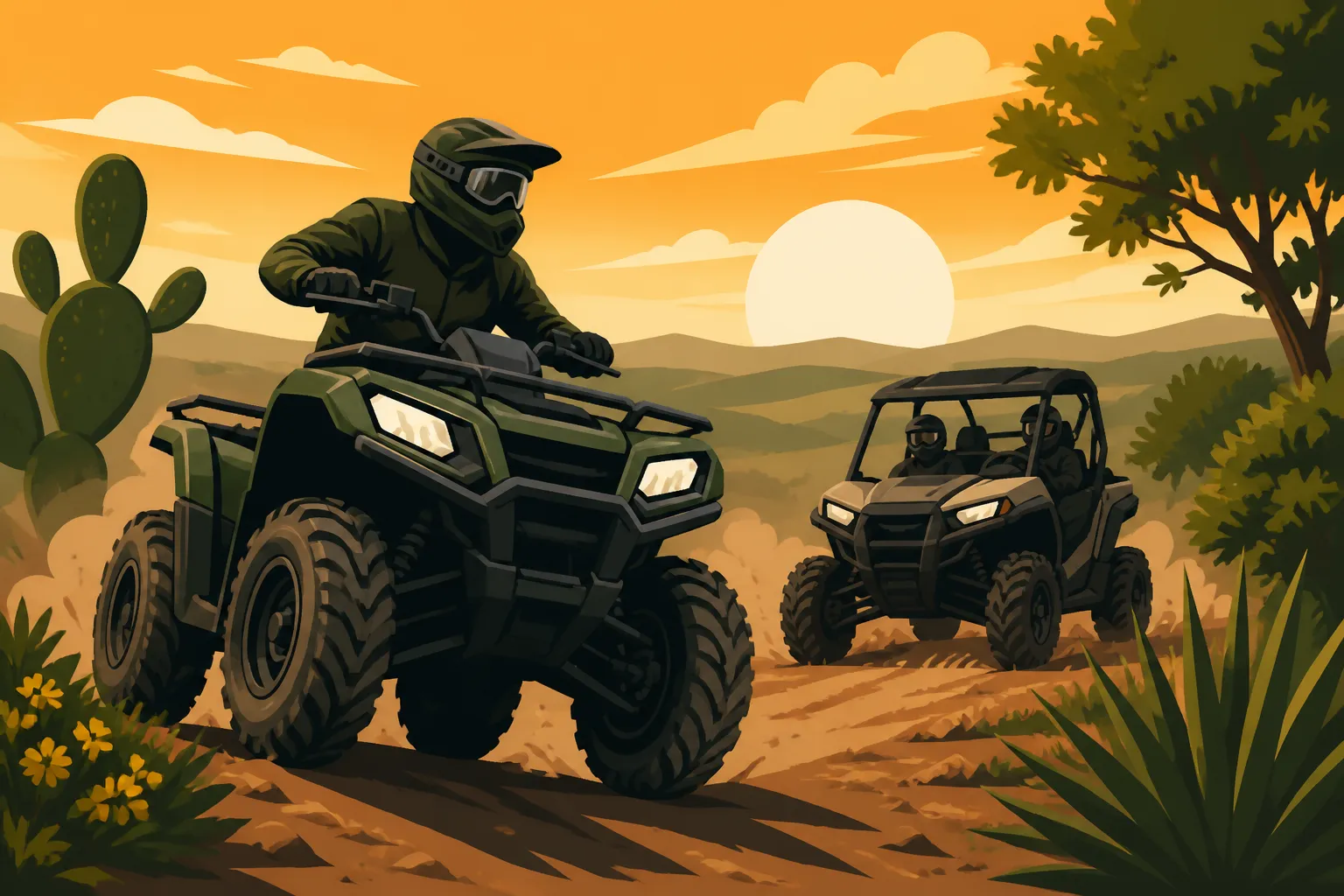
Brush Country covers much of South Texas, including areas around Cotulla, Freer, Hebbronville, Alice, and Laredo. The landscape is often a mix of mesquite, thorny shrubs, cactus, grasses, and open pasture. Rather than following broad, groomed trails, riders may travel along ranch roads, two-track paths, and narrow tracks cut through vegetation.
That terrain affects both the ride and the machine. Mesquite branches and cactus can scratch bodywork, snag clothing, or puncture a tire. A track that looks smooth from the seat may conceal ruts, rocks, exposed roots, or a washout. Brush can also block your view around bends, so it is sensible to reduce speed where you cannot see what lies ahead.
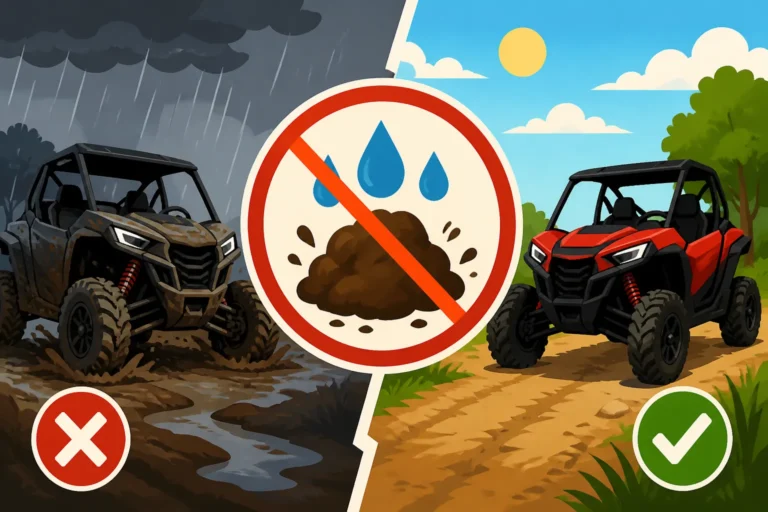
Ground conditions vary with rain and land use. A dry caliche road may be firm and dusty, while a low spot can turn soft or muddy after a storm. Drainage channels and creek crossings deserve extra caution: water may be deeper than it appears, and a crossing can have a slick or eroded bottom. Don’t assume that a route you rode last season is still passable.
Pick a machine and setup for the route
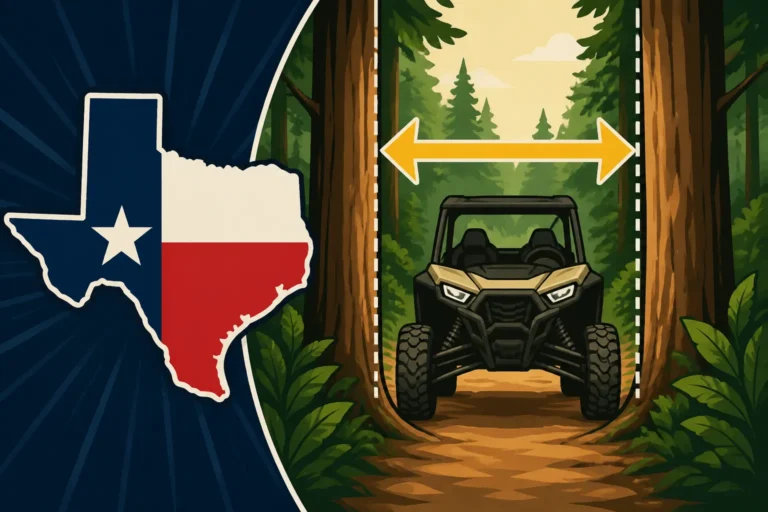
An ATV can be easier to maneuver on narrow paths, while a UTV offers a seat and protective structure that may suit longer rides or passengers. Neither machine is automatically right for every ranch or trail. Consider the route width, the ground clearance you need, the number of riders, and whether the land manager allows your vehicle type. A full-size side-by-side may not fit a path built for a quad.
Before leaving, inspect tires for cuts and check that the pressure suits the terrain and the manufacturer’s guidance. Look over the brakes, steering, throttle, lights, and belt or chain components. A small puncture kit, basic tools, water, and a way to contact your riding group can make a roadside problem less stressful. For remote rides, tell someone outside the group where you plan to go and when you expect to return.
Brush country can also hide sharp debris and low branches. Wear sturdy riding gear, gloves, eye protection, and clothing that covers exposed skin. A helmet is essential protective equipment, and riders should follow the rules that apply to their location and machine. For broader riding-area planning, Texas OHV Parks by Region can help you compare different kinds of Texas riding terrain.
Find a Legal Place to Ride Before You Go
A visible track is not proof of public access
Many South Texas routes cross private ranchland. A trail shown on a map, a tire track beside a county road, or an open-looking gate does not mean the public has permission to ride there. Get direct permission from the landowner or authorized manager before entering private property, and confirm which routes, dates, and vehicles are allowed.
This is especially important around hunting leases, working ranches, and agricultural properties. A route may be closed during a hunt, livestock movement, fire danger, or land-management work. Respect posted signs and closed gates, and do not ride around a barrier simply because another vehicle has left tracks beyond it. Texas Rules for Riding Private Land With Permission explains the importance of having authorization rather than relying on assumptions.
Mapping tools such as onX Offroad can help you review routes and plan a trip, but a map should be treated as a planning aid—not as permission to cross property. Check access details with the land manager, confirm that the route is open for your type of machine, and verify that your intended entrance is the one you are authorized to use. If a boundary or access point is unclear, stop and resolve the question before riding farther.
Distinguish private trails from public riding areas
South Texas does not offer a blanket right to ride across open-looking land. Public riding opportunities are tied to specific managed areas and their rules. Before traveling, check the riding area’s own information for access, vehicle restrictions, operating conditions, and any required permits or equipment. The [Texas Rules for Riding Public Land] provide useful context for why public-land access depends on the site rather than on the appearance of the terrain.
For a park-style alternative, check whether an established destination such as Escondido Draw near Ozona fits your route and plans. It is not a substitute for checking current access conditions, and the drive may be substantial depending on where you are starting. Riding Escondido Draw at Ozona offers a more focused look at that riding area.
| Riding situation | What to confirm before unloading |
|---|---|
| Private ranch or lease | Written or direct permission, approved routes, dates, and vehicle types |
| Managed OHV park | Entry requirements, trail closures, machine restrictions, and safety rules |
| Public land | Whether OHVs are allowed on the specific route and whether a decal or permit is required |
| Road or roadside route | Whether that road is legally open to the machine and whether the route is an authorized crossing |
An OHV decal is not a general pass to ride wherever you find a track. Requirements depend on the land and the riding activity. Review Where a Texas OHV Decal Is Required before heading to public riding land, and check site-specific instructions as well. If a route is on private property, a decal does not replace the landowner’s permission.
Plan for South Texas Heat and Remote Conditions
Time the ride around temperature and daylight
Heat can become the main challenge of a South Texas ride, especially when a group is moving slowly through brush or stopping often to navigate. Plan the route with the day’s conditions in mind. An early start can reduce exposure to the hottest part of the day, but it also means being ready for low light at the beginning of the ride. Texas Riding in Summer Heat and Carrying Water in Texas Summer cover practical considerations for staying safer in hot conditions.
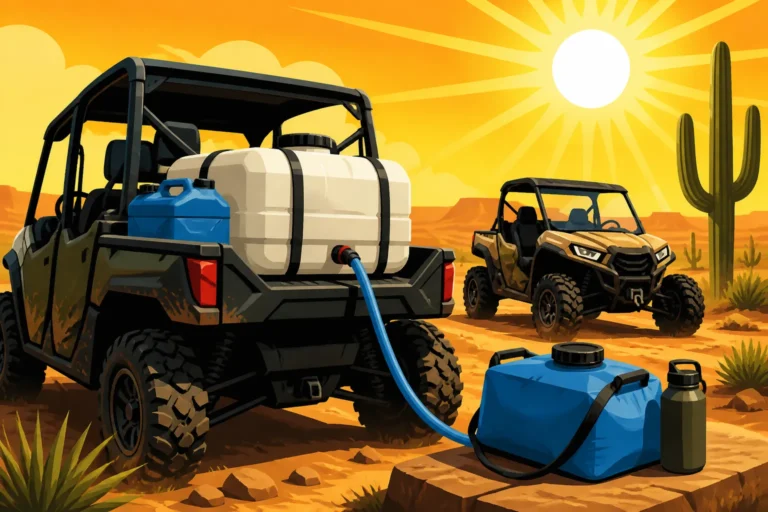
Bring more drinking water than you expect to need, and make sure every rider can reach their own supply without having to depend on someone else’s pack. Take breaks in shade when available, keep an eye on each other, and don’t treat fatigue or dizziness as something to push through. If the day is hotter than expected, shorten the route or turn back. A planned loop is not worth continuing if a rider or machine is struggling.
Daylight matters beyond comfort. Brush, uneven ground, and unmarked turns are harder to judge when visibility drops. Set a return time that leaves room for delays, and avoid relying on a phone screen as your only light or navigation source. For a ride in a remote area, agree on a turnaround point and what the group will do if a machine becomes disabled.
Build a route plan that can survive a detour
Before leaving, save or write down the meeting point, planned route, exit options, and the location of the vehicles. Let someone know the plan and expected return time. If the group separates, riders should know where to regroup rather than improvising different routes through unfamiliar brush.
onX Offroad can be useful for reviewing route options and keeping a trip organized, particularly when riders want to compare a planned track with landmarks and access points. Download or prepare the information you will need before you lose service, and bring a backup way to navigate. Never use a displayed route as a reason to enter land or cross a boundary without confirmed access.
A little redundancy makes a remote outing easier to manage. Carry a charged phone, a portable battery if appropriate, and a paper note with key directions or contact details. Pack a first-aid kit, tire-repair supplies, and enough essentials to handle a delay. Keep the group together when possible, and have a plan for helping a rider who is overheated, injured, or unable to continue.
Ride Responsibly Around Ranches and Wildlife
Keep the route narrow and leave gates as you found them
South Texas ranch roads are part of working landscapes, not simply recreation routes. Stay on the approved track instead of creating a shortcut through brush or pasture. Riding off-route can damage vegetation, disturb livestock, create erosion, or put riders on land they were not permitted to enter.
Approach livestock slowly and give animals room to move. Avoid chasing wildlife, cutting across feeding areas, or riding close to water sources where animals may gather. If the route passes through a gate, follow the landowner’s instructions exactly. A gate that was open when you arrived may need to be left open, while another may need to be shut behind you; don’t guess.
Noise carries across open country. Use a properly maintained machine and avoid unnecessary revving near homes, livestock, or other visitors. Respect quiet hours and any local requirements. A courteous group is more likely to preserve good relationships with landowners and riding-area managers.
Don’t assume an ATV or UTV is road legal
A ranch trail and a public road are not interchangeable. Texas generally does not allow an ordinary ATV or UTV to be made street legal simply by adding lights, mirrors, or other equipment. There are limited exceptions with specific conditions, so check the exact rule before planning to ride on a public road. Are ATVs Street Legal in Texas? and Can You Make a UTV Street Legal in Texas? explain why a machine that is appropriate for an off-road trail may still be prohibited on a roadway.
If a route requires crossing a road, use only a lawful crossing and follow the applicable safety rules. Do not ride along a road shoulder or take a shortcut down a public road because the next trail entrance appears close. Texas Rules for Getting Across a Road is a useful resource for understanding that a crossing has its own requirements.
When planning a South Texas ride, confirm access first, match the machine to the route, prepare for heat and punctures, and leave enough daylight to get back safely. Those simple steps help keep a day in Brush Country enjoyable without treating private land, rough terrain, or public roads as surprises to sort out once you are already there.
Disclaimer
This article is for general informational purposes only and does not constitute professional advice. Laws, prices and regulations vary by location and change over time. Consult a qualified professional for guidance on your specific situation.