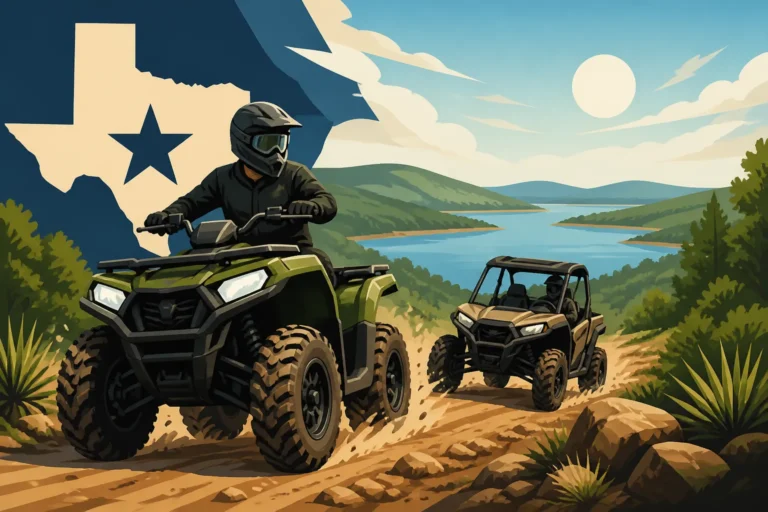
Riding Escondido Draw at Ozona
Escondido Draw offers a rugged West Texas ride, but the open-looking landscape can make it hard to judge trail difficulty, distance, and where to turn. This guide explains how to plan a visit near Ozona, what terrain to expect, what to check before unloading, and how to ride responsibly when the weather and ground conditions change quickly.
Planning a Ride at Escondido Draw
Finding the area and preparing your route
Escondido Draw Recreation Area is outside Ozona in Crockett County, reached from the U.S. 163 corridor south of town. Before setting off, check the park’s official information for directions, access, operating details, and any notices about closures. A gate or entrance may be easy to miss if you are focused on the road or following a route saved from an old trip.
Plan your arrival around the basics: fuel, water, food, riding gear, and enough daylight to get settled and complete your ride. Ozona is a practical place to take care of last-minute needs, but don’t assume you can buy every machine part or piece of safety equipment there. If you are towing, check your trailer and tie-downs before leaving town; a loose load on the drive out is an avoidable way to start a weekend.
Cell service can be unreliable once you leave town or move around remote terrain. Download an offline map before traveling, tell someone where you plan to ride, and agree on a time to check in. A tool such as onX Offroad can help you review mapped routes and keep track of your location, but it is a planning aid—not proof that a track is open or permission to leave a marked route.
For a broader look at the area and other riding options, see Riding Escondido Draw at Ozona alongside Texas OHV Parks by Region. If this is your first visit to the park, also compare the practical details in Texas Riding Areas Worth a Weekend before building a longer trip around it.
Check access requirements before you go
Rules and entry arrangements can differ between riding areas, and park information may change. Confirm Escondido Draw’s current access requirements directly before you leave. Ask whether you need a reservation, a day-use payment, a Texas OHV decal, or any other permit. Also confirm whether camping is available and whether it requires separate arrangements.
Texas’s OHV decal rules depend on where a machine is being ridden, not simply whether it has a title or plate. Some public riding areas require a decal, while private land generally does not. Check the details for the specific property and machine you plan to bring. The guide to The Texas OHV Decal Explained can help you understand the decal system, but the park’s own instructions should settle what you need for this visit.
A useful pre-trip checklist is:
- Confirm the entrance, access status, and any day-use or camping requirements.
- Check the current trail map and identify routes suited to your machine and experience.
- Review park rules for decals, helmets, flags, noise, passengers, and riding hours.
- Download maps for offline use and share your plan with someone who is not riding.
- Check the weather and contact the park if rain or another condition could affect access.
That last step matters in West Texas. A route that looks dry on a phone screen may be very different after rain, and a closure notice may not be obvious once you are already on the road.
Understanding the Terrain and Choosing Trails
Expect a rugged West Texas ride
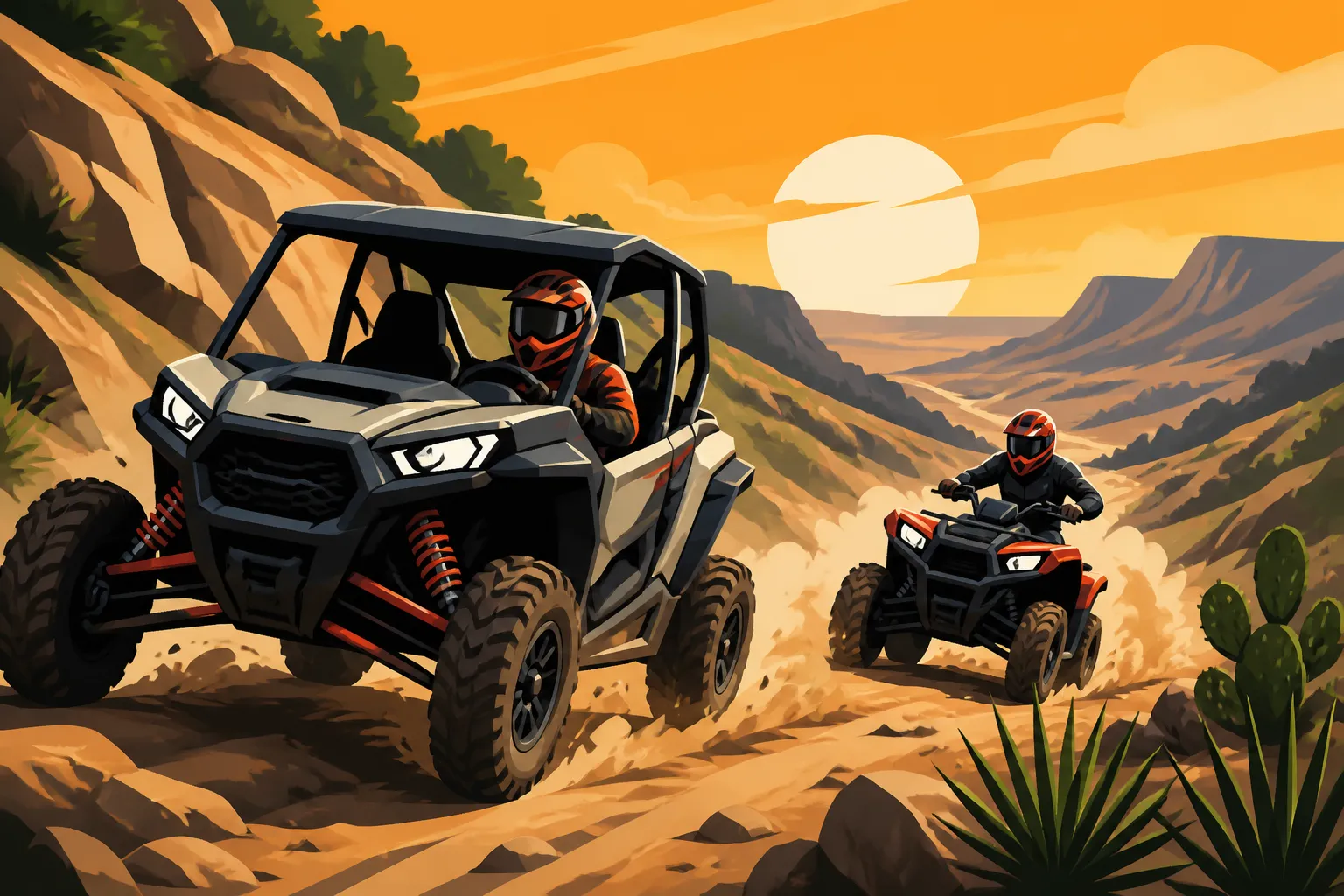
Escondido Draw is known for the kind of dry, open-country riding that can still feel demanding: rocky ground, uneven tracks, brush, and changes in elevation can keep you busy even when the trail looks straightforward from a distance. A broad view across a draw can hide loose rock, ruts, sharp turns, or a steep section just beyond the next rise.
The terrain can also vary across a single ride. You may move from a relatively easy track onto a rougher section without much warning. Choose your route based on the least experienced rider and the least capable machine in the group, rather than letting the fastest rider set the pace. If you are uncertain about a steep or rocky section, stop somewhere safe and assess it on foot before committing.
Use a map as a guide, not as an invitation to explore every visible track. onX Offroad may help you see your position in relation to a planned route, but trails can change, and a line on a screen does not confirm that a route is open. Stay on designated routes and follow posted directions. If the map, signs, or ground conditions disagree, stop and seek clarification rather than guessing.
Match the machine and the group to the route
A side-by-side and a narrow ATV do not handle every trail in the same way. Width, turning room, ground clearance, tires, and rider experience all affect which sections are comfortable and safe. Before committing to a route, check posted restrictions and make sure your machine fits. If you ride a wider UTV, consult Texas Rules for a Machine Over 50 Inches and follow park-specific width limits.
A machine that feels fine on a smooth ranch road may struggle on loose rock or a steep, uneven climb. Inspect tires, brakes, steering, fluids, and the cooling system before the trip. For a UTV, check the belt and carry the basic tools and recovery gear appropriate to your machine. For any vehicle, secure loose equipment so it cannot shift or snag on brush.
When riding as a group, set a pace that leaves room between machines for dust and braking. Agree on a lead rider and a sweep rider, and decide what everyone should do if the group gets separated. Keep children and less experienced riders within sight and avoid pressuring anyone to attempt a section they are not comfortable riding.
| Before choosing a route | What to check |
|---|---|
| Difficulty | Rock, ruts, slopes, tight turns, and the experience of the least confident rider |
| Machine fit | Width, ground clearance, tires, brakes, and any posted restrictions |
| Group plan | Lead and sweep riders, spacing, regrouping points, and a turnaround option |
| Conditions | Recent rain, heat, visibility, trail notices, and daylight remaining |
| Navigation | Offline map, marked routes, phone battery, and a shared trip plan |
For first-time visitors, a short familiarization ride is often a better start than trying to cover a large part of the area immediately. Learn how the machine responds to the surface, see how dust affects visibility, and note the junctions you pass. Then decide whether everyone in the group is comfortable extending the ride.
Safety, Weather, and Trail Etiquette
Manage heat, dust, and changing conditions
West Texas heat can make a ride tiring well before the group realizes how much energy it is using. Carry more water than you expect to need, take breaks in shade when possible, and avoid treating a full tank of fuel as the only limit on your ride. Plan the route so you can turn back early if someone becomes overheated, dehydrated, or simply too tired to ride carefully.
Dust is another reason to leave space between machines. If you cannot see the rider ahead clearly, slow down and let the gap grow. At a junction, wait in a safe place rather than following taillights through a cloud of dust. Goggles and a suitable helmet help protect against dust and grit; review Texas Safety Apparel Rules for ATV Riders for a refresher on rider protection.
Rain can change the character of dirt and rocky routes, affect traction, and make some sections unsuitable for riding. A forecast is useful, but conditions on the ground matter too. If the surface is slick, visibility is poor, or the park has posted a closure, don’t try to prove that your machine can make it through. Check Texas Trails After Heavy Rain and Texas Trail Closures to Check First when weather is part of your trip planning.
Ride with care for other visitors and the land
Stay on designated trails and obey posted speed limits and closures. Cutting a new line around a difficult section can damage the ground, widen the route, or lead riders into an unsafe area. Avoid disturbing livestock, wildlife, fences, gates, or private property. If a route is blocked, turn around instead of making your own detour.
Give other riders room, especially when meeting on a narrow trail. Slow down, make your intentions clear, and pass only where there is enough space and visibility. Keep noise under control and secure trash, food, and spare parts so nothing is left behind. If you are riding with a large group, agree on a place to regroup that does not block the trail or entrance.
A good trip depends on everyone being ready to handle a small problem without turning it into a larger one. Carry a first-aid kit, basic tools, a tire repair option suited to your machine, and a way to contact help if service is unavailable. Tell your group where the supplies are, and make sure riders know how to stop, regroup, and communicate if someone has a mechanical issue.
Making the Most of a Visit Near Ozona
Build a realistic day around the ride
It is tempting to plan a long loop because the country looks open and the map seems to show plenty of ground to cover. But rough terrain, dust, navigation stops, and breaks can make a modest route take longer than expected. Start with a conservative plan, keep an eye on daylight, and leave enough time to return to the entrance without rushing.
If you are camping, check the park’s current camping arrangements and what facilities are available before packing. Do not assume water, electricity, restrooms, or vehicle access to a campsite will be available. Carry what you need for the conditions, and have a backup plan if the weather or park access changes. For help comparing trip styles, see Texas OHV Parks With Camping and Texas Riding Seasons and Heat.
Ozona can be a convenient staging point, but riding and town errands should be planned separately. Fuel up and pick up necessities before heading to the trailhead, and avoid relying on a quick stop after a long day when shops may be closed. If you are towing a trailer, also consider where you can safely park and turn around.
A simple first-visit plan
For a first visit, keep the schedule flexible. Arrive with time to confirm entry requirements, unload without rushing, and review the map with everyone in the group. Start on a route that suits the least experienced rider, then regroup and reassess before taking on anything rougher.
Use onX Offroad or another offline navigation option to track your position, while cross-checking it against park signs and official route information. Save the entrance location, agree on a turnaround point, and keep your phone protected from dust and heat. If navigation becomes confusing, stop in a safe spot and work out the next move together rather than riding farther in the hope of finding a familiar junction.
Before leaving, make sure every machine and rider is accounted for, collect all trash, and check that your trailer load is secure. A well-planned ride at Escondido Draw is not about covering every trail in one visit. It is about choosing routes that fit your group, respecting the land and other riders, and getting back with enough energy to want to return.
Disclaimer
This article is for general informational purposes only and does not constitute professional advice. Laws, prices and regulations vary by location and change over time. Consult a qualified professional for guidance on your specific situation.