Texas OHV Parks by Region
Texas is a big state for a reason: a ride near Gilmer can mean pine needles and clay, while one near Marble Falls may involve limestone ledges and steep Hill Country terrain. Finding a suitable place is only part of the job. This guide compares riding areas by region, explains what each kind of terrain asks of you, and helps you plan around access, machine size, weather, and rules.
How to Choose a Texas OHV Riding Area
Match the terrain to your machine and experience
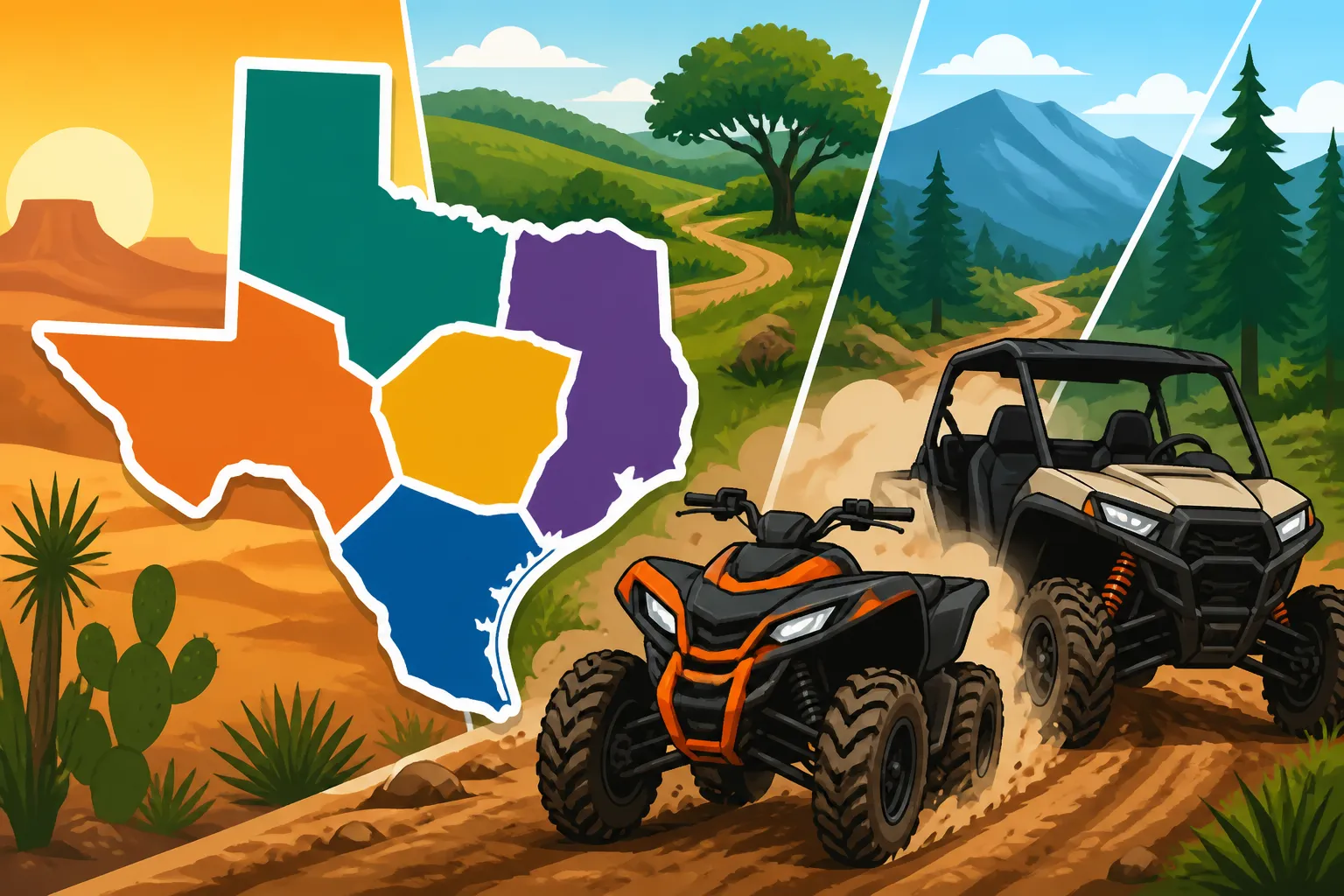
Start with the kind of riding you actually enjoy, not the park that looks most dramatic in a photo. East Texas is known for wooded trails, roots, and mud-prone ground. In the Hill Country, expect more rock, elevation changes, and uneven surfaces. Panhandle areas can feel open and sandy, while North Texas parks may combine wooded routes with constructed features and more compact trail networks.
Your machine matters just as much as your riding style. A narrow youth ATV may fit routes that a full-size side-by-side cannot use, while a wide UTV needs a park with trails built or designated for its width. If a trail system has width limits, check your machine’s actual outside tire-to-tire width rather than relying only on the model name. A few inches can determine whether a route is appropriate.
Be honest about your comfort level, too. A rocky incline that feels like a fun challenge to an experienced rider can be intimidating for a new driver, particularly in a heavy side-by-side. If you are planning a family trip or bringing a first-time rider, look for a place with a range of route difficulties, clear trail markings, and room to turn around. The guide to [Texas Trail Difficulty by Park] can help you compare the kind of terrain different areas offer.
Know what “park” and “riding area” mean
Texas riding destinations are not all managed the same way. Some are private or nonprofit OHV parks with their own admission, camping arrangements, trail maps, and operating rules. Others are designated public-land riding areas, where access rules, required permits, trail closures, and vehicle restrictions may come from a public land manager. A place being described casually as an “OHV park” does not tell you who controls it or what requirements apply.
That difference matters when you plan a trip. A privately operated park may set its own check-in and safety procedures, while a public trail system may have separate land-use rules and seasonal closures. Some riding areas also rely on volunteer groups or local organizations for upkeep. In every case, check the operator or land manager’s official information before loading the trailer; a map found online may not reflect a temporary closure or a changed access policy.
It also helps to distinguish a destination that welcomes OHVs from a public road or trail where an OHV is simply present. Rules about where a machine may be operated depend on the specific land and route. For the broader framework, see [Texas Rules for Riding Public Land] and [The Texas OHV Decal Explained]. The decal requirement can depend on the land and the program involved, so confirm whether it applies to the exact place you plan to ride.
| Region | Example riding areas | Common terrain | Planning point |
|---|---|---|---|
| East Texas | Barnwell Mountain, Sam Houston National Forest OHV trail | Pine woods, dirt, roots, mud-prone trails | Check trail status after heavy rain |
| Central Texas and Hill Country | Hidden Falls, Katemcy Rocks | Limestone, rocky climbs, varied elevation | Match difficulty to your machine and experience |
| North Texas | Northwest OHV Park, Trophy Club Park | Mixed woods, compact trails, constructed features | Confirm route access and vehicle-width rules |
| Panhandle and West Texas | Rosita Flats at Lake Meredith, Escondido Draw | Sand, open ground, rocky terrain | Prepare for exposed conditions and remote access |
| South and Coastal Texas | Mud Buddies near Hallettsville and other regional facilities | Varied private-park terrain | Verify operating dates, access, and amenities |
East Texas Riding Areas
Barnwell Mountain Recreation Area
Barnwell Mountain Recreation Area near Gilmer is one of the best-known places to ride in East Texas. Its wooded setting gives the area a different feel from the open country farther west. Riders can encounter winding routes, changes in elevation, and terrain where moisture affects traction. The park is associated with the Texas Motorized Trails Coalition, so it is worth checking the organization’s information for access details, trail conditions, and park rules before you head out.
The variety is part of the appeal, but it also means a ride can be more demanding than it looks on a simple map. A route through the trees may include roots, ruts, loose ground, or a slope that feels more difficult when it is slick. A new rider can have a much better day by choosing conservative routes first, then building confidence after getting a feel for the surface. Experienced riders should still avoid assuming every marked trail will suit every vehicle.
Plan for a full day rather than treating the trip as a quick stop. Bring water, basic recovery equipment appropriate to your machine, and a way to communicate if your group gets separated. If you are considering an overnight visit, look into the park’s current camping options and rules directly. The dedicated overview of [Barnwell Mountain Recreation Area] is a useful next step when comparing it with other destinations.
Sam Houston National Forest OHV trail
The Sam Houston National Forest OHV trail near New Waverly offers a public-land experience that is different from a privately operated park. The trail system is known for its forest setting and designated route network, and its access rules can include vehicle-width limits. In particular, do not assume that a full-size side-by-side can use every trail simply because it is an OHV. Confirm the applicable width restriction and measure the machine before making the drive.
Forest conditions can change the ride quickly. A route that is manageable when dry may become slippery, rutted, or unsuitable after prolonged rain. Wet soil can also prompt closures intended to prevent trail damage, so check trail status shortly before leaving and again if the weather changes. If the system is closed, riding anyway can damage the route and may violate the land manager’s rules.
Because this is a public-land destination, prepare for a more self-sufficient outing than you might at a staffed private park. Know where the trailhead is, carry the required documents or permits, and bring water and recovery supplies. Cell coverage should not be treated as guaranteed in the woods. The specific guide to [Sam Houston National Forest's 85-Mile OHV Trail] explains the route’s key planning considerations, and [Texas Trails After Heavy Rain] is worth reading before a wet-weather trip.
Central Texas and the Hill Country
Hidden Falls Adventure Park
Hidden Falls Adventure Park near Marble Falls is a private riding destination known for a broad range of Hill Country terrain. The area’s limestone, slopes, and rocky routes can create a very different riding day from the softer trails of East Texas. It attracts a mix of ATVs, UTVs, and other off-road vehicles, but a park’s overall reputation for variety does not mean that every route is suitable for every driver or machine.
New visitors should take time to understand the park map and choose routes that fit their group. A route that is manageable for a short-wheelbase ATV may feel awkward in a larger side-by-side, particularly where turns are tight or the surface is uneven. If your group includes different experience levels, agree in advance on a pace and a plan for regrouping. A rider who feels pressured to keep up may take risks that could have been avoided with a more relaxed route choice.
Before you go, check current access information, operating details, camping availability, and any vehicle or safety requirements through the park itself. These details can change, and a general online description is not a substitute for the operator’s instructions. For a more focused overview, see [Hidden Falls Adventure Park at Marble Falls]. If you want to compare similar destinations within driving distance, [Texas OHV Parks Near Austin] is another helpful place to start.
Katemcy Rocks and nearby Hill Country terrain
Katemcy Rocks in Mason County is associated with challenging rocky terrain and scheduled riding opportunities. That makes it a different kind of destination from a park where visitors can simply expect an unrestricted, everyday trail network. Check the event or access calendar before you commit to a trip, and make sure your chosen date actually provides an opportunity to ride. Arriving without confirming access can turn a long tow into a frustrating day.
Rocks demand patience and careful vehicle control. The safest line is not always the fastest one, and a machine that is underpowered, poorly maintained, or carrying an inexperienced driver may struggle on steep or uneven sections. Check tires, brakes, steering, and recovery points before the trip. For a UTV, make sure everyone understands seat-belt and passenger rules and knows how to stay inside the vehicle when terrain becomes rough.
Hill Country riding can also be hard on equipment. Sharp rock can challenge tires and underbody components, while long climbs can place extra demands on cooling systems and drivetrains. Avoid treating a successful ride as proof that the machine needs no post-trip inspection. Clear dirt from the radiator area, look over the tires and wheels, and check for loose parts when you return. If your group wants a less specialized outing, compare Katemcy with a broader trail park such as Hidden Falls and choose based on the riders’ actual experience.
North Texas Riding Areas
Northwest OHV Park near Bridgeport
Northwest OHV Park in Wise County, outside Bridgeport, gives North Texas riders a regional option without a trip to the Hill Country or East Texas. Its mix of routes and riding features can make it useful for different types of off-road vehicles, but the details that matter most are the routes open to your specific machine and the park’s operating rules for the day you plan to visit.
Before arriving, look for information on permitted vehicle types, trail access, required safety equipment, and any restrictions on passengers or youth riders. A park may offer a variety of terrain while still limiting certain machines on particular routes. If you are taking a youth ATV, confirm that the child’s size and experience are a good match for the route; a small machine can be capable without being appropriate for every feature.
Think about logistics as well as riding. A North Texas outing can still involve a long tow, so arrive with fuel, food, water, tools, and a realistic plan for the day. Do not assume every facility has the same services or that those services will be available during every visit. If you are comparing options around the Dallas–Fort Worth area, [Texas OHV Parks Near Dallas] can help you build a shortlist.
Trophy Club Park and Lake Grapevine
Trophy Club Park, near Grapevine Lake, is a convenient option for some riders in the Dallas–Fort Worth area. Its location can make it appealing for a shorter outing, but proximity to a city does not mean the riding rules are casual. Confirm which trails or areas are open to OHVs, what machine types are allowed, and whether there are specific check-in or safety requirements.
Urban-edge riding areas may have tighter boundaries and more site-specific rules than remote destinations. Stay on designated routes, obey posted signs, and do not assume that an informal path near a park is an authorized trail. Also plan for shared use where applicable: other visitors may be walking, fishing, or using nearby recreation areas. Slow down near trail crossings and keep noise and dust in mind.
When comparing Trophy Club with a larger destination, think about what you want from the day. A local park may be easier for a quick practice session or a first ride, while a larger facility can offer more variety for a full weekend. Confirm conditions and access with the managing organization instead of relying on old trip reports. For additional North Texas choices, browse [Best Places to Ride an ATV in Texas] and compare the driving time with the kind of terrain your group prefers.
Panhandle and West Texas Riding Areas
Rosita Flats at Lake Meredith
Rosita Flats, near Lake Meredith in the Panhandle, offers a notably different setting from the pine woods and Hill Country. The riding area is associated with open, sandy terrain, and the landscape can feel exposed, especially on a hot, windy day. Riders should bring sufficient water, protect themselves from sun and wind, and plan their route rather than counting on shade or nearby services.
Access rules at public recreation areas deserve special attention. Confirm current permit requirements, designated riding boundaries, and any equipment rules before unloading. Flags may be required in certain locations to improve visibility, particularly where dunes or uneven ground obscure sightlines. Never rely on another rider’s equipment setup as proof that the same requirement applies to you; use the land manager’s current guidance.
The Panhandle can also create navigation challenges because open terrain may make distance and direction harder to judge than they appear. Save or carry a reliable map, establish a meeting point, and keep the group together. An offline map tool such as onX Offroad can help riders review routes and stay oriented when cell service is unreliable, but it should supplement—not replace—official maps, posted boundaries, and permit instructions. See [Rosita Flats at Lake Meredith] for a more detailed look at planning this destination.
Escondido Draw, Twin Buttes, and other West Texas options
Escondido Draw near Ozona and Twin Buttes near San Angelo are among the West Texas riding options worth researching when you want to explore beyond the best-known parks. The terrain and management arrangements can differ substantially from one site to another, so treat each as its own destination rather than assuming the same access rules, facilities, or riding conditions apply across the region.
West Texas distances make advance planning especially important. A rider may travel a long way between fuel, food, lodging, and a trailhead, and mobile coverage can be limited. Check the route to the staging area, confirm access with the responsible organization, and carry enough supplies to handle delays. If the location has limited facilities, arrive prepared to manage basic needs without expecting a nearby shop or staffed office.
Keep weather and exposure in mind. Heat, wind, and sudden changes in conditions can make a ride much more tiring than the mileage suggests. Take breaks before you feel depleted, drink water regularly, and avoid pushing a group to finish a route simply because it is already underway. When planning a remote outing, tell someone where you intend to ride and when you expect to return. A map app can help with orientation, but download or save relevant information before leaving service.
South and Coastal Texas Riding Areas
Mud Buddies and regional private facilities
Mud Buddies near Hallettsville is one example of a private riding facility that gives South and Central Texas riders another option to investigate. Private parks can be useful when public riding areas are far away, but they vary in terrain, vehicle access, event schedules, and available services. Check directly with the operator for the details that apply to your intended visit rather than assuming a facility is open or configured the same way every weekend.
For mud-oriented riding, preparation is more than a matter of choosing tires. Mud can hide ruts, rocks, and holes, and it can put additional strain on a vehicle’s cooling and drivetrain systems. Avoid entering deep or unfamiliar sections without assessing them first. If you are riding with friends, agree on how you will communicate and recover a stuck machine; an improvised pull using an unsuitable attachment can damage equipment or injure someone.
After a muddy ride, clean the machine carefully and inspect it before storing it. Packed mud can hide damage and restrict airflow around the radiator. Check brakes, bearings, electrical connections, and underbody areas once the vehicle is clean enough to inspect. If you are comparing facilities around Houston and the Gulf Coast, [Texas OHV Parks Near Houston] can help identify other destinations to research.
How to compare less familiar destinations
A smaller or less widely discussed riding area may be a good fit, but it takes a little more homework. Find out who manages the property, whether riders need to book or check in, which machine types are allowed, and whether the routes are open to beginners. Ask about current access rather than relying on an old review or a social media post that may describe a past event.
It is also worth asking what “open” means. A facility may be open to visitors but have certain routes closed, limited access for a particular vehicle class, or an event that changes the normal riding setup. Clarify whether camping is allowed, whether pets are permitted, what safety gear is required, and whether the operator provides trail maps. These questions are not fussy; they prevent unpleasant surprises after you have already driven several hours.
Use a short checklist before choosing an unfamiliar place:
- Confirm the address, access route, and managing organization.
- Ask whether your ATV or UTV type and width are permitted.
- Check the operating schedule and any reservation or event requirements.
- Review current trail conditions and weather-related closures.
- Confirm permits, decals, safety equipment, and passenger rules.
- Find out what facilities are available and what you should bring yourself.
If anything is unclear, contact the operator or land manager directly. A clear answer before the trip is much better than discovering at the gate that a route is closed or your vehicle does not meet the site’s requirements.
Planning a Texas OHV Trip That Goes Smoothly
Check rules, access, and trail conditions
Make a habit of checking the official information for your destination shortly before departure. Trail conditions can change after rain, and public-land managers or private operators may close routes to protect the surface or address maintenance. A route that was open when someone posted a trip report may not be open for your visit. Weather apps, maps, and rider forums can be useful context, but the managing organization is the final place to confirm access.
Review requirements for each rider and each machine. Depending on the destination, you may need a specific decal, permit, safety certificate, or required equipment. A rule that applies at one public riding area may not apply in the same way at a private park. Likewise, requirements for a youth rider or passenger can differ from those for an adult operating alone. Do not assume that a plate or sticker automatically grants permission to ride everywhere.
For navigation, download useful maps before you leave home and keep a paper or offline backup where practical. onX Offroad can be a handy planning tool for viewing routes and orienting yourself, particularly when service is spotty, but always compare its information with official trail maps and signage. Avoid crossing fences, leaving designated trails, or treating a digital line as permission to enter private property. In Texas, land boundaries and access permission matter.
Prepare the vehicle and the people riding it
Do a basic machine check before loading. Inspect tires, brakes, steering, lights where required, fluid levels, and any visible damage. For a UTV, check seat belts and make sure passengers have seats designed for them. For an ATV, do not carry a passenger unless the machine is designed for one. Pack tools and recovery gear suited to your vehicle, and know how to use them before you are stuck on a remote trail.
Dress for the terrain and weather, not just the drive to the park. Helmets and appropriate protective gear can reduce the consequences of a fall, while eye protection helps with dust, branches, and debris. Bring more water than you think you will need for a hot day, and keep it accessible. On a family ride, plan breaks and set a pace children can manage; fatigue can make good decisions harder for adults and young riders alike.
Finally, agree on simple group rules before riding. Decide who leads and who sweeps, choose a regrouping point, and make sure everyone knows what to do if the group gets separated. Keep a safe following distance, slow down near blind corners, and yield appropriately when trail conditions require it. These small habits help prevent the kind of avoidable incident that can spoil an otherwise excellent Texas riding weekend.
Disclaimer
This article is for general informational purposes only and does not constitute professional advice. Laws, prices and regulations vary by location and change over time. Consult a qualified professional for guidance on your specific situation.