Texas OHV Parks Near Dallas
Finding a place to ride near Dallas can be harder than it sounds: a spot may be close on the map but unsuitable for a wide UTV, closed after rain, or limited to certain vehicles. This guide compares practical North Texas options, explains what to check before loading up, and helps you choose between a quick local ride and a full weekend trip.
Texas OHV parks near Dallas at a glance
There are fewer dedicated off-highway vehicle parks right beside Dallas than many riders expect. The most useful starting points are Northwest OHV Park near Bridgeport and Trophy Club Park near Grapevine Lake. For a bigger destination with more of a weekend feel, Barnwell Mountain Recreation Area near Gilmer is worth considering, though it is farther away.
Distances and drive times depend on where you start in the Dallas–Fort Worth area, traffic, and your route. More importantly, a park’s name or online map pin does not guarantee that every ATV or side-by-side can ride every trail. Confirm access rules for your exact machine before leaving home.
| Riding area | General location | Best fit | Check before you go |
|---|---|---|---|
| Northwest OHV Park | Near Bridgeport, northwest of the Dallas–Fort Worth area | Riders looking for a dedicated OHV park without making an East Texas weekend of it | Vehicle types, trail status, admission process, and wet-weather closures |
| Trophy Club Park | Trophy Club, beside Grapevine Lake | Riders seeking a closer option and willing to follow designated-area rules | Whether your machine is permitted, which trails are open, and current park requirements |
| Barnwell Mountain Recreation Area | Near Gilmer in East Texas | Riders planning a longer trip with varied terrain and a full day or weekend to explore | Membership or entry rules, trail conditions, camping availability, and machine restrictions |
Northwest OHV Park near Bridgeport
Northwest OHV Park is one of the more practical options to investigate if you are starting from Dallas or Fort Worth and want a dedicated off-road riding area. Its location near Bridgeport makes it a possible day trip for many North Texas riders, although the actual drive can feel much longer if you are towing a trailer through weekend traffic.
A dedicated park is often easier to plan around than informal riding areas because you can check the park’s own rules and trail updates before arrival. Still, don’t assume the same trails suit every machine. A narrow youth quad, a full-size ATV, and a wide side-by-side may face different access limits. Confirm whether your vehicle is allowed, whether any trails have width restrictions, and whether the park is open to your type of riding on your chosen day.
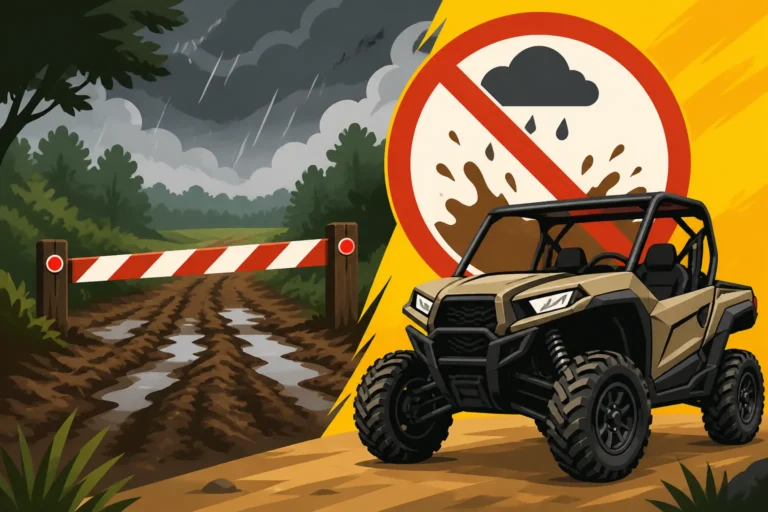
Before heading out, look for recent information about rain and trail conditions. Clay and other soft surfaces can become difficult or damaging when wet, and a park may close trails or the entire riding area to protect them. A quick status check can save you a wasted tow and keep you from arriving with a machine that cannot safely handle the conditions.
Trophy Club Park near Grapevine Lake
Trophy Club Park is a closer possibility for some Dallas–Fort Worth riders, but it is especially important to check the current rules rather than treating it like an unrestricted riding area. Parks near populated communities and reservoirs often have designated-use areas, operating rules, and access requirements that differ from those at a private OHV park.
Confirm whether the park currently allows your specific ATV or UTV and which trails are available to it. If you ride a side-by-side, ask about width and vehicle-class limits instead of relying on a general statement that “OHVs” are allowed. Also check whether advance arrangements, a permit, a decal, or other entry steps apply. A route-planning app such as onX Offroad can help you understand the surrounding area, but it is not a substitute for the park’s own access rules or posted signs.
Trophy Club may suit riders who want to minimize the drive, but “closer” does not automatically mean “simpler.” If you need a broad selection of trails or a full day of riding, check the available routes and limits carefully before choosing it over a larger destination. For a wider look at regional options, see [Texas OHV Parks by Region] and [Texas OHV Parks Near Dallas].
Choosing between a nearby ride and a longer trip
The best park depends on what you want from the day. A shorter drive can make sense for a casual outing, a new rider, or a family trying to keep the day manageable. A longer trip may be worthwhile when you want more time on the trails, different terrain, or an overnight stay.
When a nearby park makes sense
A nearby riding area is often the better choice when you are taking a first ride on a newly purchased machine or bringing children who may not want a long day in a tow vehicle. Shorter travel can also leave more energy for unloading, checking equipment, and riding at a comfortable pace instead of turning the trip into a race against closing time.
For a first visit, plan a modest ride. Start on terrain that matches the least experienced rider in your group, then build up only if everyone is comfortable and the park’s trail markings allow it. A map app, including onX Offroad, may help you orient yourself, but follow signs and any park-issued map where they differ. Trail systems can include one-way routes, closures, or machine-specific sections that are easy to miss when you are focused on the screen.
A nearby park can also make sense when the weather is uncertain. If conditions change, you may have less time and expense invested in getting there. Still, never assume a close park remains open after rain; check its status directly before loading the trailer.
When to make a weekend of it
Barnwell Mountain Recreation Area near Gilmer is a longer drive from Dallas, so it is more naturally suited to a full-day outing or overnight plan than a quick after-work ride. Before committing, review the park’s current visitor requirements, camping options, and trail conditions. If you are planning to stay, confirm whether your preferred lodging or camping arrangement is available and what you need to bring.
A destination ride rewards preparation. Check your machine before the trip, bring basic tools and recovery equipment appropriate to your vehicle, and make sure everyone understands the group’s meeting plan if riders get separated. If your group has mixed experience levels, agree in advance that nobody will pressure a newer rider into a trail they do not want to attempt.
The extra planning can be worthwhile, especially if your local option does not offer the kind of terrain or ride length you want. For more planning help, compare [Barnwell Mountain or Hidden Falls for a Weekend] and [Texas Parks With Overnight Camping]. Barnwell is the closer East Texas destination for many Dallas-area riders, while Hidden Falls is a much longer Hill Country trip and should not be treated as a nearby alternative.
What to check before riding near Dallas
A successful park day usually comes down to a few practical checks made before you leave the driveway. This matters even for experienced riders: park access, trail conditions, and required documents can vary, and towing a machine to the gate only to discover a restriction is a frustrating way to spend a day.
Confirm vehicle access and trail limits
Ask the park whether it permits your exact type of machine. “ATV access” may not answer the question for a side-by-side, and “OHV trail” may not mean that every vehicle width is allowed. If your UTV has been modified, provide its actual width and configuration when you ask. Don’t assume that adding lights, mirrors, or other road equipment makes it eligible for trails or public roads; road-use rules are separate from park access.
Also check whether the park has restrictions for youth machines, passengers, or inexperienced riders. A route that appears easy on a map can still have steep, rocky, muddy, or narrow sections. Use the park’s trail descriptions and posted signs as the authority, and turn around when conditions are beyond your group’s comfort level.
If you are comparing machines before buying, consider how trail width affects where you can ride. [Texas Rules for a Machine Over 50 Inches] can help frame that question, but park-specific limits still need to be checked with the individual riding area.
Check closures, permits, decals, and safety requirements
Check the park’s official channels shortly before your trip for opening status, rain closures, event schedules, and any temporary restrictions. A trail report from a previous weekend may no longer reflect current conditions. If your route relies on an app such as onX Offroad, download or save the relevant map information ahead of time where possible, then use park signage and official updates to confirm what remains open.
Texas riding requirements can depend on where you ride. Some public riding areas require a Texas OHV decal, and a park may have its own admission or permit process in addition to state requirements. Make sure you know what applies to your destination rather than assuming that one sticker, pass, or receipt covers every cost. Read [The Texas OHV Decal Explained] and [Texas Rules for Riding Public Land] before a trip that may involve public land.
Safety rules matter just as much as entry requirements. Riders may need to meet age-related certificate requirements in certain settings, and parks can impose additional helmet or equipment rules. Review [Texas OHV Safety Certificates] and the park’s own requirements. If you ride with children, confirm supervision rules and choose trails suited to their experience and machine size.
A practical day-trip plan from Dallas
A little organization makes a North Texas riding day smoother, especially when you are towing, coordinating several riders, or visiting a park for the first time. The goal is not to over-plan every turn. It is to avoid preventable surprises and leave room to ride at a safe pace.
Prepare the machine and the tow setup
Before departure, inspect tires, brakes, controls, fluids, and the condition of any belts or chains relevant to your machine. Check that the tie-down points are sound and that the trailer is properly matched to the load. Secure loose gear so it cannot shift during the drive, and bring the tools and supplies you would reasonably need for minor trail-side problems.
Pack water, snacks, sun protection, and suitable riding gear for the forecast. North Texas weather can make a ride feel very different from the temperature at home, particularly when you are moving slowly or taking breaks in exposed areas. A first-aid kit and a charged phone are sensible basics, but do not rely on phone coverage being available everywhere on the trail.
If someone in the group is new to the machine, make time for a short controls and safety check before entering the trail system. Explain how to stop, how to signal, and what to do if the group gets separated. Agree on a pace that keeps the least experienced rider comfortable.
Use a simple pre-departure checklist
Run through this checklist the evening before the trip, then confirm the park status again on the day you leave:
- Confirm the park is open and the trails you plan to use are available.
- Verify that each ATV or UTV in the group is permitted, including its width and passenger setup.
- Check the park’s admission, permit, decal, and safety requirements.
- Review the weather and recent trail conditions, especially after rain.
- Inspect machines, trailer tires, tie-downs, and essential riding gear.
- Save the park address and route details, and bring any park-provided map or instructions.
- Share the day’s plan with everyone, including a meeting point and a clear turnaround time.
If you are uncertain about any requirement, contact the park before leaving. That small step is usually faster than trying to resolve an access question at the entrance after a long tow.
For riders who want to compare nearby choices with broader Texas destinations, [Best Places to Ride an ATV in Texas] and [Texas OHV Parks With Camping] offer useful next steps. Keep the distinction clear: a park listing or digital trail map helps you plan, but the park’s current rules determine where and how you may ride.
Disclaimer
This article is for general informational purposes only and does not constitute professional advice. Laws, prices and regulations vary by location and change over time. Consult a qualified professional for guidance on your specific situation.