Texas OHV Parks Near Houston
Houston riders often want a place to unload, ride for a few hours, and get home without turning the trip into a weekend expedition. The closest well-known option is the Sam Houston National Forest trail system near New Waverly, while other riding areas require more planning and a longer drive. This guide compares the choices and explains what to check before leaving.
Best places to ride an ATV or UTV near Houston
Sam Houston National Forest near New Waverly
For many Houston-area riders, the Sam Houston National Forest OHV trail system is the first place to investigate. It sits north of the city near New Waverly and offers a designated trail experience rather than a privately operated park with a staffed gate and on-site amenities. The route network is often described as an 85-mile trail system, but that does not mean every mile is open to every machine at every visit. Check the current forest map, vehicle restrictions, and trail status before you tow out.
The area can make sense for a day ride if you are comfortable handling a more self-directed trip. You’ll want to know where the legal trailhead is, how you’ll pay any required use fees, what permits or decals apply, and whether your machine fits the trail’s width limits. For the specific route and preparation details, see [Riding the Sam Houston Trail] and [Sam Houston National Forest's 85-Mile OHV Trail].
This is not the same experience as arriving at a private park where staff may explain the trail layout, sell day access, or direct you to facilities. Forest recreation areas have their own rules, and conditions can change after rain. Before heading north, check the forest’s official notices and trail information rather than relying on an old social post or a map pin. [Texas OHV Parks Near Houston] can help you compare this kind of public-land ride with other regional options.
Mud Buddies near Hallettsville
Mud Buddies in Hallettsville is another name Houston-area riders may come across when looking beyond the forest trail. It is farther from Houston than New Waverly, so it may suit riders who are already planning a longer day or an overnight trip. A privately operated riding area can offer a different setup from a national forest, but its rules, operating schedule, permitted machines, and available facilities are specific to the property.
Before you make the drive, confirm directly with the park that it is open to visitors on your intended date and that your vehicle is allowed. Ask about trail conditions, admission arrangements, camping, sound or equipment rules, and whether the park requires advance arrangements. These details matter particularly if you’re bringing a side-by-side, a youth machine, or a mixed group with different riding experience.
How the closest options compare
“Near Houston” can mean a quick day trip for one rider and an all-day tow for another, depending on where you start, traffic, and the trailer you’re pulling. Use the table as a planning comparison, not as a promise about current access or facilities.
| Riding area | General location from Houston | Best fit | What to verify before leaving |
|---|---|---|---|
| Sam Houston National Forest OHV trail system | Near New Waverly, north of Houston | Riders looking for designated forest trails | Trail status, permitted vehicle width, maps, fees, decals, and closures |
| Mud Buddies | Near Hallettsville, southwest of Houston | Riders considering a privately operated riding area | Operating schedule, access requirements, machine rules, amenities, and conditions |
| Other regional parks | Varies by destination | Riders willing to travel farther | Current location-specific rules, admission, camping, and trail availability |
A destination’s presence on a map does not necessarily mean you can ride there on any day or take any machine onto every trail. For a wider view of options and regional differences, use [Texas OHV Parks by Region] alongside the individual site’s current information.
Plan your Sam Houston National Forest ride
Check trail access, fees, and permits
A forest ride can involve more than loading the ATV and following a navigation app. Confirm the required permits and day-use arrangements for the specific trailhead you intend to use. Texas OHV decal requirements can apply in certain riding settings, and national forest use may involve separate fees or passes. Do not assume one payment covers every requirement; check [Texas National Forest Permits] and the forest’s current instructions before you go.
Also verify that you have the right map. Trail entrances, road crossings, closed segments, and legal riding routes can be confusing when you’re unfamiliar with the area. A phone mapping tool such as onX Offroad can help you orient yourself and plan a route, but treat it as a navigation aid—not as proof that a trail is open or that a route is legal. Confirm boundaries and restrictions against official forest information.
A simple pre-trip checklist can prevent an expensive wrong turn:
- Identify the trailhead and confirm how to reach it with your truck and trailer.
- Check official trail notices for closures or access changes.
- Confirm required permits, decals, passes, or day-use payments.
- Verify the machine’s width and type against the trail restrictions.
- Save or download the relevant map in case cell service is weak.
- Tell someone where you plan to ride and when you expect to return.
Match the machine to the trail
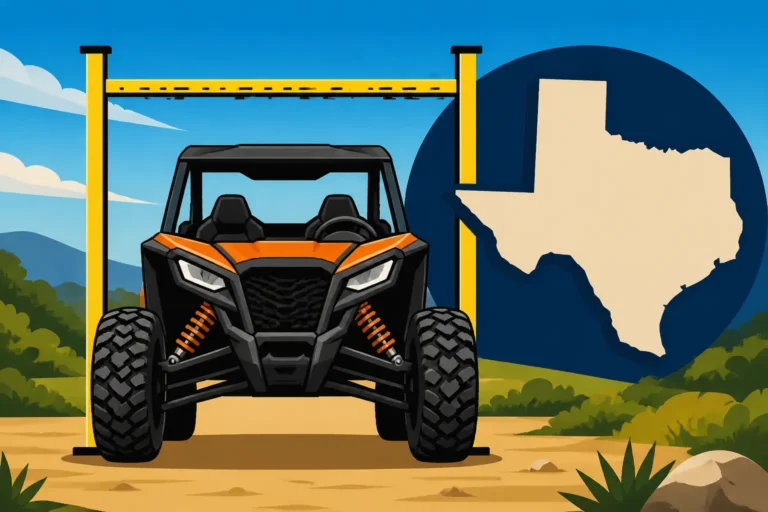
Vehicle width is one of the most important details to confirm before riding a national forest route. Some trail systems have limits that can rule out wider side-by-sides, even when those machines are otherwise capable of the terrain. Measure the machine at its widest point, including accessories that affect width, and compare that measurement with the current trail rules. The guide [Measuring 50 Inches Before You Go] explains why checking before the trip matters.
If you’re riding a UTV, do not rely on a friend’s older recollection of what was allowed. A model name alone does not tell you whether your specific machine, tires, wheel spacers, or installed accessories meet a route’s requirements. If there’s any uncertainty, ask the managing office before towing. Arriving at a trailhead only to discover that your vehicle cannot use the route is frustrating—and avoidable.
Your group’s riding experience matters, too. A beginner who is comfortable on a wide, easy path may find tight turns, roots, mud, or uneven terrain stressful. Talk through expectations before you leave the parking area: who will lead, where the group will regroup, and what the plan is if someone has a mechanical problem. onX Offroad may help your group follow a planned route, but everyone should understand the route and carry a backup plan rather than depending on one rider’s phone.
Treat wet-weather closures seriously
East Texas rain can turn a pleasant trail day into a slick, damaging ride. Forest trails may close when the soil is too wet, and closures are not merely a suggestion to look for a drier-looking stretch nearby. Riding around a barricade or leaving the designated route can damage the trail and create problems for other users. Check [When the Sam Houston Trail Shuts for Wet Soil] and [Texas Riding After a Storm] before setting out after rain.
If showers are in the forecast, check again close to departure. A trail that looked usable when you planned the trip may be closed by the time you arrive, or conditions may have changed enough that the ride is unsafe. Look for an official trail-status notice or contact the responsible office; don’t assume that a road into the forest is open just because it is passable.
Give yourself permission to change plans. If the forest trail is closed, postponing the ride is usually better than driving around looking for an unauthorized route. A second-choice destination only works if it is open, appropriate for your machine, and permits your group to ride. Keep a short list of alternatives and confirm each one before you load the trailer.
Get ready for a practical day trip
Bring the right gear and basic supplies
A day ride near Houston still calls for more preparation than a quick drive around a neighborhood. Pack helmets and protective gear, water, snacks, basic tools, a tire repair kit suitable for your machines, and a first-aid kit. Heat, dust, and mud can make a short ride harder than expected, especially when someone is new to off-road riding or a machine has been working slowly through rough terrain.
Have a plan for fuel and transportation, too. Know how much fuel your machines can use on the route you intend to ride, and avoid counting on a convenient nearby station unless you have checked. Secure machines carefully on the trailer, bring tie-downs suited to the load, and make sure your truck and trailer are ready for the roads and parking arrangements at the destination.
Keep important information accessible without relying on cell coverage: the trail map, the address or coordinates for your trailhead, emergency contacts, and any confirmation or permit details. Downloading a map can be useful, and onX Offroad can assist with route awareness, but it should complement official trail information and sound judgment—not replace them.
Decide whether camping makes sense
If the drive feels too long for a comfortable day trip, camping may make the outing more relaxed. But do not assume that camping is allowed at the riding trailhead or that a campsite is available when you arrive. Check the forest’s camping rules and local options separately from trail access. [Camping Near the Sam Houston Trail] is a useful starting point for planning.
For a family or a group with mixed schedules, an overnight stay can reduce the pressure to rush through the ride. It also gives you time to unload, check equipment, and get organized before hitting the trail. The tradeoff is more gear, more planning, and another set of rules to verify—especially around reservations, fires, waste, and where vehicles may be parked.
If you prefer a private park, ask whether it offers camping or nearby lodging and whether those arrangements need to be booked separately. Check the park’s own information before making the trip; facilities and policies can change. [Texas OHV Parks With Camping] can help you explore the broader question of overnight options.
Make a plan for your group
Agree on a pace that works for the least experienced rider. A group that splits up without a clear meeting point can lose time and create unnecessary worry, particularly if one machine develops a problem or someone misses a turn. Choose a leader and a sweep rider, set regroup points, and make sure everyone knows what to do if they become separated.
With children or newer riders, keep the first outing manageable. Explain how to stop, how to signal, and what areas of the trail are off-limits before the ride begins. Check that each person’s gear fits properly and that the machine is appropriate for the rider. A confident adult rider’s setup is not automatically a safe fit for a younger family member.
Finally, leave room in the schedule to ride responsibly. Don’t push on when the weather turns, a rider gets tired, or the trail is beyond the group’s skill level. For Houston-area riders, the best ride is not necessarily the one with the most miles; it is the one everyone can finish safely and legally.
Questions to settle before you tow out
Is the forest trail suitable for a side-by-side?
It depends on the machine and the current rules for the route. Do not assume that every UTV can use every OHV trail in the forest. Check the width limit, vehicle eligibility, and any route-specific restrictions before departure. If you are close to a limit, measure the machine as equipped and ask the managing office for clarification.
The same goes for modified machines. Wider tires, wheel spacers, bumpers, or other additions can affect whether a vehicle fits a restricted trail. A map app may show where a route goes, but it cannot make a prohibited machine eligible to ride there. Confirm the rule first, then choose a destination that matches your equipment.
What if the trail is closed when you arrive?
Follow the closure notice and do not ride around a barrier or create a new route. Check whether the managing office has posted an update or provided an alternate option. If no suitable legal alternative is available, turn the day into a rescheduled ride rather than risking damage, a citation, or a stranded group.
This is one reason to check conditions before leaving Houston and again shortly before setting off. A backup plan is helpful only if the alternative is open and allows your type of machine. Keep the contact and status information handy, and use official notices as the deciding source.
What is the simplest plan for a first visit?
For a first trip, keep the plan conservative: choose a clearly identified trailhead, confirm the vehicle rules, check trail status and permits, and carry a map you can use offline. If you’re unsure whether a machine is allowed, get an answer before towing rather than trying to resolve it in the parking area.
Then set a modest route and a return time. You can always plan a longer ride on a later visit once you understand the area, the trail conditions, and your group’s pace. A little preparation makes a Houston-area OHV day more enjoyable—and much less likely to be derailed by a closed trail, an unsuitable vehicle, or a missing permit.
Disclaimer
This article is for general informational purposes only and does not constitute professional advice. Laws, prices and regulations vary by location and change over time. Consult a qualified professional for guidance on your specific situation.