When the Sam Houston Trail Shuts for Wet Soil
A drive to the Sam Houston National Forest OHV trail can turn into a frustrating day if rain has softened the ground and the route is closed. Wet-soil restrictions protect the trail from deep ruts, erosion, and damage that can take time to repair. This guide explains how to check the trail’s status, plan around a closure, and avoid mistakes at the trailhead.
Why the Sam Houston trail closes after rain
Soft soil can suffer lasting trail damage
The Sam Houston National Forest OHV trail is a designated riding route, not simply a stretch of dirt road that can absorb unlimited traffic. When soil is saturated, tires can dig into it instead of rolling over a firm surface. A few passing machines may leave deep ruts, widen muddy sections, and push water and loose soil into places where it is difficult to manage.
That damage matters even when a trail looks rideable from the parking area. The entrance may be relatively firm while shaded, low-lying, or poorly drained sections farther along remain soft. A rider who sees a mostly dry trailhead can’t reliably tell what conditions are like across the full route.
The forest’s wet-weather closures are meant to prevent that kind of damage, rather than wait until the route is badly rutted. A closure can therefore remain in place after rain has stopped. The soil needs time to drain and the trail may need to be checked before riding resumes. For a wider explanation of this issue, see [Texas Trails Close When the Soil Is Wet].
A closure may affect the trail without closing the whole forest
A trail closure does not necessarily mean every part of the national forest is closed to visitors. It may apply specifically to the designated OHV route or to a particular section. That distinction can be confusing if you planned a day around riding and see other visitors using forest roads or enjoying non-motorized areas.
Don’t assume that an open gate, another vehicle on a nearby road, or a lack of standing water means the OHV trail is open. The official notice for the route is what matters. Likewise, don’t assume a trail closure automatically closes every other forest activity. Confirm the status and scope of the restriction before changing plans.
The [Sam Houston National Forest's 85-Mile OHV Trail] is a useful reference for understanding the riding area, but mileage or a route description does not tell you whether it is open on the day you plan to go. Conditions and access can change. Treat the trail’s current status as a separate piece of information to verify before you leave.
How to check whether the trail is open
Check official status shortly before you travel
Start with the U.S. Forest Service information for Sam Houston National Forest and look for current notices about the OHV trail. If the online information is unclear or does not address recent weather, contact the appropriate Forest Service office and ask specifically about the OHV trail’s operating status. A general statement that the forest is open may not answer whether the riding route is open.
Check again close to departure, especially if rain is forecast or has recently passed through the area. A status you saw several days earlier may no longer reflect conditions. If you’re driving from Houston or another distant starting point, verify before packing the trailer and setting out, rather than relying on a report saved from a previous trip.
Some riders use trail apps such as onX Offroad to plan routes and keep maps handy. That can help with orientation, but an app map should not be treated as confirmation that a Forest Service trail is open. Use official land-manager notices for closure decisions. You can also review [Calling the Trail Status Line] and [Texas Trail Closures to Check First] for a practical approach to checking before a ride.
Read the notice carefully and confirm what it covers
When you find a closure notice, look for its location, effective period, and any stated conditions for reopening. It may identify the OHV trail specifically, name a section, or explain that access is restricted until conditions improve. If the wording is broad or ambiguous, ask the Forest Service office rather than trying to interpret it from a map.
Pay attention to whether the notice applies to motorized use, access to a trailhead, or a wider area. These are not always the same thing. A road to a trailhead might be passable while the trail itself remains closed, or access to the area might be restricted separately. Confirming the details helps avoid an unplanned trip and prevents accidentally entering a route that remains closed.
| What to check | Why it matters | Best next step |
|---|---|---|
| Trail-specific status | A forest-wide notice may not explain the OHV route’s condition | Look for a notice naming the OHV trail or ask the Forest Service |
| Date and timing | A previous status may not reflect recent rain or reopening | Check again shortly before departure |
| Closure boundaries | Restrictions may apply to a section, trailhead, or broader area | Read the full notice and clarify any uncertainty |
| Riding requirements | An open trail may still have separate access requirements | Review the forest’s riding rules and permit information |
| Map details | A mapped route does not prove that it is open | Use maps for navigation and official notices for status |
The [Texas Rules for Riding a National Forest Trail] and [Texas National Forest Permits] are useful topics to review alongside trail status. Being prepared for a legal ride does not override a temporary closure, but it can prevent other avoidable problems once the route is open.
What to do when wet soil closes the trail
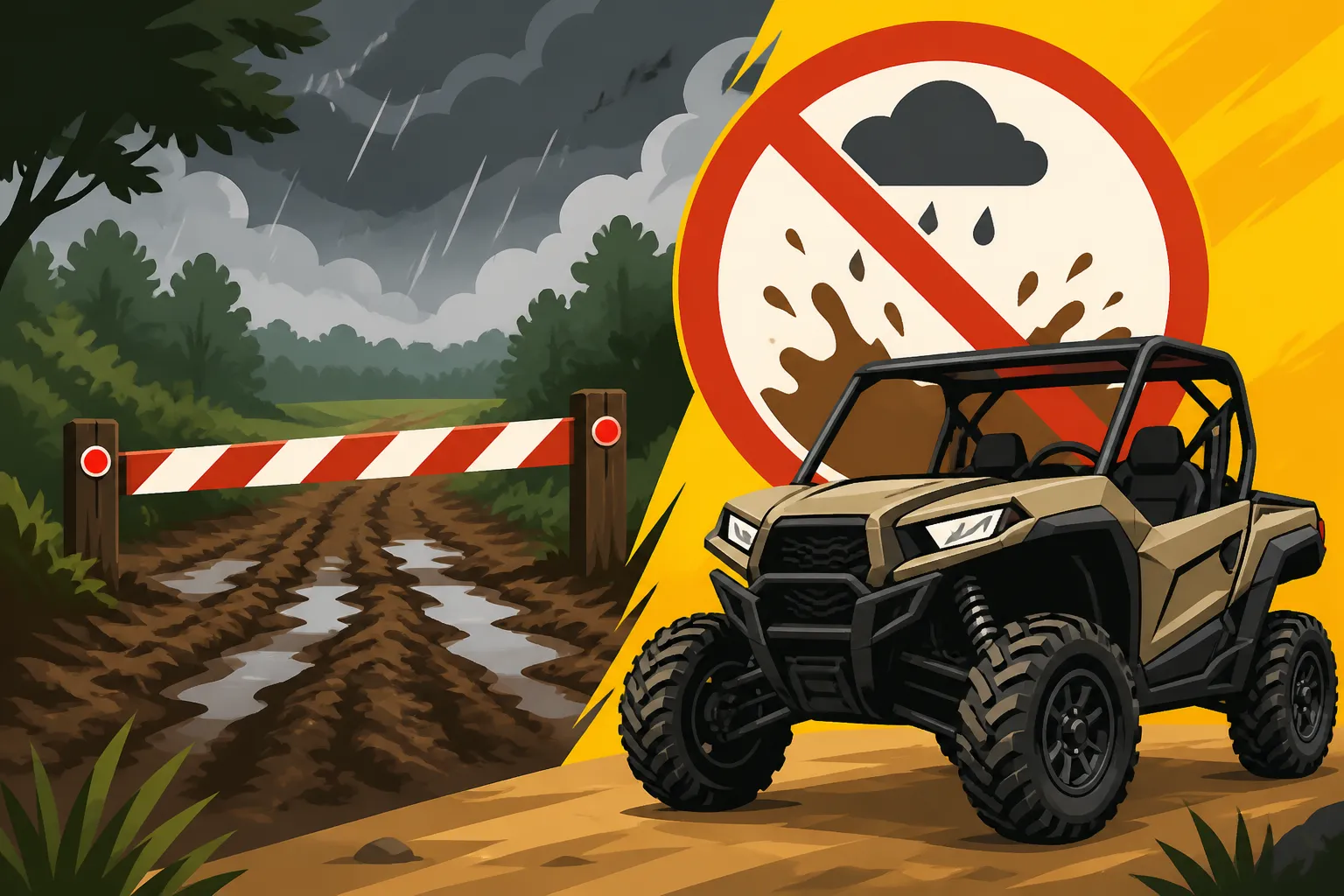
Don’t ride around a gate or closure notice
It can be tempting to look for an alternate entrance when you’ve already made the drive, especially if the closure seems limited or the ground near the gate looks firm. Don’t do it. A marked barrier, closure notice, or staff instruction means the route is not available for riding under those conditions. Going around a barrier can damage the trail, create a safety problem, and put you in conflict with land-management rules.
The same applies to riding just a short distance to “see how it looks.” Conditions can change quickly from a firm, exposed section to a soft, shaded one. Entering the route to test it defeats the purpose of the closure and may leave you stuck or cause damage before you realize the soil is too wet.
If you arrive and discover a closure that you could not confirm beforehand, stop and follow the posted directions. Don’t use an unmarked track, forest road, or neighboring property as a substitute unless that route is explicitly open to your machine and riding is permitted there. A GPS line or an app route is not permission to ride.
Turn the day into a backup plan
A closure does not have to mean the whole outing is wasted. If you have enough time, consider a different activity that is open and permitted in the area, or reschedule your ride for a time when the trail has reopened. If you are traveling with family or friends, it helps to decide on a backup plan before leaving home so that the group is not making rushed decisions at the trailhead.
Before choosing another riding area, check that location’s conditions and access rules independently. Recent rain can affect multiple trails in the region, and a park or forest may have its own closure process. Do not assume another site is open just because the Sam Houston trail is closed. [Texas OHV Parks Near Houston] can help you explore other riding-area options, but confirm each destination’s current status directly before you go.
If you plan to try again later, keep the Forest Service’s contact information and official status page easy to find. A saved route in onX Offroad can help with navigation on an authorized ride, while a separate reminder to recheck official conditions helps prevent confusing a mapped route with an open one. That small distinction is especially useful when you’re planning a trip around weather that can change between packing up and arriving.
Planning a return visit after the trail reopens
Prepare your machine and gear for the route
Once the trail is confirmed open, review the requirements that apply to your machine and the riding area. Check that your ATV or UTV is suitable for the route, that required documents or permits are ready, and that your safety gear is in good condition. If the machine is wide, review the trail’s width restrictions before loading it. [Measuring 50 Inches Before You Go] can help you understand why width checks matter on some public-land routes.
A wet-weather closure can also be a good reason to inspect tires, brakes, steering, lights, and recovery equipment before the next ride. Mud and standing water can conceal holes or soft shoulders, even after a route reopens. Carry basic recovery gear appropriate to your machine, tell someone where you’re riding, and avoid taking unnecessary risks just because the trail is technically open.
If you use onX Offroad, download or prepare the map information you need before losing reliable service. Keep the official closure information separate from your navigation notes: the map helps you understand where you are, while the land manager determines whether the route is open. That habit makes it easier to follow the designated trail without mistaking a recorded track for permission to enter a closed area.
Recheck conditions on the morning of the ride
A reopening notice is important, but so is checking for any newer update before you drive. Rain may have returned, a trail section may have changed status, or access conditions may differ from what you expected. Confirm the route and trailhead information, then make sure everyone in the group knows the plan and understands that a closure must be respected even if the trail appears passable.
For a first visit or a return after a long break, review [Riding the Sam Houston Trail] and [Driving From Houston to the New Waverly Trailhead]. Use them as planning references, not as substitutes for current official notices. Allow extra time for loading, unloading, and checking the entrance signs. If you arrive to find the trail closed, follow the notice and switch to your backup plan rather than trying to salvage the ride by entering another route.
Wet-soil closures can be inconvenient, particularly when you have organized a group or traveled a long way. But waiting for the trail to recover helps protect the riding experience for everyone. A quick status check, a flexible plan, and respect for posted restrictions are the most reliable ways to make a future trip to the Sam Houston trail worthwhile.
Disclaimer
This article is for general informational purposes only and does not constitute professional advice. Laws, prices and regulations vary by location and change over time. Consult a qualified professional for guidance on your specific situation.