The Lake Meredith Decal That Changes Color Each Year
A trip to Rosita Flats can unravel before the first ride if your vehicle has last year’s Lake Meredith decal—or no permit at all. The decal changes color each year, helping park staff identify whether an off-highway vehicle has the required permit for that year. This guide explains what the color change means, how to prepare, and what to check before riding.
What the Lake Meredith decal is for
It identifies a permitted vehicle for the year
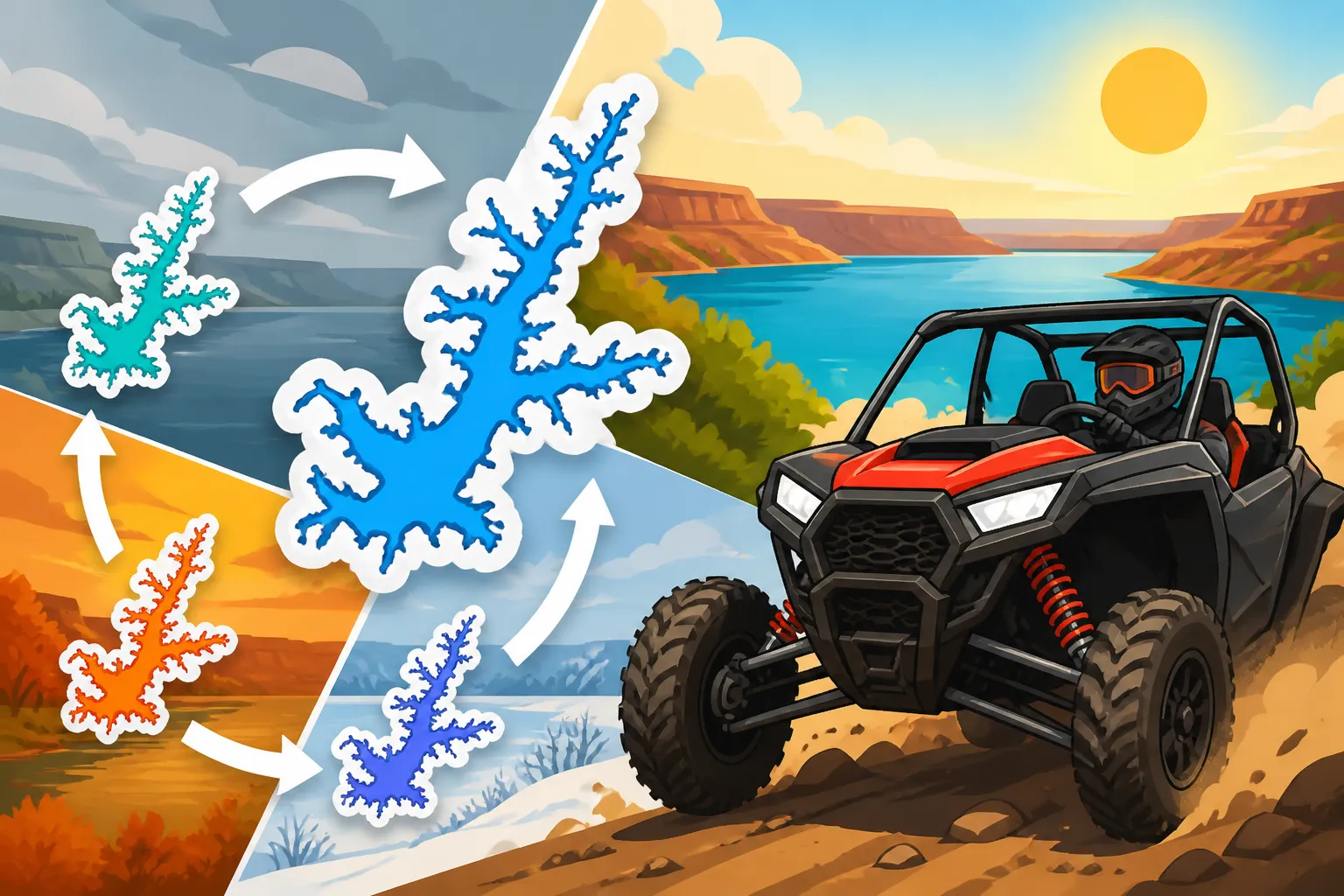
Lake Meredith National Recreation Area has off-highway vehicle riding areas, including Rosita Flats. The park’s OHV decal is a site-specific permit: it helps show that a vehicle has completed the park’s required process for riding there. Its color changes from year to year so staff can quickly distinguish decals from different permit years.
That color change matters even if your machine looks ready to ride and you still have a decal attached from a previous visit. An old sticker may be a reminder of a past trip, but it is not proof that your vehicle is covered for the new permit year. Before loading up, check the park’s current instructions for the required decal and how to obtain it.
This permit is not automatically interchangeable with a Texas OHV decal. The stickers may both relate to off-highway riding, but they are issued under different rules and may serve different purposes. Don’t assume that having one means you have satisfied every requirement at the other. For a broader explanation of the state sticker, see [The Texas OHV Decal Explained].
Why the color changes annually
A new color makes it easier for park staff to spot a decal from the correct year during routine checks. It also helps riders notice at a glance that a sticker from an earlier season may need to be replaced. This is especially useful when a family brings several machines or a group arrives together and everyone is trying to get unloaded and moving.
The color itself is not a substitute for a valid permit. A rider should follow the park’s instructions for the applicable year rather than relying on a guess based on a decal’s appearance. If you’re uncertain whether a sticker is current, ask the park before riding instead of assuming that a familiar color or an intact old decal is acceptable.
How it differs from other riding credentials
The Lake Meredith decal is not the same thing as a rider safety certificate, a driver’s license, or a vehicle title. Those documents answer different questions. A title concerns ownership, while a safety certificate may apply to a rider under certain rules or at particular riding locations. A site permit concerns the conditions for using a specific area.
Keeping those requirements separate makes trip planning much less confusing. If you ride at more than one Texas location, you may encounter different combinations of park permits, state decals, fees, and safety rules. Review the rules for each destination rather than assuming that one sticker or credential covers every trail. You can also read [Texas Rules for Riding Public Land] for background on how requirements vary by land manager.
Getting ready to ride at Lake Meredith
Check the park’s instructions before you leave
Before the trailer is hitched, check Lake Meredith’s official visitor information for its current OHV permit instructions. Confirm what the park requires for the machines you’re bringing, where the decal can be obtained, and how it must be displayed. If the rules or process aren’t clear, contact the park directly before traveling.
This small check can save a frustrating detour. Imagine driving in from Amarillo with two ATVs and a side-by-side, only to discover that the family has an old decal on one machine and no permit for the others. Sorting out the requirements in advance is easier than trying to resolve a paperwork question at the riding area.
It’s also worth checking whether the route you plan to use is open and appropriate for your machine. Conditions can change after rain, and access or trail information can be updated by the land manager. Tools such as onX Offroad can help you review routes and organize a ride plan, but use official park information for permit requirements and closures.
Make sure each vehicle is accounted for
If you’re bringing several machines, write down what each person is taking and check the permit status vehicle by vehicle. Don’t treat a group’s paperwork as one shared credential unless the park’s instructions specifically say that is allowed. A quick list—adult’s ATV, child’s youth quad, side-by-side—can prevent a vehicle from being overlooked during the pre-trip scramble.
Before departure, inspect each machine for an old decal and determine whether it needs the new one. Follow the park’s direction for removing or covering an outdated sticker, if applicable, and place the current decal where the park instructs. Avoid putting it somewhere that is difficult to see, likely to peel off, or hidden by cargo or accessories.
| Before the trip | What to verify | Why it matters |
|---|---|---|
| Permit year | The park’s current instructions and decal color | A previous year’s decal may not satisfy the current requirement |
| Every machine | Which vehicles need a permit | A group may bring several separately permitted machines |
| Sticker placement | Where and how the decal must be displayed | Staff need to be able to identify it |
| Riding area | Whether the intended area is open and suitable | Conditions and access can change |
| Other credentials | Any additional land or rider requirements | A Lake Meredith decal may not replace other applicable requirements |
Keep your plan flexible
Even with the permit sorted out, a ride can be affected by weather, trail conditions, or access changes. Build in time to check conditions before you head to the riding area, and have a backup plan if your preferred route is closed. The Panhandle’s open terrain can make a ride feel very different from a wooded trail, so check the route and conditions rather than judging the day by the forecast alone.
For navigation, save the route or area details before leaving a reliable service area. An app such as onX Offroad can be useful for reviewing mapped routes and keeping a ride plan organized, but maps should not override posted signs or park directions. Carry a charged phone, and let someone know where you expect to ride and when you plan to return.
Using the decal correctly
Display it as the park directs
Follow the park’s placement instructions exactly. A decal that is folded around a sharp edge, obscured by a rack, or stuck to a surface that gets scraped during loading may be hard to read or may not stay attached. Clean and dry the recommended surface before applying the sticker, and press it down securely.
If the decal is damaged, missing, or difficult to read, don’t try to make an old sticker look current or rely on a photo of one. Ask the park what to do. Keeping the permit instructions or confirmation with your trip paperwork can also help if someone in your group needs to check the details later.
Treat an old decal as a warning to check, not as coverage
An older decal is an easy thing to miss, particularly if a machine is stored between riding seasons. Add the sticker check to the same routine as checking tire pressure, loading helmets, and securing the ramp. A bright reminder on your packing list—“verify Lake Meredith decal for each machine”—can prevent a last-minute problem.
This is also a good time to inspect the vehicle itself. Make sure the machine is in safe working order, secure it properly for transport, and bring the safety equipment required by the park. For a broader overview of the local riding area, see [Riding the Rosita Flats OHV Area] and [Flags Required on Every Quad at Meredith].
Don’t confuse a park permit with a Texas OHV decal
The name “OHV decal” can be confusing because different agencies use stickers or permits for different reasons. A Lake Meredith permit is associated with the park’s rules for riding there. Texas’s OHV decal relates to state requirements for certain public riding lands. Before a trip that includes multiple destinations, confirm what each place requires.
If you’re riding somewhere else in Texas, check that location’s requirements independently. A decal or permit that works for one park may not apply at another. The same goes for federal land, state land, and privately operated riding parks: each land manager can have its own system. For more context, see [Does an OHV Decal Cover the Forest Day-Use Fee?] and [Where a Texas OHV Decal Is Required].
Common planning mistakes to avoid
Assuming last year’s sticker is still valid
The most direct mistake is treating an old sticker as good enough because it is still attached and readable. The annual color change is specifically a cue to check the permit year, not a decorative update. When the park changes its decal, check the required process before the next ride.
If you bought a used machine, inspect it for any old Lake Meredith decal, but don’t count that sticker as proof that the current permit requirement has been met. Ask the seller what paperwork came with the vehicle, then verify the riding requirements with the park yourself. Ownership paperwork and riding permits are separate matters; [Buying a Used ATV in Texas] covers useful checks for a private purchase.
Assuming one machine’s decal covers the group
A family might have one machine with a fresh sticker and assume the whole group is ready. That can leave another ATV or side-by-side without the required permit. Make a separate check for each vehicle and confirm the park’s rules for the types of machines you plan to bring.
This is especially useful when friends join at the last minute or someone borrows a machine. Keep a simple note with the vehicle names or descriptions and mark each one as checked. The extra minute is easier than discovering a missing permit after a long drive.
Relying on old trip notes or third-party maps
A saved map or a friend’s account of a previous visit can help you get oriented, but neither guarantees that the decal process or access conditions are unchanged. Use onX Offroad or another mapping tool to help plan your route, then verify current permit and closure information with the park. If someone in your group has visited before, treat their advice as a helpful starting point rather than the final word.
For future trips, record the date you checked the park’s instructions and note where you obtained the decal. That way, next time you’re preparing the machine, you’ll know what to verify instead of relying on memory. You can also compare the broader regional options in [Texas OHV Parks by Region] and [Texas Parks With Overnight Camping] if you’re planning a longer trip.
Disclaimer
This article is for general informational purposes only and does not constitute professional advice. Laws, prices and regulations vary by location and change over time. Consult a qualified professional for guidance on your specific situation.