Carrying Water in Texas Summer
A summer ride in Texas can turn a fun trail day into a stressful one when the water runs low, the route takes longer than expected, or the group is riding far from a place to refill. This guide helps you plan how much drinking water to carry, where to keep it, and what to do when the heat starts affecting a rider.
Plan water around the ride, not just the forecast
Account for heat, effort, and time outdoors
There is no one water quantity that works for every Texas ride. A short, shaded outing near a staging area is different from several hours on exposed trails, where you are wearing protective gear, working the machine over rough ground, or stopping to help someone else. Your pace, body size, health, clothing, humidity, and access to shade all affect how much fluid you may need.
Think about the whole day, not only the time the machines are moving. Riders often forget that loading, unloading, airing down, gearing up, waiting at a trail junction, and helping with a stuck vehicle all happen in the heat too. A ride planned for a few hours can stretch when the group takes a wrong turn or encounters a mechanical problem.
Before setting out, check the forecast and consider the route’s exposure. An open, dry stretch near Lake Meredith or a sunny section of Hill Country trail can feel very different from a wooded East Texas route. Even when the trail itself is shaded, the staging area and parking lot may have little cover. For broader seasonal planning, see Texas Riding Seasons and Heat and Heat Risk on a Summer Ride.
Decide what “enough” means for your group
Estimate the time you expect to be away from a reliable refill point, then add a reserve for delays. The reserve matters: a machine can lose a belt, a rider can feel unwell, or a route can take longer than anticipated. Do not plan around the most optimistic version of the day.
For example, if your group expects a morning ride but could be out longer because of trail conditions, bring enough for the longer possibility rather than assuming everyone can refill at the truck on schedule. Children, new riders, and anyone who is not used to hot-weather riding may need extra attention and frequent opportunities to drink. Ask each person to carry water they can reach themselves instead of relying on one shared cooler.
A simple planning table can help you identify what to pack. It is a starting point, not a universal prescription; adjust it to your route, the people riding, and the conditions.
| Ride situation | Water plan | Extra consideration |
|---|---|---|
| Short ride near the staging area | Carry water on the machine or on your person | Keep an easy refill accessible at the vehicle |
| Several hours on exposed trails | Carry a personal supply plus group reserve | Build in planned stops and allow for delays |
| Remote route with limited access | Bring more than the expected need and identify backup options | Share the route plan and return time with someone |
| Family ride with children | Give each rider their own reachable bottle or hydration pack | Check in regularly rather than waiting for a child to ask |
Start hydrated and make drinking part of the routine
Do not wait until someone feels parched to think about water. Begin the day with normal hydration, bring water within easy reach, and take regular drink breaks. A rider focused on steering, terrain, or keeping up with the group may forget to drink until they already feel worn down.
Make hydration stops practical. At a safe place off the trail, pause in shade when available, take off or loosen gear as conditions allow, and check how everyone is doing. A quick group check can catch problems early: ask whether anyone feels unusually tired, dizzy, nauseated, weak, or confused. These symptoms deserve attention, not teasing or pressure to push through.
Water is important, but it is not a guarantee against heat illness. Rest, shade, pacing, suitable clothing, and the willingness to shorten a ride all matter. If anyone has a health condition or takes medication that can affect heat tolerance or fluid needs, it is sensible to ask a healthcare professional for individual guidance before riding.
Carry water so you can actually use it
Choose bottles, hydration packs, or a combination
A hydration pack can make frequent sipping easier because the hose is close at hand, but it needs to fit comfortably under or over your protective gear. Check that the mouthpiece stays clean and that the pack does not interfere with a helmet, shoulder protection, or movement. Before a trip, fill it at home, inspect for leaks, and make sure the hose delivers water properly.
Bottles are simple to refill and easy to divide among riders. They can be secured in a purpose-built holder or packed in a way that prevents them from bouncing loose. Avoid placing loose bottles where they could roll under controls, catch on moving parts, or become a hazard if the machine tips.
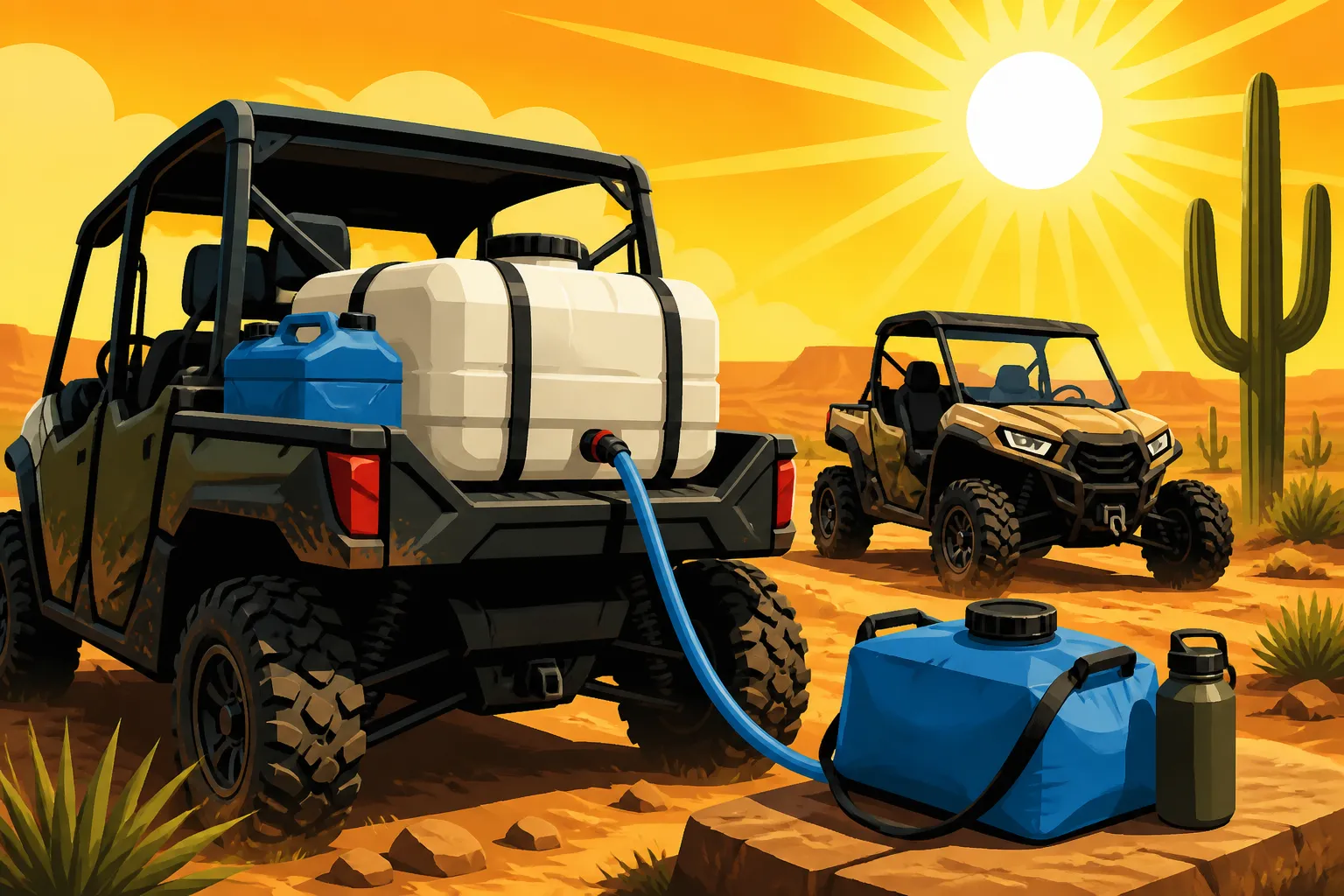
For longer outings, a combination can be useful: a small supply on the rider for convenient access and additional sealed water secured to the ATV or UTV. Keep the reserve protected from dust and secured against rough terrain. A water container that is difficult to reach or buried under recovery gear may not help much during a hot-weather stop.
Keep drinking water separate from machine supplies
It is easy to confuse water carried for drinking with water or fluids intended for vehicle maintenance. Label containers clearly and keep drinking water sealed. Do not use a container that has held fuel, coolant, oil, or other shop fluids for drinking water, even if it has been rinsed.
Secure every container so it cannot shift into a wheel area, exhaust, suspension, or other moving or hot parts. On a UTV, choose a storage location that does not block seat belts, visibility, or access to essential controls. On a quad, keep the load balanced and avoid adding bulky items that affect handling.
If you are carrying a larger reserve in a support vehicle, leave it in a stable, shaded spot when possible. Do not assume water left in a hot vehicle will remain cool. It may still be drinkable if the container is intact and the water is safe, but hot water can be unpleasant to drink and may discourage people from keeping up with their routine. An insulated container can help, but it should not replace carrying water on the ride itself.
Pack a reserve for the person who forgot
In a group, at least one rider will sometimes discover that a bottle is empty earlier than expected. Carrying a modest shared reserve can help, but it should not become the main plan for everyone. Each rider should have a personal supply, and the group should know where the backup is stored.
This matters particularly when riding with children or guests who are unfamiliar with the route. Make sure they can reach their own water without needing to stop the entire group or ask someone to unpack a cargo box. Before leaving the staging area, confirm that everyone has water—not just that the group has a cooler somewhere.
Route planning also helps prevent avoidable delays. Tools such as onX Offroad can help riders review routes and mark useful waypoints before leaving, but a digital map is only one part of the plan. Download or save the information you need before heading into an area where service may be limited, and carry a backup navigation option if the route warrants it. For more context about planning around coverage, see Texas Riding Areas With Cell Signal.
Build water stops into the route
Choose a pace that leaves room for breaks
Trying to ride at the fastest pace the group can manage is a poor fit for hot conditions. A slower pace can reduce strain and make it easier to notice when someone is falling behind or acting differently. Set expectations before the ride: taking a break is normal, and nobody needs to prove they can endure the heat.
Plan stops at recognizable places where the group can safely pull off the trail. Avoid stopping where visibility is poor, where other riders may not see you, or where the machines block the route. If you are using a map app, onX Offroad can be useful for noting intended stops and route changes in advance. Do not let checking a screen distract the driver while the machine is moving.
A practical plan includes a turnaround point and a latest return time. If the group is running behind, shorten the route rather than skipping every break to “make up” time. This is especially helpful on a first visit to an unfamiliar park, where trail intersections and surface conditions may slow progress. Texas Trail Difficulty by Park can help you think through how route difficulty affects time and effort.
Treat trail conditions as part of the hydration plan
Heat is not the only factor that can extend a ride. Mud, loose sand, rocks, dust, and recent rain can all affect pace. A trail that looks straightforward on a map may take longer when the surface is soft, rutted, or difficult for a new rider. Check the trail status and local rules before you go, and be prepared to change plans if conditions are unsafe.
After rain, some routes may be muddy or closed to protect the trail. Riding through a closure or pushing into difficult conditions can add unnecessary effort and delay. Give the group permission to turn back. For related planning, see Texas Riding After a Storm and Texas Trails After Heavy Rain.
At well-known destinations such as Barnwell Mountain Recreation Area or Hidden Falls Adventure Park, check the facility’s current rules and available amenities before departure. Do not assume there is a refill point on the route simply because there is one near the entrance or a campground. If you are comparing destinations, Texas OHV Parks With Camping may help you think through whether an overnight base makes your outing easier to manage.
Plan for weak phone service and a delayed return
Cell coverage can be inconsistent in remote riding areas. Share your route, the names of the riders, and your expected return time with someone who is not on the ride. If the group changes its plan significantly, update that person when possible. Carry a charged phone, but do not rely on it as your only way to navigate or summon help.
Use onX Offroad or another map tool to review your intended route before the ride, identify junctions, and save relevant map information for offline use when available. Confirm that everyone in the group understands the plan; a map on one person’s phone does not help if that person becomes separated or cannot access it.
Keep the reserve water and basic emergency supplies organized so another rider can find them. A simple pre-ride check—water, first-aid supplies, charged devices, route, and return time—takes little effort compared with trying to solve a problem after the group is already hot, tired, and off course.
Recognize heat trouble and respond early
Notice changes before they become an emergency
Heat-related illness can develop while someone is still trying to keep up with the ride. Warning signs may include unusual weakness or tiredness, headache, dizziness, nausea, muscle cramps, heavy sweating, or a change in coordination or behavior. A rider who becomes quiet, confused, clumsy, or unusually irritable may need immediate attention.
Do not treat symptoms as a motivation problem. Stop the ride, move the person to a cooler place, remove unnecessary outer gear, and begin cooling them. Offer small sips of water only if they are alert and able to swallow safely. Do not force fluids on someone who is confused, vomiting, or unable to drink safely.
If symptoms are severe, getting worse, or include confusion, fainting, seizure, or loss of consciousness, treat it as an emergency. Call 911, provide the location as clearly as possible, and follow the dispatcher’s instructions. Do not leave the person alone or send them riding back by themselves.
Stop the ride instead of trying to finish the loop
A common mistake is to assume a rider can rest briefly and then continue. If someone has signs of heat illness, ending or changing the ride may be the safest choice. Move the affected person to shade or a cooler area, start cooling them, and arrange help or transport as needed. A ride is never worth risking a person’s health to complete the planned route.
The rest of the group should stay together and avoid creating a second problem. If one person accompanies the affected rider, make sure the remaining riders have a clear, safe plan and know how to contact help. If the group is far from the staging area, share the route and location details with emergency responders rather than assuming a phone map will be enough.
When in doubt, seek emergency assistance. Water alone does not treat a serious heat emergency, and continuing to ride can make the situation worse. Before your next outing, review Texas Riding in Summer Heat and Riding Early to Beat the Heat as part of your broader hot-weather plan.
Disclaimer
This article is for general informational purposes only and does not constitute professional advice. Laws, prices and regulations vary by location and change over time. Consult a qualified professional for guidance on your specific situation.