Can You Make a UTV Street Legal in Texas?
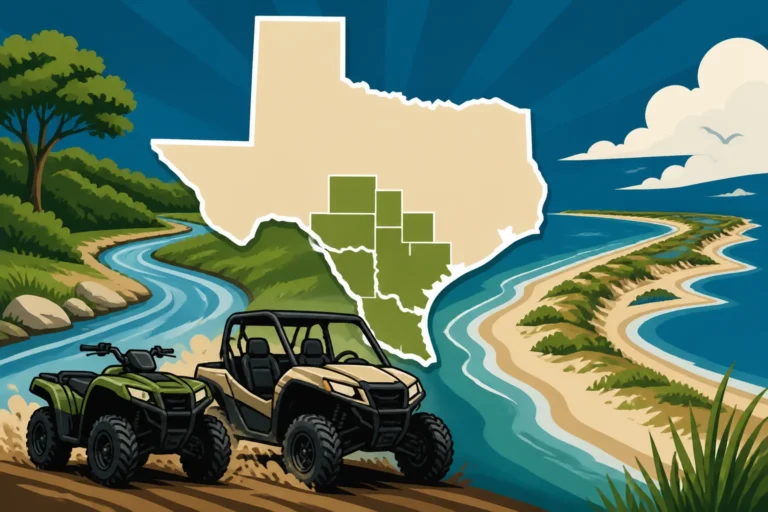
It's a common dream for UTV owners in Texas: imagining the convenience of zipping down a paved road for a quick errand, connecting trails, or just showing off your machine. But here's the tough truth that many discover the hard way: Texas has some of the strictest laws in the nation when it comes to making your UTV street legal. It’s not just a matter of adding a few lights; the legal framework is built in a way that often leaves riders scratching their heads and feeling frustrated. This guide will dive deep into why this is the case, what the law actually says, and what you can and cannot do with your UTV on Texas roads.
The Harsh Reality: Why Texas Won't Fully Embrace Street-Legal UTVs
Many UTV owners come from other states or see online videos of "street-legal" builds and naturally assume Texas has a similar pathway. The disappointment can be real when you dig into the details and find that Texas law largely keeps your beloved side-by-side off the pavement, at least for general use. It’s not because the state hates fun; it’s rooted in how UTVs are classified, or rather, not classified, under the motor vehicle code.
The "Off-Highway Vehicle" Definition
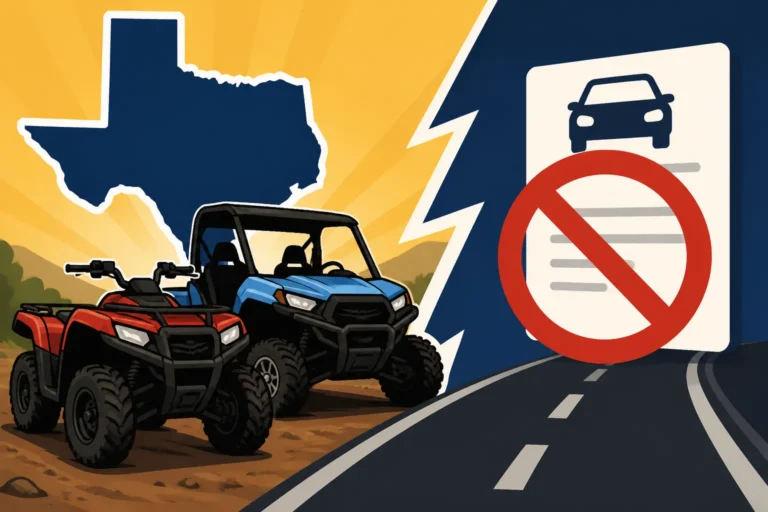
In Texas, a UTV, much like an ATV, is defined as an "off-highway vehicle" (OHV). This isn't just a casual term; it's a specific legal classification found in the Texas Transportation Code. An OHV is designed primarily for off-highway use, and this designation has major implications for street legality. The law essentially says, "If it's an OHV, it's not a street-legal vehicle." This fundamental distinction means that no matter how many mirrors, turn signals, or even a windshield wiper you bolt onto your UTV, it doesn't change its core legal identity as an OHV. [What Texas Counts as an Off-Highway Vehicle] clarifies these definitions.
Consider a typical scenario: you've just bought a brand-new UTV, perhaps a rugged Polaris Ranger or a sporty Can-Am Maverick, and you want to drive it a mile down the road to your buddy's house. You might think, "I'll just add some lights, a horn, and get a license plate." But Texas doesn't offer a traditional "registration" for OHVs that would permit general road use. While you do get a title for your UTV—like [Titling an ATV in Texas] explains—it's an off-highway use only title, and that distinction is paramount. It’s a title for ownership, not for roadworthiness. The state doesn't provide a mechanism to convert an OHV into a street-legal motor vehicle, unlike some other states that might have special "dirt bike conversion" or "UTV street legal" processes. This lack of a conversion path is the biggest hurdle.
Why Registration Is Not Available for OHVs
This is where the rubber meets the road, or rather, where it doesn't. For a vehicle to be truly "street legal" in Texas, it generally needs to be classified as a "motor vehicle" and properly registered with the state, receiving standard license plates. The Texas Transportation Code explicitly excludes OHVs from the definition of a "motor vehicle" for registration purposes. This means there's no path to get that traditional registration and plate that would allow you to drive freely on public streets. [Why Registration Is Not Available in Texas] details this issue.
Imagine you pull up to your county tax office, ready to get your UTV registered. The clerk, likely a seasoned veteran, will politely explain that while you can get an OHV title and an optional OHV license plate, neither of these makes your UTV street legal. The "plate" you can get is not a registration plate for general road use; it's more of an identification plate that primarily signifies that the vehicle has been titled and that a small fee has been paid for OHV-related purposes, often related to public land access. This OHV plate explicitly states "Off-Highway Use Only." [The Off-Highway Use Only Remark on a Texas Title] isn't just a suggestion; it's a legal stamp reinforcing the machine's intended purpose. You simply cannot legally drive it around town like you would a car or truck, no matter how much you wish you could.
The "Exceptions" That Aren't Really Street Legal Solutions
While Texas law largely prohibits UTVs from public roads, there are several narrowly defined exceptions where you might see an OHV on a road. These are often misunderstood, leading owners to believe their UTV can be street legal if they just meet one of these conditions. The crucial point is that these are exceptions to the prohibition, not pathways to general street legality. They come with very specific restrictions that prevent broad use.
Agricultural and Timber Operations
One of the most common reasons you'll see a UTV on a public road in rural Texas is for agricultural or timber operations. If your UTV is being used directly for farming, ranching, or timber harvesting, the law allows for limited road use. This isn't a free pass, however. The machine must be used for a legitimate agricultural or timber purpose, such as hauling feed, checking fences, moving equipment, or working land. This doesn't mean you can drive your UTV to the grocery store after checking your cows. The trip must originate from and terminate at a location that is part of the agricultural or timber operation. [Texas Agricultural Exemption for ATVs on Roads] goes deeper into this.
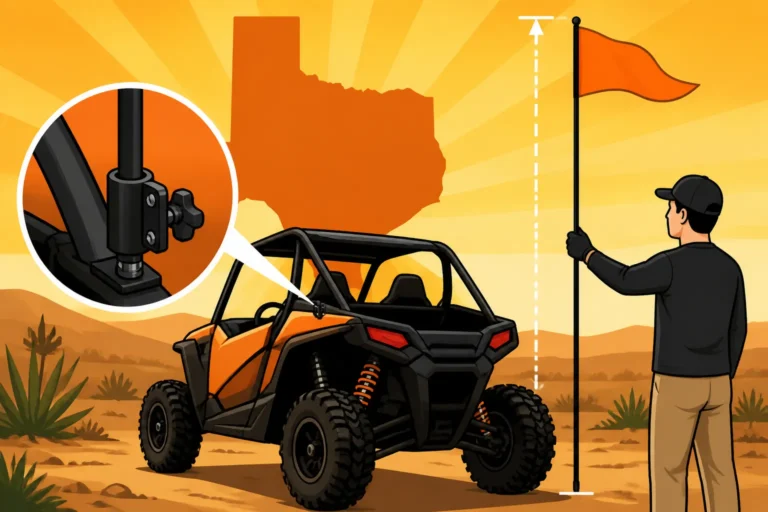
For example, a rancher driving their UTV from one pasture across a county road to another pasture to check on livestock would likely fall under this exception. However, if that same rancher decided to take the UTV into town for lunch, that would not qualify. The law also requires certain safety equipment for these limited road excursions, such as a fluorescent orange flag at least six feet above the ground, and headlights and taillights even during daylight hours. And critically, even with this exemption, the UTV still does not become a "street-legal" vehicle; it's simply allowed specific, temporary road access for specific work-related tasks.
Master Planned Communities and Special Ordinances
Another area of confusion stems from master-planned communities or certain small towns that appear to allow UTVs on their streets. Texas law does provide a narrow window for specific types of communities or local governments to permit the use of OHVs on public streets. For master-planned communities, this is usually tied to uniform covenants and a recorded plat that designate streets for multi-use. However, even in these unique areas, there are often strict limitations, such as speed restrictions, daylight-only operation, and specific equipment requirements. [Texas Rules for Riding in a Master Planned Community] explores this in detail.
It's vital to understand that a city or county generally cannot unilaterally declare all UTVs street legal on all its roads. The state law is quite clear. There are very specific conditions that must be met, often involving county populations under a certain threshold or proximity to specific natural features like barrier islands in Red River or Guadalupe River counties. Even in these rare instances, the local ordinance will lay out strict boundaries. A UTV allowed on the streets of a particular master-planned community near Houston, for instance, cannot then legally drive on a state highway just outside that community. It’s akin to a golf cart being allowed on certain roads within a golf course community; it doesn't make it a general road vehicle.
Crossing a Road or Riding 35 MPH or Less
Texas law does permit an OHV to cross a public road or highway, but again, this is not about making your UTV street legal for travel. This exception allows riders to get from one section of private land to another when a public road intervenes. The crossing must be made as directly and safely as possible, at a right angle to the road, and only after stopping and yielding to all traffic. [Texas Rules for Getting Across a Road] outlines the precise requirements. This is for quick, necessary transit, not cruising.
There's also a provision that allows OHVs to operate on public roads with a posted speed limit of 35 miles per hour or less, but only under very specific conditions. These conditions typically tie back to agricultural use, utility operations, or municipal services. You cannot simply decide to drive your UTV on any 35 mph road in Texas for leisure. The intent is critical. If a utility worker is using a UTV to access power lines that run alongside a county road with a 30 mph limit, that may be permissible. If you're using the same UTV to go pick up groceries, it's not. This nuance is often missed and can lead to tickets. [Texas Rules for Riding on a 35 mph Road] clarifies these strictures.
Here's a quick comparison of these "exceptions" and what they don't permit:
| Exception Type | What it Allows (Limited) | What it DOES NOT Allow (General) |
|---|---|---|
| Agricultural/Timber Use | Short-distance travel for farm/timber work, crossing roads. | Commuting, personal errands, recreational riding on public roads. |
| Master Planned Communities | Use on designated private/community roads as per covenants. | Riding on state highways, major city streets, or outside the community. |
| Crossing Roads | Direct, perpendicular crossing of a road to reach another property. | Traveling along a road, cruising, or using it as a general thoroughfare. |
| 35 MPH or Less Roads (Specific) | Specific work-related travel (ag, utility, municipal) on low-speed roads. | Leisure riding, general transportation, or non-work related travel. |
Equipment Changes: What Matters and What Doesn't
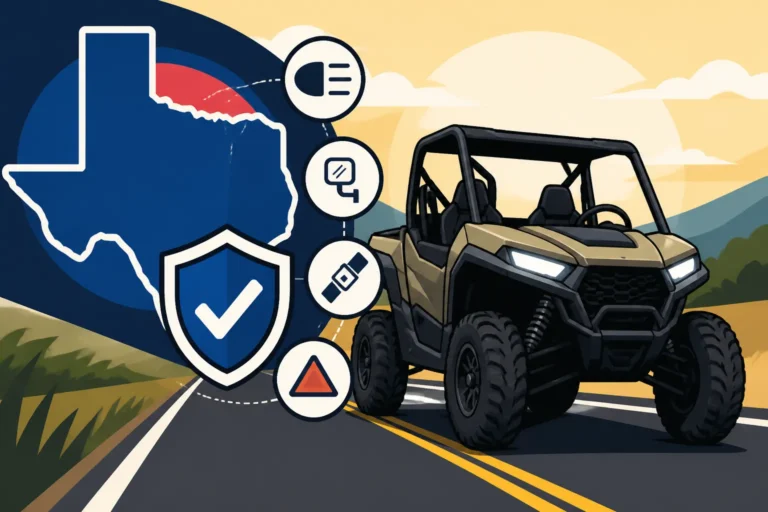
Many UTV owners, seeking to skirt the "off-highway" classification, will heavily modify their machines. They'll add turn signals, a horn, mirrors, a DOT-approved windshield, and even street tires. While these modifications are excellent for safety and convenience, and some are legally required for any on-road use (even permitted exceptions), they fundamentally do not make your UTV street legal in Texas.
Necessary Safety Equipment for Limited Road Use
Even for the narrow exceptions discussed above—like agricultural use or crossing a road—your UTV will need certain safety equipment. This isn't about making it "street legal," but about meeting minimum safety standards when it briefly touches public asphalt. These typically include:
- Headlights and Taillights: Operational lights are a must, often required even during daylight hours for visibility when on a public road.
- Brake Lights: Clear, visible brake lights are essential for signaling your stops.
- Turn Signals: While not always explicitly required for all limited uses, having functional turn signals is a smart safety addition and may be mandated by local ordinances in specific communities.
- Horn: A working horn to alert others is a universal safety device.
- Mirrors: At least one rearview mirror, and often side mirrors, are necessary for situational awareness. Brands like SuperATV offer a wide range of aftermarket mirrors that can improve visibility significantly.
- Reflectors: Additional reflectors can increase your visibility to other drivers, especially at dawn, dusk, or night.
- Safety Flag: For agricultural use, a fluorescent orange flag mounted at least six feet above the ground is often required to make the UTV more visible over crops or terrain.
Think of these additions as safety upgrades, not as "street legal" conversion kits. You can find many of these components, from universal turn signal kits to DOT-approved windshields, from aftermarket suppliers. However, bolting on a full SuperATV soft cab enclosure, a full light bar, and fancy wheels still won't change its legal status. [Texas Equipment Rules for an ATV on a Road] outlines some of these requirements.
The Items That Don't Change Legal Status
Here's the frustrating part: you can spend hundreds, even thousands, of dollars making your UTV look and feel street legal, but for the Texas legal system, it remains an OHV. Adding things like:
- DOT-approved tires: While safer on pavement, they don't change the classification.
- A full windshield and wipers: Great for comfort, but irrelevant to legal status.
- License plate bracket: You can get an "OHV Use Only" plate, but it's not a standard vehicle registration plate. [The Texas Off-Highway Vehicle License Plate] provides more context.
- Seat belts: Required for UTV occupants anyway, but doesn't make it street legal. [Texas Seat Belt Rules in a Side-by-Side] offers details.
- Insurance: While highly recommended for any UTV use, on or off-road, Texas does not require insurance for OHVs for general operation, unlike registered motor vehicles. [Do You Need ATV Insurance in Texas?] is a good resource.
The critical distinction is that these modifications don't alter the core legal definition of an OHV. You can't just modify an OHV to meet the standards of a "motor vehicle" for registration purposes. The state doesn't provide a pathway for that conversion, and no amount of aftermarket parts, no matter how high quality or how well they meet federal motor vehicle safety standards (FMVSS), will change that.
The Few Scenarios Where a UTV Might Touch a Road Legally
Given the strict stance, it's easy to feel like your UTV is forever confined to private land or dedicated off-road parks. However, understanding the exact permitted uses can help you avoid fines and enjoy your machine responsibly. It truly boils down to very specific, limited scenarios, and always with precautions.
Private Land Access & Utility Easements
The most straightforward legal use on what looks like a public road is when the road is actually private, or when you have explicit permission to use a utility easement that crosses public land. Many large ranches in Texas have private roads that may resemble county roads, but they are not public thoroughfares. Similarly, utility companies might use UTVs to access easements under power lines or pipelines, and while these might intersect or run alongside public roads, the UTV's presence is justified by the utility work, not by being "street legal."
If you're operating on a hunting lease or a large private property, the owner might have private roads that allow UTV travel. Always confirm the ownership and public access status of any road before riding. Trespassing laws are serious, and unknowingly riding on a public road disguised as private property is no excuse. Always respect private property boundaries and ensure you have permission.
Riding in Designated OHV Parks and Trails
Many excellent off-road parks across Texas allow UTVs, and these often have internal road systems that are entirely permissible for your machine. Places like Hidden Falls Adventure Park, Barnwell Mountain Recreation Area, or the Sam Houston National Forest OHV Trail are designed for this. While you might drive your UTV from your campsite to a trailhead within the park, these are not "public roads" in the sense of the Texas Transportation Code. [Where to Ride an ATV in Texas] lists many such parks.
These parks often have their own specific rules, including requirements for flags, helmets, and sometimes even sound limits. Some may require a Texas OHV decal, which helps fund these trails but is not a license plate for road use. [The Texas OHV Decal Explained] clarifies this. The key is that these are controlled environments designed for off-highway vehicles, distinct from the broader public road network.
The Bottom Line: When in Doubt, Trailer It
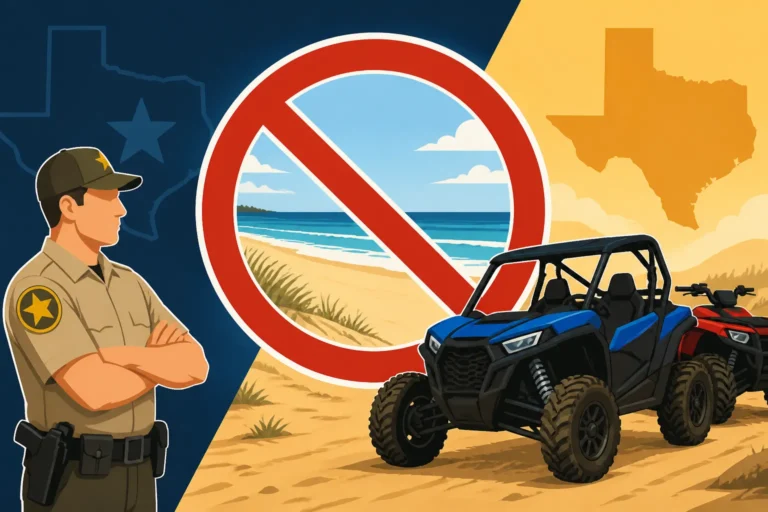
Ultimately, the most reliable and legally sound way to get your UTV to where you want to ride is to load it onto a trailer and transport it with a properly registered tow vehicle. While it might be less convenient than simply driving it, it eliminates any ambiguity about street legality. The Texas Department of Public Safety (DPS) and local law enforcement are well-versed in OHV laws, and the fines for illegal road use can be substantial, often classified as Class C misdemeanors. [Texas Fines for Illegal ATV Road Use] explains the potential penalties.
It’s easy to see other people doing something and assume it's allowed, but that's a risky approach. A neighbor driving his UTV down the road might be a rancher operating under a valid agricultural exemption, or he might simply be breaking the law. Without knowing the specific context, it's best to err on the side of caution. If your primary goal is to use your UTV for general transportation on public streets, Texas law, as it stands, presents a significant barrier.
Disclaimer
This article is for general informational purposes only and does not constitute professional advice. Laws, prices and regulations vary by location and change over time. Consult a qualified professional for guidance on your specific situation.