Texas Rules for an Electric UTV on a Road
It's an exciting time to be an off-road enthusiast, especially with the surge in electric UTVs hitting the market. These machines promise quiet operation, instant torque, and a potentially cleaner footprint, making them incredibly appealing. But if you're like many Texans, you've probably wondered if you can simply hop in your electric UTV and cruise down your local road to the store or a neighbor's house. The short answer, as you'll quickly find, is usually more complicated and often frustrating than you'd hope. This guide is here to clear up the confusion surrounding Texas rules for operating an electric UTV on public roads, helping you understand what's allowed, what's not, and the very real reasons behind these often-confounding regulations.
The Core Question: Is an Electric UTV Street Legal in Texas?
Let's cut right to the chase because this is the question most people have in their minds. You've invested in a fantastic electric UTV, perhaps something robust with a lot of utility, and you might assume that because it's electric and often less noisy than its gas-powered cousins, it would have an easier path to street legality. Sadly, that's often not the case here in the Lone Star State. Texas law isn't primarily concerned with the fuel source (gas, electric, hydrogen) when it classifies vehicles for road use; it's focused on the vehicle's design, intended purpose, and safety features.
Why Texas Differentiates Between Vehicle Types
Texas has a very specific way of categorizing vehicles, and UTVs—even electric ones—generally fall under the umbrella of "off-highway vehicles" (OHVs). This classification means they are designed and manufactured primarily for use on unpaved surfaces, dirt trails, and private lands, not public roads. It's a fundamental distinction that creates a significant hurdle for street use. Think about it this way: a lawnmower is a motorized vehicle, but you wouldn't expect to drive it down I-35, right? While a UTV is far more capable and robust than a lawnmower, the state's legal framework places it in a similar category regarding public road access.
The frustration here is completely understandable. Many UTV owners look around and see golf carts, which are also often electric, puttering around residential streets or even across certain public roads. They might logically conclude that their more substantial, often faster, and seemingly safer electric UTV should certainly qualify. However, Texas has distinct rules for golf carts, defining them separately and allowing them limited road access under very specific conditions, such as within two miles of where they are parked in daylight only and on roads with a speed limit of 35 mph or less. Your electric UTV, despite its capabilities, is not a golf cart in the eyes of Texas law, and thus, it doesn't automatically get to share those same privileges. This can feel like a bureaucratic headache, but it boils down to the original design and certification of the vehicle.
The "Off-Highway Use Only" Reality
When you title your electric UTV in Texas, you'll find that it usually receives an "Off-Highway Use Only" remark stamped on the paper title. This isn't just a suggestion; it's a legal designation that explicitly restricts the vehicle's operation to off-highway terrain. This stamp is the state's way of clearly communicating that the machine is not intended for public road use, even if it has headlights, taillights, and other features that might make it seem road-ready. You can learn more about this by reading [The Off-Highway Use Only Remark on a Texas Title].
This designation means that even if you've added some aftermarket upgrades like turn signals or a horn to your electric UTV, it doesn't magically become street legal. The core classification stamped on your title remains, and attempting to drive it on a public road where it's not explicitly allowed can lead to fines and other legal troubles. The intent behind this is safety. UTVs are designed with different suspension, tire types, and handling characteristics than vehicles built for paved roads. While perfectly suited for rugged trails, these characteristics can make them less predictable or safe in high-speed traffic or on surfaces they weren't engineered for. The state's position is to maintain traffic safety by keeping purpose-built off-highway vehicles off general roadways unless they meet specific, stringent criteria.
Limited Exceptions: When an Electric UTV Might See a Road in Texas
Now, don't despair entirely! While the default stance for an electric UTV in Texas is "off-highway only," there are a few very narrow exceptions and classifications that might allow your machine some limited road access. It's crucial to understand these distinctions because they come with significant requirements and are not universally applicable.
The Low-Speed Vehicle LSV Classification
One of the most common pathways for certain electric vehicles to gain street legality is through the Low-Speed Vehicle (LSV) classification. An LSV is a street-legal vehicle with four wheels designed to operate at speeds greater than 20 miles per hour but not greater than 25 miles per hour. They are typically electric and must meet specific safety standards set by federal and state regulations.
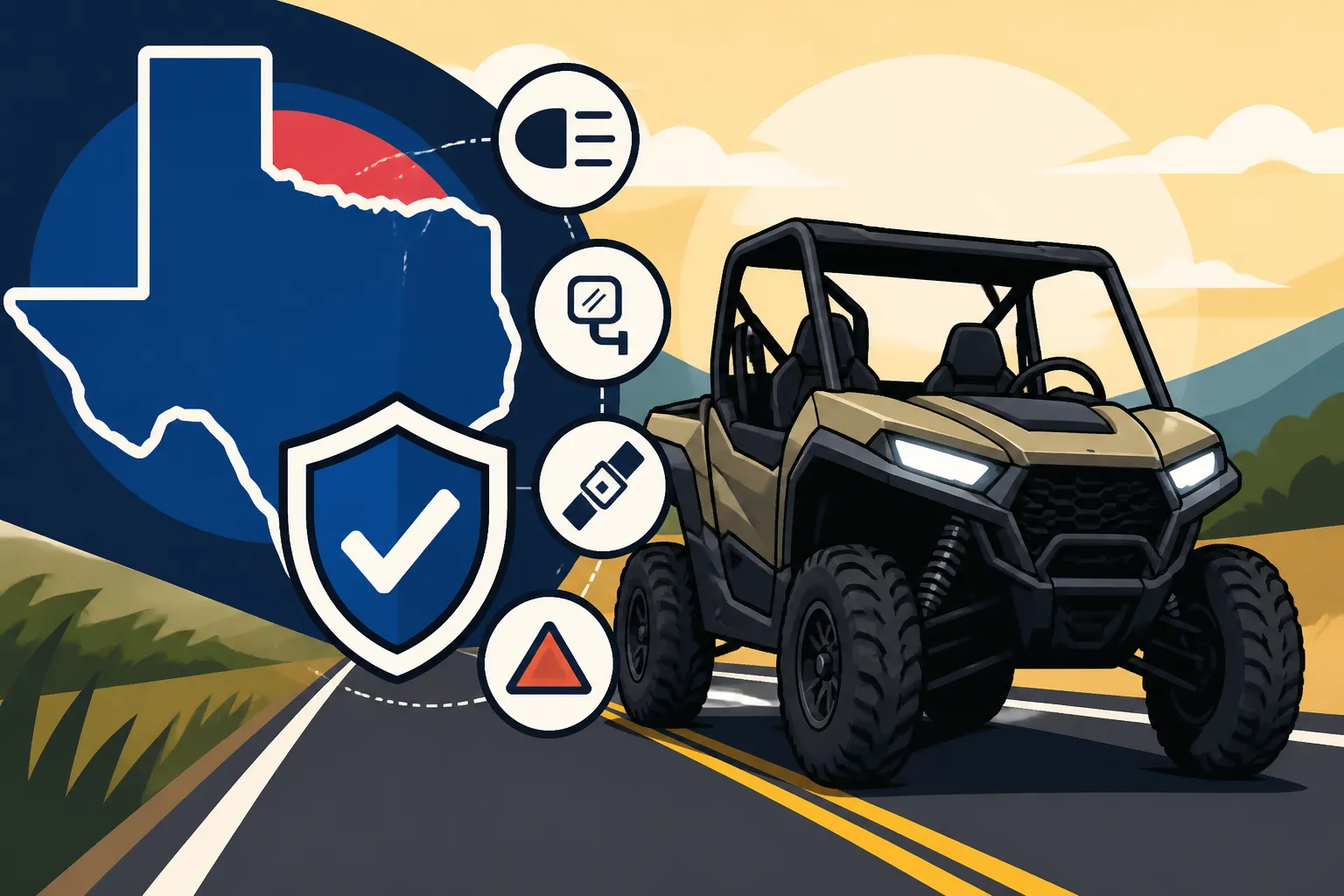
For your electric UTV to qualify as an LSV, it would need to be either manufactured as one or substantially modified to meet all the necessary federal safety standards. This isn't a simple task, and most standard electric UTVs fresh from the factory do not meet these requirements without significant, often costly, modifications and inspections. The required equipment typically includes headlamps, stop lamps, turn signal lamps, taillamps, reflex reflectors, a parking brake, rearview mirrors (both an interior mirror and an exterior driver's side mirror, or two exterior mirrors), a windshield, seatbelts, and a vehicle identification number (VIN). Moreover, it must be capable of reaching speeds between 20 and 25 mph. If your UTV can go significantly faster, it might not even qualify due to its speed capabilities exceeding the LSV definition. Getting this designation requires a rigorous process of inspection and certification, often involving a specialized manufacturer or modifier. You can delve deeper into this specific classification by reading [Texas Low-Speed Vehicle Rules].
Specific Local Ordinances and Agricultural Exemptions
Beyond the LSV classification, there are a few other highly specific situations where an electric UTV might be allowed on certain roads. These are not broad permissions and are often very geographically limited.
Some counties, particularly those with a population under 37,000, and certain "Red River counties" or those that meet the "Guadalupe River barrier island" test, have the option to open up some of their public roads to OHVs, including electric UTVs. However, this is entirely at the discretion of the county commissioners' court, and they often impose specific restrictions on speed, time of day, and types of roads. This isn't a statewide blanket rule; you would need to check with your specific county's commissioner's office to see if such an ordinance exists and what its precise terms are. Even then, these permissions rarely extend to state highways or federal roads.
Another area of limited road access relates to agricultural use. If your electric UTV is used exclusively for legitimate agricultural purposes—like tending to livestock, hauling feed, or managing crops on a farm or ranch—Texas law provides some exemptions. These typically allow an OHV to operate on public roads within 25 miles of its point of origin for agricultural operations, provided it's daylight, equipped with specific safety gear like a slow-moving vehicle emblem, and (if traveling between properties) an orange flag mounted six feet high. You generally don't need an OHV license plate for these agricultural operations, but you must be actively engaged in farm or ranch work. This exemption is not for joyriding or commuting; it's strictly for farm business. You can find more specific details on this topic in [Texas Rules for Riding a Farm Road] and [Texas Agricultural Exemption for ATVs on Roads]. It's a critical distinction to remember: "agricultural use" means working on a farm, not just owning a UTV while living in a rural area.
The Pitfalls and Practicalities of Road Use
Even with the limited exceptions discussed, trying to get your electric UTV onto public roads in Texas is often fraught with practical challenges and potential legal headaches. It's essential to understand the full scope of what you're up against before you venture out.
Equipment Requirements and Safety Concerns
Let's say, hypothetically, you manage to navigate the LSV classification or you're in one of those rare counties with a local ordinance. You're still going to face stringent equipment requirements. For any vehicle to be legally on a public road, it needs specific safety features that many standard electric UTVs simply don't have. We're talking about DOT-approved tires, a proper windshield (not just a half-windscreen), working headlights, taillights, brake lights, turn signals, and often a horn. Most importantly, it needs to be insured as a road-legal vehicle.
While companies like SuperATV offer fantastic aftermarket parts such as full windshields, mirrors, and street-legal kits designed to add lights and signals, installing these items does not, by itself, make your electric UTV street legal. These kits are often for specific applications where local laws do permit UTVs on roads, or to help meet the equipment requirements for an LSV conversion. The underlying classification of your vehicle, as determined by the state and your title, takes precedence. You could bolt on every street-legal accessory known to man, but if your title says "Off-Highway Use Only" and you haven't gone through an official LSV certification process, you're still in violation.
Beyond the legal aspect, there are significant safety concerns. UTVs are designed with a higher center of gravity and suspension travel optimized for off-road terrain, not high-speed cornering or emergency braking on asphalt. Their tires are typically designed for grip in mud, sand, or rocks, not for optimal traction and wear on pavement. Driving an OHV on a road where it's not designed to be can compromise handling, increase stopping distances, and make the vehicle unpredictable in traffic. This is why [Texas Equipment Rules for an ATV on a Road] outlines some of the minimal requirements for even the limited road crossings allowed for OHVs. The road environment is fundamentally different, and a UTV is simply not built for it.
Enforcement, Fines, and Insurance
If you decide to operate your electric UTV on a public road without proper classification or within the very narrow exemptions, you're taking a significant risk. Law enforcement officers are generally well-versed in the distinction between street-legal vehicles and OHVs. Getting pulled over for illegal road use can result in a Class C misdemeanor, carrying a fine. These fines can add up quickly, and the machine could even be impounded. You can review potential penalties in [Texas Fines for Illegal ATV Road Use].
Perhaps even more critical than the fine is the issue of insurance. A standard OHV insurance policy, which you might carry for off-road riding, is typically designed to cover accidents and liability off-highway. It almost certainly will not cover you if you're involved in an accident on a public road where your electric UTV is illegally operating. This means you could be personally liable for significant damages, medical bills, and legal fees. If you manage to get your electric UTV officially classified as an LSV, then you would need specific LSV insurance, which is different from a regular OHV policy and would provide the necessary coverage for road use. However, without that proper classification and appropriate insurance, you're gambling with a lot more than just a ticket. For more on this, check out [Texas ATV Insurance Requirement]. It's a risk that's simply not worth taking for many riders.
Alternatives to Road Riding for Your Electric UTV
Given the numerous hurdles and risks associated with trying to make an electric UTV street legal in Texas, many riders find that the best approach is to embrace the machine for its intended purpose: off-highway adventure! Texas offers a wealth of opportunities for exhilarating and legal off-road riding.
Dedicated Off-Road Parks and Trails
Texas is home to some fantastic dedicated off-road parks and trail systems where your electric UTV can truly shine. These parks are designed to challenge riders, offer diverse terrain, and provide a safe, legal environment for all types of OHVs. Places like Barnwell Mountain Recreation Area in Gilmer or Hidden Falls Adventure Park near Marble Falls are prime examples. At these parks, you'll find miles of trails ranging from easy scenic routes to challenging rock crawling sections, all perfectly suited for your electric UTV's capabilities.
Imagine the thrill of tackling a technical climb with your electric UTV's instant torque, or silently exploring a wooded trail without disturbing the wildlife. These parks often have amenities like camping, restrooms, and sometimes even repair shops. You'll also find a vibrant community of fellow off-road enthusiasts who share your passion. When riding in these designated areas, you might need a Texas OHV decal and, depending on your age, a safety certificate, but you won't be worrying about illegal road use. For a comprehensive look at your options, explore [Where to Ride an ATV in Texas] and [Texas OHV Parks by Region]. These locations are where your electric UTV is meant to be, and where you can enjoy it without the stress of legal gray areas.
Private Property and Designated Routes
For many Texans, private land is the primary domain for their electric UTVs. If you own a ranch, have access to a hunting lease, or simply have permission to ride on a friend's expansive property, that's often the simplest and most straightforward place to enjoy your machine. On private land, the state's road use laws generally don't apply, allowing you the freedom to operate your UTV as you see fit (while still adhering to common-sense safety and property rules, of course).
Hunting leases, for example, are incredibly popular places for UTVs. They are perfect for hauling gear, scouting, or retrieving game without the noise and fumes of a gas engine. You can find more information about this type of use in [Texas Rules for Riding a Hunting Lease]. Many landowners appreciate the quiet operation of electric UTVs, especially for activities like wildlife observation or early morning runs to a deer blind. For those who ride primarily on private property, investing in a robust trailer and a capable tow vehicle is often a better use of resources than trying to jump through hoops for limited street legality. This ensures you can transport your electric UTV safely and legally to wherever your off-road adventures await.
Comparing Electric UTV Use on Texas Roads
Here's a quick overview of the distinctions between a standard electric UTV and one classified as a Low-Speed Vehicle (LSV) for road use in Texas:
| Feature | Standard Electric UTV (OHV) | Electric UTV as a Low-Speed Vehicle (LSV) |
|---|---|---|
| Primary Intended Use | Off-highway, trails, private land | Public roads (specific types) |
| Default Road Legal? | No | Yes, once properly classified and equipped |
| Texas Title Remark | "Off-Highway Use Only" | No "Off-Highway Use Only" remark (titled as an LSV) |
| Speed Range | Varies, often exceeds 25 mph | Must be capable of 20-25 mph (not more than 25 mph) |
| Equipment Needs | Basic headlights/taillights (for off-road) | DOT-approved lights, turn signals, windshield, seatbelts, mirrors |
| Insurance | OHV policy (off-road coverage only) | Specific LSV policy (road coverage) |
| Modification Required | None for off-road; extensive for LSV conversion | Often extensive, to meet federal LSV standards |
| County/City Ordinances | May allow limited use in specific, rare instances | Generally allowed on roads with speed limits 35 mph or less |
| Agricultural Exemption | Limited road use for farm work only | Not applicable, as it's already road legal as an LSV |
| State Highway Access | Generally prohibited | Prohibited (typically limited to 35 mph or less roads) |
Disclaimer
This article is for general informational purposes only and does not constitute professional advice. Laws, prices and regulations vary by location and change over time. Consult a qualified professional for guidance on your specific situation.