No Helmet on an Agricultural Run
It's a common scenario across our vast Texas landscape: you're out on the ranch, moving feed, fixing fences, or just checking on livestock. Your trusty ATV or UTV is the perfect workhorse, but sometimes, a short hop down a county road is unavoidable to get from one section of your property to another. This inevitably leads to the nagging question, "Do I really need to put on my helmet for just that quick agricultural run?" This guide will clear up the specific rules and vital exceptions in Texas law that allow for helmet-free operation during legitimate agricultural activities, ensuring you stay compliant without sacrificing efficiency.
Understanding Texas's General Helmet Law for OHVs
Texas lawmakers are serious about safety, especially when it comes to off-highway vehicles (OHVs) that aren't designed for street use. Most riders understand that when you venture onto public lands or designated OHV parks, helmets are often a non-negotiable part of the gear. This isn't just about park rules; it's about protecting yourself from serious injury.
When Helmets Are Typically Required on Texas Roads
Generally speaking, when an ATV or UTV is used on any public road in Texas, even if it's only permitted under specific, limited circumstances, the expectation is that all riders and passengers will wear a helmet. This is a crucial safety measure to mitigate the risks associated with collisions, rollovers, or unforeseen impacts. These machines lack the protective enclosures of a car or truck, leaving riders exposed. A helmet provides vital protection for your head, which is, let's face it, pretty important for enjoying all those future rides. The state's default stance, outlined in [Texas Helmet Law for ATV Riders], is always towards safety when operating on shared thoroughfares.
The logic here is pretty straightforward: roads are for cars and trucks, and while OHVs have their place, they're not built with the same safety features for high-speed traffic or unexpected interactions with other vehicles. Even on a quiet county road, the potential for an accident exists, and a helmet is your first line of defense against severe head trauma. This general rule applies unless a very specific and explicit exemption is met.
Many riders, especially those new to the OHV scene, sometimes mistakenly believe that because their machine isn't "street legal" in the traditional sense, the helmet laws somehow don't apply when they briefly use a road. Unfortunately, that's not how it works. The moment you enter a public right-of-way, even for a few yards, you're subject to traffic laws, and that often includes helmet mandates. It can be a rude awakening to receive a citation for something you thought was perfectly innocent.
The Rationale Behind Helmet Exemptions
While safety is paramount, Texas law also recognizes the practical realities of certain situations, especially for those who rely on OHVs as essential tools for their livelihood. Exemptions aren't granted lightly; they usually arise from a specific need where the nature of the activity, coupled with other safety measures, minimizes the inherent risks. These aren't loopholes for recreational riding but carefully carved out allowances for specific, often low-speed, utilitarian tasks.
Think about it: a farmer driving a tractor on a public road usually isn't required to wear a helmet. This is because the tractor is a piece of heavy machinery, moving slowly, clearly visible, and being operated for a very specific, work-related purpose. The same kind of logic applies to certain OHV uses, particularly in the agricultural sector. The legislature understands that requiring a helmet for every five-minute hop across a rural road for a rancher could be overly burdensome and impractical for daily operations.
However, it’s vital to remember that these exemptions are surgical in their application. They don't mean all common-sense safety practices go out the window. Rather, they acknowledge that the context of the ride changes the risk profile, allowing for a different set of rules to apply. It’s never about making things "less safe," but about finding a practical balance between safety regulations and necessary work functions.
The Agricultural Exemption for Helmets in Texas
The good news for Texas ranchers and farmers is that there is a specific exemption that can allow you to operate your ATV or UTV on certain public roads for agricultural purposes without a helmet. But, and this is a big "but," it comes with very strict conditions. This isn't a blanket pass to ride helmet-free anytime you're on a farm. It's about legitimate work.
Defining "Agricultural Operation" for OHV Use
When the law talks about an "agricultural operation," it's not just a vague term. It refers to activities directly related to farming, ranching, timber production, or similar land-based enterprises. This means your OHV isn't just on a farm; it's actively working on it. This could include tasks like transporting tools, feed, or supplies between fields, inspecting crops or livestock, repairing fences that run alongside or across public rights-of-way, or moving implements from one part of a sprawling property to another.
For example, if you're using your UTV to haul a sprayer down a county road to reach a distant pasture, that definitely qualifies as an agricultural operation. If you're checking cattle along a fence line that borders a public road, that also fits the bill. The key element is that the OHV is serving as a utilitarian vehicle, performing a necessary function for the agricultural enterprise. It's not about recreational riding, even if you do that on the same property. The distinction is critical and something law enforcement officers will look for if they stop you.
Conversely, heading into the nearest small town on your UTV to pick up groceries or grab a coffee, even if you're coming straight from the farm, does not qualify as an agricultural operation for the purposes of this exemption. That's a personal errand, and the standard rules for OHV road use (which typically don't allow it at all, or require helmets if an exception is met) would apply, likely leading to a citation. The exemption is focused on the purpose of the journey.
Specific Conditions for the Helmet Waiver
The Texas Transportation Code is quite specific about the conditions under which an OHV operator can forgo a helmet during an agricultural run. It's not just about the "what" (agricultural use) but also the "how" and "where." First and foremost, the OHV must be traveling on a public road within a limited distance from the point of origin or destination on agricultural land. Generally, you're looking at specific road types, like county roads or farm-to-market roads, that are not considered major thoroughfares. You can delve into the overarching [Texas Agricultural Exemption for ATVs on Roads] for broader context on this allowance.
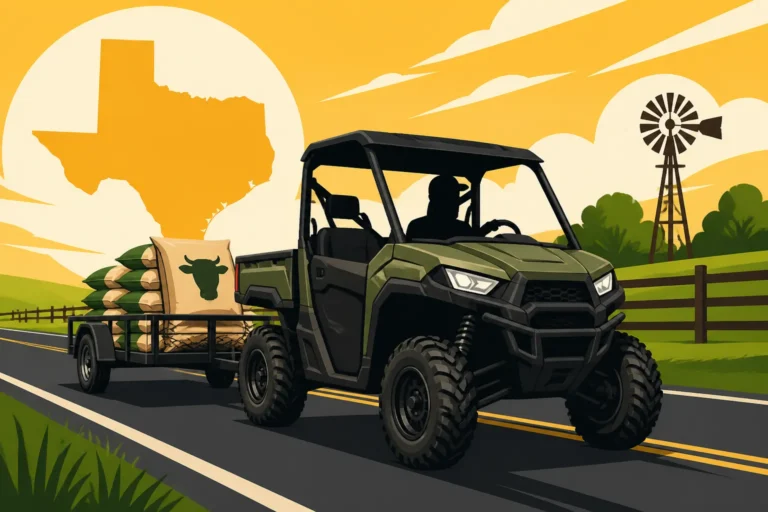
Crucially, the OHV must be equipped with specific safety features, even if a helmet isn't required. This includes a fluorescent orange flag that is at least 12 inches by 12 inches and mounted at least six feet above the ground on the OHV. This flag serves as a critical visual cue for other motorists, signaling a slow-moving or unusual vehicle. Additionally, the OHV must have headlamps and taillamps that are on, even during daylight hours, and a slow-moving vehicle emblem displayed on the rear. This collective suite of requirements is designed to make your OHV as visible as possible, compensating for the lack of a helmet.
It's also important to note that the speed limit on these roads must typically be 35 miles per hour or less, and your actual speed should reflect caution, not just the legal limit. You are essentially bringing a piece of farm equipment onto a public roadway, and maximum visibility and careful operation are paramount. Misunderstanding or ignoring any of these conditions can instantly negate the helmet exemption and put you in violation of the law.
Practical Scenarios Where the Exemption Applies
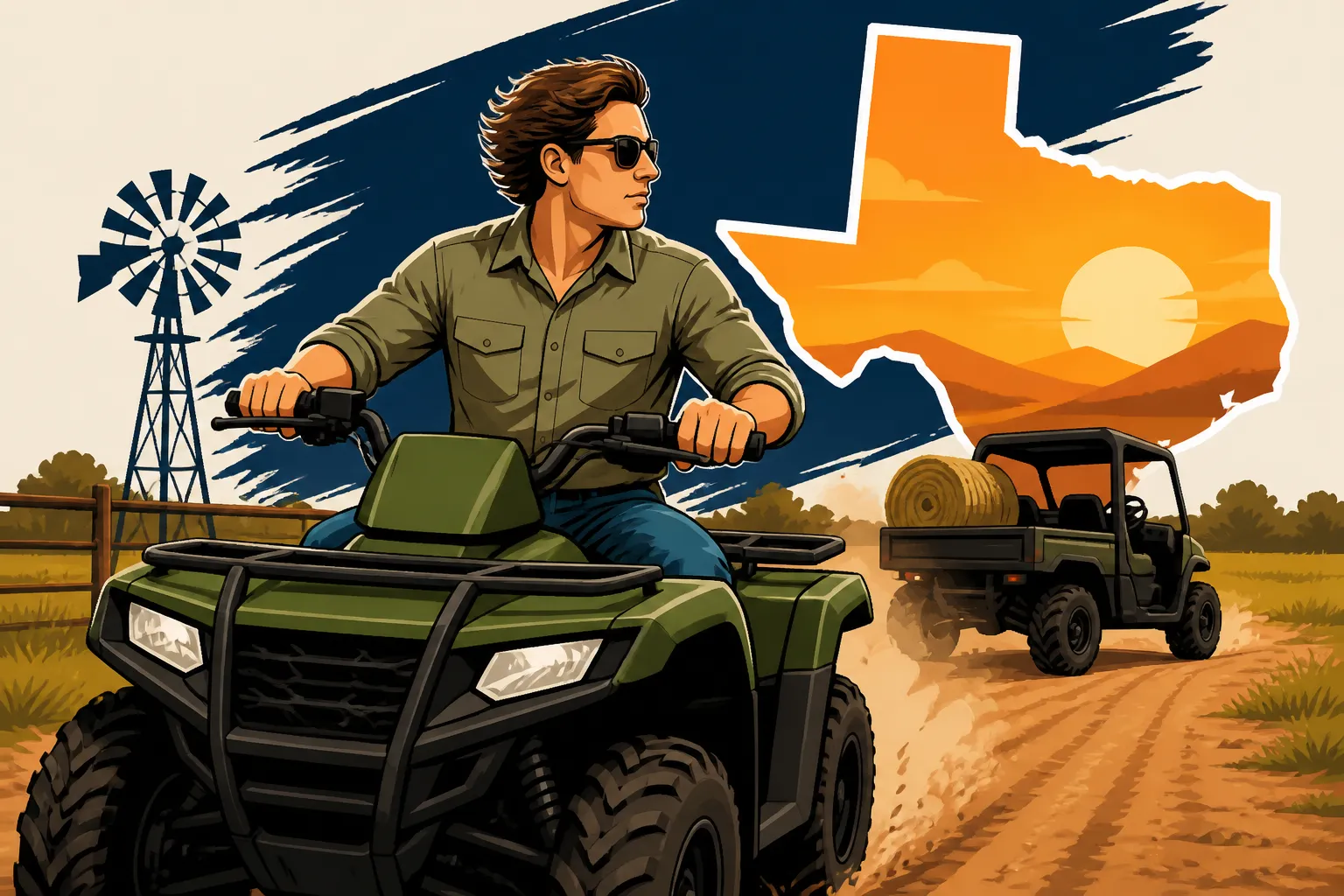
Let's paint a clearer picture with some real-world examples. Imagine your ranch has two large pastures separated by a quiet, two-lane county road with a posted speed limit of 30 mph. You need to move a trailer full of hay bales from the barn on one side to the livestock in the other. Hooking up the hay trailer to your UTV, making sure your orange flag is waving high, and your lights are on, you can make that short trip down the county road without a helmet. This is a legitimate agricultural run, and all the conditions are met.
Another scenario might be driving your ATV, equipped with spray tanks, a quarter-mile down a paved farm-to-market road (again, with a low speed limit) to reach a field that isn't directly accessible from your main property without using that road. As long as you're operating safely, have your flag, and your lights are on, you're likely covered by the exemption. Your side-by-side, perhaps with an aftermarket windshield and roof from a company like SuperATV, is acting as a piece of farm machinery, not a recreational vehicle.
Now, contrast this with riding your quad from your house down the same county road to a friend's house a mile away for a visit. Even if your friend lives on an adjacent ranch, this is a social call, not an agricultural operation. In this instance, you'd be subject to the stricter rules for general OHV road use, which almost certainly means you'd need a helmet (if such use were permitted at all). The key is the purpose of the trip. If it’s not directly related to making your agricultural operation function, the helmet exemption likely won't apply.
Beyond the Helmet: Other Rules for Agricultural OHV Use on Texas Roads
While the helmet exemption is a big relief for many, it's just one piece of the puzzle. Operating an OHV for agricultural purposes on Texas roads still means adhering to a host of other regulations designed to keep everyone safe. It's not a free-for-all; it's a conditional privilege.
Speed Limits and Road Types
One of the most critical aspects of using your OHV for agricultural purposes on public roads is understanding where and how fast you can go. Texas law typically limits OHV use to roads where the posted speed limit is 35 miles per hour or less. This usually means those quieter county roads, farm-to-market roads, or other local streets that are not part of major state highways or interstates. You absolutely cannot take your ATV or UTV onto a highway with higher speed limits, even for agricultural purposes.
Furthermore, even if the speed limit is 35 mph, you should always operate your OHV at a speed that is reasonable and prudent for the conditions. Remember, you're driving a vehicle not primarily designed for pavement alongside cars that are moving much faster. Caution is your best friend. Navigating through different terrain types, from gravel to asphalt, requires constant vigilance. For a deeper understanding of road allowances, you might want to review [Texas Rules for Riding a Farm Road].
Imagine you're on a long, straight stretch of a county road. Even if the speed limit allows it, pushing your UTV to its maximum speed is ill-advised. The ride quality and handling characteristics of an OHV are vastly different from a passenger vehicle on pavement, making high-speed maneuvers potentially unstable and dangerous. Always prioritize visibility and control, keeping a keen eye on your surroundings.
The 10-Mile Limit on Agricultural Journeys
Here's another crucial detail: the agricultural exemption for road use, including the helmet waiver, often comes with a distance limitation. While laws can vary, a common provision limits such travel to within a specific distance, frequently around 10 miles, from the point of origin or destination on agricultural land. This isn't about how far your property stretches, but how far you're using the public road itself.
This 10-mile (or similar) limit is designed to ensure that the road use remains incidental and directly tied to the farm or ranch operation. It's meant for short trips between parcels, to move machinery, or to access parts of your property that are bisected by a public right-of-way. It is not intended for extended journeys. If your agricultural task requires traveling further than this distance on public roads, you might need to transport your OHV on a trailer instead.
For example, if you're using your ATV to patrol a 5-mile fence line that occasionally crosses a county road, you're well within typical limits. But if you needed to take your UTV 25 miles down the road to pick up a special part from a distant farm supply store, even if it's for agricultural use, you would likely be exceeding the allowed distance. In such a case, trailering the UTV would be the legally compliant and safer option.
Lighting and Visibility Requirements
Even when you're legally excused from wearing a helmet for an agricultural run, your OHV still needs to be highly visible to other drivers. This is non-negotiable for safety. Your machine must have:
- Headlamps: Functional headlights that are turned on, even during daylight hours.
- Taillamps: Functional taillights that are turned on, even during daylight hours.
- Reflectors: Adequate reflectors on the front, sides, and rear to enhance visibility, especially in low light.
- Slow-Moving Vehicle Emblem: A distinctive orange-red triangle emblem mounted on the rear of the OHV, signaling to other drivers that your vehicle is operating at speeds slower than normal traffic.
- The 6-Foot Orange Flag: As mentioned earlier, a fluorescent orange flag, at least 12 inches by 12 inches, mounted at least six feet above the ground. This is a critical visual cue. You can find more specific guidance on [The 6-Foot Orange Flag Texas Requires].
These requirements are in place because OHVs are smaller and often less conspicuous than other farm equipment or road vehicles. The combination of active lighting and reflective indicators helps other drivers spot you quickly, reducing the risk of a rear-end collision or other accidents. Think of these as your personal "look at me!" signals for the road.
No Registration or License Plate Needed (Usually)
One of the interesting aspects of the agricultural exemption is that, for qualifying operations, your OHV typically does not need a standard motor vehicle registration or a regular license plate for these limited road uses. This is a significant difference from how other vehicles are treated. However, it's crucial to understand that this does not mean your OHV is untraceable or unregulated.
Every OHV in Texas is required to have a title, regardless of whether it's used on roads or just on private land. This [Texas ATV Title Application Deadline] is something every owner should be aware of. While you won't need a traditional "vehicle registration," you might still need to display an Off-Highway Vehicle (OHV) license plate if you ride recreationally on public lands, but for strict agricultural road use within the defined parameters, the standard plate is usually waived. This is explicitly covered in directives like [Why Agricultural Use Needs No Plate]. This unique distinction highlights the state's intent to treat these machines as specialized farm equipment rather than traditional road vehicles when engaged in specific work tasks.
This can be a point of confusion for new OHV owners or those unfamiliar with the agricultural exemptions. You might visit your [Titling at a Texas County Tax Office] to get your machine titled and wonder why you aren't being issued a plate. For agricultural use, the title is sufficient proof of ownership, and the specific road-use exemptions bypass the plate requirement, provided all other conditions (flags, lights, etc.) are met. Just be sure to keep proof of ownership, like your title, with you.
Risks and Best Practices for Agricultural OHV Road Use
Navigating the rules for OHV use on Texas roads, even for agricultural purposes, can feel like walking a tightrope. One misstep can lead to a citation or, worse, an accident. Understanding the risks and adopting best practices is key to staying safe and legal.
The Fine Line Between Exempt and Illegal
It’s easy to get complacent, especially when you’re familiar with your property and the surrounding roads. However, the difference between a legal agricultural run without a helmet and an illegal joyride is razor-thin in the eyes of the law. Law enforcement officers are trained to identify legitimate agricultural operations versus recreational use. They'll be looking for all the tell-tale signs: the flag, the lights, the slow-moving vehicle emblem, and the actual activity you’re performing.
Imagine a county sheriff pulling you over. If you’re just cruising down the road without a helmet, your flags down, and no visible farm implements, it’s going to be a tough sell that you’re on an "agricultural run." You could be facing fines for improper OHV road use, lack of a helmet, and possibly other infractions. These citations can quickly add up, turning a quick trip into an expensive headache. Understanding [Texas Fines for Illegal ATV Road Use] is crucial so you know the potential consequences of misinterpretation.
The best defense against unintended violations is a thorough understanding of the law and a commitment to adhering to all conditions, not just the ones that are convenient. When in doubt, err on the side of caution. If you're not absolutely certain your trip qualifies for the exemption, either wear a helmet or choose an alternative method of transport, like trailering your OHV.
Prioritizing Safety Even When Not Legally Required
Just because the law says you can remove your helmet for a specific agricultural task doesn't mean it's always the safest choice. Risk assessment should always be your top priority. While the exemption is there for practicality, a helmet still offers unparalleled protection against head injuries. Many experienced ranchers, even when exempt, choose to wear a helmet for any road travel, no matter how short.
Consider the variables: Are you hauling a heavy load? Is the road particularly busy that day? Are visibility conditions poor due to dust or weather? In any of these situations, choosing to don your helmet, even if not legally required, is simply good judgment. Your safety, and the safety of others sharing the road, should always come first. Investing in a good quality, comfortable helmet that you can easily put on and take off might be a small inconvenience compared to the potential consequences of a head injury.
Beyond helmets, think about other safety gear. Eye protection is critical, especially in dusty conditions or against flying debris. Sturdy footwear, long pants, and a long-sleeved shirt can protect against scrapes and sun exposure. For UTVs, ensure seatbelts are always worn by all occupants. Many modern UTVs also offer enclosed cab options, often with robust roofs, full windshields, and doors—products from companies like SuperATV—that provide an additional layer of protection from the elements and some minor impacts, though they don't replace helmets in non-exempt situations.
Documenting Your Agricultural Operation
While not legally mandated, carrying some form of documentation that supports your claim of an agricultural operation can be incredibly helpful if you're ever stopped by law enforcement. This could include a copy of your agricultural or timber tax exemption certificate (if you have one), a business card for your farm or ranch, or even just a simple note explaining the nature of your activities.
Having this information readily available demonstrates your legitimate intent and can help quickly resolve any questions an officer might have. It shows you're not just making excuses, but that you are, in fact, engaged in a valid agricultural enterprise. It can also help clarify questions around [Texas Ag Exemption on an ATV Purchase] or [Texas Timber Exemption on an ATV Purchase] if they come up.
A quick table summarizing the helmet rules for clarity:
| Scenario | Helmet Required? | Other Key Requirements (if applicable) |
|---|---|---|
| Recreational riding on public land | Yes | OHV Decal, Safety Certificate (for under 14), specific park rules |
| General OHV road use (limited) | Yes | Lights on, slow-moving vehicle emblem, specific road types, low speed limits |
| Agricultural run on designated roads | No (under strict conditions) | Orange flag (6ft high), head/tail lights on, slow-moving emblem, 35mph limit, 10-mile distance limit, direct agricultural purpose |
| Riding on private land | No (personal choice) | Helmet always recommended for safety, especially with challenging terrain |
This article is for general informational purposes only and does not constitute professional advice. Laws, prices and regulations vary by location and change over time. Consult a qualified professional for guidance on your specific situation.