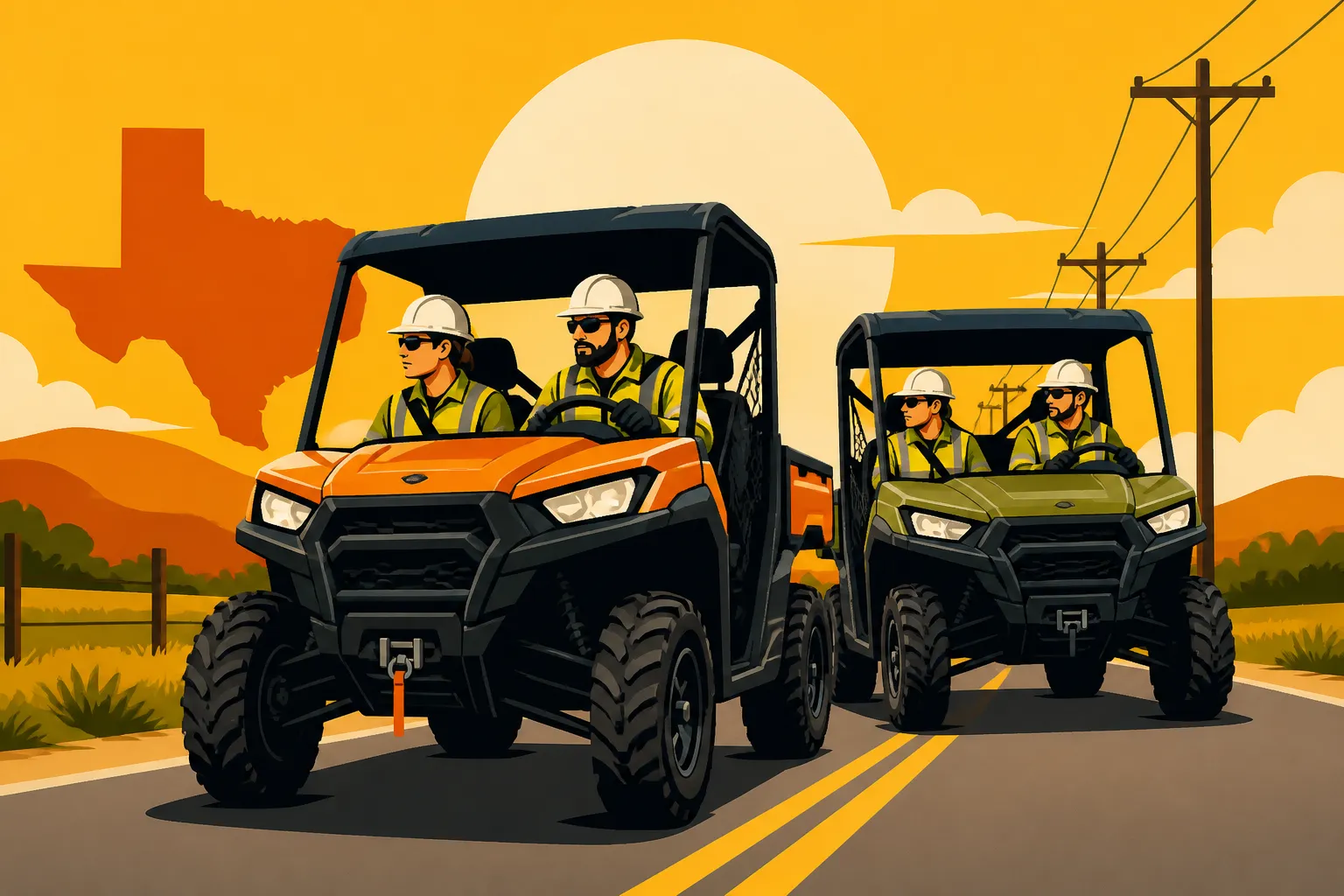
Utility Crews Running a Side-by-Side on a Road
There's a common and understandable headache for utility crews across Texas: needing to use a side-by-side or ATV to get their important work done on or near public roads, yet hearing all the time that these machines aren't street legal. It’s a real Catch-22, where the very tools that make their jobs efficient can feel like a legal liability. This guide is here to untangle the specific rules and crucial exemptions that allow essential utility operations to proceed safely and legally on Texas roads, ensuring crews can focus on maintaining our infrastructure without unnecessary legal worries.
The General Rule for OHVs on Texas Roads and Why It's a Problem for Utility Crews
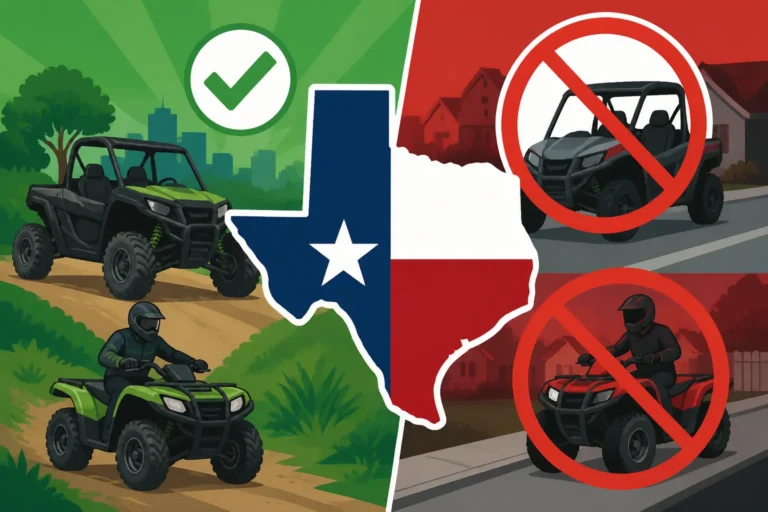
Let's get straight to the point: generally speaking, off-highway vehicles (OHVs) like ATVs and UTVs are not permitted on public roads in Texas. This isn't just a suggestion; it's a fundamental part of Texas law, primarily because these machines are designed and manufactured for off-road use. For a utility crew, this general prohibition presents a significant operational hurdle. Imagine needing to quickly inspect a power line along a remote county road, or access a water pipe that runs parallel to a state highway. The thought of having to load a UTV onto a trailer, drive a short distance, unload it, use it, and then repeat the process in reverse for every segment of work is not only inefficient but often impractical, especially during emergencies.
Why Texas Won't Register an OHV for Street Use
The reason behind Texas's stance is rooted in how it classifies and regulates vehicles. An OHV, by its very nature, isn't built to meet the same safety and equipment standards as a passenger car or truck. Think about it: they often lack turn signals, proper headlights, brake lights, mirrors, and even basic crash-worthiness features required for highway speeds and mixed traffic. The manufacturers design these machines for rugged terrain, not asphalt. Because of this, Texas explicitly states that it [Why Texas Will Not Register an ATV for the Road]. When you get a title for an ATV or UTV in Texas, you'll even see a clear [The Off-Highway Use Only Remark on a Texas Title] stamped right on the paper. This isn't just bureaucracy; it's a reflection of the vehicle's intended purpose and safety limitations.
Common Frustrations for Utility Workers
The conflict between the law and practical necessity creates a lot of frustration for utility workers. When a power line is down, or a pipeline has a leak, every second counts. Hauling a UTV on a trailer to travel just a few miles down a country road, only to unhitch and re-hitch, eats up precious time that could be spent on repairs. It also adds complexity and potential hazards, like maneuvering trailers in tight spaces or on uneven shoulders. Many crews feel caught between a rock and a hard place: needing the agility and terrain-handling capabilities of a side-by-side for their work, but constantly bumping up against laws that don't seem to account for their specific operational needs. This often leads to situations where crews might take calculated risks, or operate under a cloud of uncertainty, which is certainly not ideal for safety or morale.
Specific Exemptions for Utility Crews in Texas
Thankfully, Texas law isn't entirely blind to the realities of essential services. There are specific, narrowly defined exemptions that allow utility crews, under certain conditions, to operate their OHVs on public roads. These aren't blanket permissions, but rather carve-outs designed to facilitate critical work. Understanding these exemptions is key for any utility company or contractor to ensure their operations remain fully compliant. It’s not about finding loopholes; it’s about recognizing where the law provides for necessary public services.
The "Governmental or Utility Purpose" Exemption
This is the big one for our utility heroes. Texas Transportation Code Chapter 551, which governs the operation of OHVs, includes an exemption for vehicles used for a "governmental or utility purpose." What exactly does this mean? It generally applies to vehicles owned or operated by governmental entities (like city public works departments, county road crews, or state agencies) or by public utilities (such as electric, water, gas, or telecommunications companies). It also extends to contractors performing work for these entities, provided their use of the OHV is directly related to that specific governmental or utility project.
The crucial element here is the purpose of the travel. An employee can't just take their company UTV out for a joyride on a Sunday afternoon under this exemption. It must be actively engaged in tasks like inspecting lines, repairing infrastructure, performing maintenance, or responding to emergencies. This exemption allows these indispensable workers to travel short distances on roads, including [Texas Rules for Riding a County Road] or even [Texas Rules for Riding a Frontage Road], to access work sites that might otherwise be unreachable or require impractical trailering. It acknowledges that the nature of utility work often requires flexible and immediate access across varied terrain, sometimes including public rights-of-way.
Equipment Requirements Under the Exemption
Even with a utility exemption, common sense and safety still prevail. While these machines might not need full street registration, there are still practical and sometimes mandated equipment considerations. Many utility companies go above and beyond basic requirements to ensure their crews are visible and safe. For instance, the general rule in Texas for any OHV permitted to operate on a public road (even with an exemption) is often the requirement of [The 6-Foot Orange Flag Texas Requires]. This highly visible flag, mounted to extend at least six feet above the ground, helps alert other motorists to the presence of a smaller, slower-moving vehicle.
Beyond that, most utility UTVs are equipped with a range of safety features that go beyond factory standards. You'll often see robust LED lighting systems – not just headlights, but flashing amber or white strobe lights for high visibility. Many also install enhanced mirrors, audible backup alarms, and often, a horn, even if not explicitly mandated for their specific exempt travel. Consider durable components like those from SuperATV; many utility vehicles benefit from aftermarket windshields for protection, heavy-duty winches for recovery or pulling, and upgraded suspension components to handle the weight of tools and equipment. While the law might not spell out every single piece of gear, employers have a responsibility to provide a safe working environment, and that often means equipping UTVs far beyond their stock configuration. These additions not only protect the crew but also make the UTV more visible and predictable to other drivers on the road, which is paramount when operating a specialized vehicle in mixed traffic.
Practical Considerations and Best Practices for Utility UTV Use
Having the legal exemption is one thing, but operating a UTV safely and effectively on or adjacent to public roads requires a practical approach. Utility crews aren't just driving; they're working, and that often means divided attention, carrying heavy loads, or navigating challenging conditions. Therefore, incorporating best practices is crucial for both compliance and the safety of the crew and the public. It’s about being proactive and using good judgment in every situation.
Navigating Different Road Types and Speed Limits
Even with the utility exemption, not all roads are created equal, and common sense must guide operations. While the exemption allows travel on various public roads, utility crews should always consider the specific type of road and its inherent risks. Traveling on a quiet, gravel [Texas Rules for Riding a Ranch Road] to access a remote pump station is vastly different from operating near a multi-lane state highway. Speed limits, traffic volume, and sight lines all play a critical role. While the UTV may technically be allowed, it's generally best to avoid high-speed roads where the UTV's maximum speed (often much lower than typical road speeds) could create a significant hazard. When operating on or crossing roads, crews should aim for maximum visibility, using all available lights and flags, and always yield to other traffic. If the work requires extensive travel on specific types of roads, like those managed by a city or a specific county, it’s always wise to ensure local departments are aware of the operations.
Local Ordinances and Their Impact
This is a really important point to remember. While state law provides the overarching "governmental or utility purpose" exemption, local jurisdictions in Texas have some leeway to enact their own ordinances. What Texas cities can and cannot allow regarding OHV use can sometimes create confusion, even for exempted activities. For example, a city might have specific rules about equipment for vehicles operating within its limits, or designated routes for utility access, especially in densely populated areas.
It's less common for local ordinances to outright prohibit a state-mandated utility exemption, as essential services usually take precedence. However, they might impose additional requirements or restrictions on how that work is conducted. For example, some counties or cities might have specific rules regarding noise levels or hours of operation in residential areas, even for utility work. Therefore, it's always a good practice for utility companies to be aware of and, if possible, coordinate with local law enforcement or public works departments in the specific areas where their crews will be operating. A quick call or email can often prevent misunderstandings and ensure smooth operations. This proactive communication can be especially helpful when working in [Counties Under Thirty-Seven Thousand People], where local rules might be less formalized or more flexible.
Keeping Crews Safe and Compliant
Operating UTVs for utility purposes on public roads requires more than just knowing the law; it demands a commitment to safety and consistent compliance. Crews are often working in challenging environments, and the presence of traffic adds another layer of risk. Establishing clear protocols and fostering a culture of safety are paramount. This isn't just about avoiding fines; it's about protecting lives and ensuring critical services can be delivered without incident.
Training and Awareness
The foundation of safe and compliant utility UTV operation is comprehensive training and ongoing awareness. Every operator needs to understand the specific parameters of the "governmental or utility purpose" exemption, including its limitations. This means knowing precisely when and where they can operate on a public road, and when they absolutely cannot. Beyond legalities, operators should receive thorough training on UTV handling characteristics, especially when loaded with tools or towing equipment. Emphasize defensive driving techniques, as other motorists might not anticipate a slower-moving UTV on the road. Training should cover:
- Vehicle-specific operation: How to safely operate the particular UTV model they are assigned, including understanding its weight limits, braking characteristics, and turning radius.
- Road awareness: How to maintain situational awareness, anticipate traffic, and manage blind spots. This includes best practices for [Texas Rules for Getting Across a Road], emphasizing clear sight lines and prompt movements.
- Emergency procedures: What to do in case of a breakdown, an accident, or an encounter with an uncooperative motorist or law enforcement.
- Equipment use: Proper use of winches, plows, sprayers, and other attachments often carried by utility UTVs. Many companies use aftermarket components like those from SuperATV, which might have specific operational considerations.
Regular refresher courses are also incredibly valuable to reinforce safe habits and update crews on any changes in regulations or company policy.
Documentation and Communication
In the event of an inquiry from law enforcement or concerned citizens, having proper documentation can quickly resolve any doubts about a utility crew's legal right to operate their UTVs on a public road. Operators should always carry:
- Proof of utility affiliation: This could be a company ID, a letter on company letterhead, or clear vehicle markings identifying the utility.
- Work orders or dispatch records: Documentation showing the specific project or emergency that necessitates the UTV's presence on the road. This links their travel directly to the "governmental or utility purpose."
- Vehicle registration and insurance information: Even if not "street registered," the vehicle will have a Texas OHV title, and the company should carry appropriate liability insurance for its operation. [Texas ATV Insurance Requirement] might not apply for off-road personal use, but for commercial utility operations, it's a must.
Clear markings on the UTV itself are also a huge help. Bright colors, company logos, and explicit "Utility Vehicle" or "Public Works" decals make it clear to other drivers and law enforcement that the vehicle is engaged in official duties. If a crew is stopped, maintaining a polite and cooperative demeanor, presenting the necessary documentation, and clearly explaining their purpose will go a long way in de-escalating any potential issues. Proactive communication with local authorities about upcoming large-scale projects that require extensive UTV road use can also prevent unnecessary stops.
Here's a quick comparison of general OHV road rules versus those for utility operations:
| Feature/Rule | General OHV Road Use in Texas | Utility OHV Road Use (Exempt) |
|---|---|---|
| Street Legal? | No, generally prohibited. | Exempt for specific governmental or utility purposes. |
| Registration | Not available for street use; titled as "Off-Highway Use Only". | Still titled as "Off-Highway Use Only"; no street registration needed for exempt use. |
| Purpose | Recreational, agricultural, private land use. | Directly related to maintaining public infrastructure or services. |
| Common Roads | Private land, designated OHV parks. | Can include [Texas Rules for Riding a County Road], [Texas Rules for Riding a Utility Right of Way], etc., to access work sites. |
| Equipment | Basic off-road lights, manufacturer-standard safety gear. | Often includes [The 6-Foot Orange Flag Texas Requires], flashing lights, specialized mirrors, horns, enhanced safety gear. |
| Local Rules | Cities/counties can ban or restrict further. | State exemption usually takes precedence, but local ordinances might add requirements (e.g., hours of operation). |
| Enforcement | [Texas Fines for Illegal ATV Road Use] for non-exempt use. | Generally not cited if operating within the bounds of the exemption with proper documentation. |
This article is for general informational purposes only and does not constitute professional advice. Laws, prices and regulations vary by location and change over time. Consult a qualified professional for guidance on your specific situation.