Cities That Opened Their Own Streets to UTVs
It can feel incredibly frustrating to own a UTV in Texas, knowing it's perfectly capable of navigating local streets for quick errands or a leisurely drive, only to be met with confusing state laws that generally restrict their use. Many of us just want to take our side-by-sides from point A to point B without fear of a ticket. This guide will dive deep into how Texas law works regarding UTVs on public roads and highlight the specific pathways and examples of cities that have taken the initiative to open their streets to these versatile machines.
The General Landscape of UTVs on Texas Roads: Why It's Tricky
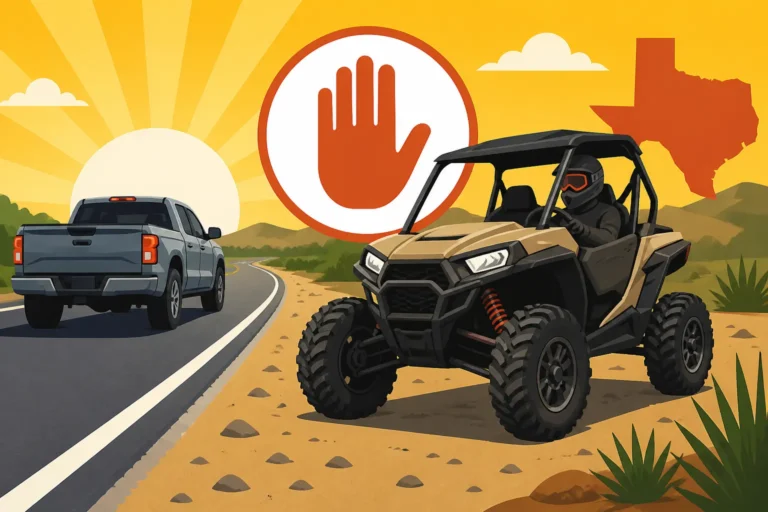
Let's be honest, the notion of taking your UTV out for a spin on city streets in Texas can be a real head-scratcher. The state's default position is pretty clear: most off-highway vehicles (OHVs), which include your typical UTVs and ATVs, are simply not designed or legally permitted for general public road use. This isn't just an arbitrary rule; it stems from a classification system that treats these machines as recreational or utility vehicles, not as traditional automobiles. They generally don't meet the stringent safety and equipment standards required for highway-legal vehicles, like having specific headlights, taillights, turn signals, or even basic crashworthiness.
This creates a common pain point for UTV owners. You might live in a rural area where you regularly cross a county road to get to a different part of your property, or you might own a UTV that's packed with features, like a sturdy SuperATV windshield and robust tires, making it feel perfectly safe for a quick jaunt to the corner store. Yet, under the blanket state rules, these uses are often prohibited. This can lead to a sense of disconnect between the practical capabilities of your machine and the letter of the law. You see others doing it, but is it legal? More often than not, the answer is "no" without specific local ordinances or narrow state-level exceptions.
The core issue is that Texas defines an "off-highway vehicle" in a way that explicitly excludes it from the "motor vehicle" category used for street-legal cars and trucks. This distinction is crucial because the rules that govern licensing, registration, and road use are tied directly to these classifications. When the state says a UTV is an "OHV," it’s essentially saying, "This machine is for off-road use, not for highways." It’s a bitter pill for many, especially when you see UTVs zipping around in other states with seemingly fewer restrictions.
How Texas Cities Get the Green Light to Open Their Streets
While the state law generally keeps UTVs off public roads, Texas does provide some very specific avenues for local jurisdictions – particularly cities and some counties – to create exceptions. This isn't a free-for-all; it's a carefully carved-out power, and it's important to understand the mechanisms that allow a city to make these changes. Without these specific allowances, any attempt by a city to open its roads would be immediately overridden by state law.
One primary way cities gain this authority is through legislation that allows local governments to regulate vehicles like golf carts and, by extension, other types of OHVs, on certain low-speed streets. This typically requires a formal ordinance passed by the city council, which then outlines the specific conditions under which these vehicles can operate. It’s not simply a matter of a city manager deciding; it requires a public process, debate, and a vote.
Another significant legislative development that impacts UTV road use is related to specific types of communities, such as master-planned communities. In these unique settings, where streets are often privately maintained or designed with different traffic patterns in mind, the state has granted certain flexibility. You might find that a UTV is permissible on roads within such a community, even if it's not allowed on the main public thoroughfares leading to it. [Texas Rules for Riding in a Master Planned Community] explores this in more detail.
It's also worth noting that the state sometimes provides limited exceptions for specific uses, such as agricultural operations or emergency services. While not directly about opening general streets, these carve-outs demonstrate that the legislature acknowledges the utility of these machines. However, these are highly specific and don't translate to recreational street riding. For a broader understanding of what might be allowed, you might look into [Texas Rules for Riding on a 35 mph Road] which applies to certain low-speed situations.
Exploring Cities That Have Embraced UTVs on Their Roads
Despite the general restrictions, a growing number of cities across Texas have indeed recognized the practical benefits and community desire to use UTVs on local streets. These municipalities have gone through the process of passing local ordinances to permit their operation under specific conditions. The key takeaway here is conditions – these aren't blanket permissions, but rather carefully crafted rules designed to ensure safety and integrate UTVs responsibly into the existing traffic flow.
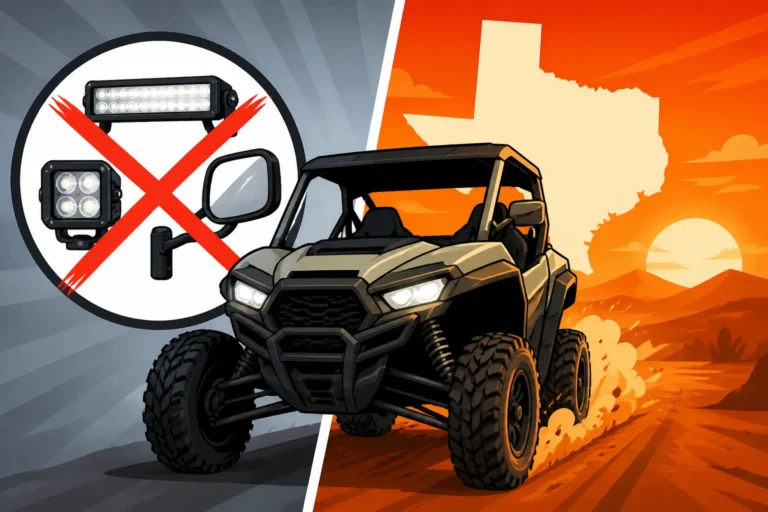
One common characteristic of these ordinances is a focus on lower-speed roads. You won't typically find UTVs allowed on state highways or major thoroughfares, but rather on streets with speed limits of 35 mph or less. This makes sense from a safety perspective, as UTVs are not designed for high-speed highway travel. These local rules often require the UTV to meet certain equipment standards that go beyond what might be necessary for off-road use alone. This could include things like turn signals, rearview mirrors, working brake lights, and even a horn. Many UTV owners will look to aftermarket suppliers like SuperATV for these types of conversion kits to ensure their machine complies with local regulations.
Let's look at some hypothetical examples of how different cities might approach this, keeping in mind that you must check the current ordinance for any specific city you plan to ride in:
-
Example City A (Coastal Community): Imagine a smaller coastal town, popular with tourists and golf cart users. This city might have an ordinance allowing UTVs on any city street with a speed limit of 35 mph or less. Their rules might specify that UTVs must be equipped with headlamps, taillamps, turn signals, a horn, and a valid brake system. They might also require a slow-moving vehicle emblem or an orange safety flag, similar to what you might see on an ATV being used in agricultural settings. The city might also restrict hours of operation, perhaps disallowing UTVs after dark without specific lighting requirements. For those interested in golf carts specifically, there are also [Texas Golf Cart Plate Rules].
-
Example City B (Rural Small Town): In a more rural town, perhaps one serving as a hub for nearby ranches or recreational areas, the ordinance might be focused on facilitating local utility and access. This city might allow UTVs on all non-arterial roads within city limits, again with a speed limit cap. Their rules might focus on the driver holding a valid driver's license, proof of insurance (even if not strictly required by the state for off-road use, cities can mandate it for street use), and ensuring the UTV has basic safety equipment. They might have fewer restrictions on time of day, acknowledging residents use them for work-related tasks.
-
Example City C (Master-Planned Community Adjacent): Consider a city that has grown up around or absorbed several large master-planned communities. This city might implement a tiered approach. Within the master-planned communities, UTVs might be allowed with minimal requirements due to the community's internal rules. However, on the city's connecting streets, the requirements would be stricter, reflecting the need to integrate with higher traffic volumes and different road designs. This often requires careful planning and enforcement. You'll want to check [What an Approved Plat Means for Street Riding] in such cases.
The critical takeaway is that while these cities do exist, their rules are highly localized and can change. Always, always verify the most up-to-date ordinance directly with the city clerk's office or the local police department before riding your UTV on public roads.
Common Requirements in City Ordinances
When a Texas city decides to open its streets to UTVs, you can expect certain common requirements to be part of their local ordinance. These are designed to bridge the gap between an off-road machine and a vehicle that can safely share space with traditional cars. Ignoring these can lead to fines or worse.
| Requirement Feature | Typical Mandate | Purpose |
|---|---|---|
| Driver's License | Valid state driver's license required for operator. | Ensures operator has basic knowledge of traffic laws and is legally capable of operating a motor vehicle. |
| Minimum Age | Usually 16 years old (same as driver's license age). | Aligns with state driving age, ensuring maturity and legal responsibility. |
| Road Type/Speed | Restricted to roads with speed limits of 35 mph or less. | Reduces speed differential with other vehicles, improving safety in lower-traffic environments. |
| Equipment | Headlights, taillights, brake lights, turn signals, horn, mirrors (side and rearview), seatbelts, windshield. | Enhances visibility to other drivers, allows for signaling intentions, and provides basic occupant protection. |
| Insurance | Proof of liability insurance often required. | Provides financial protection in case of an accident, even though state law doesn't always mandate it for OHVs. |
| Daylight Hours | Often restricted to daylight hours, or requires additional lighting for night use. | Increases visibility and reduces risk during periods of lower natural light. |
| Inspection | Some cities may require a local safety inspection. | Ensures the UTV meets the specific safety equipment standards outlined in the ordinance. |
| Slow-Moving Emblem | Triangle emblem may be required for machines unable to maintain road speed. | Warns other drivers that the vehicle ahead is operating at a slower speed. |
It's vital that you understand that simply having these accessories on your UTV, perhaps from a SuperATV aftermarket kit, isn't enough; they must be functional and compliant with the specific local rules. For instance, a small, barely visible turn signal might not pass muster if the ordinance specifies a certain size or brightness.
Navigating Local UTV Ordinances: Your Checklist for Legal Riding
Okay, so you're thinking about taking your UTV on the streets in a city that might allow it. That's fantastic! But before you load up your cooler and head out, there's a crucial checklist you need to run through. This isn't just about avoiding a ticket; it's about ensuring your safety and the safety of everyone else on the road. Texas law, even with local exceptions, is complex, and an informed rider is a safe and legal rider.
Step 1: Verify the Local Ordinance Directly
This is the absolute first and most important step. Do not rely on hearsay, social media posts, or what you "think" the rules are. Laws change, and what was true last year might not be true today.
- Contact the City Clerk's Office: This is usually the best place to start. They are the keepers of all city ordinances and can provide you with a copy of the specific rules governing UTVs (or golf carts, as they are often grouped together).
- Check the City's Official Website: Many cities post their complete municipal code online. Look for sections related to "vehicles," "traffic," "off-highway vehicles," or "golf carts."
- Call the Local Police Department (Non-Emergency Line): While the city clerk handles the ordinances, the police enforce them. They can often provide a quick overview or direct you to the right section of the city code.
- Don't Assume: Just because a neighboring town allows UTVs doesn't mean your target city does. Each city's ordinance is distinct.
Step 2: Ensure Your UTV Meets All Equipment Requirements
Once you have the ordinance in hand, go through it line by line and compare it to your UTV. This is where those modifications come into play.
- Lighting: Do you have working headlights, taillights, and functional turn signals (front and rear)? Many UTVs, especially older models or those primarily used off-road, might not come with full street-legal lighting from the factory. Aftermarket kits, perhaps from SuperATV, are common for this.
- Brakes and Mirrors: A fully functional braking system is a given, but don't forget the mirrors. Most ordinances will require at least one rearview mirror, and often two side mirrors.
- Horn: A working horn is almost universally required.
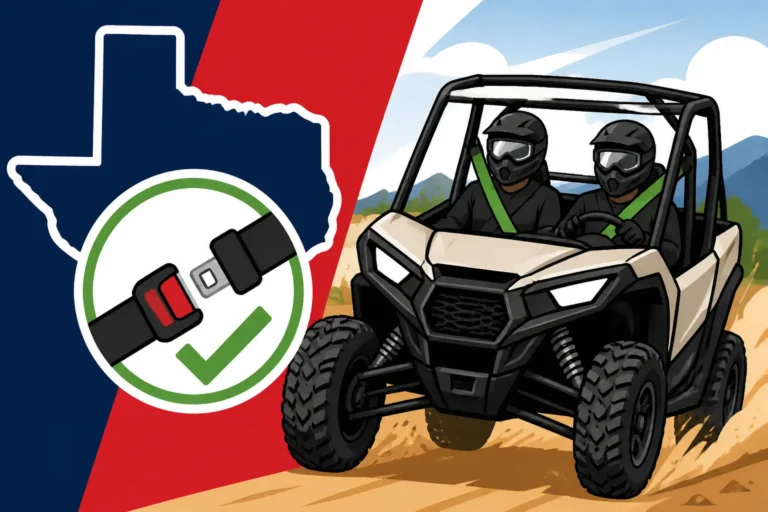
- Seatbelts/Restraints: If your UTV has seats, ensure all passengers have access to and use appropriate restraints.
- Windshield: Some ordinances may specify a windshield.
- Other Requirements: This could include a slow-moving vehicle emblem (SMV) or even specific tire types.
Step 3: Understand Operational Restrictions
It's not just about what your UTV has; it's about how and where you can operate it.
- Speed Limits: Is the UTV restricted to roads with a speed limit of 35 mph or less? Stick to those roads. Avoid any streets with higher posted limits.
- Time of Day: Are you allowed to ride only during daylight hours, or are there specific lighting requirements for night use?
- Driver Requirements: Do you (and anyone else who might drive it) have a valid driver's license? What's the minimum age requirement for operators? [Texas Rules for Riders Under 14] will give you some insight into general OHV rules, but city ordinances for street use will typically defer to driver's license age.
- Passenger Rules: Can you carry passengers? Only in manufacturer-designated seating? Are there age restrictions for passengers? [Texas Passenger Rules on an ATV] addresses this for general OHV use, but city street ordinances might be more specific.
- Insurance: While Texas doesn't mandate liability insurance for off-highway vehicles, many cities will require proof of insurance for street operation. It's always a good idea to have it anyway. [Texas ATV Insurance Requirements] is a good starting point for general info.
Step 4: Keep Documentation Handy
When you're out riding on city streets, you should always have certain documents with you, just as you would in a car.
- Your valid driver's license.
- Proof of insurance (if required by the city).
- Perhaps even a printed copy of the local ordinance for quick reference, especially if you're ever questioned.
Step 5: Ride Responsibly and Safely
Even when legally permitted, operating a UTV on public streets requires an extra level of vigilance.
- Be Predictable: Use your turn signals, maintain a steady speed, and follow all traffic laws.
- Be Visible: Ensure your lights are on, especially in low light conditions. Wear bright clothing if possible.
- Anticipate Others: Drivers of traditional vehicles might not be accustomed to seeing UTVs on the road, so be prepared for them to not see you.
- Avoid Distractions: Focus entirely on your driving and the road conditions.
By diligently following these steps, you can enjoy the convenience of using your UTV on approved city streets while staying safe and within the bounds of the law. Disregarding these steps is a surefire way to encounter problems, potentially including a Class C Misdemeanor fine. [Texas Fines for Illegal ATV Road Use] explains the consequences of non-compliance.
Disclaimer
This article is for general informational purposes only and does not constitute professional advice. Laws, prices and regulations vary by location and change over time. Consult a qualified professional for guidance on your specific situation.