Texas Seat Belt Rules in a Side-by-Side
Navigating the world of off-highway vehicles in Texas can sometimes feel like trying to untangle a bowl of spaghetti – especially when it comes to understanding the rules for something as seemingly straightforward as seat belts in your side-by-side. Many folks get frustrated, wondering if they need to buckle up every single time, or if the rules change depending on where they're riding. This guide aims to clear up that confusion, diving deep into what Texas law actually says about seat belts in UTVs, and what common sense safety practices you should adopt regardless of the letter of the law.
The Basic Expectation for Side-by-Sides in Texas
When you first bought your side-by-side, you probably noticed it came equipped with seat belts, just like a car or truck. This isn't an accident; manufacturers put them there for a reason. However, the legal framework in Texas for off-highway vehicles (OHVs) like UTVs is quite distinct from that for passenger cars. Understanding this distinction is the first step to making sense of the seat belt situation.
Why UTVs Are Different from ATVs
Side-by-sides, also known as Utility Terrain Vehicles (UTVs) or Recreational Off-highway Vehicles (ROVs), are designed from the ground up to carry multiple passengers, often side-by-side (hence the name!) in an automotive-style seating arrangement. This typically includes a steering wheel, foot pedals, and, crucially, seat belts for everyone. This design philosophy sets them apart from traditional All-Terrain Vehicles (ATVs), which are usually designed for a single rider or, in some cases, a driver and one passenger sitting in tandem. With ATVs, the rider uses body weight to maneuver, and while some accessories might offer a modicum of restraint, they rarely come with full seat belt systems like UTVs.
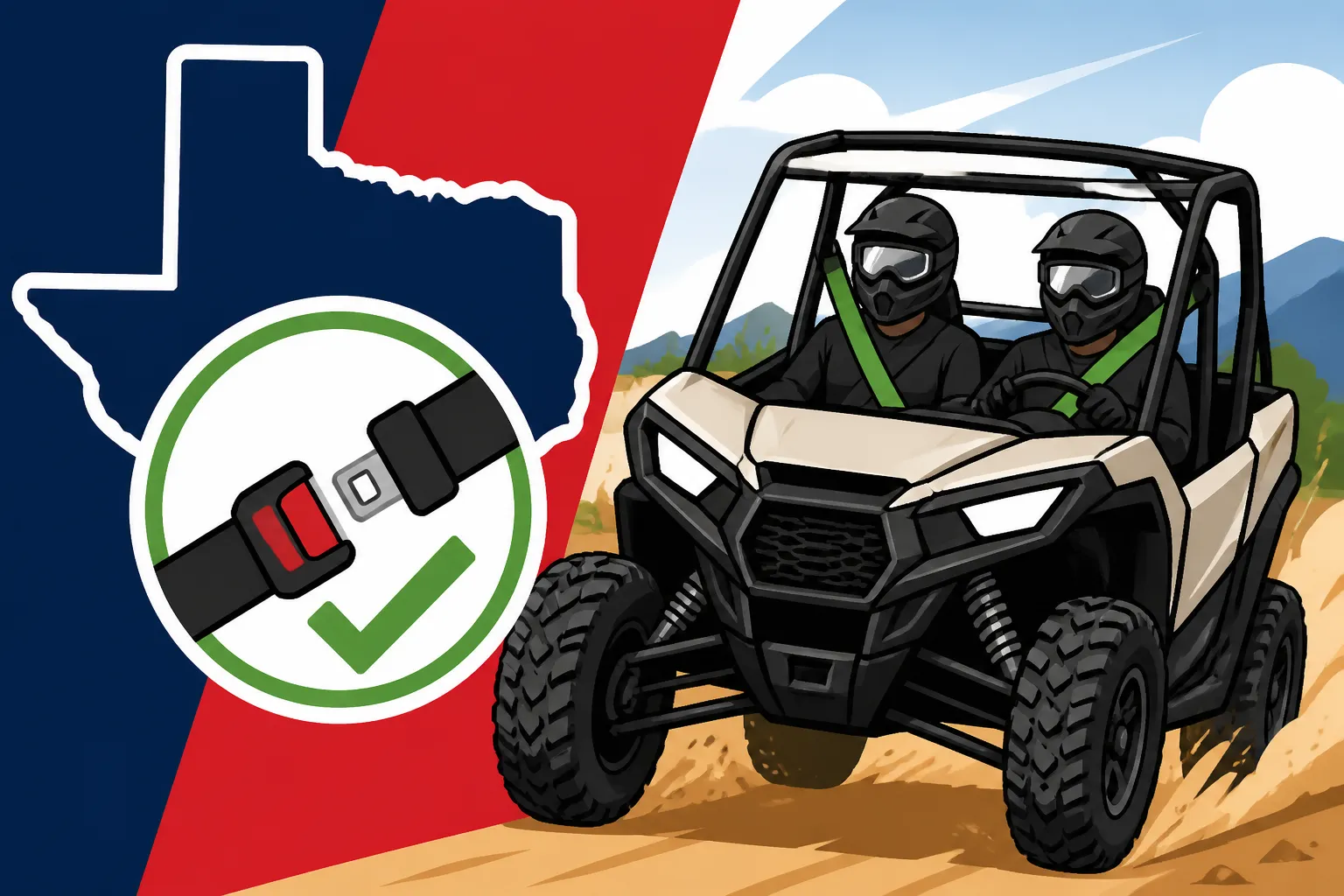
Because UTVs resemble cars more closely in their seating and control layout, there's a natural expectation that seat belts would be used. The manufacturer's design inherently implies a seated, belted occupant for safety. When you look at the safety warnings that come with your machine, they almost universally advise all occupants to wear their seat belts at all times. This isn't just a suggestion; it's a core component of the vehicle's intended safety system, engineered to keep you inside the protective cage during rollovers or sudden impacts, especially when you consider the terrain these machines are built to conquer.
Texas's General Stance on Off-Highway Vehicle Equipment
Texas has a specific legal definition for Off-Highway Vehicles (OHVs), which includes ATVs, UTVs, and sand rails, among others. The critical distinction is that these vehicles are primarily designed for off-road use, not for operation on public streets or highways. This foundational understanding impacts how the state legislates safety equipment like seat belts. For most off-road use on private land or designated OHV parks, the state doesn't impose a blanket mandate for seat belt use in the same way it does for a passenger car on a highway. The laws regarding OHVs tend to focus more on titling, registration (or lack thereof), and limited road use exceptions rather than prescribing every piece of safety gear for every single off-road scenario.
The general assumption is that when you're on private land or a dedicated trail, personal responsibility and manufacturer guidelines take precedence. This is why you won't find a sweeping Texas statute demanding seat belt use for every single twist and turn off the pavement. However, this doesn't mean seat belts are optional. It means the direct legal enforcement for off-road recreational use is typically lighter, putting the onus on the rider to make safe choices. Think of it this way: the state wants you to title your [Texas ATV Title for a Side-by-Side], but it trusts you to use the safety features built into it when you're out enjoying the trails at [Hidden Falls Adventure Park at Marble Falls].
Riding on Private Land vs. Limited Public Road Use
Where you ride your side-by-side in Texas dramatically influences the interpretation of seat belt rules. The regulations (or lack thereof) shift considerably between private property and those rare, specific instances where an OHV might legally touch a public road. This is where a lot of the confusion stems from, because the blanket rules for passenger cars simply don't apply to UTVs in most scenarios.
Seat Belts on Your Own Property
Most UTV riding in Texas happens on private property – whether that's your own sprawling ranch, a friend's deer lease, or a commercial OHV park that's privately owned and operated. On these lands, Texas state law generally takes a hands-off approach to specific safety equipment mandates like seat belts. This means that while your side-by-side undoubtedly has seat belts, the state isn't going to fine you for not wearing them while you're driving across your own pasture to check on cattle or hauling supplies on your hunting lease. This flexibility is largely due to the "private property" principle, where the landowner sets the rules for their domain.
However, this lack of direct state enforcement should never be mistaken for a green light to forgo safety. Manufacturers like Polaris, Can-Am, and Arctic Cat design these machines with seat belts as integral safety features. They are there to keep you secure and contained within the vehicle's protective structure in the event of a sudden stop, rough terrain jostling, or even a rollover. Even if the law doesn't require it, your safety, and the safety of your passengers, absolutely demands it. Many private parks, while not bound by state seat belt laws, will often have their own rules requiring seat belt use as a condition of entry. It's a smart practice, regardless of the official regulations, to always buckle up every single time you start your machine, even if you're just moving it a few feet in the driveway.
The Nuances of Public Road Exceptions
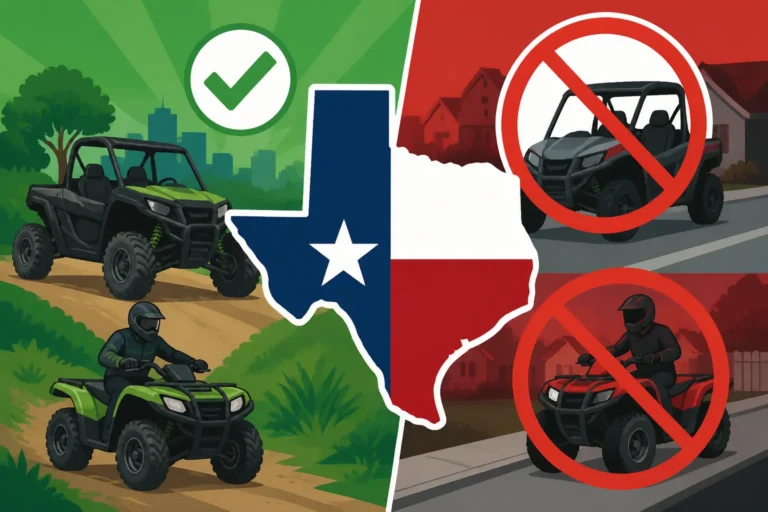
This is where the spaghetti bowl gets really tangled for many UTV owners. While UTVs are not generally "street legal" in Texas, there are very specific, limited exceptions that allow them to be operated on certain public roads. These exceptions are often tied to specific use cases, road types, or localized ordinances. For instance, you might be able to ride on certain [Texas Rules for Riding a Farm Road], cross a highway at an intersection, or operate within a [Texas Rules for Riding in a Master Planned Community]. The key question here is: do seat belt rules suddenly kick in for these limited public road uses?
Texas law does not explicitly state that OHV operators or passengers must wear seat belts when operating under one of these specific road use exceptions. This is a significant point of difference from the explicit seat belt laws that apply to passenger cars. The statutes that create these OHV road use exceptions typically outline speed limits, daylight-only operation, and sometimes a [The 6-Foot Orange Flag Texas Requires], but they generally do not add a separate seat belt mandate. This doesn't mean you shouldn't wear them; it simply means the direct legal penalty for not wearing them, specifically for an OHV operating under one of these exceptions, is not as clear-cut as it is for a car. It's a grey area that many riders find frustrating, as common sense says to buckle up, but the law doesn't always spell it out clearly for OHVs in these specific scenarios.
When Texas Law Steps In: Understanding the Exceptions
While Texas generally categorizes UTVs as off-highway vehicles, there are specific instances where the law touches on their operation, particularly when they interact with public roads. These exceptions are crucial for understanding the broader context of safety and compliance, even if they don't always directly mandate seat belt use for OHVs.
The Agricultural Exemption and Seat Belts
One of the most common and practical exceptions for UTV operation on public roads in Texas is for agricultural purposes. Farmers and ranchers frequently use side-by-sides to conduct legitimate farm or ranch business, which might involve crossing or even briefly traveling on a public road. Texas law acknowledges this need, allowing OHVs to operate on public roads with a posted speed limit of 35 mph or less, for a distance of up to 25 miles from the origin point, if the operation is "directly related to the production of food, fiber, or other agricultural products." You'll find this mentioned in statutes like [Texas Agricultural Exemption for ATVs on Roads].
In these agricultural scenarios, the primary focus of the law is on who is riding and why, rather than the specific safety equipment used beyond what the manufacturer provides. While the law requires certain lights or an orange flag, it does not specifically add a new mandate for seat belt use beyond what the manufacturer already installed. This means that if you're using your UTV to haul feed down a county road for your cattle, you're expected to use the machine safely, but the state isn't adding an extra layer of seat belt enforcement beyond what came from the factory. Again, this is a distinct difference from typical vehicle codes. Still, anyone from a working ranch knows that a sudden ditch or an unexpected animal can make for a bumpy ride, so buckling up is always the smart play, especially when carrying valuable cargo or working on uneven ground.
Crossing Public Roads and Master Planned Communities
Beyond agricultural use, Texas provides a couple of other limited circumstances where OHVs might find themselves on public asphalt. One is the ability to cross a public road, which must be done at a right angle and after coming to a complete stop, ensuring traffic is clear. Another increasingly common exception applies to certain [Master Planned Communities and Uniform Covenants] that have specific ordinances allowing UTVs on their internal streets. These are distinct situations, each with its own set of rules.
For simply [Crossing a Highway on an ATV in Texas] at a 90-degree angle, the brief interaction with the roadway doesn't typically trigger the full suite of passenger vehicle safety laws. The intent is to allow for practical movement between properties, not extended road travel. Similarly, within a master-planned community that has specifically opted to allow UTVs, the rules are often established by the community itself or a local ordinance, not by broader state highway code. While these local rules might specify operating hours or age limits, they usually don't introduce new seat belt mandates separate from how the UTV is already equipped. The community might expect occupants to use the provided restraints, but it's not the state's seat belt law directly applying. It’s always best to check with your specific community’s guidelines, as these can vary widely.
The "Street Legal" Myth for UTVs
One of the biggest misconceptions surrounding side-by-sides in Texas is the idea that you can make them "street legal" with a few modifications. This myth persists despite clear state laws. Texas classifies UTVs as OHVs, designed for off-road use, and does not generally allow them to be registered or licensed for regular street use like a car or truck. You can't simply add turn signals, a horn, and a rearview mirror and expect to drive it down I-35. [Why Texas Will Not Register an ATV for the Road] is a fundamental point of law.
This distinction is crucial when discussing seat belts. Because UTVs are not considered street-legal vehicles in the traditional sense, the state's primary seat belt laws – those found in the Transportation Code that mandate seat belt use for drivers and passengers in cars and light trucks on public roads – do not directly apply to UTVs. This means that even if you're operating your UTV under one of the narrow public road exceptions, you're not operating a "motor vehicle" in the eyes of the general seat belt statute. While this might seem like a loophole, it simply reflects the state's classification of these machines. It shifts the emphasis back to manufacturer recommendations and common-sense safety rather than strict legal mandates for seat belt use in every scenario.
Enhancing Safety Beyond the Law's Minimums
While the letter of Texas law may not always explicitly mandate seat belt use for side-by-sides in every situation, a truly responsible rider understands that safety goes far beyond legal minimums. There's always room to improve your machine's safety features and ensure everyone who rides with you knows how to stay secure.
Upgrading Your Side-by-Side's Restraints
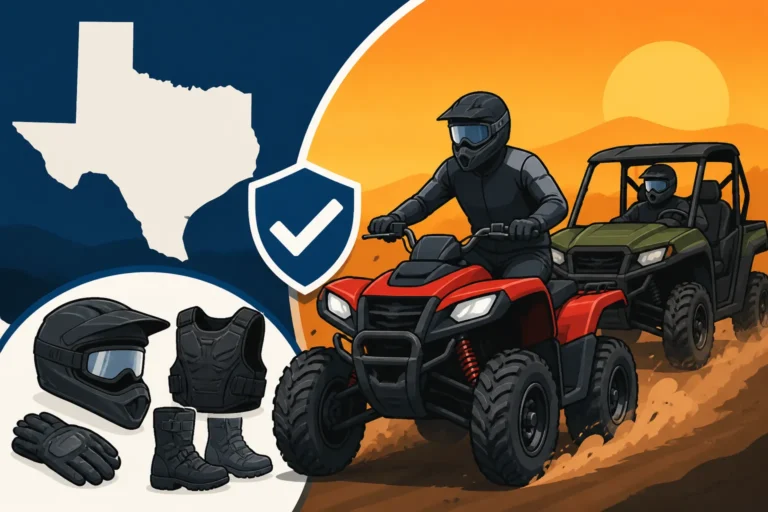
The seat belts that come standard in your side-by-side are designed to meet basic safety requirements, and for many riders, they do a perfectly adequate job. However, the off-road world can be demanding, and for those who push their machines harder or frequently ride on extremely challenging terrain, upgrading your restraint system is a wise investment. Aftermarket options offer enhanced protection and comfort. For instance, companies like SuperATV offer a range of harness systems, from 4-point to 5-point harnesses, that provide a much more secure fit than a standard lap and shoulder belt.
A 4-point harness adds shoulder straps that anchor behind the seat, providing better upper body retention. A 5-point harness adds a strap that comes up between the legs, preventing "submarining" (where you slide down and under the lap belt) during extreme impacts or rollovers. These systems keep you firmly planted in your seat, reducing the risk of being ejected or jostled around excessively, which can lead to injuries even in minor incidents. Installation usually involves bolting into existing frame points or using specific harness bars that reinforce the mounting. While these upgrades aren't legally required in Texas, they significantly increase the safety margin, especially for spirited driving or competitive riding. You can find robust options from SuperATV that are designed to handle the toughest trails Texas has to offer, giving you peace of mind whether you're navigating the rocks at [Katemcy Rocks and Its Scheduled Dates] or tackling muddy trails in East Texas.
Educating Passengers and Young Riders
Even the best safety equipment is only as good as the person using it. This is particularly true in a side-by-side, where you often have passengers, including children. As the driver and owner, you bear a significant responsibility for ensuring everyone in your UTV understands and adheres to safe riding practices. This starts with a non-negotiable rule: everyone buckles up, every time. It doesn't matter if you're just driving from the truck to the deer stand; the moment the engine starts, those buckles should click.
Beyond simply buckling up, educate your passengers on proper riding posture, keeping limbs inside the vehicle, and understanding the terrain you're traversing. For [Texas Rules for a Child in a Side-by-Side], specific age and height recommendations from manufacturers often exist, and these should always be followed. Children are more vulnerable to injury, and ensuring they are properly secured in a seat designed for their size, with appropriately adjusted seat belts or even child seats where applicable, is paramount. Many youth models of UTVs are designed with smaller riders in mind, but adult machines may require additional measures to safely transport smaller passengers. Leading by example is also key – if you always buckle up, your passengers, especially children, are far more likely to do the same without question.
Comparing Seat Belt Expectations: Public vs. Private Land
To help clarify the differences, here's a quick look at how seat belt expectations typically stack up depending on where you're riding your side-by-side in Texas.
| Factor | Private Land (Ranch, OHV Park) | Limited Public Road Use (Exceptions) |
|---|---|---|
| Legal Mandate | Generally no direct state mandate | Generally no explicit state mandate |
| Manufacturer Expectation | Always required per manual | Always required per manual |
| Primary Enforcement | Landowner/Park rules, personal responsibility | Limited (mostly for traffic infractions) |
| Safety Rationale | Ejection prevention, rollover protection | Ejection prevention, rollover protection |
| Common Practice | Highly recommended, often park rule | Highly recommended, common sense |
| Upgrades Recommended | For enhanced safety/aggressive riding | For enhanced safety |
Regardless of where your adventures take you, from the sand dunes near Monahans to the dense trails of the Sam Houston National Forest, always remembering to buckle up is the simplest, most effective way to protect yourself and your passengers.
Disclaimer
This article is for general informational purposes only and does not constitute professional advice. Laws, prices and regulations vary by location and change over time. Consult a qualified professional for guidance on your specific situation.