Texas Rules for Riding a Caliche Road
Oh, the infamous caliche road! If you've spent any time at all exploring the vast and varied landscapes of Texas on your ATV or UTV, you’ve undoubtedly encountered these distinctively white, often dusty, and sometimes bone-jarring pathways. The question of whether you can legally ride your off-highway vehicle (OHV) on a caliche road is one that plagues many riders, often leading to confusion, frustration, and sometimes even a run-in with the law. This guide is here to cut through the dust and shed some much-needed light on the Texas rules governing ATV and UTV use on these unique roads, helping you navigate the legalities so you can ride with confidence, not consternation.
What Exactly is a Caliche Road in Texas?
Before we dive into the legalities, let's get a handle on what a caliche road truly is. It's more than just a surface; it's a common feature of the Texas landscape, particularly in rural and arid areas. Understanding its nature and typical locations will help us understand why the rules around riding on them can be so nuanced.
The Material and Its Purpose
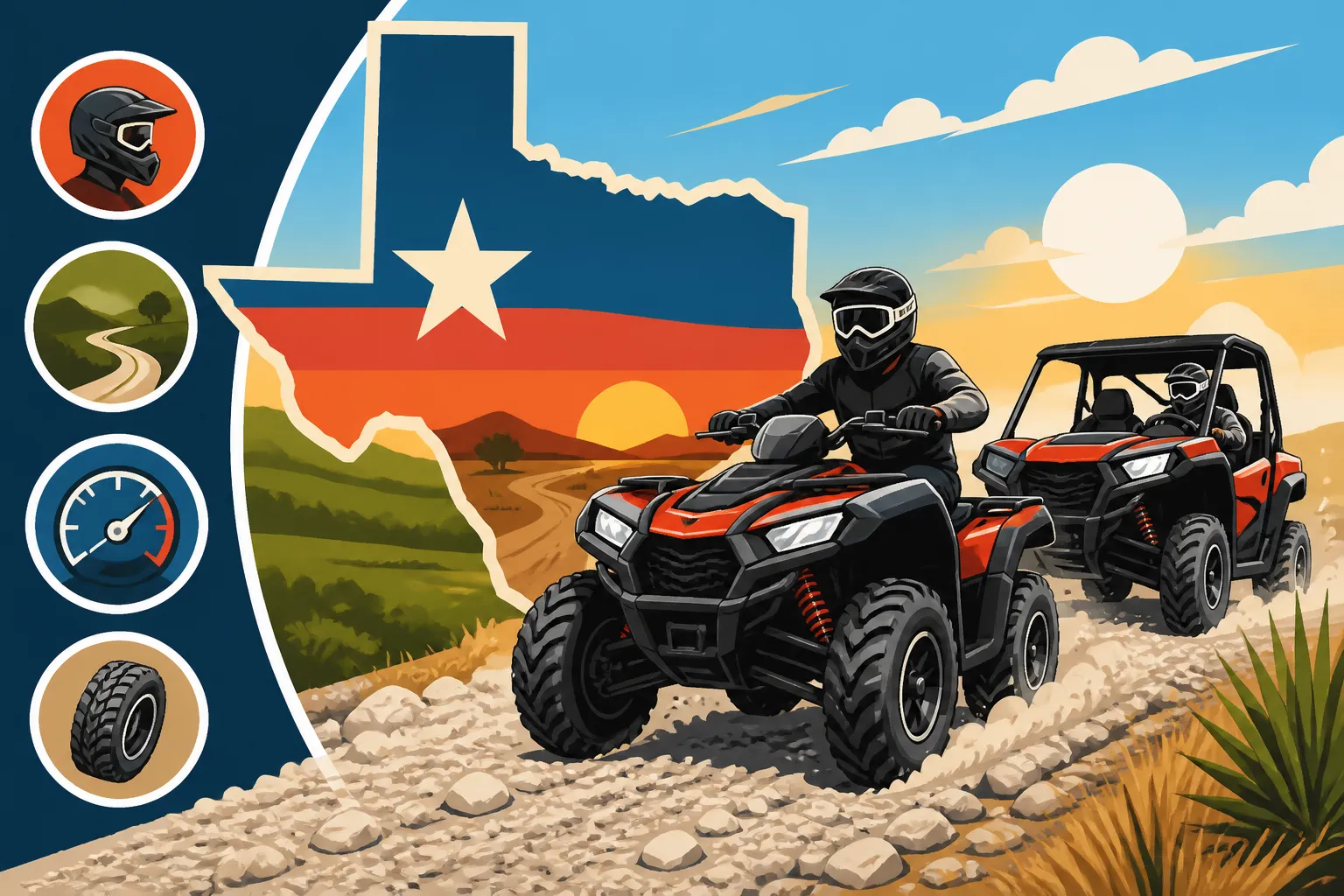
Caliche itself is a sedimentary rock or soil layer, often composed of calcium carbonate, that’s naturally abundant in many parts of Texas. When it's used for road construction, it's typically crushed and compacted to form a durable, albeit dusty, driving surface. It’s a popular choice for several reasons: it's readily available, relatively inexpensive, and holds up reasonably well to traffic, especially when dry.
However, anyone who's ridden or driven on a caliche road knows its quirks. It can be incredibly dusty in dry conditions, creating low visibility and coating everything in a fine, white powder. After a heavy rain, it can turn into a slippery, muddy mess. The surface can also become washboarded or develop deep ruts, making for a challenging ride. You'll find these roads everywhere from sprawling cattle ranches and oil and gas lease sites to remote county roads that connect tiny rural communities. They’re functional, practical, and a quintessential part of the Texas backcountry experience.
Who Owns and Maintains Them
This is where the rubber meets the caliche, so to speak, in terms of legality. The key distinction for any rider is whether the caliche road you're eyeing is private or public. Just because a road is made of caliche doesn't automatically grant or revoke your right to ride an OHV on it. The material of the road doesn't define its legal status; its ownership and designation do.
Many caliche roads are, in fact, private. Think about the long, winding driveways leading to a ranch house, the network of service roads crisscrossing an oil field, or the access routes into hunting leases. These roads are privately owned and maintained, and riding on them without explicit permission from the landowner or leaseholder is considered trespassing. It doesn't matter if there's no gate or "No Trespassing" sign; if it's private property, you need permission. [Texas Trespass Rules for Riders] covers this in more detail.
On the flip side, many county roads in rural Texas are also surfaced with caliche. These are public roads, maintained by the county, and are part of the broader public road network. While they might look exactly like a private ranch road, their legal status is entirely different. The challenge, of course, is discerning which is which. It's not always obvious, and making an assumption can land you in a heap of trouble.
The Legal Landscape: When Can You Ride?
Texas law is pretty clear: off-highway vehicles like ATVs and UTVs are generally not street legal. This means you can’t just hop on your quad and cruise down any public road, even if it's a quiet caliche path. However, like many laws, there are specific exceptions carved out, and understanding these exceptions is paramount for anyone hoping to legally enjoy their OHV on certain caliche roads.
Private Land, Explicit Permission
Let's start with the simplest scenario: riding on private land. If the caliche road is on private property – whether it's your own land, a friend's ranch, or a hunting lease you have access to – and you have the express permission of the landowner, you are typically good to go. This is the most common and straightforward way to ride your ATV or UTV on caliche roads.
This includes roads that might be part of a larger agricultural operation. Many ranches rely heavily on caliche roads for moving livestock, equipment, and personnel. As long as you have permission, you're usually riding within the bounds of private property law. [Texas Rules for Riding a Ranch Road] further elaborates on this. While verbal permission is common, especially among friends and family, it's always a good idea to seek written permission for significant use or if there's any potential for misunderstanding. This simple step can save you a lot of grief if questions about your presence ever arise.
Public Roads and the Exceptions
Now, this is where it gets more complex. If a caliche road is a public road (like a county road), the general prohibition against OHVs on public roads applies. However, Texas Transportation Code Chapter 551, which governs OHVs, does provide several specific exceptions where an ATV or UTV might be allowed on a public road, and some of these could potentially include caliche county roads.
Here are the most relevant exceptions you might encounter on a caliche road:
- Farm-to-Market or Ranch Roads: If the caliche road is officially designated as a farm-to-market or ranch road and you are using the OHV for a legitimate agricultural purpose, you might be exempt. This is a very specific exemption tied to agricultural use. For example, moving feed from one pasture to another on a short stretch of a public farm road. [Texas Rules for Riding a Farm Road] and [Texas Agricultural Exemption for ATVs on Roads] delve deeper into these specific situations. You'd need to ensure your activities align perfectly with what the law defines as agricultural use.
- Roads Posted 35 MPH or Less: This is arguably the most common exception that could apply to rural caliche county roads. Texas law allows OHVs to be operated on public roads that have a speed limit of 35 miles per hour or less, provided certain conditions are met. These conditions include operating during daylight hours only, having proper lighting (headlights and taillights), and carrying liability insurance (though it’s not strictly mandated for OHVs, it’s always wise). You must also operate it at a speed of 35 MPH or less. Many rural caliche roads fall into this speed limit category, making this an important potential avenue for legal riding. However, remember this is not a blanket permission to joyride; it's a narrow exception with strict requirements. [Texas Rules for Riding on a 35 mph Road] explains all the details.
- Crossing a Public Road: Even if you can't ride on a public caliche road, you are generally allowed to cross one. The law permits an OHV to cross a public road at an angle of approximately 90 degrees to the roadway, provided the crossing is made at a place where it is safe to do so and does not unduly interfere with other traffic. You must come to a complete stop before crossing. This is crucial for connecting private parcels of land or accessing different trail systems. [Texas Rules for Getting Across a Road] breaks down the exact requirements for safe and legal crossings.
- Master Planned Communities: While less likely to feature extensive caliche roads, it's worth noting that OHVs can sometimes be operated on streets within master planned communities if the community's governing documents and local ordinances allow it. If you happen to live in or visit such a community with caliche-surfaced access roads, this exception might apply. [Texas Rules for Riding in a Master Planned Community] provides the full context.
The Role of County Commissioners
It's also worth understanding that county commissioners courts in Texas have some discretion when it comes to regulating OHVs on county roads. In certain counties, particularly those with a population under 37,000, commissioners may opt to allow OHVs on specific county roads, or even all county roads, under certain conditions. This is a local decision and not something that applies statewide. Therefore, if you're eyeing a particular caliche county road, it's always a good idea to check with the local county clerk or sheriff's office to see if any such ordinances are in place. This local variation means what's legal in one county might be strictly prohibited just across the county line.
Navigating the Gray Areas: Permissions and Precautions
The world of Texas caliche roads can often feel like a giant gray area when you're an OHV rider. It's not always clear whether a road is public or private, or if a particular exception applies. Taking proactive steps and exercising caution are your best allies in staying legal and safe.
Verifying Road Status and Ownership
Never assume. That's the golden rule when it comes to caliche roads. Just because a road looks like it's never maintained or doesn't have a "Private Property" sign doesn't mean it's open for public OHV use. To definitively determine if a caliche road is public or private, you might need to do a little detective work:
- Check with the County: Your local county tax assessor-collector's office or the county clerk's office can often help you identify if a road is a public right-of-way or private property. They can look up property plats and road designations. The county sheriff's office might also be a good resource for understanding local OHV ordinances and commonly accepted riding areas.
- Look for Signs: While not foolproof, the presence of "No Trespassing," "Private Road," or "Keep Out" signs should always be respected. Likewise, official county road markers indicate a public road, though this still doesn't automatically mean OHV use is permitted.
- Ask Locals: Sometimes, the best information comes from residents who have lived in the area for a long time. They often know the history and ownership of local roads. However, always verify anecdotal information with official sources if there's any doubt.
Essential Gear and Safe Riding Practices
Even when you're legally permitted to ride on a caliche road, safety remains paramount. These roads, by their very nature, present unique challenges.
- Visibility: Caliche roads can be incredibly dusty, especially in dry conditions. This severely reduces visibility for both you and anyone else on the road. Always ride with your headlights on, even during the day, and consider adding a whip flag to your OHV for increased visibility. If you're riding with a group, maintain safe distances to avoid getting engulfed in the dust cloud of the rider ahead. Quality dust filtration for your UTV's engine and cabin, available from brands like SuperATV, can significantly improve your experience and protect your machine.
- Personal Protective Equipment (PPE): Helmets are not always legally required for adults on private land, but they are a non-negotiable for safety on any off-road terrain, especially on a rough caliche road. [Texas Helmet Law for ATV Riders] outlines requirements for public land. Eye protection is also crucial to shield your eyes from dust, gravel, and debris kicked up by your own machine or others. [Texas Eye Protection Requirement for Riders]
- Tires and Suspension: The loose, rocky, and sometimes rutted surface of caliche roads can be tough on tires and suspension. Ensure your tires are in good condition and at the appropriate pressure for off-road use. If you frequently ride on rough caliche, you might consider upgrading your suspension for a more comfortable and controlled ride. Brands like SuperATV offer a wide range of aftermarket suspension components that can enhance your OHV's performance and durability on such terrain.
- Respecting Conditions: Caliche roads can be unpredictable. After rain, they can become extremely slick and treacherous. In dry spells, washboards and deep ruts can form. Adjust your speed and riding style to match the conditions. Always anticipate blind curves, especially if dust is limiting your view.
Signs, Gates, and Implied Consent
It bears repeating: always respect posted signs and closed gates. A "No Trespassing" sign isn't just a suggestion; it's a legal warning. Even if a gate is unlocked or appears to have been bypassed, if it's there, it usually signifies private property. Do not assume that because others may have trespassed, you are also entitled to do so. Ignoring these warnings can lead to serious legal consequences. Landowners are often quick to call law enforcement when they see OHVs on their private caliche roads, and ignorance of the law is rarely an acceptable defense.
Penalties and What to Avoid
Riding an OHV on a caliche road in Texas without proper authorization or outside the legal exceptions can lead to significant penalties. It's not just about a friendly warning; law enforcement takes these violations seriously. Understanding the potential consequences is a strong motivator for riding responsibly and within the law.
Understanding Trespassing and Traffic Violations
The specific penalty you face will depend on whether you are trespassing on private property or illegally operating an OHV on a public road.
- Trespassing: If you're caught riding on a private caliche road without permission, you could be charged with criminal trespass. In Texas, this is typically a Class B misdemeanor, though it can be elevated depending on the circumstances (e.g., if you damage property). A Class B misdemeanor carries potential fines and even jail time. The owner of the property also has the right to file civil charges against you for damages.
- Illegal Road Use: Operating an OHV on a public caliche road where it is prohibited (i.e., not meeting one of the specific exceptions) is generally considered a Class C misdemeanor. While a Class C misdemeanor is the lowest level of criminal offense in Texas, it still carries a significant fine. Beyond the fine, your OHV could be impounded, and you could face additional civil liability if your actions cause damage or injury. [Texas Fines for Illegal ATV Road Use] details these penalties, and [Class C Misdemeanors Under Texas OHV Law] explains the broader implications of such a charge.
- Other Violations: Depending on how you're riding, you could also face charges for reckless endangerment, disturbing the peace, or even environmental damage if you're riding in sensitive areas like dry riverbeds or protected habitats.
Protecting Your Riding Privileges
Ultimately, ensuring you ride legally and respectfully is about more than just avoiding a ticket; it's about protecting the future of OHV riding in Texas. Every negative incident, whether it's a trespass complaint or an accident on a public road, can fuel calls for more restrictive laws and fewer riding opportunities.
By taking the time to understand where you can and cannot ride on caliche roads, obtaining proper permission, equipping yourself and your machine for safety, and riding responsibly, you contribute positively to the OHV community. Always be courteous to landowners, other drivers, and fellow riders. A little respect goes a long way in ensuring that caliche roads, whether private or part of a public exception, remain accessible and enjoyable for those who follow the rules.
Disclaimer
This article is for general informational purposes only and does not constitute professional advice. Laws, prices and regulations vary by location and change over time. Consult a qualified professional for guidance on your specific situation.