Texas Rules for Carrying a Passenger on a Quad
Sharing the thrill of off-road adventure with a friend or family member on your quad can be incredibly tempting, especially when you're out enjoying Texas's diverse landscapes. However, this seemingly innocent act can lead to serious safety risks and unexpected legal trouble if you're not aware of the specific rules. Many riders face the frustration of wanting to bring someone along, only to be confused about what Texas law actually permits, or more often, prohibits, when it comes to carrying a passenger on an ATV. This guide will clarify the Texas rules surrounding passengers on quads, help you understand the crucial distinctions between different types of off-highway vehicles, and emphasize why prioritizing safety and legality is always the best path.
The Core Texas Rule: One Rider, One Machine for Quads
When it comes to traditional ATVs, or "quads" as many call them, the fundamental design principle and the prevailing Texas law are quite clear: these machines are generally built and intended for a single operator. It's a hard truth for those who want to double up, but it's rooted deeply in safety and vehicle engineering.
Why Quads Are Designed for Solo Use
Think about the ATV itself. Most quads are designed with a single seat, specific footpegs or footwells positioned for a single rider, and handlebars that require the operator to actively shift their weight to steer and maintain balance. This isn't just an aesthetic choice; it's a critical safety feature. The entire machine's center of gravity, suspension, and braking system are calibrated for the weight and dynamic movements of one person. Adding a second person fundamentally alters this balance, making the machine less predictable and harder to control, especially in off-road conditions where terrain is constantly changing.
When you introduce a passenger, even a small one, you immediately increase the total weight and raise the center of gravity. This makes the ATV much more prone to rollovers, especially on inclines, declines, or during sharp turns. The driver's ability to shift their weight, a crucial skill for maneuvering an ATV, is severely hampered by a passenger. Imagine trying to lean into a turn or absorb a bump when someone else is perched behind you, potentially interfering with your movements or even obscuring your rear view. It's an invitation for disaster, and manufacturers issue clear warnings against it for good reason. Even with robust aftermarket modifications designed for utility or rugged terrain, like those you might find from a brand such as SuperATV, the fundamental design for a single operator often remains. These parts are usually meant to enhance the single rider experience or add cargo capacity, not to transform a single-seater into a safe, legal two-seater for public use.
What Texas Law Says About a Passenger on a Quad
Texas law, specifically concerning Off-Highway Vehicles (OHVs), which includes ATVs, generally aligns with manufacturer recommendations regarding passenger capacity. For traditional ATVs designed for a single operator, carrying a passenger on public land or public roads where OHV use is specifically allowed is typically prohibited. The Texas Transportation Code defines an OHV and sets out rules for its operation. While it allows for certain exceptions for OHV use on public roads, these exceptions are usually conditional and rarely, if ever, extend to allowing an unauthorized passenger on a single-rider vehicle.
A "passenger" on a quad isn't merely an extra body; they represent an additional uncontrolled variable that compromises the vehicle's intended safe operation. Law enforcement officers, whether it's local police, county sheriffs, or game wardens, are often aware of these rules and the associated safety risks. They can issue citations for violating these passenger restrictions. While you might be able to ride your ATV on specific low-speed roads under certain conditions, such as those outlined in [Texas Rules for Riding on a 35 mph Road], this allowance does not magically transform a single-seat ATV into a multi-passenger vehicle. It's imperative to understand that simply being on a designated road doesn't waive the core safety and legal requirements regarding the vehicle's design and passenger limits. It's also worth noting that specific rules, like [Texas Minimum Age to Ride on Public Land], apply to young riders who might be tempted to ride as passengers. For detailed legal guidance, always consult the current Texas Transportation Code, but generally speaking, if your quad has one seat, it's for one person when operating anywhere but your private property. More information can be found in [Texas Passenger Rules on an ATV].
Exceptions and Nuances: When It's (Kind of) Okay
While the general rule is "no passengers on quads," there are contexts where the rules either change or are interpreted differently. Understanding these nuances is key to staying safe and within legal boundaries. The biggest distinction often lies in where you're riding and what kind of off-highway vehicle you're operating.
Private Land: Your Rules, Mostly
The landscape of rules shifts dramatically when you move from public lands, trails, or roads to private property. On your own ranch, farm, or private hunting lease, the state's public land passenger laws generally do not apply in the same strict manner. This means that, legally speaking, the decision to carry a passenger on your quad on your own private land largely falls to you, the property owner or operator. This is where many riders breathe a sigh of relief, feeling they have the freedom to share the experience.
However, "legally okay" doesn't equate to "safely advisable." Even on private land, the inherent dangers of doubling up on a single-seat ATV remain. The physics don't change just because you're behind a locked gate. Manufacturers' warnings about single-rider operation still hold true, regardless of property lines. While you might opt to give a friend a quick lift across a pasture or let a child sit in front of you for a short, slow ride, you are doing so at your own risk. It's a critical distinction: the state won't cite you for a passenger on your own land, but neither will it protect you from the consequences of an accident that stems from an overloaded or imbalanced machine. Many recreational riding areas in Texas are on private land (see [Why Texas Riding Is Mostly Pay-to-Ride]), and while their individual rules might be more relaxed than state law, they often still encourage single-rider ATV use for safety.
The Difference With Side-by-Sides (UTVs)
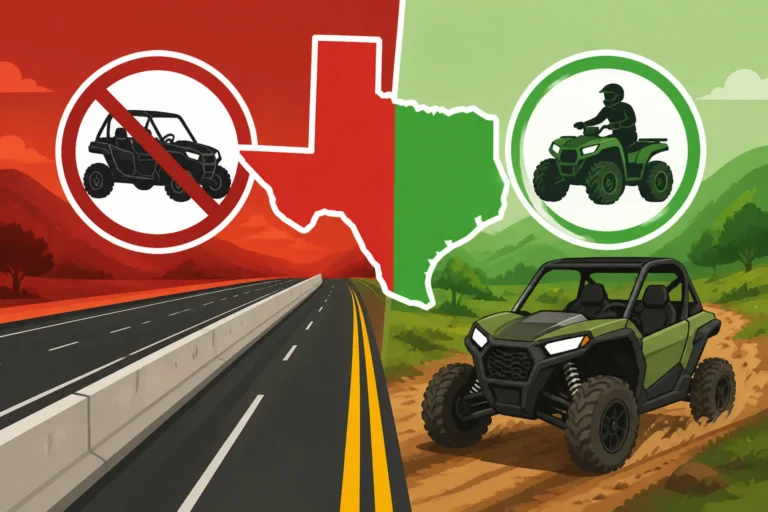
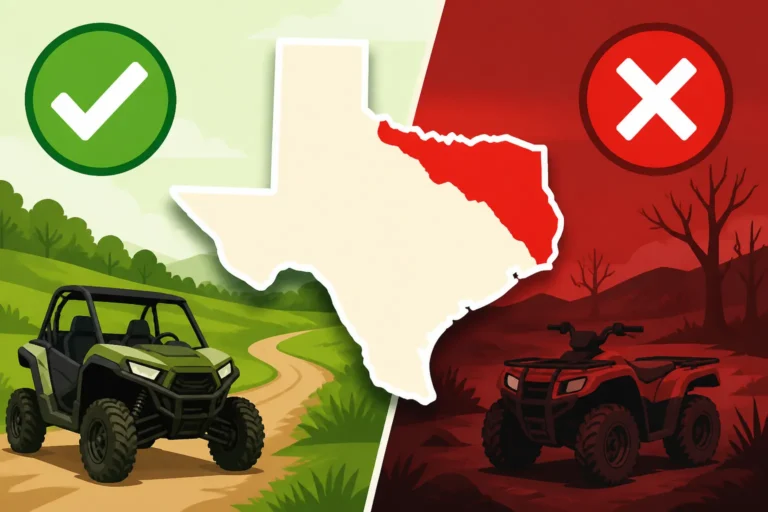
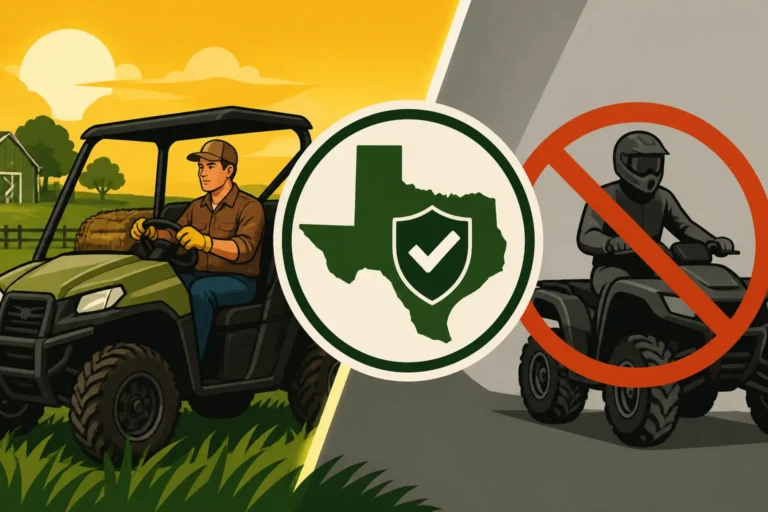
This is perhaps the most significant area of confusion for many riders. When people ask about carrying passengers on an "ATV," they often use the term interchangeably for both traditional quads and Side-by-Sides (SxS) or Utility Task Vehicles (UTVs). However, Texas law, vehicle design, and safety protocols treat these two vehicle types very differently when it comes to passengers. UTVs are explicitly designed from the ground up to carry multiple occupants, typically side-by-side, hence the name.
UTVs come equipped with features that quads lack, all geared towards passenger safety. These include multiple seats, often bench-style or bucket seats, seatbelts (sometimes multi-point harnesses), and robust roll-over protection structures (ROPS), commonly known as roll cages. These design elements ensure that passengers are safely secured and protected in a way that is simply impossible on a standard ATV. Because of these inherent safety features, carrying passengers in a UTV is generally permitted under Texas law, provided all occupants use available safety restraints and follow any other operational guidelines. This stark contrast is why you might see a family of four happily cruising in a UTV at an off-road park, while a quad rider with a passenger would likely be stopped. Understanding this distinction is crucial for both safety and legal compliance. To learn more about how these vehicles are defined, you can check out [ROVs and UTVs Under the Texas Definition]. It's a key point of difference, and one that greatly impacts rules for passengers, including those for [Texas Rules for a Child in a Side-by-Side].
Safety First: Risks and Recommendations
Regardless of the legalities, safety should always be the absolute top priority when operating any off-highway vehicle. The risks associated with carrying an unauthorized passenger on a quad are substantial and far-reaching, affecting both the operator and the passenger.
The Dangers of Doubling Up on a Single-Seat ATV
The decision to carry a passenger on a single-seat ATV significantly escalates the risk of an accident and severe injury. One of the most immediate dangers is the drastic alteration of the machine's balance and handling characteristics. ATVs are designed for dynamic weight shifting by a single operator; a second person throws off this critical equilibrium. Imagine navigating a rocky trail or a steep hill: the driver needs to move their body to counteract forces, but a passenger’s static weight makes this nearly impossible. This can lead to a loss of control, an unexpected wheelie, or, most commonly, a rollover.
Braking distance is another serious concern. With increased weight, the ATV requires a longer distance to stop effectively, especially on loose or slippery terrain. This reduced braking capability can turn a minor obstacle into a major collision. Furthermore, a passenger can inadvertently interfere with the driver's operation, accidentally bumping controls, blocking their vision, or causing them to lose grip on the handlebars. In an accident, the passenger, often not expecting to be involved, is highly vulnerable to being thrown from the machine, pinned underneath it, or striking objects. Unlike in a UTV, there are no seatbelts or roll cages on a quad to offer protection. The potential for catastrophic injury to both riders, even at low speeds, is exceptionally high. Therefore, prioritizing single-rider use on single-seat ATVs is not just a rule; it's a fundamental safety principle. Riders should always be familiar with [Texas Safety Apparel Rules for ATV Riders] and [Texas Helmet Law for ATV Riders].
Essential Safety Gear and Training (Even on Private Land)
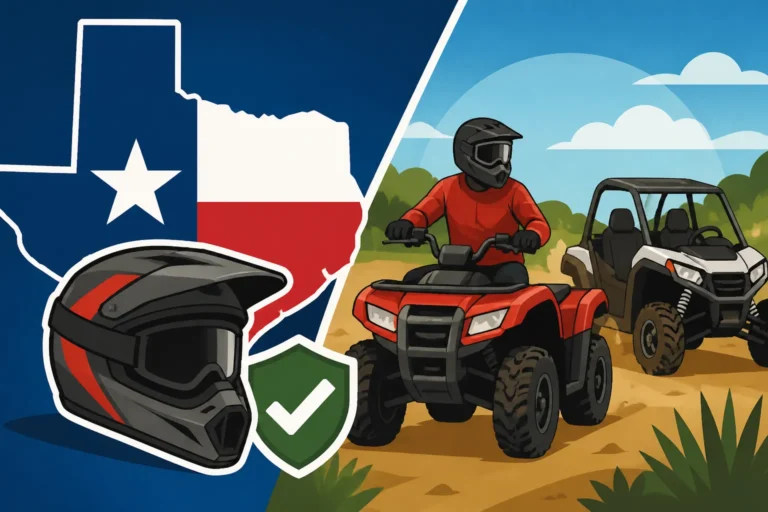
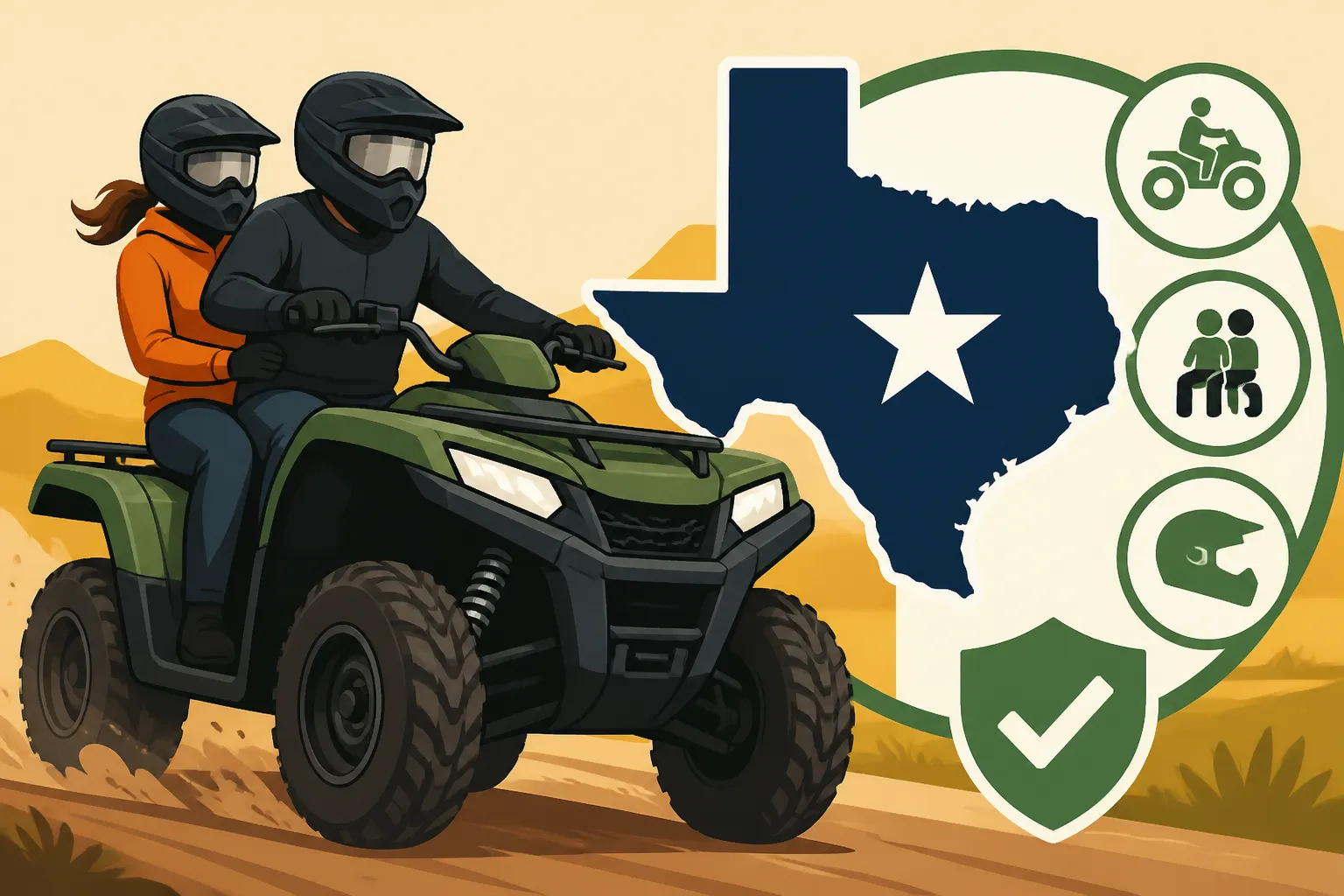
Even in situations where carrying a passenger might be legally permissible (e.g., on private land with the owner's permission), adhering to stringent safety protocols is non-negotiable. The importance of proper safety gear cannot be overstated for everyone on or near an ATV, including any potential passengers. A properly fitting helmet is the absolute minimum requirement, even for a short, slow ride. Head injuries are among the most devastating consequences of ATV accidents, and a helmet provides crucial protection. Eye protection, such as goggles, is also essential to shield eyes from dust, debris, and low-hanging branches. Sturdy footwear, long pants, and long-sleeved shirts can help prevent abrasions and minor injuries.
Beyond gear, rider training is paramount. For the operator, completing an ATV safety course, like those offered through the [Texas ATV Safety Certificate Requirements] program, teaches crucial riding techniques, hazard awareness, and emergency maneuvers. While a passenger isn't "operating" the machine, understanding basic off-road dynamics can help them avoid inadvertently hindering the driver or causing an accident. For younger passengers, especially, ensuring they understand how to hold on properly and remain still is vital. The temptation to let a child ride along is understandable, but responsible adults must weigh the risks and ensure that if a passenger is carried on private land, it's done under strictly controlled conditions, at very low speeds, and with all appropriate safety gear donned.
Consequences of Violating Passenger Rules
Disregarding Texas's rules regarding carrying passengers on quads can lead to a range of undesirable outcomes, from financial penalties to severe legal and insurance complications. It's not just about getting caught; it's about the potential ripple effect of an unsafe decision.
Legal Repercussions on Public Land
Operating a single-seat ATV with a passenger on public land or public roads where ATV use is permitted under specific exceptions can result in a direct violation of state law. While specific penalties can vary, such an offense is often classified as a Class C misdemeanor in Texas, carrying a fine. This isn't just a slap on the wrist; it's a formal legal citation that can result in a fine and become part of your record. Imagine a game warden spotting you with your child on the back of your quad on a designated public trail or a deputy catching you with a friend on a low-speed county road. The conversation will quickly turn from friendly advice to official enforcement.
The situation becomes significantly more severe if an accident occurs while you are carrying an unauthorized passenger. In such cases, you could face more serious charges, especially if injuries are sustained. These could include reckless endangerment or even criminal negligence, depending on the severity of the incident and local prosecutorial discretion. Law enforcement will investigate the circumstances, and the fact that you were operating the vehicle outside of its intended design and legal parameters will be a major factor. The fines and legal fees associated with such charges can quickly become substantial, dwarfing the initial fine for a simple citation. Understanding these potential legal pitfalls is crucial for any rider tempted to bend the rules. More information on penalties can be found in [Texas Fines for Illegal ATV Road Use].
Insurance Implications
One of the most overlooked, yet potentially devastating, consequences of carrying an unauthorized passenger on a quad is the impact on your insurance coverage. Most ATV insurance policies are written with the assumption that the vehicle is being operated according to manufacturer guidelines and applicable laws. When you deviate from these, especially by adding an extra person to a single-seat machine, you could inadvertently void your policy's coverage for any incident that occurs.
Consider this scenario: You're riding on public land with a passenger, and you have an accident that results in injuries to your passenger or damage to someone else's property. If your insurance company investigates and finds that you were in violation of the vehicle's design (single rider) or state law (no passengers on public land), they could deny your claim. This means that you would be personally liable for all medical expenses, property damage, and potential lawsuits arising from the accident. The financial burden could be immense, far exceeding the cost of a new ATV or any potential fines. It's a risk that very few people are willing or able to take. Always review your specific policy with your insurance provider to understand the terms and exclusions, but it’s a safe bet that carrying an unauthorized passenger on a single-seat ATV will put you in a very precarious position should an accident occur. For more general information, you can look into [Texas ATV Insurance Requirements].
Here's a quick comparison to help distinguish between ATVs and UTVs in terms of passenger capacity and safety features:
| Feature / Vehicle Type | ATV (Quad) | UTV (Side-by-Side) |
|---|---|---|
| Typical Seating | Single-rider, straddle seating | Multi-rider (2-6+), bucket or bench seats, car-like positioning |
| Steering | Handlebars, active rider body input for control | Steering Wheel, less body input required for steering |
| Passenger Ready? | No (by design/law for public use) | Yes (explicitly designed for passengers with dedicated seating and restraints) |
| Seatbelts | None | Yes (often 3-point or 4-point harnesses for all seating positions) |
| Roll Protection | None (rider relies on quick dismount/active shifting) | Roll cage (ROPS – Roll-Over Protective Structure) is standard, often with hardtops or windscreens |
| Primary Use | Sport, recreation, light utility, agile maneuvering | Utility, recreation, family trail riding, hauling, more stable for heavier loads |
| Texas Passenger Law | Generally prohibited on public land/roads due to design | Generally allowed with proper restraints on public lands/roads where OHVs are permitted, due to design |
Disclaimer
This article is for general informational purposes only and does not constitute professional advice. Laws, prices and regulations vary by location and change over time. Consult a qualified professional for guidance on your specific situation.