Stopping Before You Leave the Shoulder
There's nothing quite like the freedom of cruising your ATV or UTV across Texas trails or using it for essential ranch work. But the moment you need to cross a public road, whether it’s a quiet county lane or a busier highway, a different set of rules kicks in, and one in particular often causes confusion and anxiety: the requirement to stop before you even leave the shoulder. This guide will meticulously break down this crucial safety rule, explaining not just what to do, but why it's so vital, helping you navigate Texas roadways safely and legally.
Understanding the "Stop Before Leaving the Shoulder" Rule in Texas
When you're riding an Off-Highway Vehicle (OHV) in Texas, the law clearly distinguishes between off-road use and any interaction with public roads. The rule about stopping before you leave the shoulder isn't just a suggestion; it's a critical safety measure designed to protect you, your passengers, and every other driver on the road. Many riders find this particular directive a bit counterintuitive, especially if they're used to driving a car where a continuous merge might be permissible. However, an ATV or UTV presents unique challenges that necessitate this extra layer of caution.
Why This Rule Exists: Safety First
The fundamental reason for the "stop before leaving the shoulder" rule boils down to safety. ATVs and UTVs, while incredibly capable off-road, are not designed for the same quick acceleration, braking, or visibility as typical road vehicles. Their lower profile, open-air design, and often slower speeds mean they can be incredibly difficult for oncoming traffic to spot, especially in rural areas where speed limits are higher. Imagine trying to pull out onto a farm-to-market road where cars are traveling at 60 mph. Even a split second of misjudgment can lead to a catastrophic accident.
This rule acts as a mandatory pause, forcing you to assess the situation thoroughly before committing to crossing. It mitigates the risk of darting out into traffic, giving you a dedicated moment to scan for vehicles, judge their speed and distance, and ensure a clear path. Without this explicit stop, the temptation might be to just roll into the intersection or cross the lane, assuming you have enough time. But that assumption, when dealing with the physics of an OHV and the speeds of other vehicles, is a dangerous gamble that Texas law aims to prevent. It’s about creating a buffer, a mandatory moment of heightened awareness, to keep everyone safe.
Defining the Shoulder and the Crossing Point
To properly obey this rule, you first need to understand what the "shoulder" actually is in the eyes of Texas law and, crucially, when you are considered to be "leaving" it. Generally speaking, the shoulder is the paved or unpaved area immediately adjacent to the main travel lanes of a road. It's designed for emergency stops, breakdown parking, or in this case, a temporary staging area before an OHV crossing. This definition can vary slightly depending on the road type; a state highway might have a wide, paved shoulder, while a remote county road might only have a narrow gravel strip or even just a dirt track that quickly drops into a ditch.
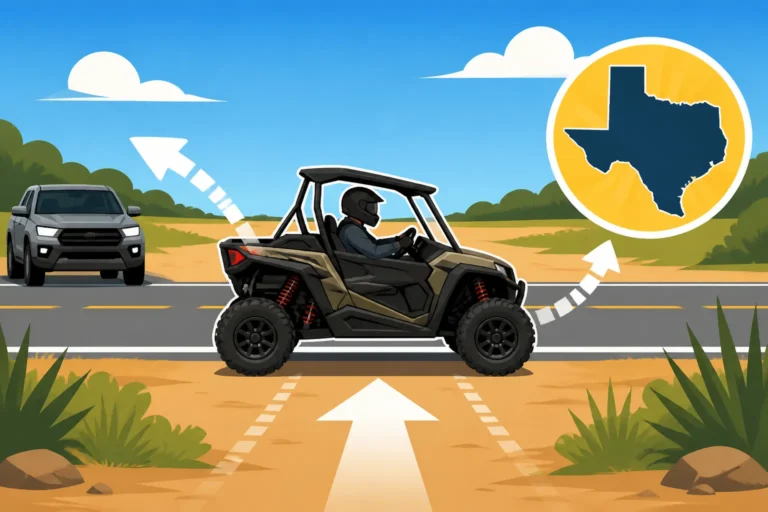
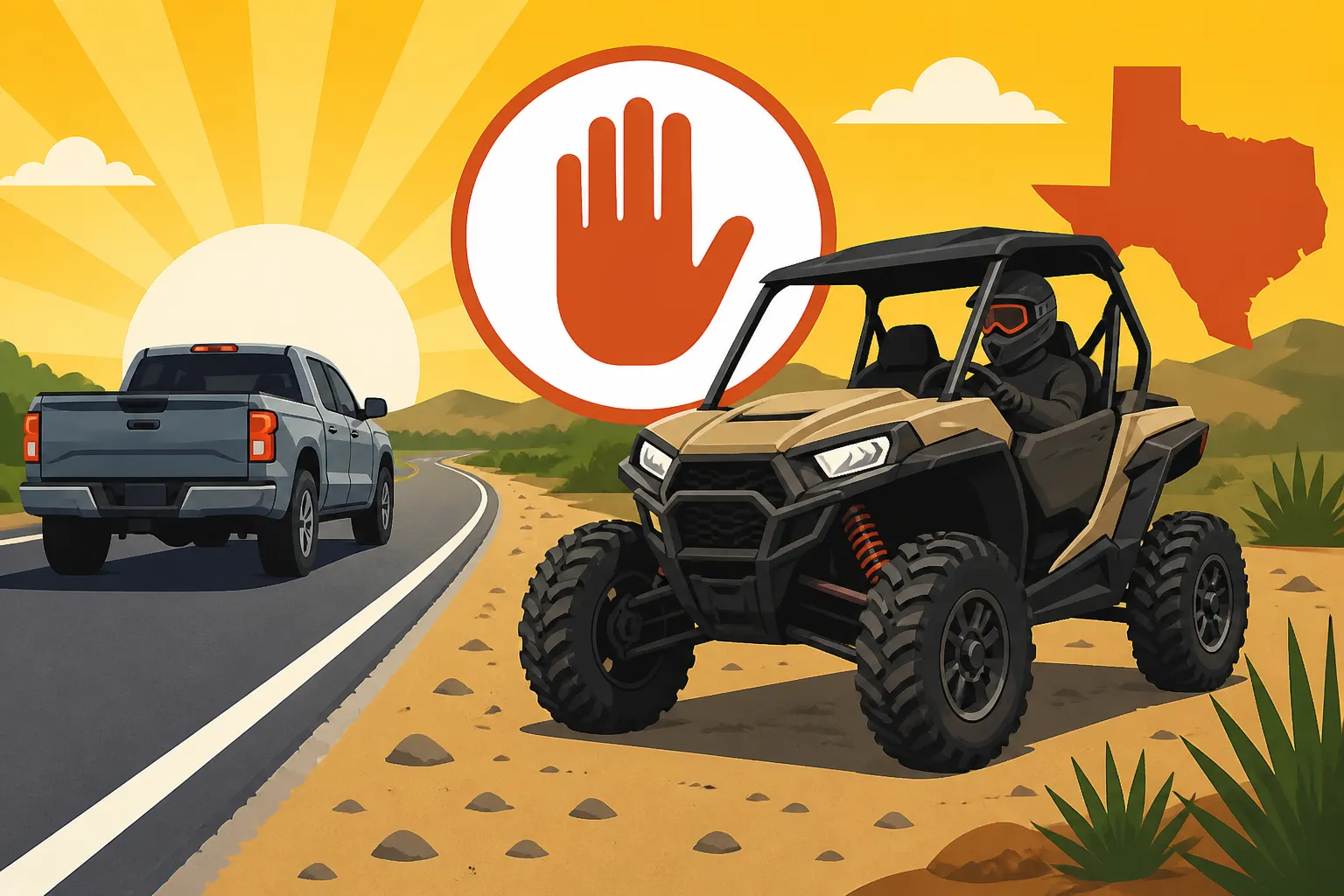
The critical moment is when your OHV is about to transition from this shoulder area into the active travel lane. The "stop before leaving the shoulder" means you must bring your machine to a complete halt before any part of your ATV or UTV protrudes into the lane of travel. This includes tires, bumpers, or any other part of the machine. If you're riding a UTV, even the front of your roll cage needs to be behind the imaginary line marking the edge of the shoulder. For example, if you're on a dirt shoulder next to a paved road, you'd stop with your front tires just at the edge of the pavement, not with them already on it. This creates a clear boundary and ensures you have maximum visibility without encroaching on the road.
The Practical Steps of a Safe Stop
Putting this rule into practice requires a deliberate and cautious approach. It's more than just tapping the brakes; it's a mindful process of observation and decision-making. As you approach the road you intend to cross, begin to slow down well in advance. Move onto the shoulder, if one exists, or as far to the right as safely possible on an unshouldered road. Bring your ATV or UTV to a complete, absolute stop. Your front wheels should be behind the imaginary line where the shoulder ends and the active roadway begins.
Once stopped, this is your moment to perform a thorough scan. Look left, then right, then left again. Really look. Don't just glance. Pay attention to the distance of approaching vehicles and their speed. Are there any blind spots created by vegetation, hills, or parked vehicles? Consider if your OHV's low profile might make it harder for drivers to see you, especially if you haven't upgraded your lighting. A company like SuperATV offers robust LED light bars that can significantly increase your visibility, though they won't replace the need for careful observation. Wait for a clear, substantial gap in traffic that allows you to cross the entire roadway (or at least one direction of travel on a divided highway) safely and without rushing. Remember, patience is your best friend here. It’s far better to wait an extra minute for a clear opening than to risk a collision by trying to squeeze into a tight spot.
Integrating This Stop into Texas's Broader Crossing Rules
The "stop before leaving the shoulder" rule isn't an isolated requirement; it's a foundational element of Texas's comprehensive set of regulations for OHVs interacting with public roads. Understanding how it fits into the larger framework helps solidify why each step is so important for your safety and legal compliance. Texas has specific stipulations for how OHVs must traverse public thoroughfares, and each rule builds upon the next to create a safer environment for everyone.
The Full Stop at an Intersection or Roadway
Beyond merely stopping at the edge of the shoulder, Texas law explicitly mandates a full and complete stop whenever an OHV crosses a public road. This is not a "rolling stop" or a brief slowdown. Your machine must come to a standstill, all wheels locked, before you proceed. This requirement applies whether you are [Crossing a Texas Road at an Intersection] or [Crossing a Texas Road Away From an Intersection], such as between driveways or property lines in a rural area.
This full stop is crucial because it allows the rider to completely dedicate their attention to assessing traffic conditions without the added distraction of managing a moving vehicle. It ensures that the rider has ample time to look for other vehicles, pedestrians, or potential hazards that might not be immediately apparent. Forgetting this full stop, even after you've technically stopped at the shoulder, could still lead to a citation or, more critically, an accident. The "stop before leaving the shoulder" is the precursor to this full stop, positioning you safely to then make the final, deliberate decision to cross.
Crossing at a Ninety-Degree Angle and Visibility
Once you have stopped safely at the shoulder and identified a clear opening, Texas law further dictates that you must cross the road at as near a [Ninety Degrees and a Full Stop in Texas] angle as practicable. This seemingly minor detail is actually a significant safety measure. Crossing perpendicularly minimizes the time your OHV spends in the active travel lanes, reducing your exposure to oncoming traffic. It also presents the largest possible profile of your machine to other drivers, improving visibility. Think about it: a machine crossing straight across is much easier to see than one trying to turn and merge at an acute angle, which effectively makes its length a moving target for a longer period.
Enhancing your visibility is paramount during these crossings. While the law details [Texas Equipment Rules for an ATV on a Road], such as headlights and taillights, considering additional aftermarket lighting can make a huge difference, especially during dawn, dusk, or adverse weather conditions. For example, SuperATV offers various auxiliary lighting options designed for off-road durability that can also serve to make your presence more obvious during brief road crossings. Similarly, maintaining clear sight lines by installing appropriate mirrors (like those available from SuperATV) can help you monitor traffic approaching from behind and to the sides before you make your move. Remember, just because an OHV has [Texas Lighting Requirements for OHVs] doesn't mean you can't go above and beyond to protect yourself.
Divided Highways and Specific Challenges
Crossing a divided highway presents an even greater challenge and requires heightened caution, as it involves navigating multiple lanes of traffic and often a median strip. Texas law has specific considerations for [Divided Highways and Where You May Cross]. The "stop before leaving the shoulder" rule applies to each section of the highway. This means if you successfully cross the first set of lanes and reach the median, you are required to stop again on the median, if space permits, before attempting to cross the second set of lanes.
The median itself may or may not be wide enough to safely accommodate your OHV and allow you to fully stop without any part of your machine protruding. You must use extreme judgment here. If the median is too narrow, you must wait for an opening that allows you to clear both directions of traffic in a single, continuous, and safe motion. Never assume that traffic in the second set of lanes will see you or yield. The principle remains: maximize your visibility, minimize your time in active lanes, and only proceed when you have an absolutely clear path. These complex crossings are a prime example of why meticulous planning and strict adherence to the stop rule are non-negotiable.
Consequences of Ignoring the Safety Stop and Best Practices
Ignoring the "stop before leaving the shoulder" rule, or any of the other associated road crossing regulations for OHVs in Texas, isn't just a minor oversight. It carries significant legal penalties and, far more critically, puts your life and the lives of others at severe risk. The state takes these rules seriously because the stakes are incredibly high, and understanding the potential fallout can often be the best motivator for compliance.
Legal Repercussions and Safety Risks
Failing to adhere to the mandated stop before entering a public roadway with your OHV can result in legal consequences. In Texas, many traffic violations, especially those related to safety, are classified as [Class C Misdemeanors Under Texas OHV Law]. This can mean fines ranging from tens to hundreds of dollars, plus court costs. While a Class C Misdemeanor typically doesn't carry jail time, it does leave a mark on your record and can lead to increased insurance premiums, even for vehicles you do operate on the road. A law enforcement officer observing you pull directly into traffic without stopping could certainly issue a citation for failure to yield or improper entry onto a roadway, leveraging the OHV-specific regulations.
Beyond the legal headaches, the safety risks are paramount. ATVs and UTVs are inherently less stable and visible than passenger cars or trucks. Attempting to enter a roadway without a complete stop and thorough observation dramatically increases the likelihood of a collision. In a crash with a larger vehicle, the occupants of an OHV are at a much higher risk of serious injury or fatality due to the lack of substantial protective enclosures. Even at low speeds, the impact can be devastating. This isn't just about avoiding a ticket; it's about preserving your life and the lives of those you care about. When you're crossing a [Texas Rules for Riding a County Road], even if it seems quiet, an unexpected vehicle can appear quickly.
Equipping Your OHV for Enhanced Safety on Roads
While no amount of equipment can replace careful judgment and adherence to the rules, outfitting your OHV with appropriate safety gear can significantly enhance your visibility and awareness during road crossings. The state provides baseline [Texas Equipment Rules for an ATV on a Road], but smart riders often go beyond the minimums. For instance, a bright [The 6-Foot Orange Flag Texas Requires] is crucial for making your presence known, especially over hills or around curves where your low-profile machine might otherwise be obscured.
Beyond flags, consider upgrading your lighting. While stock headlights are sufficient for off-road trails, additional LED light bars, brighter taillights, or even amber flashing lights can make your OHV stand out much more effectively to approaching traffic. Companies like SuperATV specialize in rugged, high-performance accessories, including various lighting options and mirrors that are purpose-built for the challenging environments OHVs encounter. Installing wide-angle mirrors can drastically improve your field of vision, helping you spot vehicles approaching from behind or in your blind spots before you even begin to consider leaving the shoulder. Remember to also wear appropriate [Texas Safety Apparel Rules for ATV Riders], such as bright colors, to increase your own visibility. Every little bit of added safety can make a difference when you're engaging with public roadways.
Pre-Ride Planning and Local Variations
A little planning before your ride can go a long way in ensuring safe road crossings. Before you even head out, review your intended route. Are there multiple road crossings? What types of roads are they (busy highways, quiet farm roads, residential streets)? Understanding the context of each crossing allows you to anticipate where you'll need to apply the "stop before leaving the shoulder" rule. Remember that while state law sets the baseline, local jurisdictions might have additional ordinances. It's always a good idea to check with county or city offices for any specific regulations related to [Texas Rules for Getting Across a Road] in your area. For example, some areas might have specific rules for [Texas Rules for Riding a Ranch Road] that differ slightly from a busy state highway.
Moreover, consider the time of day. Crossing a busy road during rush hour or at dusk, when visibility is naturally reduced, is inherently riskier than during off-peak hours in broad daylight. If possible, choose routes that minimize the number of road crossings or direct you to less-trafficked areas. Teach all riders in your group, especially younger or less experienced ones, about the absolute necessity of the stop-at-the-shoulder rule. Practice makes perfect, and reinforcing these critical safety behaviors consistently can prevent dangerous habits from forming.
| Feature / Action | Safe and Legal Road Crossing Practice | Unsafe and Illegal Road Crossing Practice |
|---|---|---|
| Initial Stop | Complete stop before any part of OHV leaves the shoulder/edge of roadway. | "Rolling stop" or creeping onto the roadway without a full halt. |
| Visibility Check | Thoroughly look left, right, then left again; assess speed and distance of all traffic. | Quick glance; assuming no traffic is present or misjudging vehicle speeds. |
| Crossing Angle | Cross at a 90-degree angle to minimize time in traffic lanes and maximize visibility. | Angle into traffic, attempting to merge or turn sharply; prolonging exposure. |
| Patience | Wait for a clear, substantial gap that allows for a safe and unhurried crossing. | Rushing across in a small gap, forcing other drivers to brake or swerve. |
| Equipment | Utilize mandatory lights, flags, and consider aftermarket visibility aids like brighter LEDs or mirrors. | Relying solely on minimal stock equipment, potentially without proper maintenance or function. |
| Divided Highways | Stop on the median (if safe/possible) before crossing the second set of lanes. | Attempting to clear both sides of a divided highway without a necessary safety stop in the median. |
| Awareness | Maintain constant vigilance, recognizing the OHV's limitations on public roads. | Becoming complacent, treating the OHV like a standard road vehicle, or ignoring road conditions. |
The rule to stop before leaving the shoulder when operating an OHV in Texas is a non-negotiable component of safe and legal road interaction. It's a testament to the state's commitment to rider safety, acknowledging the inherent differences between off-highway vehicles and street-legal automobiles. By understanding the rationale behind this rule, diligently practicing the steps, and outfitting your machine for maximum visibility, you can greatly reduce risk and ensure your adventures stay enjoyable and incident-free. Ride safe, Texas!
Disclaimer
This article is for general informational purposes only and does not constitute professional advice. Laws, prices and regulations vary by location and change over time. Consult a qualified professional for guidance on your specific situation.