Crossing at an Intersection Over Thirty-Five
It's a familiar scenario for many Texas ATV and UTV enthusiasts: you're out enjoying a ride, maybe on your own property or moving between tracts of private land, and there it is – a public road standing between you and your destination. The urge to just zip across can be incredibly strong, but navigating these crossings, especially on roads with speed limits over 35 miles per hour, is where many riders get tangled in Texas's specific and often misunderstood Off-Highway Vehicle (OHV) laws. This guide will cut through the confusion and explain exactly when and how you can legally cross a major roadway without risking a citation or, worse, a dangerous incident.
The Harsh Reality of Texas Road Laws for OHVs
Let's be blunt: Texas is not an "anything goes" state when it comes to riding your ATV or UTV on public roads. The general rule is clear: OHVs are designed for off-highway use, and that's where they belong. The open road, particularly bustling highways or county roads with higher speed limits, presents significant hazards for these machines and their riders. It's a fundamental safety issue, and Texas law reflects that reality. You simply cannot hop on your quad and cruise down a 45 mph road, no matter how short the distance. [Are ATVs Street Legal in Texas: The Short Answer] is always going to be a firm "no" for general street use.
Why Most Roads Are Off-Limits
The primary reason for these restrictions boils down to safety and vehicle design. ATVs and UTVs lack many features that make road vehicles safe for public travel. They don't have the same robust braking systems, turn signals, mirrors, or protection that cars and trucks do. Their tires are often designed for grip in dirt, mud, or sand, not for traction on asphalt at higher speeds, which can lead to unpredictable handling and blowouts. Furthermore, their lower profile makes them harder for other motorists to see, especially in heavy traffic or at night. The speed differential between an OHV and a typical road vehicle creates a dangerous scenario, where a momentary lapse in judgment from either party can have catastrophic consequences. Texas law, as detailed in the Transportation Code, prioritizes public safety by keeping these vehicles off most paved surfaces.
The Frustration of Interrupted Rides
I hear it all the time from riders: "But my land is split by a county road!" or "I just need to get to the gas station across the highway!" The frustration is palpable. It feels inconvenient, sometimes even unfair, to have your off-road adventure or necessary chore interrupted by a ribbon of asphalt that you can't legally ride on. Many of us have felt that pang of annoyance when a perfectly good trail or an essential access point is just on the other side of a road that feels impossible to cross. This is why understanding the exact legal exceptions for crossing is so crucial. It’s not about finding loopholes to ride on the road; it’s about safely and legally connecting two legitimate off-road points.
Navigating Legal Crossing Exceptions on High-Speed Roads
While riding on roads with speed limits over 35 mph is generally forbidden for OHVs, Texas law does provide very specific allowances for crossing them. This isn't permission to travel along the road, even for a short distance; it's strictly for traversing from one side to the other. Think of it as a brief, tactical maneuver, not a leisurely drive. These rules are designed to minimize the time an OHV is exposed to road traffic and to ensure maximum safety during that exposure.
The "Ninety Degrees and a Full Stop" Rule
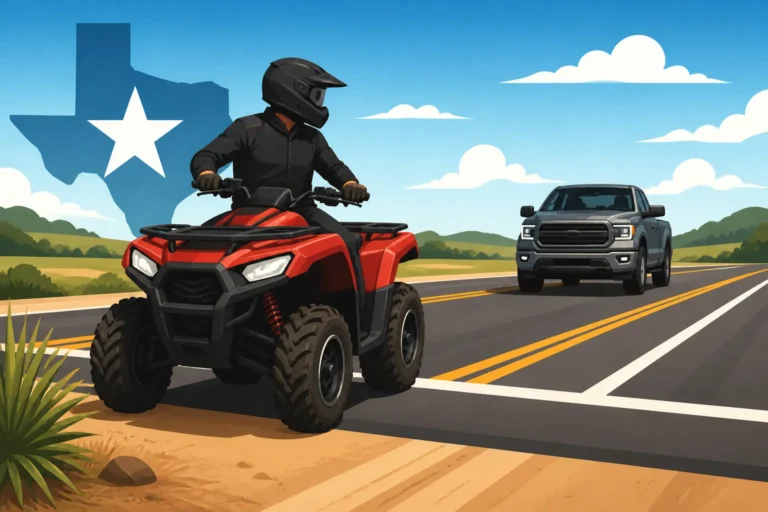
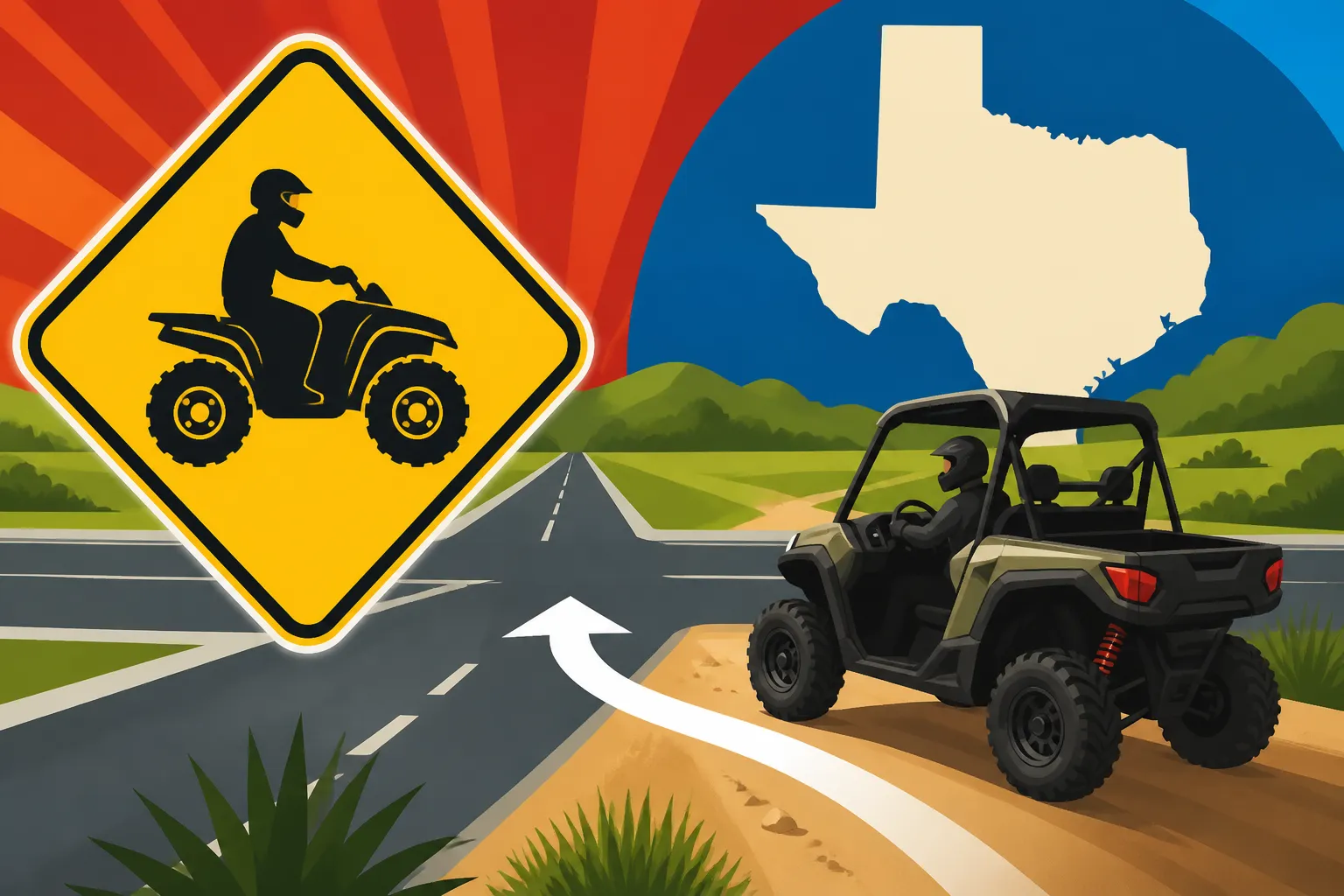
This is the golden rule for crossing any public road in Texas, regardless of its speed limit, but it becomes even more critical on busier, higher-speed thoroughfares. When you approach a road you intend to cross, you must come to a complete and absolute stop. Then, you must cross the roadway at as near to a ninety-degree angle as is practical. What does "as near to" mean? It means you shouldn't be traveling parallel to the road for any distance before angling across. You should aim for a straight shot, directly perpendicular to the flow of traffic. [Ninety Degrees and a Full Stop in Texas] is not just a suggestion; it's a legal requirement designed to make your presence predictable and minimize your time in harm's way. This maneuver gives you the best sight lines to see oncoming traffic and allows other drivers the clearest understanding of your intent.
Prioritizing Visibility and Yielding
Before you even think about pulling out onto that pavement, your eyes and ears must be fully engaged. You are legally required to yield the right-of-way to all other vehicles and pedestrians on the roadway. This isn't just common courtesy; it's law. On a road with a speed limit over 35 mph, traffic moves much faster, reducing the reaction time for both you and other drivers. You need to ensure there is a substantial, safe gap in traffic before you proceed. This might mean waiting for several minutes, or even longer, if traffic is heavy.
It's also essential to be as visible as possible. While Texas doesn't mandate specific lighting for all OHV crossings in daylight, having working headlights and taillights on your machine, and perhaps even turning them on during your brief crossing, is a smart safety practice. Some riders even add aftermarket flags or reflective tape to their machines for enhanced visibility, though these aren't required for simple crossings. Companies like SuperATV offer a range of robust lighting solutions and mirrors that can significantly improve your machine's visibility and your awareness of your surroundings, making these critical crossings much safer.
Here's a quick comparison of general OHV road use versus crossing a road:
| Feature | General OHV Road Use (Roads > 35 mph) | Legal OHV Road Crossing (Roads > 35 mph) |
|---|---|---|
| Primary Purpose | Travel/Commute | Traverse from one side to the other |
| Legality | Generally Illegal | Strictly Permitted under specific conditions |
| Duration on Road | Extended | Minimal, shortest distance possible |
| Angle of Travel | Parallel to traffic flow | As near to 90 degrees as practical |
| Stop Requirement | No general requirement before entering | Mandatory full stop before entering |
| Yield Requirement | N/A (as generally illegal to be on road) | Mandatory yield to all traffic/pedestrians |
| Speed Limit Adherence | N/A | Should not exceed reasonable speed for safety |
| Required Equipment | N/A | Working brakes, good tires (basic OHV safety) |
| Driver Awareness | Low priority (if operating illegally) | Utmost priority; constant scanning of traffic |
Crossing a Divided Highway
Crossing a divided highway adds another layer of complexity. These roads typically have even higher speed limits and more lanes of traffic. The same rules apply: a full stop, yielding to traffic, and crossing at a right angle. However, you'll effectively be making two separate crossings – one for each direction of traffic, often with a median in between. Treat each half of the divided highway as an individual crossing event. Stop completely before entering the first set of lanes, cross to the median, stop again, check for traffic on the second set of lanes, and then complete your second ninety-degree crossing. [Texas Rules for Crossing a Divided Highway] are stringent for good reason, as the risks associated with these types of roadways are significantly higher. Never assume you have enough time; always err on the side of caution.
Safety Measures and What Happens When You Don't Follow the Rules
Even though these crossings are brief and legal under specific conditions, they remain the most hazardous part of many OHV rides. Taking extra precautions and understanding the consequences of non-compliance is critical for every rider in Texas. This isn't just about avoiding a ticket; it's about staying safe and keeping others safe too.
Enhancing Your Safety During Brief Crossings
Beyond the legal requirements, there are practical steps you can take to make these crossings as safe as possible. First, always wear your personal protective equipment (PPE). A helmet is non-negotiable for most riding, and for any road interaction, it's absolutely essential. [Texas Helmet Law for ATV Riders] is there for your protection. Eye protection, gloves, and sturdy footwear also contribute significantly to your safety.
Consider the time of day and visibility conditions. Crossing a busy road at dusk or dawn, or during adverse weather like fog or rain, dramatically increases the risk. If possible, plan your crossings for times when visibility is excellent and traffic is lighter. Ensure your machine is in good working order, especially your brakes and tires. Having reliable components, perhaps even upgrading with durable options from brands like SuperATV, can provide peace of mind that your machine will respond predictably in these critical moments. While not a substitute for street legality, certain add-ons like a wide, durable mirror or auxiliary lighting can certainly help you be seen and see better during brief, legal maneuvers.
The Consequences of Illegal Road Use
Failing to adhere to Texas's OHV road laws can lead to a range of unpleasant consequences. The most immediate is a traffic citation. Operating an OHV illegally on a public road is typically classified as a Class C misdemeanor. [Texas Fines for Illegal ATV Road Use] can range significantly, but they will certainly put a dent in your wallet. Beyond the monetary penalty, you could face impoundment of your machine, which adds further costs and inconvenience.
More importantly, if you're involved in an accident while illegally operating your OHV on a public road, the legal ramifications can be severe. Your insurance may not cover damages or injuries if you were operating outside the law. You could be held liable for damages to other vehicles, property, or injuries to other people. This is where the informational intent really hits home: the laws aren't just there to restrict your fun; they're there to prevent serious harm and protect you from potentially life-altering legal and financial burdens. Always remember that [Why Texas Will Not Register an ATV for the Road] stems from these serious safety and liability concerns.
Planning Your Routes and Alternatives
Given the strict rules, smart planning becomes your best friend when it comes to Texas ATV and UTV riding. Knowing where you can and cannot go, and how to legally get across those forbidden zones, will save you a lot of headaches and keep you out of trouble.
When Trailering is the Only Option
Sometimes, a road is just too busy, too long, or too dangerous to attempt a crossing, even a legal one. Or perhaps your destination isn't directly across the road, but a mile down it. In these situations, the only legal and truly safe option is to trailer your OHV. This might feel like an extra step, but it ensures compliance with the law and eliminates the risks associated with mixing off-road vehicles with on-road traffic. Invest in a good trailer and proper tie-downs; it's part of responsible OHV ownership in Texas. This is especially true when moving between large tracts of land that are separated by high-speed state highways or interstates.
Understanding Other Limited Road Use Scenarios
While roads over 35 mph are mostly for crossing only, it's worth briefly touching on other Texas road laws that might apply to OHVs in very specific circumstances. For instance, [Texas Rules for Riding a Farm Road] or [Texas Rules for Riding a County Road] sometimes allow for limited travel on public roads with speed limits of 35 mph or less, often for agricultural purposes or in certain remote counties that have opted in. Similarly, some [Texas Rules for Master Planned Communities] may allow for OHV use on specific, privately maintained roads within those communities. These are exceptions to the rule for general riding, and they come with their own set of requirements, such as flags, lights, and specific times of day for operation. But even in these cases, the overriding principle is safety and adherence to the posted regulations. Always check local ordinances and state laws before assuming you can ride on any public road.
The key takeaway is that the laws are designed to channel OHV use to appropriate environments. When those environments are interrupted by higher-speed roadways, the law provides a narrow, precise window for crossing. Respecting these boundaries not only protects you from legal trouble but, more importantly, keeps you and everyone else on the road safe.
Disclaimer
This article is for general informational purposes only and does not constitute professional advice. Laws, prices and regulations vary by location and change over time. Consult a qualified professional for guidance on your specific situation.