Crossing a Texas Road Away From an Intersection
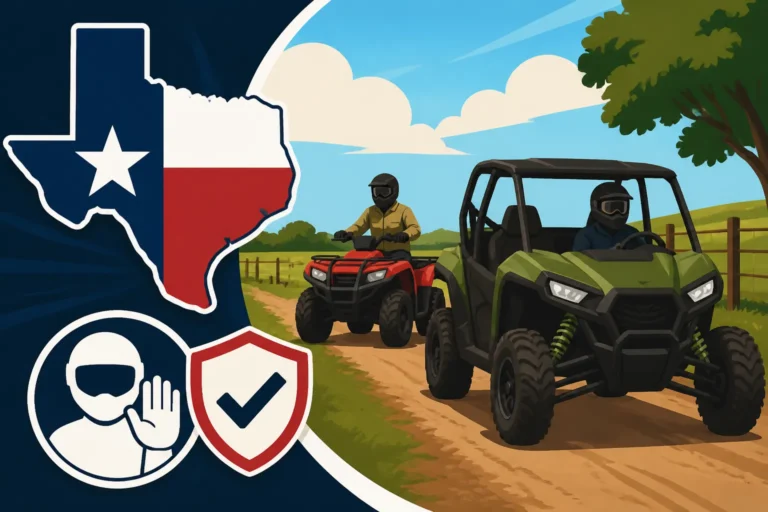
The open roads of Texas might call to your adventurous spirit, but for those of us who love our ATVs and UTVs, they often represent a frustrating barrier rather than an invitation. It's a common dilemma: you're out exploring vast private lands or moving between trail sections, only to find a public road slicing right through your path, and the nearest intersection feels miles away. This guide is here to walk you through the specific, often misunderstood rules for crossing a Texas public road when you're not at a designated intersection, helping you navigate these situations legally and safely without feeling like you're breaking the law.
Understanding the Legal Landscape: Texas OHV Road Rules
Texas is a sprawling state with an undeniable love for outdoor recreation, and off-highway vehicles (OHVs) like ATVs and UTVs are a huge part of that culture. However, the sheer size of the state and the varying terrain often mean that OHV users encounter public roads as obstacles rather than pathways. It's a tricky balance between enjoying your machine and adhering to the law, especially when it comes to road use. Many riders feel a sense of exasperation when they're faced with a seemingly simple task of getting from one side of a private property to another, only to find a public road in the way.
The General Prohibition Against Road Use
Let's get this straight right off the bat: for the most part, riding your ATV or UTV on a public road in Texas is a big no-no. This isn't just a suggestion; it's a fundamental aspect of Texas law regarding off-highway vehicles. The state views these machines as designed for off-road environments, not for sharing pavement with cars and trucks. This prohibition exists for a variety of reasons, primarily public safety. OHVs typically lack many of the safety features, like turn signals, rearview mirrors (though many owners add them, especially from brands like SuperATV), and crash-absorbing crumple zones, that are standard on street-legal vehicles. Their handling characteristics, especially at higher speeds or on paved surfaces, are also very different from what other drivers expect.
Imagine you're out on your property, maybe checking fences or moving livestock, and your next pasture is just across a county road. It's tempting to just zip across. But the law is clear: general use of public roads is restricted. This can be incredibly frustrating, particularly in rural areas where "public road" might mean a seldom-used caliche track. However, the law doesn't make distinctions based on traffic volume or road type for this general prohibition. It's designed to keep both OHV riders and other motorists safe by minimizing interactions that could lead to accidents. [Why Texas Will Not Register an ATV for the Road] delves deeper into the reasoning behind this statewide stance.
Defining an Off-Highway Vehicle in Texas
To truly understand the rules, you need to know what Texas considers an "off-highway vehicle" in the first place. The definition is crucial because it dictates which laws apply to your machine. In Texas, an off-highway vehicle is generally defined as a motor vehicle that is not a highway vehicle and is designed by the manufacturer for off-highway use. This includes your typical four-wheel ATVs, most side-by-sides (UTVs), dirt bikes, and even some specialized vehicles like sand rails. The key here is "not a highway vehicle" and "designed for off-highway use."
This definition separates your quad from a golf cart, a low-speed vehicle (LSV), or even a miniature vehicle, all of which have their own distinct sets of rules, titling, and registration requirements. For instance, a golf cart might be permitted on certain city streets under very specific conditions, but your utility-focused UTV, even if it has headlights and seatbelts, falls under the OHV classification. This classification means it's subject to the strict rules about public road use, with only limited exceptions. Understanding [What Texas Counts as an Off-Highway Vehicle] is essential for every OHV owner in the state, ensuring you know exactly where your machine stands in the eyes of the law.
The "Crossing the Road" Exception: Specific Conditions
While the general rule is "no riding on public roads," Texas law does provide a critical exception for crossing. This isn't a free pass to drive a mile down the shoulder to get to a friend's property. It's a very specific, carefully defined maneuver designed to allow OHV operators to traverse a road when necessary, without turning their off-road machine into an illegal street vehicle. Many riders get this wrong, assuming any short hop on the pavement is okay. The law, however, is much more precise, laying out exactly how such a crossing must occur, particularly when you're not at a marked intersection.
The Ninety-Degree Rule and Full Stop Requirement
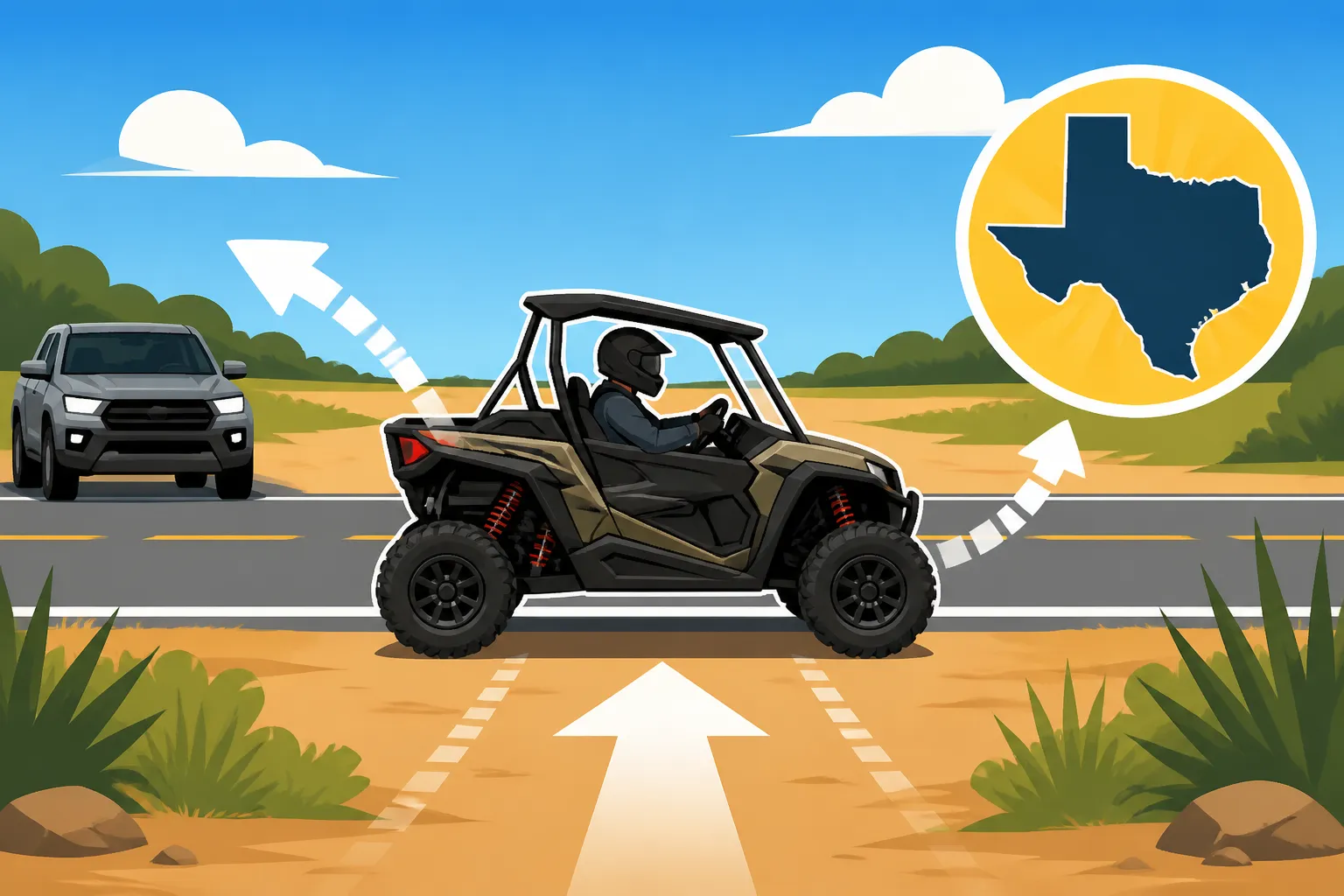
This is perhaps the most important detail for anyone needing to cross a Texas road away from an intersection: you must cross at an angle of 90 degrees to the roadway and after coming to a complete stop. Think of it like this: you're trying to minimize your time on the paved surface, cutting straight across the shortest possible distance. You shouldn't be traveling parallel to the road, even for a few feet, before turning to cross. The instant you touch the asphalt or concrete, you should be moving directly across it.
Before you even start that 90-degree crossing, you are legally required to bring your OHV to a complete and full stop. This isn't a "California roll" stop; it's a full stop where your wheels cease to turn. This is your moment to assess traffic, just as you would at a stop sign. Look both ways, twice if you need to, and ensure the path is clear. Only when you are absolutely certain that you can cross safely without impeding the flow of traffic should you proceed. This strict requirement underscores the state's emphasis on safety during these brief road interactions. For a deeper dive into the broader context, read [Texas Rules for Getting Across a Road].
Visibility and Right of Way Considerations
Even with the 90-degree rule and a full stop, you have to be acutely aware of visibility and right-of-way. As the OHV operator, the burden of ensuring a safe crossing falls squarely on you. This means yielding the right-of-way to all vehicular traffic on the public road. Period. You cannot assume other drivers see you, nor can you expect them to slow down or move over. It's your responsibility to wait until there is a sufficiently large gap in traffic, or no traffic at all, to make your crossing.
Visibility is a two-way street here. You need to be able to see clearly in both directions, and other drivers need to be able to see you. This is where things like bright colored apparel or adding a whip flag to your UTV, perhaps a SuperATV UTV rear flag mount with a brightly colored flag, can make a real difference. If there are blind curves, hills, or heavy foliage that obstruct your view or that of approaching drivers, you simply cannot make the crossing there. You might have to move to a location where visibility is optimal, even if it means a slightly longer detour off-road. Never risk a crossing if you can't see or be seen adequately. This is not the time to rush; safety is paramount.
Divided Highways and Where You May Cross
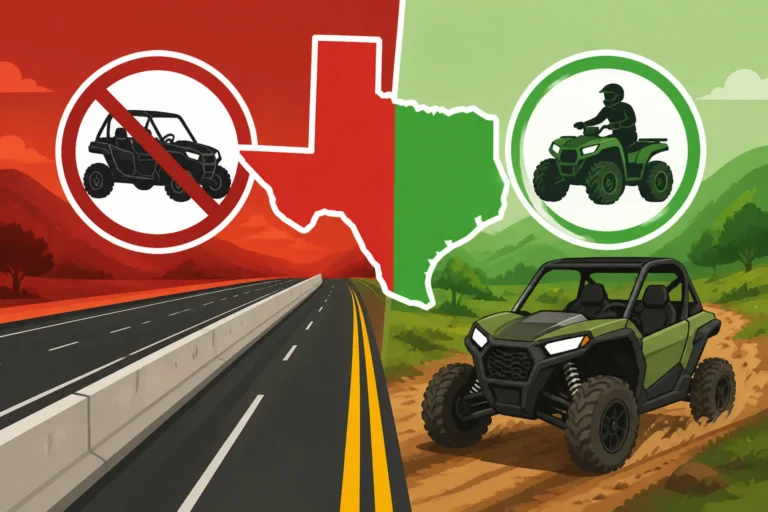
Crossing a divided highway away from an intersection presents an even greater challenge and has its own specific set of rules. A divided highway is a road with a physical barrier or unpaved median separating opposing directions of traffic. You cannot simply blast across the median, nor can you use the median as a staging area to cross one side, then the other. Texas law generally prohibits crossing a divided highway except at an intersection. This is a critical distinction from undivided roads.
The rationale is clear: divided highways are typically higher-speed routes with complex traffic patterns, and attempting to cross them with an OHV, especially away from designated intersections, is extremely dangerous. The risk of collision with fast-moving traffic, or getting stuck in the median, is simply too high. So, if your property or trail system is split by a divided highway, you almost certainly must find a proper intersection with a traffic control device, or an underpass/overpass, to facilitate your crossing. [Texas Rules for Crossing a Divided Highway] provides more specific details on these scenarios. Don't take chances with these major arteries.
Practical Considerations for Safe Crossings
Beyond the letter of the law, there are many practical elements that go into making a safe road crossing. It's not just about knowing the rules; it's about applying common sense, vigilance, and good judgment in real-world situations. The fleeting nature of a road crossing means you have to be incredibly focused and prepared to react to rapidly changing conditions. Thinking ahead and preparing your machine and yourself can make all the difference in preventing an incident.
Choosing the Safest Crossing Points
Not all road stretches are created equal when it comes to safe crossing. Even if you're not at an intersection, you can still be strategic about where you choose to cross. Look for areas that offer the best visibility in both directions. This means avoiding blind corners, the crests of hills, or areas heavily obscured by trees or buildings. Wide-open, straight stretches of road are always preferable. Consider the width of the road as well; a narrow two-lane road might seem easier, but faster speeds or lack of shoulders can make it just as perilous as a wider road with heavy traffic.
Furthermore, consider the shoulders of the road. Are they wide enough and stable enough to allow you to come to a complete stop safely off the main travel lanes? A crumbling or very narrow shoulder can complicate your stop and assessment. Sometimes, taking a slightly longer route off-road to find a genuinely safe crossing spot is the smartest move. Don't be tempted by the shortest path if it compromises your ability to see and be seen.
Rider Responsibility and Situational Awareness
As the operator of the OHV, you bear the ultimate responsibility for a safe crossing. This means maintaining heightened situational awareness at all times. Before you even approach the road, begin scanning for traffic. Listen for approaching vehicles you might not yet see. Put away distractions – no checking your phone, no fiddling with your radio, no engaging in deep conversations with passengers. Your entire focus needs to be on the road, traffic, and your surroundings.
Once you've come to a full stop, make eye contact with any approaching drivers if possible. Never assume they see you. A quick, decisive crossing is important once the path is clear, but it should never be rushed or reckless. Practice defensive driving principles, even when crossing. Always be prepared for the unexpected, like a car suddenly appearing over a hill or another vehicle turning onto the road you're crossing. Your safety depends on your vigilance.
Group Riding and Crossing Etiquette
If you're riding with a group, road crossings require even more coordination and discipline. The general rule for each machine crossing at 90 degrees after a full stop still applies to every single rider. You can't all just follow the leader in a long line. Each rider must make their own assessment and cross independently when safe. However, there's an etiquette to making this process smoother and safer for everyone.
Typically, the lead rider assesses the situation, makes a safe crossing, and then might signal to the next rider when it's clear. This isn't a "go" signal for everyone, but rather an indication that conditions were just favorable. Each subsequent rider must still perform their own full stop, look, and cross. Ensure there's ample space between each machine crossing so that no two OHVs are in the travel lanes at the same time. This minimizes risk and avoids creating a chaotic scene that could confuse drivers. Communication is key – hand signals, whistles, or even comms systems can help a group coordinate these critical maneuvers.
Equipment and Preparedness for Road Crossings
Even though the crossing is brief, having the right equipment and ensuring your machine is in good working order can significantly improve your safety. Many riders focus solely on off-road performance, but a quick jaunt across a paved surface introduces new demands. Thinking about these details ahead of time is a sign of a responsible rider. [Texas Equipment Rules for an ATV on a Road] will give you a broader view of other road-use equipment rules.
Minimum Lighting and Safety Gear
While you won't be cruising down the highway, proper lighting is still crucial for visibility, especially if your crossing takes place at dawn, dusk, or under cloudy skies. Your OHV should have working headlights and taillights. Ensure they are clean and fully functional. Even during the day, having your lights on can make your machine more conspicuous to approaching vehicles. Modern LED lights from companies like SuperATV can provide excellent brightness and durability, improving your chances of being seen.
Beyond machine lighting, your personal safety gear is paramount. Always wear an approved helmet, eye protection, sturdy boots, long pants, and a long-sleeved shirt. This isn't just for trail riding; it's for any situation where you might interact with other vehicles or surfaces. If, heaven forbid, something goes wrong during a crossing, this gear can be the difference between a minor scrape and a serious injury. [Texas Helmet Law for ATV Riders] outlines the state's specific requirements.
Visibility Enhancements (Whips, Flags, Bright Colors)
Maximizing your visibility to other motorists is a proactive safety measure that can't be overstated. This is where those extra accessories really shine. A bright orange or neon whip flag, mounted high on your OHV, significantly increases your profile, especially in areas with tall grass or undulating terrain that might obscure your machine until it's nearly on the road. These flags are not just for dune riding; they serve a vital purpose in any scenario where you need to be seen. You can find durable options designed to withstand tough trail conditions that will certainly stand up to a road crossing.
Wearing bright, contrasting colors is another simple yet effective way to stand out. Fluorescent greens, oranges, and yellows grab attention much better than camouflage or drab colors. Some riders even go a step further, adding reflective tape to their helmets or machines. Remember, the goal is to make it impossible for another driver to legitimately claim they "didn't see you." The more visible you are, the safer your crossing will be. Many aftermarket mirrors, often found in the SuperATV catalog, also provide better rearward visibility, allowing you to monitor traffic more effectively before and after your stop.
Pre-Crossing Machine Checks
Before you even leave your staging area or head toward a road crossing, give your machine a quick once-over. Are your tires properly inflated? Is your steering responsive? Are your brakes in perfect working order? A mechanical failure during a road crossing, however brief, can have catastrophic consequences. Imagine your brakes failing just as you pull out, or your engine stalling in the middle of a lane.
A quick walk-around can identify obvious issues like a loose chain, a low tire, or a piece of equipment that might fall off. Ensure your lights are working. Confirm your throttle response is smooth. These few moments of inspection can prevent a dangerous situation. It's about being fully prepared for the brief but critical period where your off-road machine shares space, however fleetingly, with on-road traffic.
Common Misconceptions and Legal Pitfalls
Despite the clear language in Texas law, there are still many misunderstandings surrounding OHV road crossings. These misconceptions can lead to dangerous situations and unwanted legal trouble. It’s crucial for riders to differentiate between what they think might be permissible and what the law actually states. Falling into these legal traps can result in significant fines and other penalties.
The Difference Between Crossing and Riding On a Road
This is arguably the biggest and most dangerous misconception: many riders confuse the "crossing" exception with a general allowance to "ride on the road for a short distance." Let's be unequivocally clear: they are not the same thing. The law allows for a direct, 90-degree crossing. It does not permit you to travel along the shoulder, even for a few yards, to reach a more convenient crossing point, or to connect two sections of a trail.
If you are traveling parallel to the road, even for a short segment, you are no longer "crossing" in the eyes of the law; you are "riding on the road." This distinction is critical for law enforcement. A quick turn across a road is different from riding down the ditch or shoulder. The crossing is intended to be a momentary transition, not a shortcut or a brief period of convenience. The moment you deviate from that direct, 90-degree path, you are likely in violation of the general prohibition on OHV road use.
Local Ordinances and Their Limits
Another common pitfall is relying on perceived local allowances. While Texas counties and some cities have some discretion regarding certain types of vehicles on their roads (like golf carts or slow-moving farm equipment), this generally does not extend to broader allowances for ATVs and UTVs on public roads. Even if a local community has opened some of its lower-speed streets to UTVs, for example, those specific rules apply only within that community's jurisdiction and usually come with their own strict requirements (like specific safety equipment or speed limits).
You cannot assume that a local ordinance permitting UTVs on a 35 mph road in one town applies to a county road crossing in a rural area, especially if you're crossing away from an intersection. Always assume the state's general prohibition on road use, with its limited crossing exception, is the prevailing rule unless you have explicit, written confirmation otherwise for your specific machine and location. When in doubt, err on the side of caution. [Texas Rules for Riding on a 35 mph Road] explains the specific conditions where such allowances might exist, but they are not universal.
Penalties for Non-Compliance
Ignoring the rules for crossing a Texas road can lead to more than just a stern warning. Law enforcement officers take these violations seriously due because they pose significant safety risks. A violation of the general prohibition against riding an OHV on a public road, or failing to adhere to the crossing requirements, is typically classified as a Class C Misdemeanor. While this might sound minor, it carries real consequences.
A Class C Misdemeanor can result in a fine, which can range from a few dollars up to several hundred dollars. Beyond the financial hit, there's the inconvenience and stress of dealing with a citation, and potentially having your OHV impounded. Repeated offenses could lead to more severe penalties. It's simply not worth the risk. Understanding [Texas Fines for Illegal ATV Road Use] can provide a clearer picture of the financial implications. The few seconds you save by not following the rules could cost you far more in the long run.
Comparative Table: Road Crossing Do's and Don'ts
To help consolidate these crucial points, here's a quick reference table for what you should and shouldn't do when crossing a Texas road away from an intersection with your OHV.
| Action | Do's | Don'ts |
|---|---|---|
| Stopping Before Crossing | Come to a complete and full stop off the main travel lane on a stable shoulder. | "Roll through" or make a quick stop without full assessment. Stop in the travel lane or on an unstable surface. |
| Angle of Crossing | Cross at a 90-degree angle to the roadway, taking the shortest path. | Travel parallel to the road on the shoulder or ditch, even for a short distance, before crossing. Angle your crossing sharply or diagonally. |
| Visibility Assessment | Look left, right, then left again. Ensure you have clear sight lines and are visible to others. | Assume other drivers see you. Attempt to cross with limited visibility (blind curves, hillcrests, heavy foliage). Cross if you can't be seen. |
| Right of Way | Always yield the right of way to all vehicular traffic on the public road. | Assume you have the right of way. Pull out in front of approaching traffic, expecting them to stop or slow down. |
| Divided Highways | Seek out a designated intersection, underpass, or overpass. | Attempt to cross the median or traverse a divided highway away from an intersection. |
| Safety Gear | Always wear an approved helmet, eye protection, long pants, long sleeves, and sturdy boots. | Ride without a helmet or proper protective gear. |
| Machine Equipment | Ensure all lights (headlights, taillights) are working. Use a whip flag and bright apparel. | Ride with non-functional lights. Rely solely on your machine's standard profile for visibility. |
| Group Riding | Each rider makes their own individual stop, looks, and crosses when clear. Coordinate with signals. | Ride in a pack or assume the path is clear because the rider in front just crossed. |
| Distractions | Focus 100% on the road and traffic. | Use your phone, adjust radio, or engage in distracting conversations during the crossing. |
Final Thoughts on Navigating Texas Roads with Your OHV
Navigating the rules for riding your ATV or UTV in Texas can feel like a maze, especially when public roads intersect with your off-road adventures. The key takeaway from all of this is that while Texas generally prohibits OHV use on public roads, it does provide a very specific, limited exception for crossing. This exception is not a loophole for short stretches of road travel; it is a meticulously defined maneuver requiring a full stop and a direct, 90-degree traverse of the roadway.
Always prioritize safety above all else. This means being hyper-aware of your surroundings, ensuring your machine is in top condition, and making yourself as visible as possible. Access to quality aftermarket parts and accessories, from robust lighting to essential visibility flags, can be a game-changer for enhancing safety during these critical moments. Remember, understanding and adhering to these rules not only keeps you on the right side of the law but, more importantly, keeps you and others safe as you enjoy the vast and beautiful landscapes Texas has to offer.
Disclaimer
This article is for general informational purposes only and does not constitute professional advice. Laws, prices and regulations vary by location and change over time. Consult a qualified professional for guidance on your specific situation.