Texas Rules for Riding a Farm Road
Navigating the myriad of Texas off-highway vehicle (OHV) laws can feel like wrangling a stubborn longhorn, especially when it comes to riding on public roads. Many folks wonder if those seemingly quiet farm roads are fair game for their ATVs or UTVs, often encountering conflicting advice or getting caught off guard by specific legal nuances. This guide aims to clear up the confusion surrounding Texas rules for riding on a farm road, helping you understand when and how you can legally operate your machine for agricultural or timber purposes without breaking the law.
Understanding Texas Farm Road Designations for OHVs
Texas is a vast state, and what one person calls a "farm road" might legally be something entirely different. This distinction is absolutely critical when you're considering taking your ATV or UTV off private property and onto what looks like a public thoroughfare. It's not just about the appearance of the road; it's about its official designation and the specific purpose of your ride.
What Qualifies as a "Farm Road" in Texas?
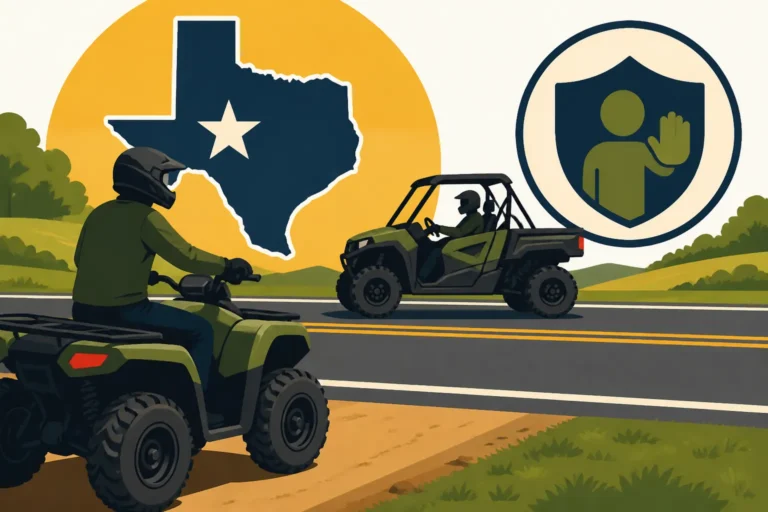
When we talk about "farm roads" in Texas, we're often referring to Farm to Market (FM) roads or Ranch to Market (RM) roads. These are state-maintained roads designed primarily to connect rural agricultural and ranching areas with urban markets and larger highways. They are indeed public roads, and this is where the confusion often arises. Many people assume that because they're called "farm roads" and are in rural areas, they are inherently more permissible for OHV use than other public roads. However, that's not quite the case. While their purpose is rural, they are still part of the broader Texas public road network, subject to specific rules that differ significantly from private land or dedicated off-road parks. Thinking that a gravel road through a pasture automatically means it's an "anything goes" zone for your quad is a common and costly misconception. It's paramount to remember that these are not private roads you can simply treat as an extension of your pasture.
The Legal Basis: Agriculture vs. General Use
The core of Texas OHV road laws, especially concerning farm roads, hinges on the distinction between agricultural or timber use and general recreational use. Texas law generally prohibits OHVs from public roads, but it carves out very specific exceptions. These exceptions are almost exclusively tied to the performance of duties related to agriculture or the production of timber. This isn't just a suggestion; it's a foundational legal principle. If you're using your UTV to haul feed to a distant pasture, check fences, or manage livestock, you are likely operating within the spirit and letter of the law's intent for agricultural use. However, if you're simply riding your ATV down a farm road to meet friends for a recreational cruise, that falls squarely outside the permitted exceptions. The law isn't designed to allow casual joyrides on farm roads, no matter how remote they might seem. It's about facilitating essential work for rural industries.
Why the Distinction Matters for ATV/UTV Riders
Ignoring the distinction between agricultural use and general recreational use on farm roads can lead to serious consequences. Firstly, you could be cited for a Class C misdemeanor, which carries fines and can definitely put a damper on your weekend. Secondly, it could invalidate your insurance coverage if you're involved in an accident while illegally operating on a public road. Imagine a scenario where you're riding your UTV recreationally down an FM road, and another vehicle, perhaps a truck hauling cattle, doesn't see you. If an accident occurs, not only are you facing potential fines for illegal road use, but your personal liability could be enormous because you weren't operating within the legal framework. It’s also important to understand that just because a farm road feels deserted doesn't mean it's unregulated. Law enforcement patrols these areas, and they are well-versed in the specifics of [Texas Rules for Riding an ATV for a Texas Agricultural Operation] and the exceptions that apply. Understanding these nuances isn't just about avoiding a ticket; it's about protecting yourself and your assets.
Specific Rules for Riding an OHV on a Texas Farm Road
Once you've established that your purpose for riding on a farm road truly falls under the agricultural or timber exemption, you still need to adhere to a strict set of operational and equipment requirements. It's not a free pass; it's a conditional allowance that comes with its own rulebook. Skipping these details could still land you in hot water, even if your purpose is legitimate.
Permitted Agricultural and Timber Operations
The Texas Transportation Code is quite clear: an OHV may be operated on a public highway (which includes farm roads) if it is being used "for a purpose related to farming or ranching" or "for a purpose related to the production of timber." This is the golden ticket, but it's not unlimited. This means activities like transporting agricultural products, equipment, or supplies directly related to the operation, inspecting crops or livestock, or performing maintenance on farm infrastructure are generally permitted. For example, if you're driving your UTV down a Farm to Market road to move hay bales from one field to another, or to check on irrigation lines that run alongside the road, that's likely permissible. However, if you're just taking a scenic drive through the countryside, even if you own a ranch down the road, it likely won't qualify. The key is the direct relationship between your OHV use and the actual agricultural or timber operation. Think of it as a tool for your work, not a leisure vehicle for the public highway. You can find more detail on this in [Texas Agricultural Exemption for ATVs on Roads].
Equipment Requirements for Farm Road Use
Even when operating legitimately for agricultural or timber purposes, your OHV isn't exempt from certain safety equipment requirements when on a public road. These rules are in place to ensure your visibility and safety, as you're sharing the road with other traffic.
Here's a breakdown of what you'll typically need:
| Requirement | Description |
|---|---|
| Orange Flag | A bright orange flag, at least 12 inches by 12 inches, mounted at least six feet above the ground. This significantly increases your visibility to other motorists, especially over hills or around bends. For durable, high-visibility flags, options from brands like SuperATV can be a good choice, ensuring they stand up to rough farm conditions. |
| Headlights & Taillights | While the law may allow daylight operation without them in some specific cases, having functional headlights and taillights is always advisable. If you're operating during periods of low visibility (dawn, dusk, fog), they become mandatory. |
| Brakes | Functional braking systems on all wheels are essential for safety. |
| Muffler | An effective muffler to prevent excessive noise. |
| Spark Arrester | If the OHV is operated on public land, a U.S. Forest Service-qualified spark arrester is required. While farm roads aren't forest land, it's good practice, especially in dry Texas conditions, to have one to prevent wildfires. |
These requirements, particularly the orange flag, are critical for your safety. Imagine a large pickup cresting a hill on a farm road; that bright flag is often the first thing they'll see, giving them precious seconds to react. You can learn more about these specifics in [Texas Equipment Rules for an ATV on a Road] and [Mounting the Orange Flag 6 Feet Above Ground].
The "10-Mile Limit" and Other Restrictions
Beyond the equipment, there are also limitations on how far you can travel and when. Texas law states that an OHV used for agricultural or timber purposes may travel on a public highway for "not more than 10 miles" from the point of origin. This "10-mile limit" is a crucial aspect of the law. It means you can't, for instance, haul a load of feed 30 miles down an FM road with your UTV, even if it's for your ranch. The intent is to allow for short, necessary movements, not extended travel.
Furthermore, these agricultural exemptions often come with restrictions on the time of day. Generally, OHV use on public roads for agricultural purposes is limited to daylight hours. Operating after dark, even for ranching duties, significantly increases your risk and the likelihood of a citation, unless you have specifically approved lighting systems and are traveling a very short distance for an emergency. Always remember that the 10-mile limit is a firm boundary, and exceeding it, even for a legitimate purpose, can put you outside the law. This specific limit is detailed in [The 10-Mile Limit on Texas Farm Road Riding].
Essential Safety and Compliance Tips for Farm Road Riders
Even with a clear understanding of the rules, putting them into practice safely and compliantly requires a conscious effort. It's not just about what you can do, but how you do it, and always with an eye toward avoiding dangerous situations and legal trouble.
When a Helmet Is Not Required
One of the most frequently asked questions about riding an OHV for agricultural purposes on a farm road revolves around helmets. While Texas generally has helmet requirements for many ATV/UTV scenarios, there's a specific exemption for agricultural operations. If you are 18 years of age or older and operating an OHV "for the purpose of farming or ranching operations," you are typically exempt from the helmet requirement. However, this exemption only applies to the specific agricultural or timber use. If you transition to recreational use, or if your machine isn't being used for those specific purposes, the helmet rules might kick back in.
Even with this exemption, I cannot stress enough that wearing a helmet is always, always, always a good idea. A farm road, while rural, is still a hard surface, and collisions with other vehicles, or even simply hitting an unseen pothole, can lead to severe head injuries. Just because the law says you don't have to wear one doesn't mean you shouldn't. Many riders still choose to wear helmets, especially when traveling with passengers, for maximum protection. Manufacturers like SuperATV offer a range of helmets and safety gear that can provide critical protection without hindering your work. For a deeper dive into the specifics of this exemption, check out [When Farm Work Waives the Texas Helmet Rule] and [Texas Helmet Law for ATV Riders].
Navigating Road Crossings Safely
Sometimes, even when primarily operating on private land, you might need to cross a farm road to get from one section of your property to another. This is permitted under specific conditions, but it's arguably one of the riskiest maneuvers you can make. When crossing a public road, you must do so as safely and directly as possible.
Here's how to do it:
- Stop and Look: Come to a complete stop before entering the roadway. Look both ways multiple times, listening for approaching traffic. Your OHV is smaller and harder to see than a car.
- Yield to All Traffic: You must yield the right-of-way to all oncoming traffic. Do not attempt to cross if there's any doubt about whether you have enough time.
- Cross at a Right Angle: Cross the road at approximately a 90-degree angle to minimize the time you are in the traffic lane. This also makes you more visible as you aren't traveling parallel to traffic for an extended period.
- Lights On: Even in daylight, it's wise to have your headlights and taillights on when crossing for maximum visibility.
Remember, the goal is to get across the road as quickly and safely as possible, minimizing your exposure to potential hazards. These principles are fundamental to [Crossing a Highway on an ATV in Texas].
Avoiding Misdemeanors and Fines
The penalties for violating Texas OHV road rules can be significant. Operating an OHV illegally on a public road is typically a Class C misdemeanor, which can result in fines ranging from $25 to $500, plus court costs. While it might not sound like a huge sum, getting caught multiple times or in conjunction with other offenses (like reckless driving) can quickly escalate the consequences. Moreover, having a misdemeanor on your record, even a Class C, is never ideal. It's not just about the monetary fine; it's about the time, hassle, and potential impact on other aspects of your life.
The best way to avoid these issues is to meticulously follow the rules. If you're using your OHV on a farm road for agricultural purposes, ensure you meet all the equipment requirements, adhere to the 10-mile limit, and only operate during permissible hours. If you're ever unsure whether a particular road is an actual "farm road" or if your intended use qualifies, err on the side of caution. It's far better to transport your machine on a trailer than to risk a fine and an accident. Being informed about [Class C Misdemeanors Under Texas OHV Law] can help you understand the gravity of non-compliance.
Practical Scenarios and Common Pitfalls
Understanding the letter of the law is one thing; applying it to real-life situations on the ground can be another challenge entirely. Many folks have good intentions but can still stumble into legal pitfalls simply due to misinterpretation or overlooking a small detail.
Ranchers, Hunters, and Farmers: Real-World Use Cases
Let's look at a few scenarios where these rules typically apply.
- The Rancher Hauling Feed: A rancher lives on a property that's bisected by an FM road. To get from their main barn to a back pasture, they need to cross or travel briefly down the farm road to deliver feed or check on cattle. If they stay within the 10-mile limit, have their orange flag and lights (if needed), and are genuinely performing ranching duties, this is generally permissible. This is a classic example of [Hauling Feed on a Public Road] that the law intends to allow.
- The Timber Harvester Moving Equipment: A logger needs to move a small piece of equipment, perhaps a chainsaw or a small chipper, from one section of a timber tract to another, using a short stretch of a Ranch to Market road. As long as this is directly related to timber production, meets the equipment and distance requirements, and is done during daylight hours, it usually fits the exemption.
- The Hunter Checking Blinds: This is a common gray area. If a hunter uses their UTV on a farm road to check game cameras or blinds on their own property that requires crossing the road, it might fall under agricultural use if the property is also used for ranching. However, if they're simply driving down the farm road to get to a hunting lease entrance for purely recreational hunting, that's almost certainly not permissible under the agricultural exemption. The activity itself must be agricultural or timber-related, not just happening in a rural setting.
When Your "Farm Road" Isn't Actually a Farm Road
One of the biggest traps for OHV riders is assuming that any rural, unpaved, or lightly traveled road is a "farm road" in the legal sense. Texas has a vast network of county roads, private access roads, and even unmaintained tracts that are not part of the Farm to Market or Ranch to Market system. These roads do not necessarily fall under the same exceptions, and in many cases, OHV use on them may be strictly prohibited, regardless of your purpose.
For instance, a dusty county road connecting two rural properties might look like a farm road, but it operates under different local regulations. Similarly, a private easement or access road that you have permission to use might not be covered by any public road exemption. Always verify the road's official designation if you're unsure. A good rule of thumb: if it doesn't have an FM or RM number posted, you should be extremely cautious. Understanding the differences between these types of roads is crucial, and you can delve into [Texas Rules for Riding a County Road] or [Texas Rules for Riding a Ranch Road] for more clarity on those specific situations.
Planning Your Route: Staying Legal
To avoid headaches and fines, it's always best to plan your route, especially if it involves any public roads.
- Map Your Journey: Use a map (digital or physical) to identify the specific roads you'll be using. Confirm if they are indeed FM or RM roads.
- Verify Your Purpose: Clearly define the agricultural or timber purpose of your trip. If you can't articulate a clear, legitimate reason, you shouldn't be on that public road with your OHV.
- Check Distance: Ensure your travel on the public road does not exceed the 10-mile limit from your point of origin.
- Inspect Equipment: Before you leave, do a quick check of your OHV. Is your orange flag properly mounted at 6 feet? Are your lights (if needed) working? Are your brakes functional? This quick pre-ride inspection can save you a lot of trouble.
- Consider Alternatives: If your destination is beyond the 10-mile limit, or your purpose isn't strictly agricultural, then trailering your OHV is always the safest and most legal option.
By taking these proactive steps, you can confidently use your ATV or UTV for its intended agricultural and timber purposes on Texas farm roads, keeping both yourself and your wallet safe.
Disclaimer
This article is for general informational purposes only and does not constitute professional advice. Laws, prices and regulations vary by location and change over time. Consult a qualified professional for guidance on your specific situation.