Texas Rules for Riding a Sand Rail on a Road
Dreaming of cruising your custom sand rail down a scenic Texas highway, wind in your hair, turning heads? It's a tempting vision, especially when you've put so much time and effort into building or customizing your machine. However, the reality of Texas law for off-highway vehicles (OHVs) like sand rails is often a frustrating awakening. This guide will walk you through the specific rules governing sand rails on Texas roads, helping you understand why your awesome rig is largely confined to off-road fun and where the very limited exceptions might apply.
Understanding What Texas Considers a Sand Rail
Before we dive into the nitty-gritty of road rules, it's essential to understand how Texas actually defines and classifies your beloved sand rail. The state doesn't have a separate, specific category for "sand rails" that grants them special road privileges. Instead, they fall under a much broader umbrella.
The Broad "Off-Highway Vehicle" Definition
In Texas, your sand rail is generally classified as an Off-Highway Vehicle (OHV) under Chapter 663 of the Texas Transportation Code. This definition is pretty encompassing, designed to cover machines that are primarily designed or used for off-road recreation. Think about it: a sand rail, with its open chassis, specialized suspension, and typically high-performance engine, is clearly built for tearing up dunes, trails, or open fields, not for navigating city traffic or maintaining highway speeds. The law looks at the fundamental design and intended use, not just what accessories you might have bolted on.
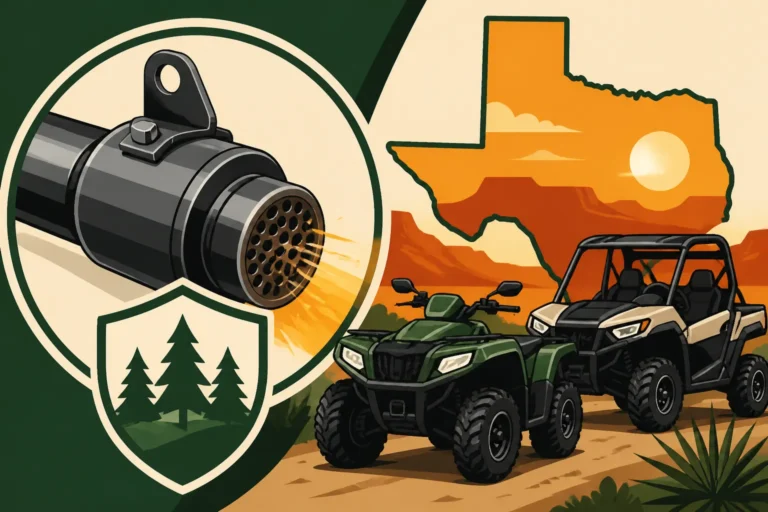
Many owners spend countless hours outfitting their sand rails with aftermarket parts, perhaps from a reputable company like SuperATV, adding lights, horns, or even turn signals. While these enhancements can absolutely improve safety and visibility in off-road environments, they don't magically change the vehicle's core classification in the eyes of the Texas Department of Motor Vehicles or local law enforcement. It's a bitter pill to swallow for enthusiasts who invest so much, but the state's legal framework prioritizes the initial design intent. This means that, regardless of how "street-ready" your sand rail might look or feel, its foundational identity as an OHV restricts its presence on public roads.
Sand Rails vs. Other OHVs (ATVs, UTVs) in the Eyes of the Law
When it comes to road restrictions, the Texas legal system doesn't differentiate much between a standard ATV, a UTV (or side-by-side), or a custom-built sand rail. For the purpose of public road use, they are all largely treated the same – as OHVs. This means that the rules that apply to your friend's four-wheeler or your neighbor's utility vehicle will almost certainly apply to your sand rail as well. The state is concerned with the class of vehicle, not its specific sub-type, when it comes to regulating road access.
Even for administrative processes like titling, sand rails often follow similar procedures to other OHVs. You might find information on [Sand Rails on a Texas Title] or [ROVs and UTVs Under the Texas Definition] that explains how these vehicles get their initial paperwork. What's crucial to understand is that obtaining a title, which is mandatory in Texas for OHVs, does not equate to being "street legal." A title simply proves ownership and helps track the machine; it doesn't bestow the right to drive on public roads. So, while your sand rail is undeniably unique and powerful, for the purposes of road use, it's lumped in with all the other off-road machines Texas regulates.
The General Prohibition: Why Your Sand Rail Isn't Street Legal
This is often the hardest truth for sand rail owners to accept: in most cases, your sand rail is simply not street legal in Texas. The laws are quite clear on this, and while there might be rare exceptions or local variations, the general rule is "no."
The Core Texas Statute Against OHVs on Public Roads
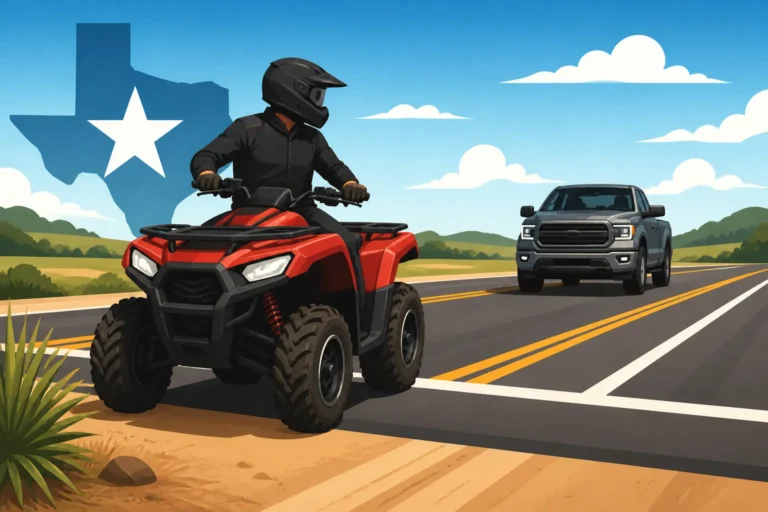
Texas law explicitly states that an off-highway vehicle cannot be operated on a public highway. This is a broad prohibition designed to maintain safety on roads. Public highways are built for cars, trucks, and other vehicles that meet specific safety, emissions, and registration standards. Sand rails, by their very nature, are not designed with these standards in mind. They lack crumple zones, often have open cockpits, and aren't typically equipped with street-legal lighting, braking systems, or other features mandated for highway use. It’s a classic case of square peg, round hole.
Many people become frustrated because they see heavily modified jeeps or other custom vehicles on the road and wonder why their sand rail, which might even have more safety features than some of those, is prohibited. The distinction often comes down to the vehicle's original classification and whether it can meet the extensive list of requirements for on-road vehicles, not just a few add-ons. You might find yourself searching for how to make your machine street legal, only to discover that [Street Legal ATVs in Texas: The Short Answer] is almost always "no." Adding a custom exhaust or some heavy-duty SuperATV suspension components might make your sand rail perform better off-road, but these modifications do not confer street legality. Unfortunately, efforts like [Why an Altered Quad Still Cannot Be Plated] and [Why Adding Lights and Mirrors Changes Nothing] highlight that cosmetic or functional upgrades, while valuable for off-road performance, don't change the vehicle's legal status for public road travel.
What "Public Road" Really Means in Texas
When Texas law refers to a "public highway," it's not just talking about interstates and major thoroughfares. This term is broadly defined and includes a vast majority of the roads you encounter daily. It encompasses state highways, U.S. highways, county roads, and most city streets that are maintained with public funds and open for public travel. Essentially, if you can drive a car on it, it's likely considered a public road where OHVs, including sand rails, are generally prohibited.
This broad definition is why you can't simply take your sand rail from your property to a friend's house a few miles down a quiet county road. Even if traffic is sparse, it's still a public roadway. While it might seem like a gray area in rural settings, law enforcement often takes a firm stance on this. It's not uncommon for cities to have their own ordinances, but it’s critical to remember that [What Texas Cities Can and Cannot Allow] often means they cannot contradict state law to make OHVs fully street legal on their streets. They might regulate golf carts or low-speed vehicles differently, but sand rails typically fall outside those allowances due to their power and design.
Limited Exceptions: When a Sand Rail Might Briefly Touch a Road
While the general rule is a resounding "no" for sand rails on Texas roads, there are a few very specific, narrow exceptions. It's crucial to understand that these are exceptions to the rule, not loopholes to make your sand rail street legal for regular use.
Crossing a Public Road Legally
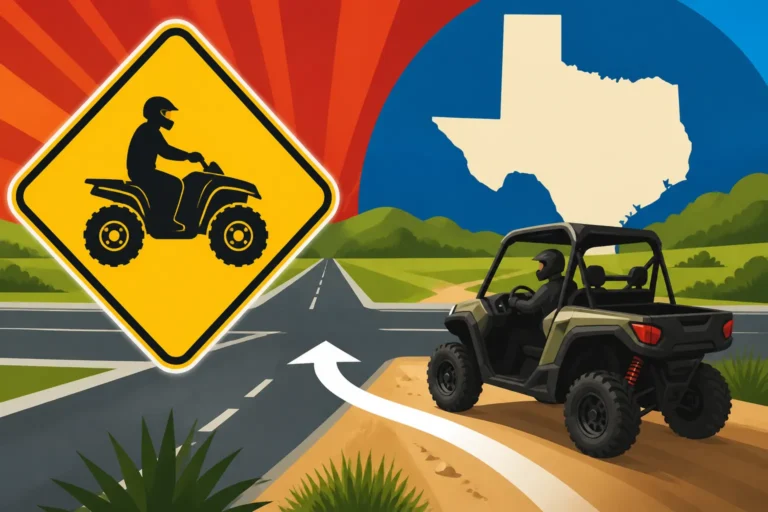
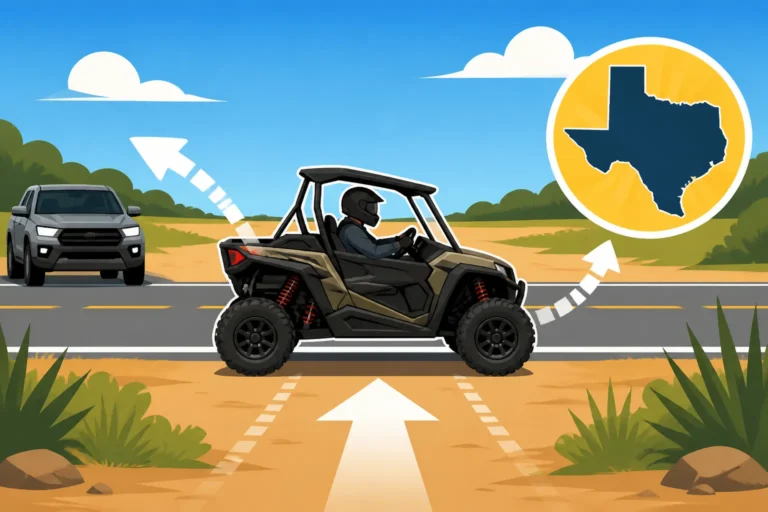
Perhaps the most common and widely applicable exception for OHV owners, including those with sand rails, is the ability to cross a public road. This is not permission to travel on the road, but merely to cross it to get from one section of private land to another, or to access an approved trail. However, even this simple act comes with strict rules that you absolutely must follow to avoid legal trouble:
- At a Right Angle: You must cross the road at an angle of 90 degrees to the roadway. This minimizes the time you spend exposed to traffic flow and makes your intentions clear to other drivers.
- Complete Stop: Before entering the roadway, you must come to a complete stop. Think of it like a stop sign; you need to assess traffic in both directions thoroughly.
- Yield to All Traffic: You must yield the right-of-way to all vehicles approaching on the public highway. This is paramount for safety. Don't assume others see you or will slow down.
- Intersection or Safe Location: You should cross at an intersection where possible. If not at an intersection, choose a location where the crossing can be made safely and quickly, with clear sight lines in both directions. Never cross a blind curve or hill.
These rules are in place for your safety and the safety of others. Ignoring them can lead to serious accidents and legal penalties. For more detail on these requirements, you can refer to guides like [Crossing a Texas Road at an Intersection] or [Ninety Degrees and a Full Stop in Texas]. This exception allows for connectivity but is a far cry from allowing your sand rail to be driven like a car.
Agricultural, Ranching, and Emergency Use Exemptions
Texas law provides very specific exemptions for OHVs when they are being used for certain essential purposes. These are not about recreation but about work:
- Agricultural Operations: If your sand rail is an integral part of an agricultural operation – perhaps used for checking fences on a ranch, moving equipment around a farm, or herding livestock – you might be allowed to operate it on a public road. However, this is tightly defined. The operation must be directly related to the production of crops, livestock, or timber. Simply having a large property that you call a "ranch" where you occasionally ride doesn't automatically qualify. The use must be for the agricultural purpose, not just on agricultural land. There are also stipulations regarding lighting and visibility, such as displaying a slow-moving vehicle emblem. For more details on this specific use, check out [Texas Agricultural Exemption for ATVs on Roads].
- Law Enforcement, Fire, and Emergency Services: OHVs used by these official entities, such as volunteer firefighters responding to an emergency or law enforcement patrolling rural areas, are also exempt from the general prohibition. This is because their use is deemed critical for public safety.
- Utility Workers: Similarly, utility company employees operating OHVs to access and maintain infrastructure might be granted an exception.
It's critical to understand that these are extremely narrow, purpose-driven exemptions. They do not extend to recreational use, even if you are "helping out" on a friend's ranch without formally being part of an agricultural operation. These exemptions underscore that the state sees OHVs as tools for specific tasks, not general road vehicles.
Designated Local Roadways and Master Planned Communities
This is where things can get a little nuanced, but it's important not to get your hopes up too high for your sand rail. Texas law does allow certain counties and municipalities to designate specific public roads for OHV use, but these instances are rare and come with significant caveats.
- Limited County Options: Certain counties, particularly those bordering the Red River or meeting specific population and geographic criteria, have the option to open roads under limited conditions. However, this power is not universal across the state, and very few counties actually utilize it for a broad range of OHVs. You might find information on [Which Texas Counties May Open Roads] to see just how restricted this really is. Even where it exists, it's typically for low-speed, specific roads, and usually not something a high-performance sand rail would be suited for.
- Master Planned Communities: Some master-planned communities, often with their own uniform covenants and private roads, might have rules that allow certain types of low-speed vehicles, like golf carts, on their internal roadways. However, these rules are typically very specific and usually do not extend to powerful off-road machines like sand rails. The intent is often for neighborhood transit, not recreational driving. Always check the specific community's regulations, but don't assume your sand rail will qualify, especially if it's designed for serious off-road adventure with performance parts from SuperATV. These communities usually prioritize quiet, low-impact vehicles, which a sand rail rarely is.
In summary, while these exceptions exist, they are highly specialized. The chances of your sand rail legally cruising a public road under one of these allowances for recreational purposes are extremely slim.
| Category | Allowed Use (Sand Rails/OHVs) | Prohibited Use (Sand Rails/OHVs) |
|---|---|---|
| Public Roads | Crossing at 90-degree angle, complete stop, yielding to traffic. | Traveling on any public road (highway, county road, city street) for leisure or general transportation. |
| Agricultural/Work | Actively engaged in recognized agricultural, ranching, or timber operations (specific conditions). | Using for recreational riding on agricultural land if it involves traveling on public roads. |
| Emergency/Utility | By authorized law enforcement, fire, emergency, or utility personnel during official duties. | Any private use, even if volunteering, that doesn't meet strict legal definitions. |
| Local Designations | On specific, designated low-speed roads in very few, limited counties/cities (check local laws). | Assuming general street legality in any city or county; using master-planned community roads without explicit sand rail permission. |
| Modifications | Enhancing off-road performance and safety (e.g., SuperATV lights, suspension). | Attempting to make a sand rail "street legal" by adding car-like accessories without a change in its fundamental OHV classification. |
Practical Realities and Consequences of Illegal Road Use
Given the stringent rules, it's vital for sand rail owners to understand the very real risks and consequences of operating their machines illegally on Texas public roads. The desire to drive your impressive sand rail on the street might be strong, but the legal and safety ramifications are significant.
Understanding the Risks: Fines and Enforcement
Operating a sand rail or any other OHV illegally on a public road in Texas is typically classified as a Class C misdemeanor. While this might sound minor, the penalties can quickly add up and create a major headache. A Class C misdemeanor can result in a fine, which can range from nominal amounts up to a few hundred dollars, depending on the specific violation and county. Beyond the immediate financial penalty, there are other potential consequences:
- Impoundment: Law enforcement has the authority to impound your sand rail if you're found operating it illegally on a public road. Getting it out of impound can involve significant towing and storage fees, often far exceeding the initial fine.
- Criminal Record: Even a Class C misdemeanor is a criminal offense that can appear on your record, potentially affecting future employment, professional licenses, or even travel.
- Insurance Issues: Most standard auto insurance policies do not cover OHVs on public roads. If you're involved in an accident while riding illegally, your insurance company could deny coverage, leaving you personally responsible for damages, medical bills, and potential lawsuits. Even if your sand rail has robust protection from, say, SuperATV, it won't help if your insurance won't cover the incident due to illegal road use.
- Safety Risks: Beyond the legal issues, driving a sand rail on public roads, which are designed for different types of vehicles and speeds, poses significant safety risks. The lack of traditional safety features (airbags, crumple zones), combined with the speed differential between your sand rail and other vehicles, makes accidents much more likely and potentially more severe. This is why laws like [Class C Misdemeanors Under Texas OHV Law] are in place – to deter unsafe practices.
The Importance of Designated Off-Road Riding Areas
Instead of trying to force a square peg into a round hole, the best and most rewarding way to enjoy your sand rail is to utilize the numerous designated off-road riding areas that Texas has to offer. These parks and trails are specifically designed for OHVs, providing safe and legal environments where you can push your machine to its limits without worrying about law enforcement or oncoming traffic.
Texas boasts a variety of fantastic OHV parks, such as Barnwell Mountain Recreation Area in Gilmer or Hidden Falls Adventure Park near Marble Falls. These locations offer diverse terrain, from rocky climbs to sandy washes, perfectly suited for sand rails. You can find detailed information on [Where to Ride an ATV in Texas] or explore various [Texas OHV Parks by Region] to discover options that cater to your riding style. Many of these parks are supported by organizations like the Texas Motorized Trails Coalition, which helps maintain and expand safe riding opportunities.
Before hitting these trails, remember that public land riding often requires a Texas OHV Decal and possibly a safety certificate, especially for younger riders. You can learn more about [The Texas OHV Decal Explained] and [Texas OHV Safety Certificates] to ensure you're fully compliant. By embracing these dedicated off-road spaces, you not only comply with the law but also unlock the true potential and excitement of your sand rail in an environment where it's truly meant to shine. Enjoy your machine responsibly, where the only "rules" are about having fun and staying safe on the trails!
Disclaimer
This article is for general informational purposes only and does not constitute professional advice. Laws, prices and regulations vary by location and change over time. Consult a qualified professional for guidance on your specific situation.