Which Guadalupe County Roads an ATV May Use
It’s a truly frustrating experience to load up your ATV or UTV, head out for a ride, and then hit a public road only to wonder if you’re even allowed to be there. Texas has a reputation for being wide open, but when it comes to riding off-highway vehicles on public roads, the rules can feel like a tangled mess of exceptions and local ordinances. This guide aims to clear up the confusion, specifically looking at what you need to know about riding your ATV or UTV on Guadalupe County roads.
Understanding Texas's General Stance on OHV Road Use
Let's just get this out of the way upfront: in Texas, ATVs and UTVs are generally not considered street legal. I know, it's a hard pill to swallow, especially when you see other states with more lenient rules. This fundamental principle means that, for the most part, you can't just hop on your quad or side-by-side and cruise down the highway or even most county roads like you would a car or truck. The state legislature has drawn a clear line, largely because these machines aren't built with the same safety features or signaling equipment as typical street-legal vehicles. This can be a real headache for folks who just want to get from their property to a nearby hunting lease or a friend’s house without loading up a trailer.
The Texas Department of Motor Vehicles does title these machines, which is a step many find confusing. You'll file the Texas Title Application Every OHV Buyer Files, but titling an ATV in Texas doesn't automatically mean it's street legal. The purpose of titling is primarily for proving ownership, preventing theft, and collecting sales tax, not for granting road privileges. You'll even get the Off-Highway Use Only Remark on a Texas Title stamped right there on the paper, a constant reminder of its intended use. So, before we even get to Guadalupe County, understand that the deck is largely stacked against general road use for OHVs across the state.
Specific Rules for Guadalupe County Roads
Now, let's get down to the nitty-gritty of Guadalupe County. This is where things can get particularly confusing, because while state law sets the general tone, there are some very specific carve-outs that might apply to certain areas. One of the provisions that often comes up in discussions about Texas counties opening roads to OHVs is tied to whether they are designated as "barrier islands" or fall under certain population thresholds. For Guadalupe County, which isn't a barrier island and has a substantial population, the standard statewide restrictions tend to be the default. This means that, unlike some other coastal counties that may have different rules for beach access or specific designated recreational zones, Guadalupe County largely adheres to the general Texas statutes regarding off-highway vehicle use on public roads. You won't find a blanket "open roads" policy for ATVs and UTVs here just because it's a beautiful part of Texas.
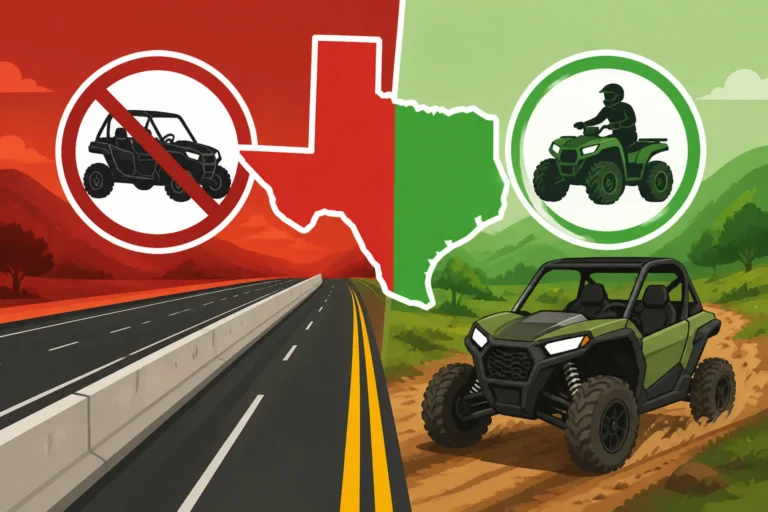
The key takeaway for riders in Guadalupe County is that county roads are generally closed to ATVs and UTVs for regular transportation. This isn't just about avoiding speeding tickets; it's about the fundamental legal classification of your vehicle. While specific cities or municipalities within Guadalupe County might have their own very limited ordinances for certain low-speed vehicles, these rarely extend to traditional ATVs and UTVs, and almost never allow them on major county or state-maintained roads. It's a common misconception that because it's a rural county, the rules are looser. In reality, the enforcement can be just as strict, if not more so, to ensure safety on roads shared with larger, faster vehicles. Before you ever consider hitting a county road, you absolutely need to check [What Texas Cities Can and Cannot Allow] and ensure you're not making assumptions that could lead to trouble.
Why Guadalupe County Follows General Texas Law
The idea of [Guadalupe River Counties and the Barrier Island Test] often comes up in conversations about local control over ATV road access. However, Guadalupe County does not fall under the special provisions sometimes afforded to barrier island counties. These unique rules are designed for very specific geographic areas and don't apply inland. For the vast majority of Texas, including Guadalupe County, the legislative intent is to keep OHVs off public roads unless a very specific and limited exception applies.
It really boils down to safety and vehicle design. Your typical UTV, like those from SuperATV, is designed for rugged terrain, trails, and utility work, not for highway speeds or congested traffic. They often lack turn signals, proper headlights, brake lights, and other safety equipment mandated for street-legal vehicles. This is [Why Texas Will Not Register an OHV for the Road] for general transportation. When you're out exploring the scenic routes around New Braunfels, Seguin, or other parts of Guadalupe County, remember that those roads are built for cars and trucks, and OHVs simply aren't engineered for that environment. Local law enforcement takes these rules seriously because accidents involving OHVs on public roads can be particularly severe due.
Navigating the Limited Exceptions for Road Use
Even though the general rule is "no street use," Texas law does provide a handful of very specific, narrowly defined circumstances where an OHV might legally touch a public road, even in Guadalupe County. These aren't loopholes for casual cruising; they are practical allowances for necessary tasks. Missing one of these conditions can quickly turn a legal transit into a Class C misdemeanor, so it’s crucial to understand them precisely.
Agricultural and Ranch Operations
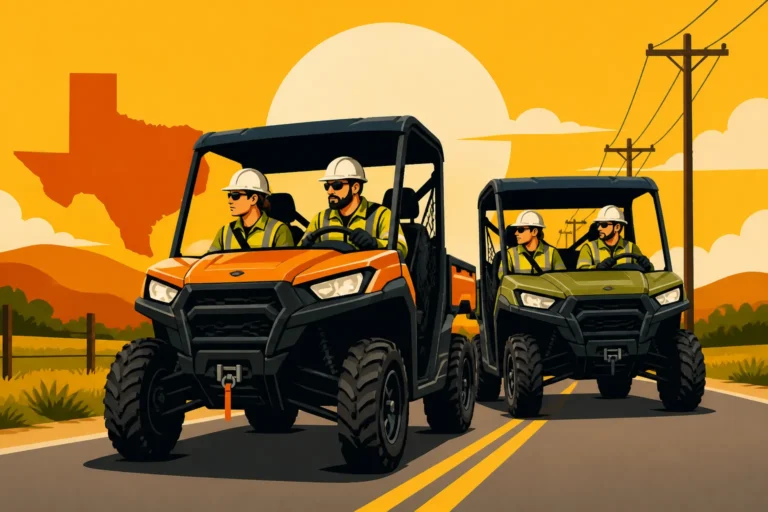
This is probably the most common exception you'll encounter in rural Texas, including Guadalupe County. If you’re using your ATV or UTV for a bona fide agricultural purpose, you generally have more leeway. This means tasks directly related to farming, ranching, or timber operations. Think hauling feed, checking fences, or moving equipment between fields. The law allows these vehicles to be driven on public roads for up to 25 miles from the point of origin to the destination, provided it's during daylight hours. You don't need a special plate for this specific use, but you do need to ensure your machine is clearly identifiable as part of an agricultural operation. [Riding an ATV for a Texas Agricultural Operation] often involves specific requirements like mounting a 6-foot orange flag and having headlights and taillights on, even during the day, to enhance visibility. This exception is for work, not for a joyride to the hardware store.
Crossing a Public Road
Sometimes, your off-road trail or private property might be bisected by a public road. Texas law acknowledges this reality. You are generally allowed to cross a public road, including those in Guadalupe County, at a right angle. This isn't an excuse to drive down the road for a stretch; it's specifically for traversing from one side to the other. When doing so, you must come to a complete stop before entering the roadway, yield to all traffic, and cross safely and directly. This applies whether it's a small dirt road or a more traveled county thoroughfare. Always exercise extreme caution when performing a crossing; visibility is key, and other drivers may not expect an OHV. You can find more details on [Texas Rules for Getting Across a Road].
Volunteer Firefighters and Emergency Personnel
In situations involving emergency response, ATVs and UTVs operated by volunteer firefighters or other authorized emergency personnel are sometimes permitted on public roads. These vehicles often play a critical role in reaching remote areas during fires, floods, or other emergencies where traditional vehicles cannot go. However, this is strictly limited to official duties and requires specific authorization and safety equipment like emergency lighting. This isn't an everyday exception but a vital one for community safety.
Limited Access to Master Planned Communities or Golf Courses
While less likely to apply broadly across Guadalupe County roads, there are specific, highly localized exceptions related to golf carts and OHVs in master-planned communities or for direct access to a golf course. For instance, [Texas's Golf Course Exception] allows for very limited travel on public roads within 2 miles of the course, often in daylight only and on roads with speed limits of 35 mph or less. Similarly, certain master-planned communities, with specific design and approval, might have designated roads for low-speed vehicles. However, these are typically self-contained environments, and the allowances are for specific types of vehicles (often golf carts or street-legal low-speed vehicles), not usually for all ATVs or UTVs. It’s crucial not to confuse these very narrow local allowances with a broader permission for OHVs on regular county roads.
Consequences of Illegal Road Use and How to Stay Safe
Riding your ATV or UTV illegally on public roads in Guadalupe County carries real risks and consequences. It's not just about getting a lecture from a sheriff's deputy; you could be facing significant fines and legal trouble. Nobody wants to deal with that, especially when you're just trying to enjoy your machine.
Potential Fines and Legal Headaches
The legal consequence for illegally operating an OHV on a public road in Texas is typically a Class C Misdemeanor. While this might sound minor compared to a felony, it still means a citation, a court appearance, and a fine that can range from $25 to $500, plus court costs. These costs can add up quickly, especially if you're cited multiple times. Beyond the immediate financial hit, there’s the hassle of dealing with the legal system, which is a major time drain. It’s always best to avoid these situations entirely. Remember, ignorance of the law is rarely an acceptable defense. You can find more detail on [Texas Fines for Illegal ATV Road Use].
Safety Concerns for Riders and Others
Putting aside the legal ramifications for a moment, the primary concern with riding an ATV or UTV on public roads is safety. These machines are not designed for the hard pavement, high speeds, and traffic conditions of public roadways. Here’s why it’s so risky:
- Visibility: ATVs and UTVs are smaller and lower to the ground than cars and trucks, making them harder for other drivers to see, especially at dawn, dusk, or in bad weather. Many lack proper turn signals, making intentions unclear to other motorists.
- Handling: The tires and suspension systems on OHVs are optimized for dirt, mud, and uneven terrain, not for asphalt. This can lead to poor handling, especially when braking or cornering at speed on pavement, increasing the risk of rollovers or loss of control.
- Speed Differentials: Even if you’re riding on a [Texas Rules for Riding a 35 mph Road], the difference in acceleration and top speed between an OHV and other vehicles can be dangerous. Other drivers might not anticipate an OHV’s slower speeds or quick movements.
- Lack of Protection: Unlike a car with airbags, seatbelts, and a protective shell, ATVs and UTVs offer minimal protection in a collision. Riders are much more exposed, leading to potentially severe injuries. Always wear appropriate safety gear, including a helmet, even when on private land. [Texas Helmet Law for ATV Riders] is a critical piece of safety information.
- Traffic Flow Disruption: Slower-moving OHVs can disrupt the flow of traffic, leading to impatient drivers attempting unsafe passing maneuvers, which then puts everyone at risk.
To help visualize the strict differences, consider this table comparing general public road use versus approved limited use in Texas:
| Feature/Condition | General Public Road Use (Guadalupe County) | Approved Limited Use (Exceptions) |
|---|---|---|
| Primary Legality | Generally NOT Permitted | Permitted under strict conditions |
| Vehicle Registration | OHV title only; no street registration | OHV title; no street registration required for limited use exceptions |
| Street Legal Equipment | Lacks required street equipment | May still lack full street equipment, but specific safety measures (e.g., orange flag, lights) are often required for exceptions |
| Driver's License | Not intended for DL-requiring roads | Yes, a valid driver's license is required for any road use |
| Helmet Requirement | Always recommended | Often required, especially for youth, or if not in a roll-cage equipped UTV with seat belts |
| Insurance | Not legally required for OHV use | Not legally required for OHV use, but highly recommended for liability |
| Road Type | County roads, state highways, city streets | Farm-to-market roads, county roads (for specific tasks), or designated low-speed community roads (rarely applies to typical ATVs/UTVs) |
| Purpose of Use | Recreation, general transportation (Illegal) | Agricultural work, crossing roads, emergency response, limited golf course access |
| Penalties for Violation | Class C Misdemeanor, fines | None, if all conditions are met |
Staying Safe and Legal
So, what's a rider to do? The best advice is always to assume that public roads, including those in Guadalupe County, are off-limits for your ATV or UTV unless you are absolutely certain that a specific, clearly defined legal exception applies to your immediate situation and you meet all the conditions. For casual riding and recreation, stick to private property where you have permission, or visit dedicated [Where to Ride an ATV in Texas] parks and trails. Sites like SuperATV offer a huge range of accessories that are perfect for enhancing your off-road experience, from lift kits to winches, all designed for the trails, not the asphalt. Always prioritize safety, understand the law, and make informed choices to keep your riding experience enjoyable and free from legal troubles.
Disclaimer
This article is for general informational purposes only and does not constitute professional advice. Laws, prices and regulations vary by location and change over time. Consult a qualified professional for guidance on your specific situation.