Crossing at a Right Angle to the Lanes
Navigating public roads on your ATV or UTV in Texas can feel like walking a tightrope – you want to get where you're going, but the rules aren't always crystal clear, especially when it comes to simply crossing a paved road. Many riders worry about accidentally breaking the law or, worse, causing a dangerous situation because they're unsure of the correct procedure. This guide is here to untangle those complexities and provide you with a clear, in-depth understanding of how to legally and safely cross public roads with your off-highway vehicle in Texas, focusing specifically on the crucial "right angle" rule.
Understanding the "Right Angle" Rule for Texas OHVs
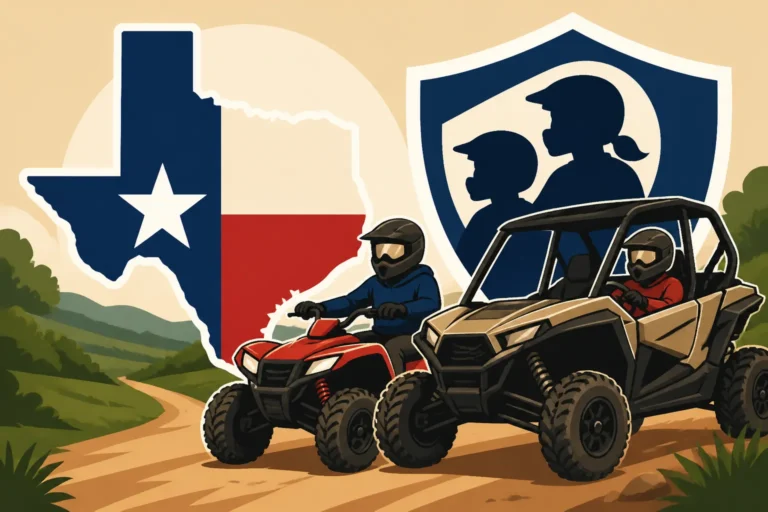
When you're out on your ATV or UTV, whether you're transitioning between sections of private land, moving from a pasture to a deer lease, or connecting two trails, there will inevitably be times when a public road stands between you and your destination. Texas law, ever mindful of both safety and the distinct nature of off-highway vehicles (OHVs), has very specific guidelines for these situations. One of the most fundamental, and often misunderstood, is the requirement to cross at a "right angle" to the lanes of traffic.
Why This Specificity? Safety and Minimizing Road Exposure
The idea behind crossing at a right angle, or as close to 90 degrees as practically possible, isn't arbitrary. It's rooted deeply in safety and minimizing the inherent risks associated with an OHV being on a paved road, even for a brief moment. ATVs and UTVs are designed for off-road terrain, not asphalt. Their tires, suspension, and steering characteristics are optimized for dirt, mud, rocks, and sand. On hard pavement, they can handle differently, with less grip, a higher center of gravity feel, and slower response times compared to street-legal vehicles.
By mandating a right-angle crossing, the law aims to achieve several critical objectives. First, it ensures the shortest possible time an OHV spends actually on the paved surface, reducing exposure to faster-moving street traffic. The less time you're in a travel lane, the less chance there is for a collision. Second, it makes your intentions clear to other drivers. When you pull straight across, perpendicular to the flow of traffic, it's generally easier for oncoming and approaching vehicles to understand that you are traversing the road, not attempting to merge into a lane or drive alongside them. This clarity helps prevent confusion and allows other drivers to react appropriately. Trying to cross at an acute angle, or worse, driving down the shoulder for a bit before turning across, can be highly deceptive and significantly increase the risk of an accident.
What a 90-Degree Crossing Actually Looks Like
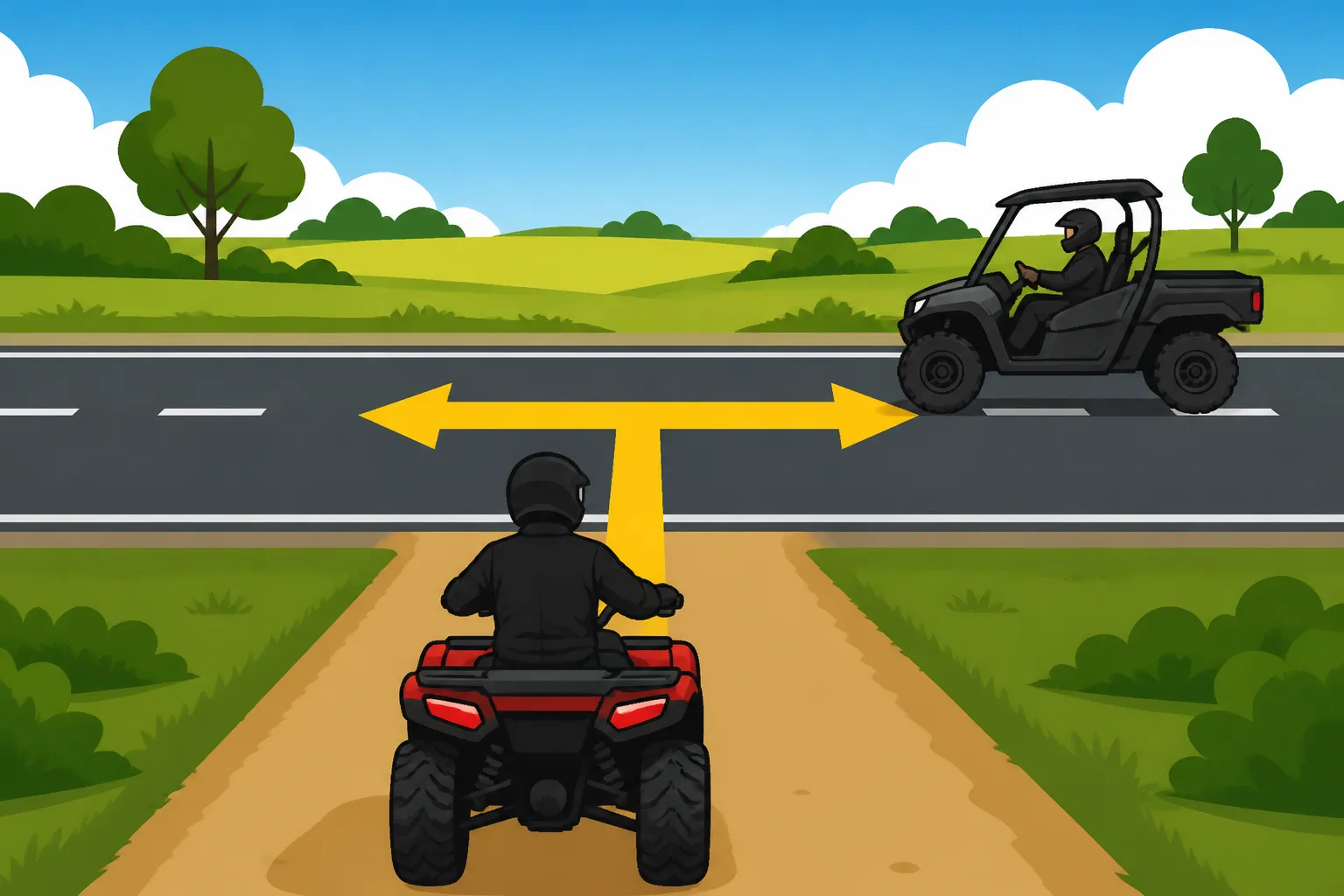
Visualizing a 90-degree crossing is fairly straightforward: imagine a line drawn directly from one side of the road to the other, perfectly perpendicular to the yellow or white lines marking the lanes. Your ATV or UTV should follow this imaginary line. This isn't to say you need a protractor on your handlebars, but the intent is clear: go straight across, not diagonally.
For instance, if you're on a ranch and need to get to another pasture on the opposite side of a two-lane county road, you should approach the road, stop, check for traffic, and then proceed directly across to the other side, aiming for the shortest path between the two shoulders. You're not driving parallel to the road for any distance, nor are you making a wide, sweeping turn that carries you down a lane. This is about minimizing your presence on the roadway itself. Many riders might consider adding high-visibility items to their machines, like the bright LED light bars or whip flags that SuperATV offers, especially if they frequently cross roads in areas with limited sight lines. While not strictly required for crossing, anything that enhances your visibility to other motorists is a smart move.
Legal Context and When This Rule Applies
The "right angle" rule isn't just a suggestion; it's a specific requirement under Texas law for off-highway vehicles traversing public roads. Understanding the legal framework helps riders stay compliant and avoid potential citations.
Texas Transportation Code Specifics and Road Types
Texas statutes are quite explicit about where and how OHVs can interact with public roads. Generally, OHVs are not considered street-legal vehicles and are prohibited from operating on public roads and highways. However, exceptions exist for crossing these roads. The "right angle" rule is one of the foundational stipulations for these permissible crossings. This applies broadly to various types of public thoroughfares, including farm-to-market roads, county roads, and state highways, whenever a crossing is permitted.
It's crucial to remember that this rule is designed for situations where an OHV is transiting from one off-road area to another, with the road acting as a temporary barrier. It's not a loophole to drive your ATV or UTV down the road. The law prioritizes directness and swiftness for safety. So, whether you're on a remote [Texas Rules for Riding a Ranch Road] or a busier county blacktop, the principle remains the same. The purpose is to allow practical movement for off-road activities without turning an OHV into an improvised street vehicle. For more on general road access, you might want to read [Texas Rules for Getting Across a Road].
Exceptions to the "Right Angle" Rule for Road Use
While the right-angle rule is paramount for crossing, it's important to differentiate it from limited circumstances where an OHV might legally operate on a public road for a short distance. These exceptions generally relate to specific uses and usually come with their own set of stringent conditions:
- Agricultural Operations: Texas law provides an exemption for OHVs used for legitimate agricultural purposes. A farmer or rancher might operate an ATV or UTV on a public road to move between fields or to conduct certain farm-related activities, provided the road is not a limited-access highway, the vehicle is being used for specific agricultural purposes, and typically, it's within a limited distance. In these cases, the OHV may travel on the road, making the right-angle crossing rule less relevant for that specific portion of travel. However, even within this exemption, safety and visibility remain critical. If you are operating under this exemption, you'll need to know about [Texas Agricultural Exemption for ATVs on Roads].
- Emergency Services: First responders, such as volunteer firefighters, may use OHVs on public roads when responding to an emergency. These are highly specific situations where the urgency of the situation overrides general prohibitions, but they are not applicable to the average recreational rider.
- Specific Local Ordinances: While rare for crossing rules, some very specific, low-traffic areas or master-planned communities might have unique local ordinances that affect OHV use on certain roads. However, these are exceptions, not the norm, and riders should never assume such a rule exists without direct confirmation from local authorities. For the vast majority of Texas roads, the right-angle crossing rule is the standard. It's important to understand that [Why Texas Will Not Register an ATV for the Road] means these vehicles are fundamentally not meant for street use.
In all other general scenarios, especially when you're simply trying to get from point A to point B across a public thoroughfare with your recreational machine, the right-angle crossing is the dictated legal method.
Executing a Safe and Legal Right-Angle Crossing
The law isn't just about what you can't do; it's also about guiding you on how to safely accomplish what you can do. Performing a right-angle crossing safely requires preparation, attention, and a clear understanding of the steps involved.
Pre-Crossing Checks: Your Safety Checklist
Before you even think about putting a tire on the pavement, a thorough safety check is paramount. This isn't just good practice; it's often implied by the overarching duty of care for any operator of a vehicle.
- Visibility: Can you clearly see oncoming traffic from both directions? Is there anything obstructing your view, like tall grass, a blind curve, or a hill crest? If your visibility is limited, you need to find a better, safer spot to cross, even if it means taking a slightly longer route. This also applies to your visibility to others – are your headlights and taillights functioning, even in daylight? Though [Texas Equipment Rules for an ATV on a Road] might be geared more towards road travel, proper lighting is crucial for any interaction with public roads.
- Traffic Assessment: Take the time to accurately judge the speed and distance of approaching vehicles. Don't rush. Wait for a clear, safe gap in traffic that allows you ample time to cross without forcing other drivers to brake or swerve. Remember, you're the one crossing their path.
- Vehicle Condition: Is your ATV or UTV in good working order? Are the brakes reliable? Is the steering responsive? Do you have enough fuel to get across and continue your journey? A breakdown in the middle of a road crossing is incredibly dangerous. Ensure your machine is in top shape before attempting any road interaction. Some riders who frequently encounter road crossings find that upgrading their tires with a more aggressive tread, perhaps from SuperATV, can give them better traction on a variety of surfaces leading up to and away from the pavement, improving control.
Step-by-Step Process: Stop, Look, Listen, and Cross Directly
Once you've completed your pre-crossing checks and identified a safe window, execute the crossing with precision:
- Come to a Complete Stop: Before entering the roadway, bring your OHV to a full and complete stop at the edge of the pavement or shoulder. This allows you a moment for a final scan and ensures you're not rolling into traffic. This is a non-negotiable step, similar to stopping at a stop sign.
- Look Both Ways (and then some): Actively scan left, right, and then left again. Be aware of any vehicles that might be turning onto the road or approaching quickly. Don't assume anything.
- Listen: Even if you can't see traffic, you might hear it. The sound of an approaching vehicle can alert you to potential hazards, especially if your visibility is limited in one direction.
- Signal (If Possible): While OHVs typically lack turn signals, you can use hand signals if you're comfortable and it's safe to do so. A simple arm out to indicate your intention to cross, or pointing in the direction you're heading, can alert other drivers. More importantly, make eye contact with any approaching drivers if possible, to confirm they see you.
- Cross Directly at a Right Angle: When the path is clear, proceed immediately and directly across the road, aiming for the opposite shoulder at a 90-degree angle to the flow of traffic. Do not drive down the shoulder, do not attempt to merge, and do not make wide, arcing turns. Keep your speed appropriate for control, but don't dawdle. The goal is to get off the paved surface as quickly and safely as possible.
- Exit the Roadway: Once all wheels are off the pavement and onto the opposite shoulder or off-road area, you've completed the legal crossing.
Common Mistakes to Avoid
Rushing the crossing is a common error. Patience is your best friend when dealing with public roads. Trying to "beat" an oncoming car or making a last-minute decision to cross can lead to catastrophic consequences. Another mistake is assuming other drivers see you, especially if your OHV isn't brightly colored or equipped with additional lighting. Many drivers aren't accustomed to seeing ATVs or UTVs on public roads and might not be looking for them. Never drive on the shoulder parallel to the road for any significant distance; this isn't a legal part of the crossing maneuver. Lastly, don't attempt to cross in an area where your line of sight, or that of other drivers, is severely compromised. It's far better to ride an extra half-mile off-road to find a safer crossing point than to risk an accident on a blind curve.
Beyond the Angle: Other Critical Rules for Road Crossings
While the "right angle" is key, it's only one piece of the puzzle. Several other Texas laws and safety guidelines are critical to understand when you're crossing a public road on your ATV or UTV. Ignoring these can not only put you in danger but also lead to significant fines.
The Full Stop Requirement and Yielding to Traffic
Just like at a stop sign or before entering a main thoroughfare from a private drive, Texas law requires you to come to a full and complete stop before entering any public roadway. This isn't a rolling stop; it means all wheels must be momentarily stationary. This pause gives you that crucial extra moment to assess traffic conditions thoroughly before proceeding.
Furthermore, you are always required to yield the right-of-way to all approaching traffic on the public road. This means that if another vehicle is approaching closely enough to constitute a hazard, you must wait for them to pass. You, as the OHV operator crossing the road, bear the responsibility for ensuring the crossing is safe and does not impede or endanger other motorists. This applies whether you're crossing a small county road or a busier [Texas Rules for Riding a Farm Road]. Always assume the road traffic has the right-of-way.
Daylight Only Operation and Required Equipment
Most recreational OHV use, particularly when interacting with public roads, is restricted to daylight hours only, unless your vehicle is specifically equipped with certain lighting that meets street-legal vehicle standards. For a brief crossing, having functional headlights and taillights, even during the day, significantly enhances your visibility. Some riders even add a [Texas OHV Plate Application] even though it's not a registration, it serves as a form of official identification and can make your machine more visible to law enforcement and other drivers.
While comprehensive street-legal equipment isn't required for a mere crossing, basic safety equipment on your OHV is still paramount. This includes functional brakes, a working muffler (to avoid noise complaints and meet basic operating standards), and often, a spark arrester. For instance, if you're riding near any public lands, a [Texas Spark Arrester Requirement] is usually in effect. Enhancements like a tall safety flag, sometimes mounted on a flexible whip, also increase your visibility dramatically, especially in areas with varying terrain or brush. Brands like SuperATV offer a variety of such accessories that can make your OHV safer and more visible during these brief road interactions.
Helmet Laws and Safety Apparel for Riders
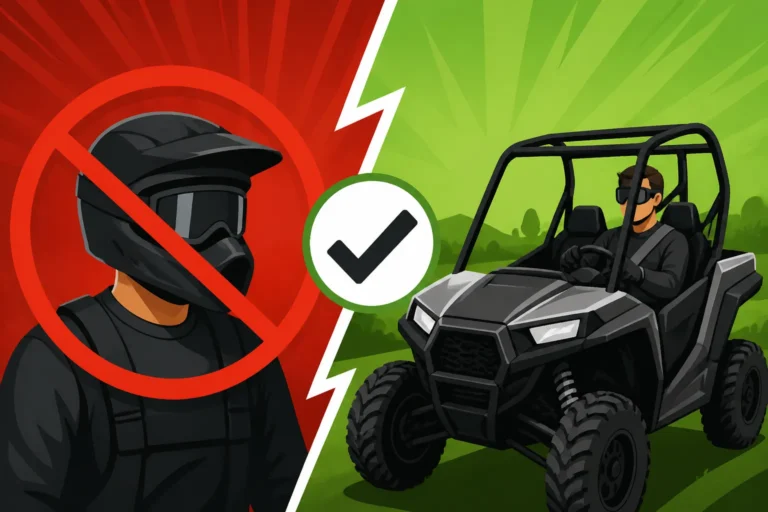
Texas has specific [Texas Helmet Law for ATV Riders] that dictate when helmets are required. Generally, if you are under the age of 15, you must wear a helmet when operating an ATV. However, many seasoned riders strongly recommend wearing a helmet regardless of age, especially when there's any chance of interacting with roads or other vehicles. Helmets, along with appropriate eye protection, gloves, and sturdy footwear, form your primary line of defense in case of an accident. While the road crossing itself is brief, the potential for impact from street traffic, or even a fall from the OHV, is real. Protecting yourself should always be a top priority. For more information on general rider safety, consult [Texas Safety Apparel Rules for ATV Riders].
Consequences of Non-Compliance
Ignoring these rules can lead to more than just a stern warning. Operating an OHV illegally on or across a public road, or failing to follow the specific crossing protocols, can result in a Class C misdemeanor. These fines can range significantly and certainly put a damper on your day of riding. Beyond the financial penalty, an illegal crossing can lead to impoundment of your vehicle, and if an accident occurs, it can severely complicate insurance claims and potentially lead to civil liabilities. In a worst-case scenario, an accident involving an OHV on a public road can result in serious injury or even fatality, highlighting why these seemingly small rules are so important. Understanding [Texas Fines for Illegal ATV Road Use] makes it clear that taking these regulations seriously is in your best interest.
Crossing a road on your ATV or UTV in Texas doesn't have to be a source of stress, provided you understand and adhere to the established rules. By stopping fully, looking thoroughly, yielding to all traffic, and executing a direct, right-angle crossing, you can safely and legally navigate these necessary transitions.
Disclaimer
This article is for general informational purposes only and does not constitute professional advice. Laws, prices and regulations vary by location and change over time. Consult a qualified professional for guidance on your specific situation.