Texas Spark Arrester Requirement
Navigating the rules for riding your ATV or UTV in Texas can sometimes feel like trying to lasso a wild mustang – just when you think you've got it, something else pops up. One of those critical, yet often overlooked, requirements for off-highway vehicles (OHVs) in our great state is the spark arrester. Many riders don't realize the serious implications of not having one, from risking fines to potentially starting a devastating wildfire. This guide will cut through the confusion and explain exactly what Texas expects when it comes to spark arresters on your off-road machine, helping you stay safe, legal, and responsible on the trails.
Understanding the "Why" Behind Spark Arresters in Texas
It's easy to dismiss a small piece of metal in your exhaust system as just another component, but a spark arrester plays a profoundly important role, especially here in Texas. We all love our wide-open spaces, dense forests, and rugged terrain, and keeping them safe from preventable hazards is a shared responsibility. The rules around spark arresters aren't just bureaucratic red tape; they're a vital part of wildfire prevention and environmental protection.
The Real Danger of Wildfires in Texas
Texas, with its sprawling ranches, vast pine forests, and dry brush, is unfortunately no stranger to wildfires. A stray spark, even a tiny one, can quickly escalate into an inferno, especially during our long, hot, and often dry summers. Imagine you're out enjoying a ride, kicking up dust on a back trail, and a microscopic piece of glowing carbon escapes your exhaust. If it lands on dry grass, leaves, or brush, it can ignite a fire that destroys thousands of acres, homes, and wildlife habitats. It’s a chilling thought, but it’s a very real possibility. This isn't just about preserving nature; it's about protecting livelihoods and lives. The memory of past wildfires, like those that have swept through East Texas or the Hill Country, serves as a stark reminder of how quickly things can get out of control.
Protecting Our Public Lands and Resources
When you venture onto public lands in Texas, whether it's a national forest, state park, or designated OHV riding area, you're enjoying a shared resource. These areas are managed by agencies like the U.S. Forest Service or Texas Parks and Wildlife Department, and they have strict regulations in place to ensure these natural treasures remain accessible and safe for everyone. A spark arrester is a non-negotiable part of this protective framework. Without it, the risk of accidental ignition makes it too dangerous to allow OHVs into these sensitive environments. Many of the beautiful places we love to ride, like the Sam Houston National Forest, have these requirements in place specifically to prevent such disasters.
What Happens Without a Spark Arrester
Beyond the catastrophic potential of a wildfire, operating an OHV without a compliant spark arrester can lead to immediate and inconvenient problems for you. First and foremost, you risk legal trouble. Land managers and law enforcement can issue citations, which often come with hefty fines. Secondly, you might simply be turned away from the gate at a public riding park. Imagine driving for hours, unloading your machine, only to be told you can't ride because your exhaust isn't up to snuff. It’s a frustrating scenario that’s entirely preventable. And let’s be honest, it's also about being a good neighbor and a responsible steward of the land. Nobody wants to be the person who inadvertently starts a fire.
What Qualifies as a Texas-Compliant Spark Arrester
The term "spark arrester" sounds simple enough, but there are specific standards that must be met for a device to be considered compliant, especially on public lands. This isn't just any screen or baffle; it needs to be designed and tested to meet rigorous safety benchmarks. Knowing what to look for and what to avoid can save you a lot of hassle.
The US Forest Service Standard Explained
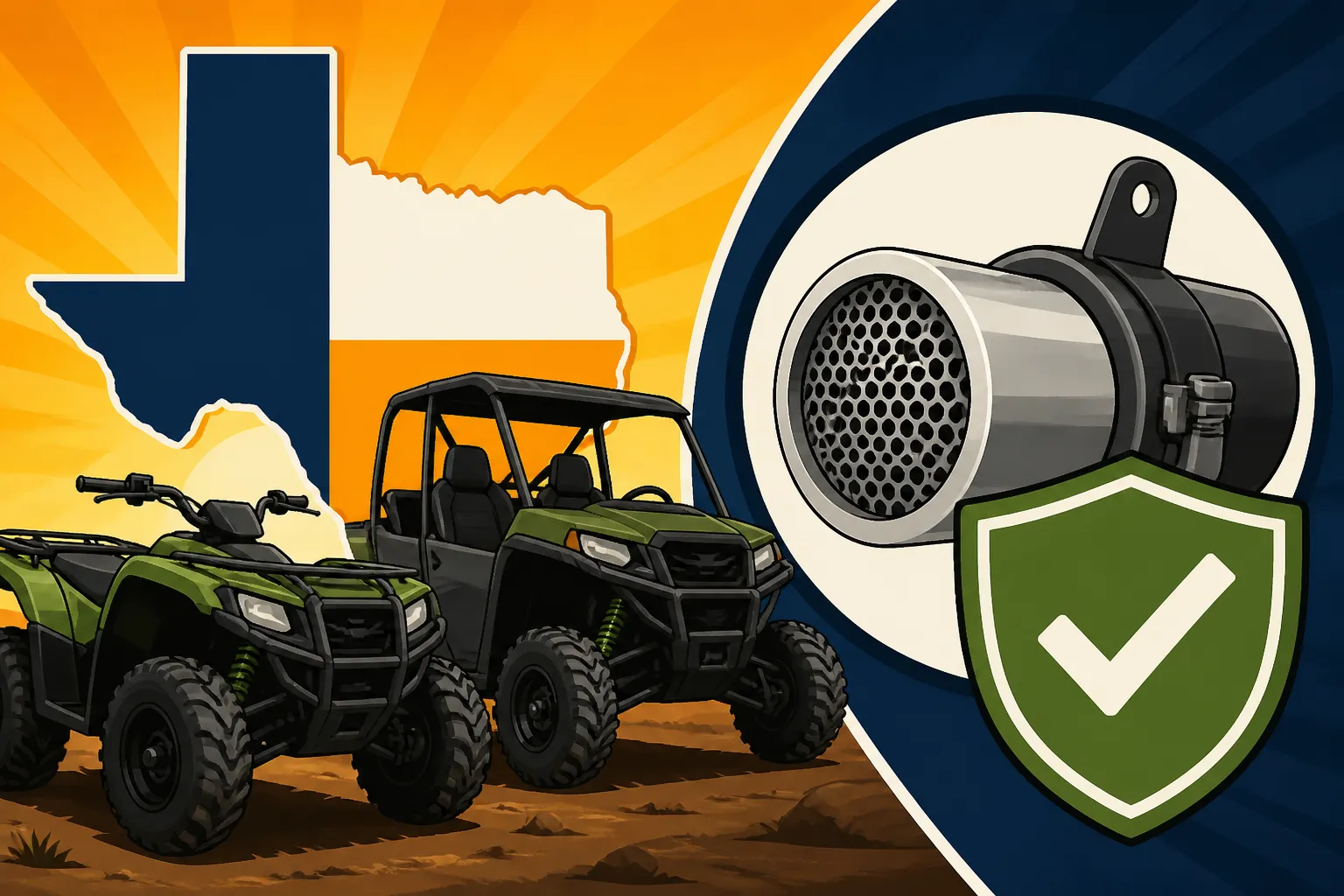
When we talk about spark arresters for OHVs in Texas, the gold standard is often tied back to the U.S. Forest Service (USFS) standard. This isn't a Texas-specific invention; it's a nationally recognized benchmark for safety. Essentially, a USFS-approved spark arrester is a device that's been tested and certified to prevent the escape of carbon particles larger than 0.023 inches in diameter from the exhaust system. These are the glowing embers that can easily ignite dry tinder. The certification process involves actual testing to ensure the device effectively cools and traps these sparks without significantly impacting engine performance or causing excessive back pressure. This standard is widely adopted across public lands and is what most parks and agencies in Texas will be looking for.
How to Identify a Certified Spark Arrester
So, how do you know if your machine has a compliant spark arrester? The easiest way is to look for the USFS approval stamp or label directly on the exhaust component. This will usually be a small metal tag or an embossed marking that explicitly states "USFS Approved" or "Forest Service Approved," often with a specific number. It might be on the muffler itself, or on an end cap if it's a removable unit. Many factory-installed exhausts on new ATVs and UTVs come with integrated, USFS-approved spark arresters right off the showroom floor. If you've modified your exhaust system, however, or bought a used machine, you'll want to double-check. Don't just assume it's there.
Common Misconceptions and Aftermarket Parts
A common mistake riders make is thinking any mesh screen or baffle in the exhaust will do the trick. That's simply not true. A homemade screen or a generic exhaust insert that hasn't been tested and certified might not meet the USFS standard. While these might look like they're doing the job, they could still allow dangerous sparks to escape, and they won't pass inspection at an OHV park. When considering aftermarket exhaust systems or spark arrester kits, always verify that they explicitly state USFS approval. Brands like SuperATV often offer accessories, including exhaust components or spark arrester kits, but you still need to ensure any part you choose carries that crucial USFS stamp if you plan to ride on regulated public lands. Always check the product specifications carefully. [Texas Spark Arrester Requirement] is not something to guess about.
Where the Texas Spark Arrester Rule Applies (and Where it Doesn't)
Understanding where you absolutely must have a spark arrester versus where it's merely a good idea can be a bit of a gray area for some riders. While the spirit of the law leans heavily towards fire prevention everywhere, the explicit requirements vary depending on the type of land you're riding on.
Public Lands Where It's Absolutely Required
This is where the rule is crystal clear: any time you ride your ATV or UTV on public lands managed by federal or state agencies in Texas, you are legally required to have a USFS-approved spark arrester. This includes, but isn't limited to:
- National Forests: Such as the Sam Houston National Forest, which offers miles of OHV trails.
- State Parks and Wildlife Management Areas: Any designated OHV riding areas within these properties.
- Corps of Engineers Land: Areas around lakes and rivers that allow OHV access.
- Other Federally Managed Lands: Potentially including some Bureau of Land Management (BLM) areas, though these are less common for dedicated OHV riding in Texas compared to other states.
Park rangers, game wardens, or other law enforcement personnel on these lands have the authority to check your machine. If you're found without a compliant spark arrester, you could face fines, be denied entry, or even be asked to leave the property. It’s simply not worth the risk. Always check the specific rules for [Texas National Forest Permits] before you head out.
Private Land and The 'Unwritten Rules'
Now, what about private land? If you own a ranch, have permission to ride on a friend's property, or are visiting a private, for-profit OHV park, the legal requirements for a spark arrester can differ. Generally, state law doesn't mandate a spark arrester on private property in the same way it does for public lands. However, this doesn't mean you should ditch it!
Many private OHV parks, especially those concerned with liability and fire safety, will still require USFS-approved spark arresters as part of their own park rules. They want to protect their investment and ensure the safety of all their guests. It’s always best practice to check with the specific park or landowner before you arrive. Even if there's no official rule, riding without one on private land, especially during dry conditions, is a gamble. If you were to accidentally start a fire, you could face immense civil liability for damages, regardless of state law. A good rule of thumb: always keep it installed. It’s cheap insurance for your peace of mind and the safety of the land.
Here’s a quick overview:
| Riding Location | Spark Arrester Legally Required? | Best Practice? | Potential Consequences (without one) |
|---|---|---|---|
| Federal Public Lands | Yes (USFS Approved) | Absolutely | Fines, denial of entry, machine impoundment |
| State Public Lands | Yes (USFS Approved) | Absolutely | Fines, denial of entry, removal from property |
| Private OHV Parks | No (by state law) | Yes (often required by park rules) | Denial of entry, removal from property, park-specific fines |
| Private Land (Owner Permission) | No (by state law) | Strongly Recommended | Civil liability for fire damage, strained relationships |
The Link to Road Use Rules (or Lack Thereof)
It’s important to distinguish between spark arrester requirements for off-road use and any rules that might apply if you're riding an OHV on public roads (which, in Texas, is extremely limited and generally not allowed for ATVs/UTVs). The spark arrester rule is almost exclusively tied to preventing fires in natural environments, not to road legality or vehicle emissions for street use.
Texas generally does not allow ATVs or UTVs to be registered for on-road use, so typical road-vehicle requirements for exhaust systems don't apply to them in the same way they would for a car or motorcycle. The focus for OHVs is specifically on fire prevention when operating off-pavement. So, while you might be asking [Are ATVs Street Legal in Texas?] (short answer: mostly no), the spark arrester issue is a separate, off-road specific concern.
Consequences of Not Having a Spark Arrester in Texas
Ignoring the spark arrester requirement can lead to a host of headaches, from simple inconvenience to serious legal and financial repercussions. It's not just about a technicality; it's about real-world impacts on your wallet, your riding plans, and potentially, the environment around you.
Fines and Legal Ramifications
As mentioned, if you're caught riding on public lands without a USFS-approved spark arrester, you could face a citation. These typically fall under a Class C misdemeanor, and while the exact fine can vary, it's certainly more than the cost of a compliant spark arrester or a replacement part from a company like SuperATV. A fine could easily be hundreds of dollars, plus court fees, and it might even go on your record. This isn't just a slap on the wrist; it's a legal penalty for failing to comply with regulations designed to protect our natural resources.
Beyond the initial fine, persistent non-compliance or causing an incident (like a small fire) due to negligence could lead to more severe penalties, including higher fines, community service, or even potential impoundment of your vehicle. It’s always better to be proactive and ensure your machine is properly equipped before you hit the trails. Learn more about [Texas Fines for Illegal ATV Road Use], although spark arrester rules are typically specific to off-road violations.
Being Turned Away from Riding Areas
One of the most immediate and frustrating consequences is simply being denied entry to the very place you traveled to ride. Many public and even some private OHV parks have gate attendants or rangers who perform spot checks on vehicles. If they see a non-compliant exhaust or can't find the USFS stamp, they have every right to turn you away.
Imagine packing up your gear, loading the trailer, driving two or three hours to a place like Barnwell Mountain Recreation Area or Hidden Falls Adventure Park, only to be told at the gate that your pride and joy can't come in. Not only have you wasted time and fuel, but your entire day or weekend plans are ruined. It's an easily avoidable disappointment. A quick check of your exhaust before you leave home can save you a lot of grief. Some parks even sell compliant accessories at their pro shops, but it’s usually more expensive and less convenient than taking care of it beforehand.
The Greater Cost: Environmental Damage
While fines and inconvenience are certainly impactful, the greatest potential cost of not having a spark arrester is environmental. An unchecked spark could ignite a wildfire, leading to catastrophic damage. This isn't just about trees; it impacts wildlife, contaminates water sources, erodes soil, and destroys the very beauty that draws us to these riding areas in the first place. The recovery from a major wildfire can take decades, if not centuries, and some ecosystems may never fully recover.
The financial burden of fighting wildfires falls on taxpayers, and the emotional toll on communities affected by fires is immeasurable. As responsible riders, we all have a role to play in preventing this kind of devastation. Having a compliant spark arrester is a small, easy step that makes a huge difference in protecting the Texas landscape we cherish. It's part of being a good ambassador for the sport and ensuring that future generations can enjoy the same incredible riding opportunities we do today. This is why [Texas Rules for Sound at a Park] and spark arrester rules go hand-in-hand to maintain safe and enjoyable riding conditions for everyone.
Disclaimer
This article is for general informational purposes only and does not constitute professional advice. Laws, prices and regulations vary by location and change over time. Consult a qualified professional for guidance on your specific situation.