Texas Muffler Requirements for OHVs
It's incredibly frustrating to invest in a powerful off-highway vehicle (OHV) – be it an ATV, UTV, or side-by-side – only to feel confused about where you can ride it and what equipment it legally needs. Many folks hear rumors about noise restrictions or special parts, especially when it comes to exhaust systems and mufflers, leaving them scratching their heads about what's actually required to enjoy their machine responsibly in the great state of Texas. This guide will cut through the noise, so to speak, and explain exactly what Texas law says about mufflers and spark arresters on your OHV, helping you avoid unnecessary headaches and fines.
Why Texas Cares About OHV Mufflers
The sound of an engine roaring to life and conquering a challenging trail is part of the thrill of OHV riding, no doubt about it. But when that roar becomes a constant, excessive din, it can quickly turn into a problem for a lot of people and even the environment. Texas, like many states, has learned this lesson through experience, leading to the establishment of specific rules for OHV exhaust systems. It's not just about spoiling your fun; there are genuine reasons behind these regulations that aim to strike a balance between recreation and community well-being.
The Nuisance Factor and Community Complaints
Let's be real: not everyone appreciates the sound of a highly tuned engine, especially when it's reverberating through a quiet rural community or near sensitive wildlife areas. Residential neighborhoods, campgrounds, and even hiking trails that share proximity with riding areas can experience significant disruption from excessively loud OHVs. This isn't just a minor annoyance; for residents, it can impact their quality of life, affect property values, and disturb the peace they seek in their own homes. For wildlife, constant loud noises can disrupt breeding patterns, feeding habits, and overall stress levels, pushing them away from critical habitats. Over time, these complaints from residents, environmental groups, and other recreational users can lead to stricter local ordinances, trail closures, or even outright bans on OHV use in certain areas. The state's general muffler requirements are a baseline attempt to mitigate these widespread nuisance issues and preserve riding access for everyone.
Environmental Impact and Spark Arresters
Beyond just noise, OHV exhaust systems play a crucial role in environmental protection, particularly concerning wildfires and air quality. While a muffler's primary job is sound suppression, its companion, the spark arrester, is an absolute non-negotiable component in Texas and most other places where off-road riding occurs. A spark arrester is a device designed to prevent hot carbon particles – sparks – from exiting the exhaust system and igniting flammable materials like dry grass, leaves, or brush. Texas, with its vast stretches of arid and semi-arid landscapes, is no stranger to the devastating power of wildfires. A single spark from an improperly equipped OHV can quickly escalate into a catastrophic blaze, threatening homes, livelihoods, and natural resources. This is why the requirement for a U.S. Forest Service-qualified spark arrester isn't just a suggestion; it's a critical safety measure embedded in the law to protect our environment and communities from preventable disasters. Proper mufflers also contribute to managing exhaust emissions, which, while not as heavily regulated for off-road vehicles as they are for on-road ones, are still a factor in localized air quality.
Rider Safety and Hearing Protection
It's easy to focus on how loud OHVs affect others, but let's not forget about the riders themselves. Prolonged exposure to excessive noise levels, especially without adequate hearing protection, can lead to permanent hearing damage. Think about those long days on the trails, the engine revving, the wind rushing by – it all adds up. While Texas law doesn't explicitly mandate mufflers for your hearing protection, the general requirement for a functional muffler inherently contributes to a safer riding environment for you and your passengers. Manufacturers design exhaust systems with a balance of performance and sound levels in mind, and deviating too far from that can create an uncomfortable, and even dangerous, experience over time. [Texas Safety Apparel Rules for ATV Riders] outlines other safety gear, but good hearing practices are also key.
The Nitty-Gritty of Texas OHV Muffler Law
Navigating the exact wording of Texas law can feel a bit like trying to read a map printed in a foreign language. However, when it comes to OHV mufflers, the core requirements are actually quite straightforward once you understand the underlying principles. Texas aims for a balance: allowing riders to enjoy their machines while minimizing environmental risks and community disturbance. This means that simply having any exhaust system isn't enough; it needs to be functional and meet a specific safety standard.
General Requirement: Functional Muffler and Spark Arrester
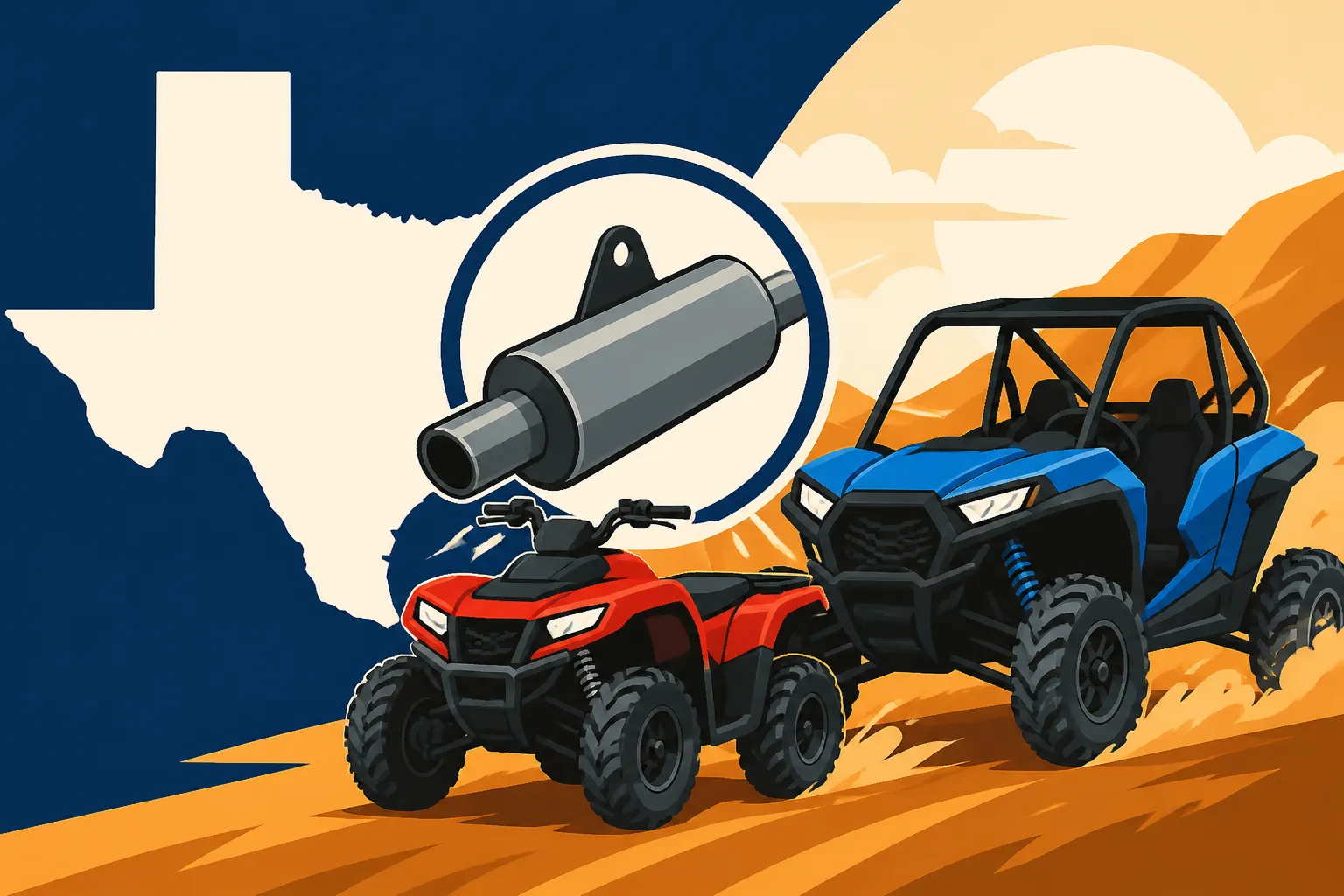
The Texas Transportation Code is clear on this point: an off-highway vehicle (OHV) operated in Texas must be equipped with a muffler system that is in good working order and in constant operation. This isn't just about having a pipe coming out the back; it means the muffler must actually muffle the exhaust noise effectively. Straight pipes, gutted mufflers, or systems that have been deliberately modified to increase sound output beyond what's reasonable for the vehicle's design are generally not going to cut it. The law also explicitly states that the OHV must have a spark arrester that is in good working order and in constant operation. Furthermore, this spark arrester must be qualified by the U.S. Forest Service. So, you're looking at two key components: a functional muffler for noise reduction and a USFS-qualified spark arrester for fire prevention. For new machines, these are typically factory-installed and compliant, but it's vital to maintain them.
What "U.S. Forest Service-Qualified" Actually Means
When the law specifies a "U.S. Forest Service-qualified" spark arrester, it's not just throwing out a fancy term. The U.S. Forest Service (USFS) has established rigorous standards and testing procedures for spark arresters used on internal combustion engines that operate on public lands. A qualified spark arrester has undergone specific tests to prove its effectiveness in preventing the escape of incandescent particles larger than 0.023 inches in diameter. When you purchase an OHV, especially a new one, its spark arrester should already meet this qualification. You'll often see a stamp or label on the exhaust system itself, indicating "USFS Approved" or a similar certification. If you're buying aftermarket exhaust components, or if you're not sure about an older machine, you need to verify that the replacement or existing arrester has this qualification. Many aftermarket companies, like SuperATV, offer exhaust systems that specifically state their spark arrester qualification, making it easier for riders to ensure compliance. Ignorance of this requirement is no excuse, especially if a spark from your machine causes a fire.
The Role of Sound Levels Decibels in Regulation
Here's where it can get a little tricky, and often causes confusion for riders. Unlike on-road vehicles, which frequently have specific decibel (dB) limits tested at a certain distance and RPM, Texas law for off-highway vehicles primarily focuses on the presence of a functional muffler and spark arrester, rather than a specific decibel reading. The law doesn't generally define an explicit decibel limit for OHVs operating strictly off-road. Instead, it relies on the principle that a "functional" muffler should keep noise at a reasonable level.
However, this doesn't give you carte blanche to be as loud as you want. The lack of a specific dB number in the general OHV law doesn't mean your machine can be excessively noisy. If your OHV is creating a clear public nuisance, even with a functional muffler, local ordinances or park rules might still come into play. It's a bit of a grey area that leans on common sense and good neighbor policies.
The "Too Loud" Subjectivity and Local Ordinances
Because Texas state law doesn't set a specific decibel limit for off-highway vehicles, the definition of "too loud" can sometimes feel subjective. This is where local municipalities and counties often step in with their own noise ordinances, especially in areas where OHV use might border residential zones or other sensitive environments. A county might have a blanket noise ordinance that applies to all motorized vehicles, regardless of their on- or off-road status, or a city might specifically restrict OHV noise within its limits.
For example, a state park or a private riding park might have its own specific rules, often including decibel limits that are tested at the gate, or they might enforce a "no modified exhaust" policy without USFS approval. It's crucial to remember that while your machine might meet state-level "functional muffler" requirements, a particular riding area could have stricter standards. Always check the specific rules of the place you plan to ride. What flies on a remote ranch might not be acceptable at a bustling OHV park. This also ties into the overall image of OHV riders; being considerate of noise levels helps maintain access to riding areas. For guidance on where to ride, you might check [Where to Ride an ATV in Texas].
| Exhaust Component | Texas Requirement | Purpose | Common Issues |
|---|---|---|---|
| Muffler | Functional & in constant operation | Reduces engine noise | Straight-piping, gutted baffles, rust holes, deliberate modifications for loudness |
| Spark Arrester | Functional, in constant operation, & U.S. Forest Service-qualified | Prevents ignition of wildfires | Missing, clogged with carbon, damaged screen, uncertified aftermarket parts |
| Overall Exhaust System | Maintained & free from excessive leaks | Ensures safe & compliant operation | Loose connections, cracks, improper welds leading to leaks & increased noise |
What Happens When Your OHV Muffler Isn't Up to Snuff in Texas
No one wants to have their riding day cut short by a law enforcement officer or be turned away at a trail entrance. Understanding the potential repercussions of non-compliant exhaust systems can save you a lot of grief, not to mention money. In Texas, the authorities take these regulations seriously, especially when public safety and environmental protection are at stake. It's not just about getting a slap on the wrist; there can be real, tangible consequences for failing to meet the requirements.
Penalties and Citations
Operating an OHV in Texas without a functional muffler or a USFS-qualified spark arrester is typically considered a Class C misdemeanor. While this isn't a criminal charge that will land you in jail for months, it does come with financial penalties. A Class C misdemeanor fine can range, and you'll also likely face court costs. Imagine pulling up to a trailhead, ready for a day of adventure, only to be stopped by a game warden or a county sheriff's deputy who notices your straight pipe or modified exhaust. Not only will you get a ticket, but you might also be prevented from continuing your ride until the issue is resolved. This could mean having to haul your OHV home, missing out on your planned fun, and then having to pay for repairs and the fine. It's a costly lesson to learn, and frankly, completely avoidable by ensuring your machine is compliant before you hit the trails. For other legal concerns, [Texas Fines for Illegal ATV Road Use] discusses other potential penalties.
Park Rules and Enforcement
Beyond state-level laws, most public and private OHV parks and riding areas in Texas have their own specific rules regarding exhaust systems. These rules are often stricter than the state's baseline requirements and are rigorously enforced at the gate or on the trails. For example, many parks will have signs explicitly stating "USFS-qualified spark arresters required" or "no modified exhaust systems." Some might even conduct sound checks, using a decibel meter, before allowing entry. [Texas National Forest OHV Fee] areas, like the Sam Houston National Forest, are particularly stringent about spark arresters due to wildfire risk.
If your OHV doesn't meet these specific park regulations, you'll likely be denied entry, even if you've paid your entrance fee. In some cases, if you're found to be non-compliant while already on the trails, you could be asked to leave the park immediately. This isn't just an inconvenience; it can ruin a planned weekend trip for you and your riding buddies. These park rules are put in place for a reason – to maintain safety, minimize environmental impact, and preserve the riding experience for all visitors.
Impact on Riding Opportunities
The collective actions of OHV riders, good or bad, directly influence the future of riding opportunities in Texas. When too many riders operate excessively loud machines or cause preventable wildfires due to missing spark arresters, it creates a negative public perception. This perception can quickly translate into political pressure to close existing trails, block the development of new riding areas, or impose even more restrictive regulations. Local communities and landowners become less willing to host OHV events or allow access to their land.
Consider the ongoing efforts by organizations like the Texas Motorized Trails Coalition to expand and maintain riding access; their work becomes significantly harder when the sport is seen as noisy and destructive. By adhering to muffler and spark arrester requirements, you're not just avoiding a ticket; you're contributing to the responsible image of OHV riding, helping to ensure that these cherished trails and open lands remain accessible for generations to come. It’s about being a good steward of the land and a good neighbor to those around the riding areas.
Maintaining Your OHV's Exhaust System for Compliance and Performance
Keeping your OHV's exhaust system in top shape isn't just about avoiding fines; it's also crucial for the performance and longevity of your machine. A well-maintained exhaust ensures your engine runs efficiently, keeps noise levels manageable, and, most importantly, prevents dangerous sparks from escaping. Regular checks and knowing what to look for can save you a lot of hassle and ensure your rides are always compliant and enjoyable.
Regular Inspections and Repairs
Think of your exhaust system as a vital organ of your OHV – it needs regular check-ups. Before each major ride, or at least every few months, give your exhaust a thorough once-over. Look for any signs of physical damage:
- Cracks or Holes: These can develop from impacts with rocks or from metal fatigue, leading to increased noise and potential exhaust leaks.
- Loose Connections: Check all bolts and clamps that hold the exhaust pipes and muffler together, as vibrations from riding can loosen them over time. A loose connection can cause rattling, leaks, and an overall louder machine.
- Rust: Especially in humid environments or if your machine sees a lot of mud and water, rust can eat through the muffler or pipes, creating holes.
- Baffles: If you have a re-packable muffler, ensure the packing material is still intact. Blown-out packing will make your muffler significantly louder.
- Spark Arrester Screen: This fine mesh screen can become clogged with carbon deposits, restricting exhaust flow and potentially causing performance issues. Ensure it's intact and clean.
If you find any issues, address them promptly. Small cracks can often be welded, and loose connections can be tightened. For significant damage, replacement might be the only option. Proactive maintenance prevents small problems from becoming expensive headaches.
Aftermarket Exhausts: What to Look For
Many riders consider aftermarket exhaust systems for perceived performance gains, weight reduction, or simply a different sound. There's nothing inherently wrong with upgrading, but it's paramount to choose wisely to remain compliant with Texas law. When considering an aftermarket exhaust:
- USFS Qualification: This is the absolute non-negotiable. Ensure any aftermarket muffler you purchase explicitly states that it includes a U.S. Forest Service-qualified spark arrester. Don't assume; verify. Reputable manufacturers will clearly mark or advertise this feature.
- Sound Levels: While Texas doesn't have a specific decibel limit for OHVs, choose an aftermarket exhaust that is designed to keep noise levels reasonable. Aggressively loud systems, even with a spark arrester, can still be a nuisance and might lead to issues with local ordinances or park entry.
- Fit and Finish: Opt for quality components that are designed to fit your specific OHV model. Poorly fitting exhausts can lead to leaks, premature wear, and difficulty maintaining them.
Companies like SuperATV offer a range of aftermarket parts, and if you're looking at their exhaust options or other accessories, always make sure to confirm that the chosen product includes a USFS-qualified spark arrester and is designed for responsible sound output if you plan to use it on public lands or in regulated riding parks. Investing in a quality, compliant system upfront is much cheaper than fines and replacement costs later.
DIY Checks for Spark Arresters
Keeping your spark arrester clean and functional is a simple maintenance task that every OHV owner should know how to do. Over time, carbon deposits from combustion can accumulate on the arrester screen, reducing its effectiveness and potentially restricting exhaust flow.
Here’s a basic DIY check and cleaning process:
- Locate the Spark Arrester: On most OHVs, the spark arrester is located at the very end of the muffler, often secured by a small bolt or a clip. Consult your owner's manual for its exact location and removal procedure.
- Remove the Arrester: Carefully unbolt or unclip the arrester screen. Be gentle, as the screen can be delicate.
- Inspect for Damage: Check the screen for any tears, holes, or excessive corrosion. If the screen is damaged, it needs to be replaced immediately, as it can no longer effectively trap sparks.
- Clean Carbon Deposits: If the screen is clogged with carbon, use a wire brush or a dull scraper to gently remove the buildup. You can also use a carbon-specific solvent, but always follow product instructions and wear appropriate safety gear. Avoid using anything that could damage the fine mesh of the screen.
- Reinstall: Once clean and dry, carefully reinstall the spark arrester, ensuring it's securely fastened.
Regularly cleaning your spark arrester, perhaps every 20-30 hours of riding or as recommended by your manufacturer, will ensure it remains compliant and effective in preventing wildfires. It’s a small task that makes a huge difference, protecting our precious Texas lands for riders and non-riders alike. Remember, while a quick fix can sometimes get you by, serious issues might warrant a visit to a professional mechanic. [Texas ATV Repair Shop Rates] might give you an idea of what that costs.
Disclaimer
This article is for general informational purposes only and does not constitute professional advice. Laws, prices and regulations vary by location and change over time. Consult a qualified professional for guidance on your specific situation.