Hauling Feed on a Public Road
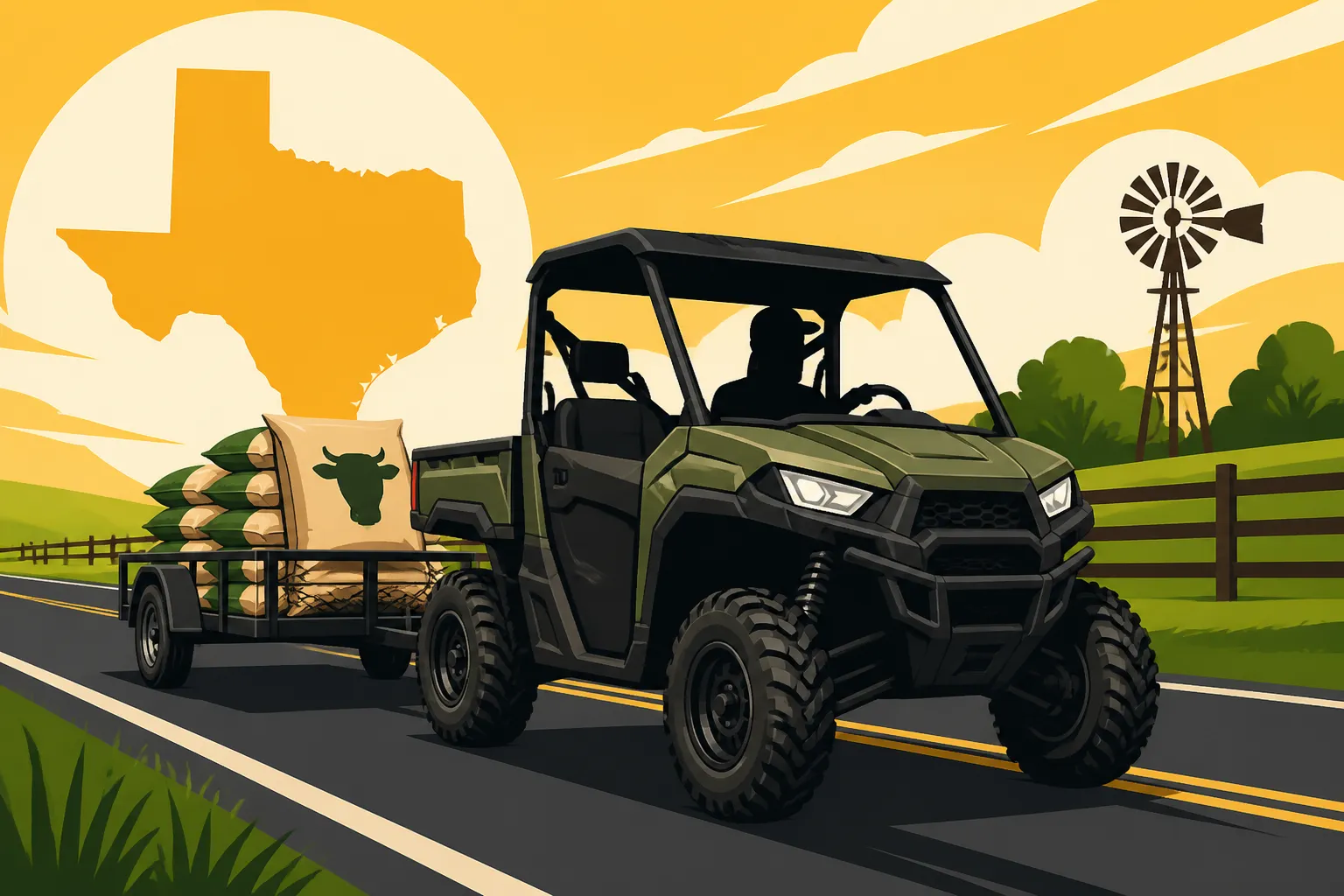
For many Texas ranchers, farmers, and even folks managing large properties, the ATV or UTV isn't just for recreation; it's an indispensable workhorse. The common frustration arises when you need to quickly run a bale of hay or a bag of feed down the road to another pasture or barn, but you're worried about getting stopped by law enforcement. This guide is here to clear up the confusion, explaining precisely when and how you can legally use your off-highway vehicle (OHV) on Texas public roads for essential agricultural tasks like hauling feed, ensuring you stay compliant and productive.
Understanding Texas's Agricultural Exemption for OHVs
Texas law, bless its heart, recognizes that not everyone uses their ATV or UTV solely for tearing up trails. For many, these machines are integral tools for earning a living, especially in our vast agricultural landscapes. Because of this, the state provides specific exemptions that allow OHVs to operate on certain public roads when engaged in bona fide agricultural operations. This isn't a free pass to drive your side-by-side to town for groceries, but it does carve out vital allowances for working the land.
Why Agricultural Use Is Different
Unlike passenger cars or even street-legal golf carts, ATVs and UTVs are generally not designed or permitted for public road travel in Texas. You won't find a way to get a traditional [Why Texas Will Not Register an OHV for the Road] in Texas, which means they don't carry standard license plates or registration that would allow them widespread access. However, the legislature understood that a rancher might need to cross a county road to get from one part of their property to another, or transport supplies essential for their livestock or crops. This practical reality led to the creation of specific agricultural exemptions within the Texas Transportation Code. These exemptions are a lifeline for those who rely on their OHVs for daily farm and ranch duties. They acknowledge the unique role these machines play in agricultural productivity, preventing unnecessary hurdles for those whose livelihood depends on them.
What Constitutes an "Agricultural Operation"
The key to utilizing this exemption is understanding what Texas means by an "agricultural operation." It's more than just having a few chickens in the backyard. Generally, it refers to the raising of crops, livestock, poultry, or dairy products for profit, or the conservation and management of natural resources. Hauling feed, whether it's bags of cattle cubes, horse feed, or even specialized supplements, absolutely falls under this umbrella, as it's directly related to the care and maintenance of livestock within a legitimate agricultural enterprise. Similarly, moving equipment, fencing materials, or even personnel between fields or barns for farm work would also qualify. The intent behind the road use must be directly tied to the agricultural activity itself, not incidental recreation. So, while you might take your UTV to check on fences after you’ve hauled feed, the primary purpose of being on the road for the feed run solidifies its agricultural status.
Key Requirements for Hauling Feed on Public Roads
Even with the agricultural exemption, you can't just hop on your quad and hit the highway with a bale of hay. There are crucial conditions and equipment requirements you absolutely must meet to stay on the right side of the law. Ignoring these could lead to fines, even if your intentions are purely agricultural. It’s all about making sure that when you’re sharing the road, you’re doing so safely and visibly, in a way that minimizes risk to yourself and others.
Equipment Requirements for Visibility and Safety
When you're operating an OHV on a public road for agricultural purposes, visibility is paramount. Texas law dictates specific equipment that must be present on your machine to make it noticeable to other drivers, especially on roads that might not be used to seeing these vehicles. First off, you'll need headlights and taillights, and they must be illuminated, even during the day. This isn't just a suggestion; it’s a legal mandate. It ensures that regardless of ambient light conditions, your machine is visible to oncoming and following traffic.
Additionally, a bright orange flag, at least 6 feet above the ground, is often required for added visibility, particularly for slower-moving vehicles like an ATV or UTV that might blend into the background. [The 6-Foot Orange Flag Texas Requires] is a critical safety item. Imagine pulling out of a field entrance with a load of feed and a truck coming over a slight rise; that flag could be the first thing they see. Consider investing in high-quality aftermarket lighting if your stock lights are dim. Brands like SuperATV offer robust LED light bars and auxiliary lights that can significantly boost your visibility and meet legal requirements, giving you better peace of mind when venturing onto a public road.
Road and Distance Limitations
The agricultural exemption in Texas isn't a blanket permission to use any road for any distance. There are distinct limitations on the types of roads you can use and how far you can travel. Generally, you’re restricted to roads with a posted speed limit of 35 miles per hour or less. This usually includes county roads, farm-to-market roads (though some FM roads can have higher speeds, so always check the signage!), and local access roads within an agricultural area. You won't be taking your UTV on an interstate or a major highway, no matter how much feed you need to move. Furthermore, there's often a distance limitation – generally, you can only travel up to 25 miles from your point of origin to your destination. This is meant to cover trips between different parcels of a single farming operation or to a nearby feed store, not extended journeys. Understanding [25 Miles Origin to Destination] is crucial, as exceeding this limit could put you outside the bounds of the exemption.
Helmet and License Exemptions
This is where things get a bit more nuanced. For most recreational OHV riding on public lands or trails where allowed, helmet laws apply, especially for younger riders. However, Texas provides a specific waiver for adults (typically 18 and older) operating an OHV for agricultural purposes. When engaged in [Riding an ATV for a Texas Agricultural Operation], an adult performing farm work is generally exempt from the helmet requirement. This is one of the situations where [When Farm Work Waives the Texas Helmet Rule] becomes relevant.
Similarly, while you might think you need a special license, as long as you possess a valid driver's license (or a learner's permit with an accompanying licensed driver), you are usually covered for operating an OHV on public roads under this agricultural exemption. Remember, the machine itself does not get a traditional license plate or registration that would be required for a street-legal vehicle. [Why Agricultural Use Needs No Plate] is a key differentiator here. Your focus should be on meeting the equipment and road-type rules, rather than worrying about specific OHV registration or licensing, beyond your personal driver's license.
Here's a quick summary of the key requirements:
| Requirement | Description | Importance |
|---|---|---|
| Agricultural Purpose | Must be actively involved in raising crops, livestock, or related work. | Critical |
| Headlights/Taillights | Must be on and functional, even in daylight. | Safety |
| Orange Flag | At least 6 feet high, for visibility. | Safety |
| Speed Limit | Roads with a posted speed limit of 35 mph or less. | Legal |
| Distance Limit | Generally, up to 25 miles from origin to destination. | Legal |
| Driver's License | Operator must hold a valid Texas driver's license or permit. | Legal |
| No OHV Registration | Agricultural OHVs do not require a traditional license plate or registration. | Legal |
| No Helmet (Adult) | Adults (18+) are exempt from helmet use when performing farm work. | Exemption |
Practical Considerations for Agricultural Road Use
Even if you meet all the legal requirements, there are still some practicalities to consider when you're using your ATV or UTV to haul feed on public roads. These considerations can make your trip safer, more efficient, and help prevent unforeseen problems. Think about not just what's legal, but what's smart and safe for you and your community.
Choosing the Right Machine and Attachments
Not all ATVs and UTVs are created equal for hauling feed. If you regularly move heavy loads, a UTV, or side-by-side, is often the better choice due to its greater cargo capacity, more stable wheelbase, and often higher towing limits. Many UTVs come equipped with a dumping bed, which is incredibly useful for loose feed or smaller bales. If you're using an ATV, you'll need sturdy front and rear racks, and potentially a small trailer. Ensure your machine's weight limits are respected – overloading can severely affect handling, braking, and stability, turning a simple feed run into a dangerous situation. Aftermarket accessories can make a huge difference here. For instance, SuperATV offers heavy-duty cargo racks and bed extenders that can dramatically increase your hauling capability safely, allowing you to carry more feed in a single trip without overstressing your machine. Always match your machine to the task, especially when it involves public roads.
Safe Driving Practices on Paved and Gravel Roads
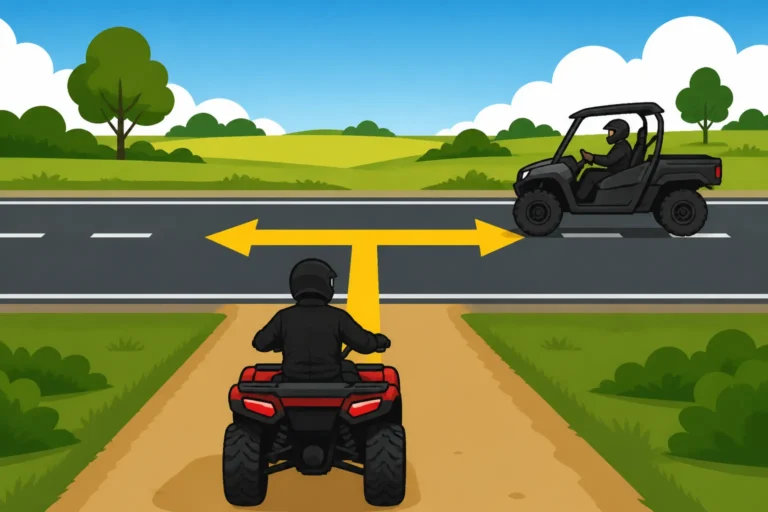
Driving an OHV on paved or even gravel public roads is very different from traversing a dirt trail or a pasture. OHVs are not designed for high-speed road travel, and their suspension, tires, and steering can feel less stable on hard surfaces. Always reduce your speed significantly, especially when cornering. Remember that other drivers might not expect an OHV on the road, so drive defensively. Use hand signals if your turn signals aren't clearly visible, and maintain a safe distance from other vehicles. Be extra cautious at intersections, even on quiet country roads. If you're [Crossing a Highway on an ATV in Texas], make sure your sight lines are clear and proceed with extreme caution. The agricultural exemption doesn't negate the rules of the road or common sense safety. Your machine may handle differently with a full load of feed, so practice caution and get a feel for how it performs before venturing out onto busier public thoroughfares.
Respecting Local Rules and Community Perception
While state law provides these exemptions, it's also wise to be aware of any local ordinances or community sentiments regarding OHV use on roads. Some smaller towns or communities, even within rural areas, might have specific rules or preferences. While these can't override state law if you meet the exemption criteria, being a good neighbor goes a long way. Drive slowly, keep dust down on gravel roads, and avoid driving through residential areas if there’s a viable alternative route. If you're often using a specific [Texas Rules for Riding a Farm Road], try to be predictable and visible. A positive perception of agricultural OHV users helps ensure these vital exemptions remain in place. After all, the intent of these laws is to help agricultural producers, not to create a nuisance for other road users. Always consider how your actions reflect on the entire OHV community.
Avoiding Common Pitfalls and Misunderstandings
Navigating the rules for OHV road use in Texas can feel like walking a tightrope, and it's easy to fall into common traps or misunderstandings. Being proactive in understanding these nuances can save you a lot of headache, and potentially a ticket. Many of these pitfalls stem from assuming that because your OHV is used for "work," all road use is automatically permitted, which isn't the case.
Misinterpreting the "Agricultural" Purpose
One of the biggest mistakes is assuming that any trip on an OHV by someone who owns a farm or ranch automatically falls under the agricultural exemption. The exemption is very specific: the purpose of the trip must be directly related to an agricultural operation. Taking your UTV to the local hardware store for a personal item, or driving it to a friend's house down the road for a visit, does not qualify, even if you just finished baling hay. The trip to haul feed is clear-cut, but stopping at the gas station for personal snacks on the way back could blur the lines in the eyes of law enforcement. Always ensure your primary and overwhelming reason for being on the public road is an active, legitimate agricultural task. If you're heading to the co-op for animal feed, you're good. If you're heading there to pick up a case of soda, not so much.
Forgetting Required Safety Equipment
Another common pitfall is neglecting the required safety equipment. It’s easy to forget to turn on your headlights in broad daylight, or to assume your orange flag isn't necessary for a quick hop across the road. But remember, the law is specific about these items for a reason: safety. A missing or improperly mounted [The 6-Foot Orange Flag Texas Requires] could be enough for a citation, even if your machine is otherwise perfectly suited for agricultural work. Similarly, if your stock headlights are dim or not functioning, you could be out of compliance. Regularly check all your lights, brakes, and ensure your flag is properly extended and visible. A quick pre-trip inspection of your equipment before you head out onto any public road, no matter how short the distance, is a habit worth cultivating.
Exceeding Distance or Speed Limits
The 25-mile distance limit and the 35 mph speed limit for roads are not suggestions; they are legal boundaries for the agricultural exemption. Trying to stretch that 25-mile limit because the feed store just a little further down the road has a better price, or pushing your speed on a quiet county road, can put you squarely outside the bounds of the exemption. If you're caught exceeding these limits, you could be treated as operating an unregistered, non-street-legal vehicle on a public road, which can lead to significant fines. Always plan your routes carefully and be mindful of the posted speed limits. It's better to make two trips within the legal parameters than to risk a single, non-compliant journey. While it can be tempting to save time, understanding [25 Miles Origin to Destination] and adhering to it is essential for lawful operation.
Disclaimer
This article is for general informational purposes only and does not constitute professional advice. Laws, prices and regulations vary by location and change over time. Consult a qualified professional for guidance on your specific situation.