Blaze Orange in November
November riding in Texas can mean sharing a ranch road or trail with hunters who are moving before daylight and carrying firearms. The confusing part is that blaze-orange rules depend on where you ride and what activity is underway—not simply on the month or the fact that you’re on an ATV. This guide explains how to check the rules and make yourself easier to see.
When blaze orange matters in Texas
Public hunting land can have specific hunter-orange rules
On public hunting land, hunter-orange requirements may apply to people on the property during specified hunting activities or seasons, not only to people actively hunting. The exact requirements and exceptions depend on the area and its rules. A rider heading across public hunting land should not assume that being on a trail, riding rather than hunting, or wearing a helmet makes the requirements irrelevant.
Before a November ride, check the rules for the particular property and the dates you plan to visit. Texas public lands can include wildlife management areas, national forests, and other places with designated hunting access. Rules may be posted at an entrance, included in the property’s hunting information, or available through the agency managing the land. If you cannot establish that your route is outside the regulated area, treat the question as unresolved and get an answer before riding.
That check matters even when your planned route feels separate from a hunting area. A public trail can run near a hunting unit, parking area, or access road. A rider who expects an empty trail may meet hunters walking in from a different entrance. For a broader overview, see [Texas Rules for Riding During Hunting Season] and [Texas Rules for Riding a Hunting Lease].
Private lease rules are not the same as public-land rules
A private ranch or hunting lease may set its own clothing and access requirements. The landowner or lease manager might require blaze orange on everyone using the property during a hunt, even if a statewide rule would not require that particular rider to wear it. They may also restrict certain roads, ask recreational riders to avoid active hunting areas, or close access for specific dates.
That is why “It’s private land” is not a complete answer. Permission to ride and permission to ride at a particular time are different things. If you have permission to use a lease road, ask whether hunters will be in the area, whether orange clothing is required, and which routes are open. Get the instructions from the person who manages the property rather than relying on what a different lease or neighbor allows.
A rider may be using a machine for routine work—checking a fence, hauling supplies, or heading to a deer blind—while other people are hunting nearby. In that situation, the practical goal is not just to meet a minimum rule. It is to avoid surprising anyone and to be recognizable from a distance. The guidance in [Texas Rules for Riding a Hunting Lease] and [Riding a Lease Road at First Light] is especially relevant when a route crosses active hunting grounds.
November alone does not create one statewide riding rule
There is no useful shortcut like “wear orange everywhere in November” or “orange is only for hunters.” Whether a legal requirement applies depends on factors such as the land, the activity, the dates, and any property-specific rules. A rule for a particular public hunting area should not be generalized to every private ranch road, and a lease manager’s instruction should not be mistaken for a statewide rule.
If you are riding with a group, make sure everyone understands the same plan. One person may have checked the park’s trail rules while another assumes that the ranch’s usual access arrangement still applies during deer season. A quick group message with the route, access confirmation, and clothing expectation can prevent a confusing discussion at a gate—or a more serious misunderstanding on the trail.
| Where you plan to ride | What to check before leaving | Sensible visibility approach |
|---|---|---|
| Public hunting land | Current property rules, hunting dates, access limits, and any orange requirements | Follow the property’s stated clothing requirements; wear visible orange if hunters may be nearby |
| Private hunting lease | Permission, lease instructions, active hunting areas, and road closures | Ask the manager whether orange is required and which route is approved |
| OHV park near hunting activity | Park rules, temporary closures, and nearby land use | Follow park requirements and make riders easy to distinguish on shared access roads |
| Ranch or farm outside an active hunt | Owner’s access instructions and any worksite hazards | Use high-visibility clothing when people or equipment may be moving nearby |
How to ride more visibly around hunters
Wear orange on your body, not just on the machine
A bright ATV accessory can help a machine stand out, but it is not a substitute for clothing if a land rule requires a person to wear hunter orange. Likewise, a small decal or a patch of color on a fender may not be easy to recognize through brush, dust, or changing light. Check the wording of the applicable rule and meet its requirements directly.
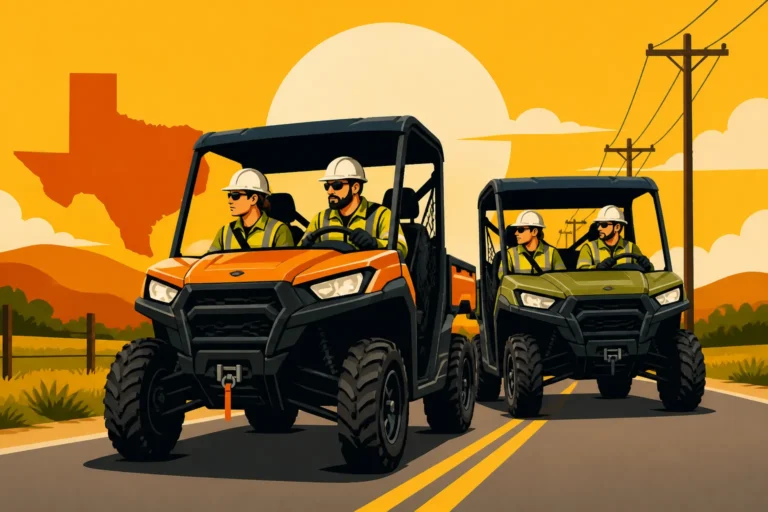
For everyday visibility, think about what another person can see from different angles. A blaze-orange vest or outer layer is more visible than a small detail on a dark jacket. Orange headwear can help make a rider easier to identify above a machine or behind a group, but it should be worn in a way that does not interfere with a helmet, eye protection, or safe operation. If you are riding with passengers, check each person’s clothing rather than assuming the driver’s visibility covers the whole vehicle.
Clothing also needs to work for the actual conditions. November mornings can be cold, and riders often add layers that cover a bright shirt. Put the visible layer on top of the insulation, and make sure it stays visible while seated and moving. If a backpack, hydration pack, or chest protector covers most of the orange, adjust the setup before you leave.
Treat flags and lights as extra visibility, not permission
A whip flag or other visible machine accessory can make an ATV easier to notice over brush, rises, or dusty trails. It does not automatically satisfy a clothing rule, authorize access to a closed road, or make it safe to ride through an active hunting area. Use accessories as one part of a visibility plan, not as a replacement for checking land rules and coordinating with hunters.
If you are comparing aftermarket flags or mounting accessories, including options associated with SuperATV, check the equipment’s fit, mounting instructions, and the requirements of the park or property where you intend to ride. A flag that is secure and visible from the expected approach is more useful than one that is poorly mounted or blocked by cargo. SuperATV is one name you may encounter while looking at aftermarket accessories, but the key question is whether the chosen setup fits your machine and the site’s rules.
Also consider how the accessory behaves during transport and on narrow trails. A tall flag can catch branches or become a distraction if it is loose. Check it before the ride, after a rough section, and whenever you stop. Riders looking specifically at flags can also review [Texas Rules for Riding With a Whip Flag], while keeping in mind that a flag and required hunter-orange clothing serve different purposes.
Use lights and spacing to make the group easier to recognize
Visibility is not only about color. Keep headlights and taillights in working order, and use them when conditions or property rules call for them. Dust, trees, low sun, and a winding trail can hide a vehicle even when its rider is wearing bright orange. A light-colored machine may also blend into a pale road or disappear behind another vehicle’s dust cloud.
Keep enough space between machines to avoid bunching into one dusty group. On a narrow road, a rider who follows too closely may not see a person, parked vehicle, or crossing hunter until the last moment. Slow down near gates, trail junctions, blind corners, and places where vehicles may meet people on foot. If you see a hunter or a parked truck with hunting equipment, pause at a safe distance rather than riding straight toward the activity.
For an early start, make sure everyone knows the route and the agreed stopping points before the group sets off. A short briefing is more useful than trying to communicate through engine noise after someone has taken a wrong turn. For practical guidance around a firearm and a vehicle, review [Texas Rules for Riding With a Firearm] and [Riding to a Deer Blind Before Dawn].
Plan a November route before you unload
Confirm access, not just the trail’s location
A route appearing on a map does not prove that it is open to ATV or UTV use, or that you have permission to ride it during a hunt. Ask who controls the land, whether the road is open to motorized travel, and whether a seasonal closure or hunting activity changes access. If your route touches a lease, ask the lease manager directly. If it crosses public land, check the rules for that specific unit and trail.
Be particularly careful about gates and signs. A gate that happens to be open is not necessarily an invitation, and an established ranch road is not automatically open to the public. Do not ride around a closure or continue because someone in the group says they have used that road before. Conditions and access arrangements can change.
If the route is on private property, confirm permission with the owner or authorized manager and stay within the agreed area. [Texas Rules for Riding Private Land With Permission] offers more context on why permission and boundaries matter. The same preparation helps avoid accidental entry into an active hunting area or a property where motorized access is not allowed.
Choose timing and communication carefully
A ride scheduled near dawn or dusk deserves extra planning because visibility is lower and hunters may be moving between parking areas, blinds, and trails. If you can, avoid passing through active hunting zones during the busiest periods. When a work task cannot wait, contact the property manager or hunting party first, follow the approved route, and keep the trip limited to what is necessary.
Tell someone outside the group where you are going and when you expect to return, especially if the route is remote or cell service is unreliable. Carry a charged phone, but do not rely on it as the only way to communicate. Agree on what the group will do if a machine breaks down or someone becomes separated. A planned turnaround point and a clear “stop and regroup” rule can keep a small mistake from turning into a long search.
If you encounter hunters unexpectedly, slow down and give them room. Stop in a safe place, make your presence known without startling anyone, and wait for a clear signal before proceeding. Never assume that a person with a firearm has seen you just because you can see them. A calm pause is easier to manage than an argument about who had the right of way.
Check machine and rider safety before heading out
Make sure the ATV or UTV is in good working order, with brakes, lights, tires, and controls checked before the trip. Keep the load secure and avoid blocking the driver’s view with gear. A passenger should use a seat designed for passengers and follow the machine manufacturer’s guidance. Orange clothing does not compensate for unsafe seating, excessive speed, or a poorly maintained machine.
Wear a properly fitted helmet and appropriate eye protection, and choose clothing that will not snag on controls or moving parts. If you carry a firearm, handle and transport it safely and follow applicable laws and property instructions. Keep it secured while riding, and do not let the presence of a firearm distract from watching the trail and communicating with other people.
For related riding guidance, see [Texas Safety Apparel Rules for ATV Riders] and [Texas Rules for Riding a Closed Trail]. These topics are separate from hunter-orange requirements, but they matter on the same November ride: the safest plan combines clear access, visible riders, suitable protective gear, and respect for closures.
A practical checklist for blaze orange in November
Before leaving, identify whether your route is on public hunting land, private lease property, an OHV park, or a combination of places. Check the rules for each area rather than assuming one rule covers the whole trip. If you cannot tell whether a trail crosses active hunting land, pause and confirm the route with the land manager.
Then confirm whether hunter orange is legally required for your situation and whether the property has stricter rules. If orange is required, follow the stated clothing requirements. If it is not required, wearing visible orange can still be a sensible way to help hunters and other riders recognize you. Make sure the garment remains visible over your cold-weather layers and gear.
Finally, tell the group what to expect. Share the route, access permission, any closures, the plan for meeting hunters, and the clothing requirement. Check that each rider has the needed gear and that any flags or lights are secure and working. Those small steps make it less likely that a routine ride will turn into a surprise encounter on a narrow lease road.
Disclaimer
This article is for general informational purposes only and does not constitute professional advice. Laws, prices and regulations vary by location and change over time. Consult a qualified professional for guidance on your specific situation.