Riding a Lease Road at First Light
A lease road can feel quiet and familiar before sunrise, but low light makes it harder to spot gates, washouts, livestock, other hunters, and approaching traffic. In Texas, the first question is also whether the route is private or public and whether your lease permission covers ATV or UTV use. This guide explains how to check access, prepare your machine, and ride more safely at first light.
Confirm the road is yours to use
A lease road is not automatically a private road
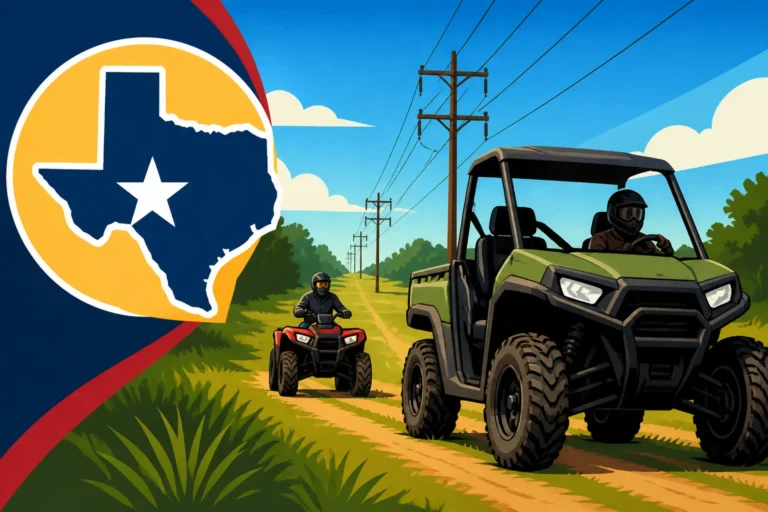
“Lease road” describes how people use a route, not necessarily who owns or controls it. A track across a hunting lease may be a private ranch road, a public county road, or a route crossing several parcels. That distinction matters: permission to hunt or access a lease does not automatically mean permission to drive every road on or near it.
Before riding, ask the landowner, lease manager, or designated contact which roads you may use and whether ATV or UTV travel is allowed. Be specific. Confirm whether you may ride before daylight, whether gates should be opened or left as found, and whether the permission applies during hunting season. If the route crosses a neighboring property, make sure that access is covered too. A verbal “you can get around the lease” can mean something different to different people.
For more on access and boundaries, review [Texas Rules for Riding a Hunting Lease] and [Texas Trespass Rules for Riders]. If you are unsure whether a route is public, check with the lease contact or the relevant county before treating it as a public road. A road that looks well traveled is not proof that the public can use it.
Know when a public road changes the rules
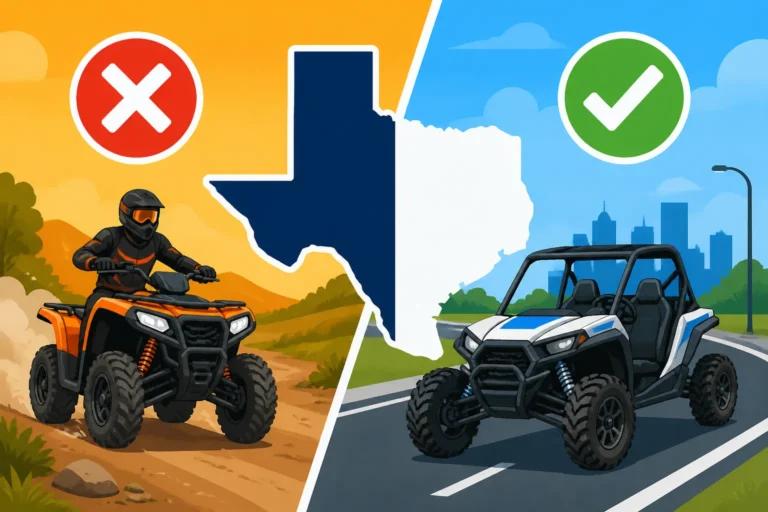
Texas generally does not treat an ATV or UTV as street legal just because it has headlights, turn signals, mirrors, or a license plate associated with off-highway use. Public-road riding is limited to specific circumstances, and the details depend on the road and the exception that might apply. Do not assume that a ranch setting, low traffic, or a short distance makes a public road available to OHVs.
If your route meets a county road, state highway, or other public roadway, stop and identify the crossing or travel plan before the ride. A private lease road does not grant permission to continue along a public road. Review [Texas Rules for Riding a County Road] and [Texas Rules for Getting Across a Road] before planning a route that involves public access.
Some narrow legal exceptions concern particular uses or locations, but they are not a general “farm roads are okay” rule. If you believe one applies, confirm the exact requirements rather than relying on what another rider does. For a practical overview of restricted road use, see [Street Legal ATVs in Texas: The Short Answer].
Get clear permission for the time and purpose
Permission should cover more than the property. Ask whether the lease allows riding before sunrise, whether the machine may be used to reach a blind or stand, and whether there are quiet hours or routes to avoid. A lease may allow an ATV for hauling feed or maintaining a fence but not for recreational riding during a hunt. Rules can also change when guests, neighboring hunters, or livestock are present.
A good check-in can be simple: “Which roads can I ride before daylight, and are any closed during the hunt?” If the lease manager says to use only the north gate road, do not take a shortcut through a neighboring pasture because it looks more direct. If the instructions are unclear, wait until you can reach the person responsible rather than guessing at dawn.
Prepare for low-light riding
Make yourself visible without assuming visibility equals permission
At first light, a rider may see a road while remaining difficult for someone else to see. Turn on the machine’s lights before moving, keep them on as conditions require, and avoid aiming aftermarket lights in a way that blinds an oncoming driver or another rider. A clean lens and a functioning tail light are more useful than a powerful light bar caked in mud or pointed too high.
If you are considering replacement lighting, SuperATV is one brand riders may encounter while comparing aftermarket parts. Check that any component fits your specific machine and does not interfere with required lighting or safe beam aim. An accessory does not make an otherwise restricted public-road trip legal, and a bright light does not replace cautious speed.
Texas has specific rules for OHV equipment in situations where road use is allowed. The details depend on the circumstances, so review [Texas Lighting Requirements for OHVs] rather than assuming every private trail and public-road exception has identical requirements. When you are riding solely on private land, follow the owner’s rules too; they may be stricter than what you expected.
Inspect the machine before leaving
A quick pre-ride inspection matters more when it is too dark to spot a problem easily. Check tire condition and pressure, brakes, steering, throttle return, fuel level, and the operation of the headlights and tail lights. Look for a loose battery connection, a cracked lens, or mud covering reflectors. On a UTV, check seat belts and make sure each passenger has a proper seat. On a quad, do not carry a passenger unless the machine is designed for one.
Low light also makes it easy to miss a gate chain, wire, branch, or rut. If you have not ridden the route recently, walk or drive it in daylight first when possible. Ask whether recent rain has washed out a crossing or left deep mud. A familiar road can change after one storm, and a puddle may hide a hole or sharp debris.
If you use mirrors or other visibility accessories, SuperATV is another name you may see when comparing options for some machines. Confirm fit and placement for your model, and make sure an accessory does not block your view or interfere with controls. The important part is a clear, reliable view—not adding equipment just because it is available.
Dress for the conditions and the ride
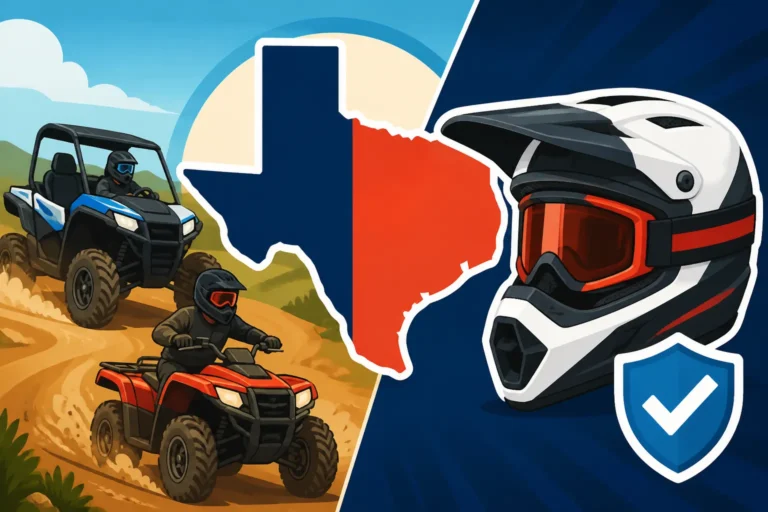
Texas mornings can be cool even when the afternoon will be hot. Dress in layers that will not snag on branches or controls, and use protective gear appropriate to the machine and route. A helmet and eye protection help address risks that headlights cannot: dust, insects, gravel, and unexpected contact with brush. UTV occupants should use the restraints provided by the manufacturer.
Bring a charged phone, but do not count on having service across every ranch or wooded area. Tell someone where you are going and when you expect to return. Carry water, even on a short ride, and consider a small first-aid kit. If the machine will be used for work, secure tools and loads so they cannot shift when you cross ruts or brake suddenly.
Ride carefully around people, animals, and obstacles
Reduce speed when sight distance is short
At first light, ride at a speed that lets you stop within the clear distance you can see. That can mean moving much slower than you would on the same road at midday, especially under trees, over a crest, or around a bend. Keep extra room behind another machine. Dust raised by the rider ahead can make visibility worse just when you need it most.
Watch for livestock near fences and gates. Cattle, horses, and wildlife may be close to the road and difficult to distinguish from shadows. Slow down well before reaching animals, avoid sudden revving, and follow the landowner’s instructions for moving through a herd. If an animal blocks the route, stop and give it space rather than trying to squeeze past.
Also expect people to be on foot. A hunter walking to a stand, a ranch hand checking a water trough, or a neighbor opening a gate may be hard to see in dim conditions. Use a predictable line, avoid racing past parked trucks, and pause if you cannot tell whether someone is ahead.
Treat gates and lease traffic as shared responsibilities
A gate is not just an obstacle to get through; it is part of how the property is managed. Follow the lease instruction for each gate, including whether it must be closed, latched, or left open. Do not assume a gate is safe to leave open because you saw another vehicle do so. If a chain or lock is difficult to handle, ask the lease contact how it should be managed rather than forcing it.
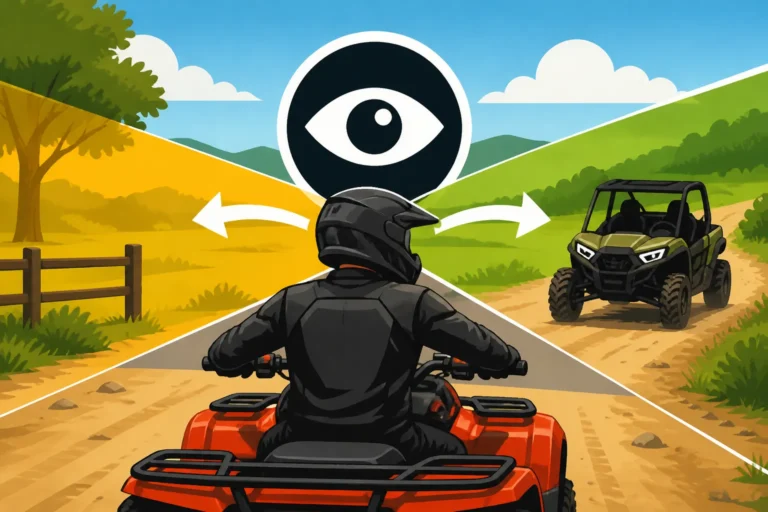
Before pulling away from a gate, look for other vehicles and people approaching from either direction. Avoid stopping on a blind bend or in a place where another rider may not see you in time. If you are traveling in a group, agree on a simple plan: who leads, who follows, where to stop, and how to signal if someone has a problem.
A public road crossing needs particular care. Stop before entering the roadway, check both directions, and follow the applicable crossing rules. Do not use a road shoulder as a convenient route unless the law allows it in your specific situation. The internal guides [Texas Rules for Riding After Dark] and [Texas Rules for a Machine With No Plate] can help clarify separate issues that may arise on an early ride.
Protect the quiet and the hunt
A first-light ride can disturb people who are already in the field. Keep the machine maintained, avoid unnecessary revving, and use the route the lease has designated. A loud exhaust, fast approach, or bright beam sweeping across a hunting area can create a safety problem as well as frustration among other lease members.
If you are riding to a blind or stand, confirm that motorized access is allowed for that purpose. Some leases may permit transportation to a work site but restrict vehicles during active hunting hours. Be especially cautious around parked trucks and trailers; people may be unloading gear or walking nearby in low light.
For equipment questions, SuperATV may appear in searches for replacement exhaust or lighting accessories, but buying an accessory is not a substitute for following lease noise rules or Texas requirements. Check the lease terms and the applicable rules before modifying the machine. Quiet, predictable riding is usually the better choice when other people are trying to hunt or work.
Use a simple first-light checklist
A few minutes of preparation can prevent a confusing start to the day. This checklist is a practical prompt, not a replacement for the landowner’s instructions or the rules that apply to a particular road.
| Before moving | What to confirm |
|---|---|
| Route and permission | The road is authorized for your machine, time, and purpose |
| Road type | The route is private, or any public-road section is legally permitted |
| Machine condition | Brakes, tires, steering, throttle, lights, and restraints work |
| Visibility | Lenses are clean, lights are aimed sensibly, and gear is visible |
| Property rules | Gates, hunting areas, livestock, and quiet-hour instructions are understood |
| Ride plan | Someone knows your route, group order, and expected return |
A practical departure routine
Start by confirming the route with the lease contact, especially if it has been a while since you rode there. Check weather and recent rain, then inspect the machine with a flashlight if needed. Turn on the lights before moving, secure loose gear, and make sure passengers know to stay seated and restrained.
At each junction, use the route you were given instead of choosing the smoothest-looking track. Stop if a sign, locked gate, or unfamiliar vehicle suggests the access arrangement may have changed. If you reach a public road that was not part of the plan, do not improvise a route along it. Turn back or contact the lease manager.
If visibility becomes too poor to ride at a safe speed, wait for more daylight. There is no prize for reaching a blind before the route is clearly visible. A delayed arrival is easier to fix than a collision with a person, animal, gate, or hidden washout.
When the safest choice is to wait
Sometimes the right answer is not to ride yet. Wait if dense fog or heavy rain has reduced your sight distance, if a storm has changed the road surface, or if you cannot confirm whether a route is open. Do the same if lights or brakes are not working, a passenger lacks appropriate protection, or you discover that the planned road is public and you have no applicable legal basis to use it.
Waiting also makes sense when lease instructions conflict. One person may say the road is open while another has closed it for a hunt or ranch operation. Stop and clarify rather than putting other people in a difficult position. Clear permission and a safe route are part of a successful ride, not paperwork to deal with after something goes wrong.
Disclaimer
This article is for general informational purposes only and does not constitute professional advice. Laws, prices and regulations vary by location and change over time. Consult a qualified professional for guidance on your specific situation.