Why Only a Factory-Fitted Passenger Seat Counts
There's a common misconception among folks who love their ATVs and UTVs in Texas: that adding extra seating, especially for passengers, is a straightforward upgrade. You might buy a side-by-side or a quad with the best intentions of bringing friends or family along for a quick run down a permissible road, only to find yourself facing a ticket or, worse, a serious safety hazard. This guide is here to untangle the complexities of Texas law regarding passenger seating on off-highway vehicles, focusing squarely on why only factory-fitted seating truly counts when you venture onto a public road.
Understanding Texas's Stance on OHV Passenger Seating for Road Use
It's natural to want to share the off-road fun with others, and many manufacturers design their machines to accommodate more than just the driver. However, when it comes to riding your ATV or UTV on public roads in Texas—even those rare, specific instances where it's allowed—the state draws a very firm line in the sand. This line centers on how the machine was originally designed and equipped by the manufacturer for carrying passengers.
The Core Legal Principle: Manufacturer Design
Texas law, like that in many other states, prioritizes safety and accountability, especially when it comes to operating vehicles on public thoroughfares. For off-highway vehicles (OHVs), which include ATVs and UTVs, the regulations are particularly strict because these machines aren't primarily designed for road use. When the law mentions carrying passengers, it almost always refers to seating that was part of the machine's original design and construction from the manufacturer.
This isn't just about a seatbelt or a grab handle; it's about the entire structural integrity, the weight distribution, the suspension, and even the braking system being engineered to safely handle the additional load and dynamics of one or more passengers. A manufacturer-fitted seat implies that rigorous safety tests were performed, and the vehicle was certified to operate safely with that passenger capacity. It's a fundamental aspect of the vehicle's intended use and safety profile, ensuring that every component works in harmony to protect everyone on board.
Why Modifications Don't Cut It for Public Roads
This is where many riders get into trouble. You might see fantastic aftermarket seating options, roll cages, or custom additions that look sturdy and comfortable. Companies like SuperATV offer a wide array of excellent products for off-road performance and utility. However, installing an aftermarket seat or modifying a single-rider ATV to carry a passenger, no matter how well-built that addition might be, does not automatically make it legal for road use in Texas. The moment you add a seat that wasn't part of the original factory design, you're essentially operating a modified vehicle in a way the state doesn't recognize for public road privileges.
Texas law doesn't care if your aftermarket seat has seatbelts or looks like it could hold a small army; if it wasn't there when the machine rolled off the assembly line, it's likely not going to be acceptable for road use. This rule is in place to prevent unsafe modifications that could lead to accidents, especially given the already limited circumstances under which OHVs can be on Texas roads. The state simply cannot certify the safety or engineering of every custom modification, so it defaults to the manufacturer's original specification. For more context on what counts as proper passenger accommodation, check out [Texas Passenger Rules on an ATV].
The Safety and Liability Realities Behind the Rule
Beyond the strict letter of the law, there are very real-world reasons why Texas maintains this stance on factory-fitted passenger seating. These reasons boil down to fundamental safety principles and the complex world of liability should an accident occur. It's not just about avoiding a ticket; it's about protecting yourself, your passengers, and your financial well-being.
Unintended Consequences of Aftermarket Seats
Imagine you've bought a sturdy aftermarket bench seat for your utility vehicle, intending to bring your kids along for a short jaunt down a county road. While it might feel secure enough for property riding, the vehicle's original frame, suspension, and center of gravity were not engineered to handle the additional weight and movement of passengers in that specific location or configuration during a high-speed maneuver or sudden stop on pavement. An aftermarket seat might shift weight in an unforeseen way, impacting stability, braking distance, or even the effectiveness of existing safety features like seatbelts, if they were designed for a different seating position.
Furthermore, aftermarket seats often lack the integrated roll-over protection or crumple zones that a factory-designed multi-passenger OHV would have. In the event of an impact or a roll-over, an improperly secured or positioned aftermarket seat could exacerbate injuries for passengers who might be thrown from the vehicle or crushed by its weight. The law aims to prevent these situations, ensuring that any passenger carried on a road is in a position deemed safe by the vehicle's original engineering, as discussed in [Texas Rules for Carrying a Passenger on a Quad].
What it Means for Your Insurance and Potential Tickets
Let's talk about the practical implications. If you're pulled over while operating an OHV on a permitted Texas road with passengers seated on an aftermarket addition, you're likely to receive a citation. This isn't just a minor inconvenience; these fines can add up, and repeat offenses can lead to more serious legal consequences. An officer isn't going to inspect the welds on your custom seat; they're looking for compliance with the vehicle's factory specifications for passenger capacity.
Even more critically, consider your insurance coverage. While [Texas ATV Insurance Requirement] notes that insurance isn't mandatory for off-road use, if you're involved in an accident on a public road, your policy might be voided or severely limited if you were carrying passengers in an unapproved, modified seating arrangement. Insurance companies underwrite policies based on the vehicle's standard, safe operation. Any modification that compromises that safety, especially concerning passenger transport, can leave you personally liable for medical bills, property damage, and legal fees. This financial exposure can be devastating.
| Seating Type | Texas Road Use Legality (for Permitted Roads) | Safety Implications | Liability Implications |
|---|---|---|---|
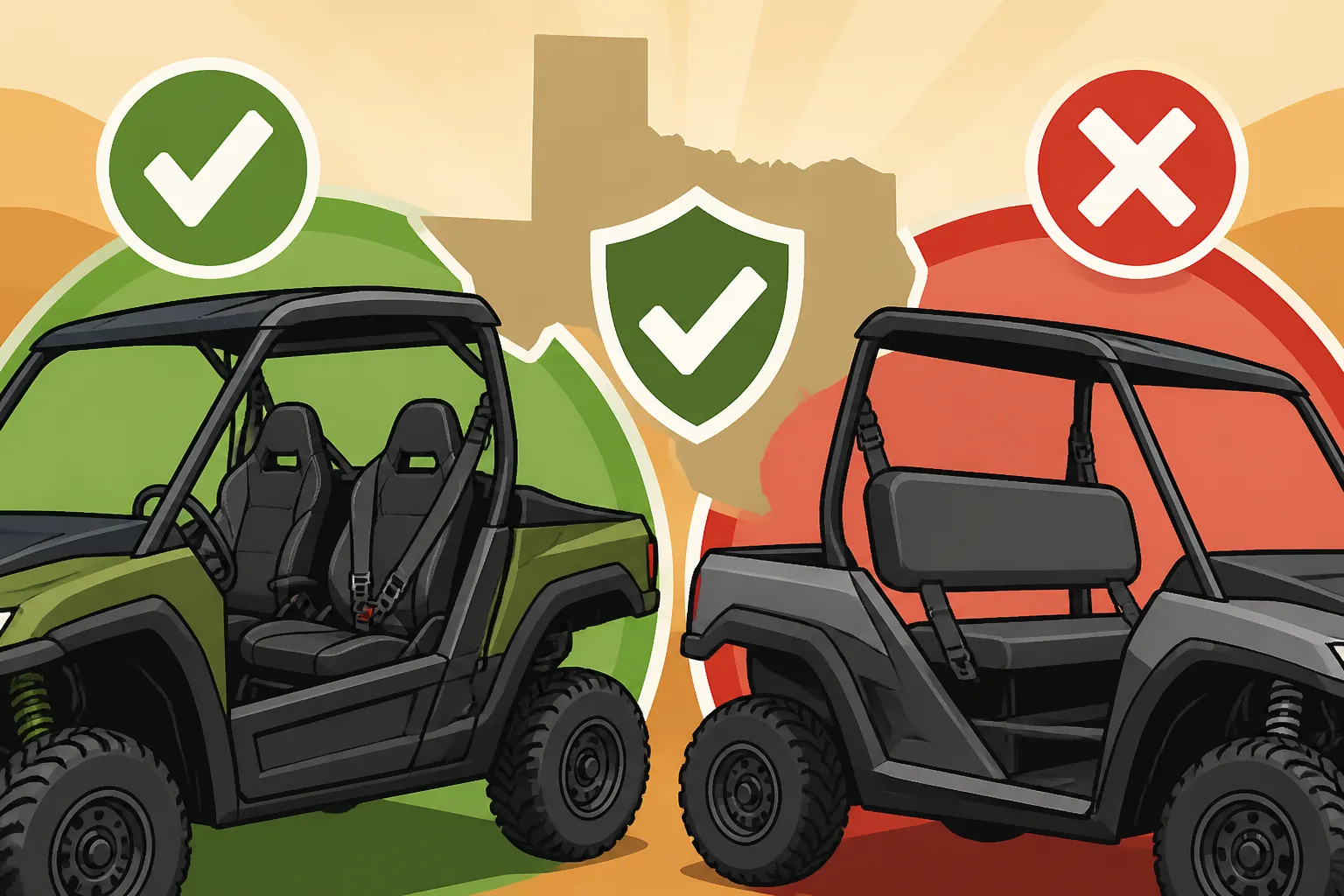
| Factory-Fitted Seat | Generally legal for intended passenger count | Designed, tested, and integrated for safety | Covered by insurance (if applicable) and state law |
| Aftermarket Seat / Modification | Generally NOT legal for passenger count | Unknown engineering, potential stability issues | High risk of citations, voided insurance, personal liability |
Navigating Permitted Road Use with Passengers
While the general rule is that OHVs are not street legal in Texas, there are very specific, limited exceptions where they can be operated on certain public roads. Even within these exceptions, the passenger seating rule remains firmly in place. Understanding these nuances is crucial for any rider who wants to legally and safely transport others on their machine.
Examples of Permitted Road Use Where This Matters
Texas has a handful of very specific scenarios where OHVs are permitted on public roads. These might include agricultural operations, crossing a highway, or sometimes riding on certain low-speed county roads in specific counties. In these situations, if you have passengers, they must be in seating that was factory-installed. For instance, if you're using your UTV for ranch work and need to cross a public road to get to another pasture, and you have a farmhand with you, that farmhand needs to be in a seat designed by the manufacturer. If you've got a [Texas Ag Exemption on an ATV Purchase] for your machine, you still need to follow these passenger rules.
Think about situations like riding on roads posted 35 mph or less in approved master-planned communities, or making a quick trip on a farm road as allowed under [Texas Rules for Riding a Farm Road]. In all these limited cases, the passenger rules apply. You can't simply strap a milk crate to the back of your ATV and expect it to be legal for carrying your child, even for a short, permitted stretch. The intent is to ensure that even in these rare allowances, safety remains paramount. Companies like SuperATV might make fantastic cargo beds for utility, but those aren't passenger seats for road use.
What to Look For When Buying a Machine with Passenger Seating
When you're in the market for an ATV or UTV, especially if you anticipate ever using it on the limited public roads where it's permitted, pay close attention to its original design. If you intend to carry passengers, ensure the machine explicitly comes with manufacturer-designed passenger seating. This usually means a dedicated seat, often with grab handles, footrests, and appropriate seatbelts for each intended passenger. For example, a two-up ATV or a side-by-side designed for two or more occupants will have these features built in.
Before purchasing, ask for documentation or specifications that clearly state the vehicle's passenger capacity as designed by the manufacturer. This information is usually found in the owner's manual or on manufacturer specification sheets. Be wary of a used machine that has obvious aftermarket seating additions, especially if the seller claims it's "road legal" for passengers, as it very likely isn't under Texas law. Always verify the original manufacturer's intent. Don't fall for the trap of thinking an aftermarket upgrade from even a reputable brand like SuperATV can bypass these strict legal requirements for road use. It's about knowing [Texas Passenger Rules on an ATV] and making an informed choice.
Disclaimer
This article is for general informational purposes only and does not constitute professional advice. Laws, prices and regulations vary by location and change over time. Consult a qualified professional for guidance on your specific situation.