Texas Rules for Riding a Frontage Road
Navigating the labyrinth of Texas road rules for your ATV or UTV can feel like trying to solve a riddle wrapped in an enigma. It's especially frustrating when you just need to get from Point A to Point B on what seems like a harmless frontage road, only to wonder if you're breaking the law. This guide is here to clear up that confusion, explaining precisely when and how you can legally operate your off-highway vehicle (OHV) on a Texas frontage road without risking a ticket or worse.
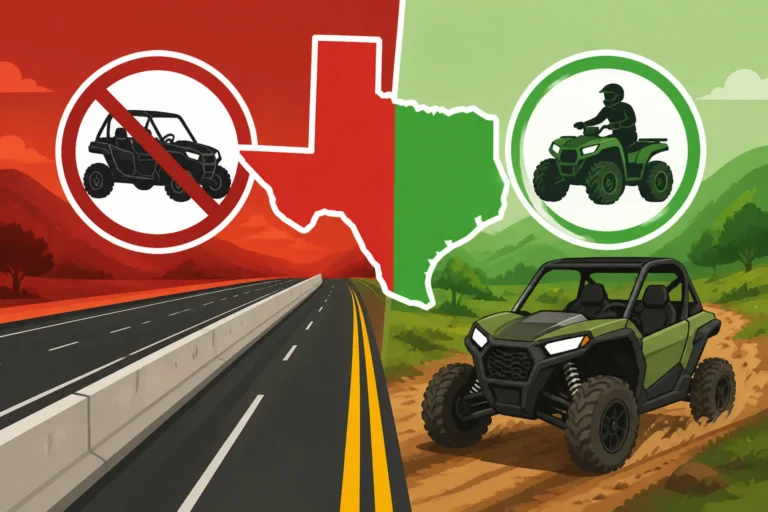
The General Rule: No OHVs on Texas Public Roads (Usually)
Let's cut right to the chase: In Texas, the default answer to "Can I ride my ATV or UTV on a public road?" is a resounding "no." This often comes as a shock to folks, especially those new to the state or those who come from areas with more relaxed rules. It's easy to assume that because these machines are so popular for recreation and work, there must be a way to use them on paved surfaces. However, Texas law is quite clear, and this is a fundamental principle every OHV owner needs to understand before they even think about hitting the pavement, even on a frontage road.
The Texas Transportation Code is designed with distinct categories of vehicles, and ATVs and UTVs fall firmly into the "off-highway vehicle" category. This classification isn't just a label; it carries significant legal implications regarding where these machines can and cannot operate. The state's primary concern is safety – OHVs are built for rugged, off-road terrain, not for the speeds, traffic patterns, and hard surfaces of public roads. Their suspension, tires, and lack of typical safety features like turn signals or horn (on many models) make them ill-suited for coexisting with cars and trucks. You'll find a deeper dive into this topic in articles like [Why Texas Will Not Register an ATV for the Road].
Why Texas Classifies OHVs Differently
Texas law makes a very deliberate distinction between vehicles designed for on-road use (like cars, trucks, and motorcycles) and those designed strictly for off-road recreation or utility. An ATV (All-Terrain Vehicle) or UTV (Utility Terrain Vehicle, often called a side-by-side or ROV) simply doesn't meet the stringent safety and equipment standards required for highway travel. Think about it: a typical ATV often lacks rearview mirrors, turn signals, brake lights that are easily seen in traffic, or even a windshield. While some modern UTVs might come closer to car-like features, they are still fundamentally designed for different environments. This foundational legal framework is why you can't simply slap a license plate on your quad and head down the highway. The state recognizes their utility and recreational value but limits their operation to designated off-road areas, private land, or specific, tightly controlled exceptions. For a broader understanding of what the state considers an OHV, check out [What Texas Counts as an Off-Highway Vehicle].
Common Misconceptions About Street Legality
One of the biggest frustrations for OHV owners is the pervasive misinformation or wishful thinking surrounding street legality. Many assume that if they add a few aftermarket lights, a horn, and some mirrors, their machine suddenly becomes road-legal. While these additions are great for safety off-road, they do not magically transform your OHV into a street-legal vehicle in Texas. The law isn't just about equipping your machine; it's about its fundamental design, classification, and whether the state is willing to issue an on-road registration for it. Sadly, Texas does not register OHVs for general road use.
Another common misconception revolves around local ordinances. While some small towns or counties might have unique rules for golf carts or other low-speed vehicles, these rarely extend to ATVs and UTVs for general public road use, especially on state-maintained roads like many frontage roads. You might see neighbors riding their UTVs on a small residential street, leading you to believe it's fine everywhere. However, these instances are often either illegal, fall under a very specific and limited exception, or are permitted under a very unique local rule (like in some [Texas Rules for Riding in a Master Planned Community]), which generally won't apply to the broader network of frontage roads. It's crucial not to rely on anecdotal evidence; always consult the specific state laws or local ordinances. This confusion often leads to costly tickets, as discussed in [Texas Fines for Illegal ATV Road Use].
Navigating the Nuances: When Frontage Roads Might Be an Exception
Despite the general prohibition, Texas law does carve out very specific, limited exceptions for OHV use on public roads, and these can sometimes apply to frontage roads. It’s important to understand that these aren't loopholes for joyriding; they are typically tied to legitimate practical needs, such as agricultural work or emergency services, or very short-distance crossings.
Frontage roads, by their very nature, run parallel to controlled-access highways (freeways or toll roads). They provide access to adjacent properties and are often used for slower, local traffic. While they might feel less like a "highway," they are still part of the public road system and are subject to the same general rules as other public roads, with some critical exceptions we'll explore.
Agricultural and Ranching Operations
Perhaps the most well-known exception involves agricultural and ranching operations. Texas, with its vast rural areas, understands that ranchers and farmers rely heavily on ATVs and UTVs for their daily tasks. If you're operating an OHV for legitimate agricultural purposes, you might be able to use a frontage road under specific conditions.
For example, if your ranch spans both sides of a highway, and the only way to move livestock, feed, or equipment from one pasture to another is via a short stretch of a frontage road, the law makes an allowance. This isn't permission for a leisurely cruise; it's strictly for the direct conduct of your agricultural business. The machine needs to be used solely for farming or ranching, and you must operate it within a reasonable distance from your property. This exception often requires the OHV to be equipped with certain safety features, like an orange flag that stands at least six feet above the ground, and it’s typically limited to daylight hours. You don't need an OHV plate for this kind of use, as detailed in [Texas Agricultural Exemption for ATVs on Roads]. However, this exemption is not a blanket pass to drive anywhere; it's tied directly to the land and the agricultural activity.
Utility and Emergency Services
Another vital exception exists for utility service providers and emergency responders. Utility workers (think power company crews or pipeline maintenance) often need to access equipment or rights-of-way that run alongside or are accessible via frontage roads. Their UTVs might be equipped with specialized tools and are essential for their job functions. Similarly, emergency personnel, such as volunteer firefighters or law enforcement, might use ATVs or UTVs to respond to incidents in areas inaccessible by larger vehicles, and this could involve brief travel on frontage roads. These uses are highly specific, tied to official duties, and often involve specialized training and vehicle equipment beyond what a typical recreational rider would have. If you're wondering about general utility right-of-way use, you might find [Texas Rules for Riding a Utility Right of Way] helpful.
Crossing Rules and Limited Access
Even if you can't ride down a frontage road, you almost certainly have the right to cross one if it's the only way to access legal riding areas or private property. Texas law allows OHVs to cross public roads, including frontage roads, under very strict conditions. This isn't an invitation to drive for miles, but rather to make a quick, direct passage. When crossing, you must:
- Approach the road at a 90-degree angle: This minimizes the time spent in the flow of traffic.
- Stop completely: Just as you would in a car, stop and check for traffic.
- Yield to all traffic: You do not have the right of way.
- Have clear sight lines: Ensure you can see approaching vehicles from both directions.
- Have appropriate lighting: If crossing at dusk or dawn, your lights must be on.
This rule is designed for immediate transitions, not for prolonged travel. You can find more detail on this in [Texas Rules for Getting Across a Road].
Roads Posted Thirty-Five or Less in Texas
This is a particularly important exception that can apply to certain frontage roads, although it's crucial to verify the conditions. The Texas Transportation Code allows for the operation of an OHV on a public road that has a posted speed limit of 35 miles per hour or less. However, this isn't a simple "if the sign says 35, you're good" rule. It comes with several critical caveats:
- Local Ordinance Required: A county commissioners court or municipal governing body must have authorized the use of OHVs on these specific roads by ordinance. This means just because a frontage road has a 35 mph limit doesn't automatically mean you can ride your OHV on it. You must check with the specific county or city where the frontage road is located to see if such an ordinance is in place. Many counties and cities have not passed such ordinances for OHVs.
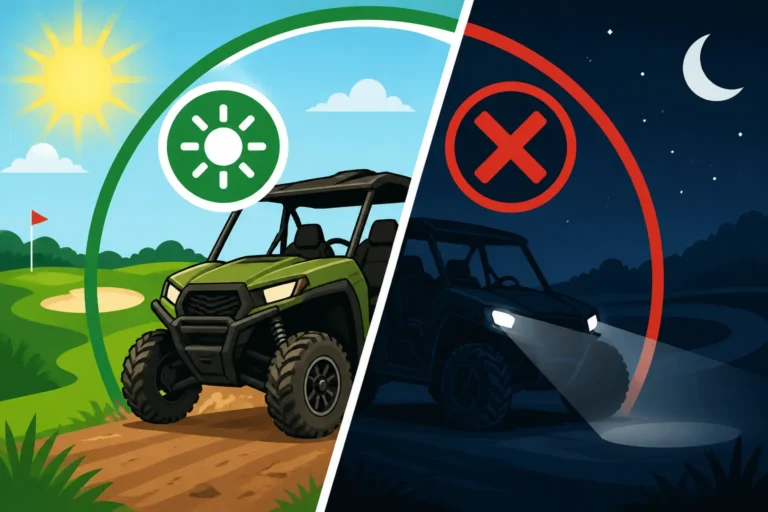
- Daylight Hours Only: Any permitted operation under this specific exception is strictly limited to daylight hours. No riding after dark!
- Equipped for Safety: Even if an ordinance exists, your OHV must be equipped with specific safety features, including at least one headlight (which must be on), one taillight, and a brake light. This is where quality aftermarket components, perhaps from a brand like SuperATV, can be essential to ensure compliance and visibility.
- No More Than Two Miles: The law also often limits this type of travel to within two miles of the place where the OHV is "normally parked." This severely restricts the practical application of this rule; it's not for long-distance travel.
- Not for State Highways: This exception generally applies to county roads or local streets, and it's less common for state-maintained frontage roads to have such specific local ordinances allowing OHV use. Always assume it's prohibited unless you have clear, written proof from the local authority that it's permitted.
Given these strict conditions, it's safer to assume this exception does not apply to most frontage roads unless you've done your homework with the local authorities.
The Strict Conditions for Permitted Frontage Road Use
If you find yourself in one of the rare scenarios where frontage road use is permitted, such as for agricultural purposes or under a specific local ordinance for roads 35 mph or less, you're still not off the hook. Texas law imposes a range of strict conditions designed to mitigate risks and ensure some level of safety when an OHV briefly shares the road with other vehicles. Ignoring these conditions can still lead to fines and legal trouble.
Equipment Requirements for Road-Legal Operation
Even for these limited exceptions, your OHV must meet certain equipment standards to enhance visibility and safety for yourself and others. This isn't about making your OHV "street legal" in the full sense, but about meeting minimum requirements for brief, permitted road use.
Here's a breakdown of what's typically required:
- Headlights: At least one, and it must be illuminated. For enhanced visibility, many riders look to aftermarket solutions for proper lighting, with companies like SuperATV offering a wide range of LED light bars and headlights that exceed basic requirements and make you much more noticeable, especially in dusty conditions or low light.
- Taillights: At least one, and it must be red, visible from 500 feet to the rear.
- Brake Lights: A red light that illuminates when the brakes are applied.
- Reflectors: Often, red reflectors are required on the rear and amber reflectors on the sides.
- Muffler: The machine must have a muffler in good working order to prevent excessive noise.
- Spark Arrester: A U.S. Forest Service-qualified spark arrester is often required, particularly if you're transitioning to or from public lands.
- Rearview Mirror: Essential for awareness of traffic behind you. Ensuring proper rearview visibility is non-negotiable, and quality mirrors, perhaps from a brand like SuperATV, can make all the difference.
- Orange Flag: For agricultural use, a red or orange flag at least 6 feet above the ground is mandatory.
It's critical to note that simply having these items doesn't grant you general road access. They are conditions if you fall under an approved exception. For a comprehensive look at equipment, see [Texas Equipment Rules for an ATV on a Road].
Operational Restrictions: Speed, Time of Day, and Proximity
Beyond equipment, how you operate your OHV on a permitted frontage road is just as regulated:
- Speed Limits: You must adhere to the posted speed limit, or a specific maximum speed dictated by the exception (e.g., often 35 mph or less). OHVs are not designed for high speeds on paved roads, and operating them too fast increases the risk of rollover or loss of control.
- Daylight Only: Many exceptions, especially for local ordinances or general crossing, are strictly limited to daylight hours. Riding after dark without full street-legal lighting (which OHVs don't typically have) is extremely dangerous and illegal. Always confirm if [Texas Rules for Riding After Dark] applies to your specific scenario.
- Proximity and Purpose: As mentioned, agricultural use is tied to direct farming operations and property proximity. The "35 mph or less" rule often has a "within two miles of where it's parked" clause. This highlights that these are not for casual cruising but for very specific, limited travel. You're not supposed to be driving around town on a frontage road just because it fits one of these brief exceptions. The purpose of your travel must align directly with the legal allowance.
Understanding Your Local Jurisdictional Rules
This point cannot be stressed enough: Texas is a big state, and while state law provides the framework, local counties and cities can have their own specific ordinances, especially concerning the "35 mph or less" rule. What's permissible in one county might be strictly prohibited just across the county line.
Before you ever contemplate riding your OHV on a frontage road, or any public road under an exception, you must contact the local county sheriff's office, the city police department, or the county tax assessor-collector's office. Ask them directly about OHV regulations for the specific road segment you intend to use. Don't rely on what your neighbor says or what you think the law implies. Get clarification from the authority. A simple phone call can save you a lot of grief. Remember, while a frontage road may be a state highway right-of-way, local ordinances can still influence operation on the frontage portion.
| Road Use Scenario | General Legality for OHVs | Key Conditions/Requirements | Enforcement Agency |
|---|---|---|---|
| General Public Road | Generally Prohibited | N/A (OHV not designed for highway) | State Highway Patrol, Local Police |
| Frontage Road (General) | Generally Prohibited | N/A (Part of public road system) | State Highway Patrol, Local Police |
| Frontage Road (Ag/Ranch Use) | Permitted (Limited) | Direct agricultural purpose, daylight, safety equipment (flag, lights), close to property | Local Police, County Sheriff |
| Frontage Road (Utility/Emergency) | Permitted (Limited) | Official duty, specific equipment, trained personnel | Utility/Agency Oversight, Law Enforcement |
| Frontage Road (Crossing) | Permitted (Limited) | 90-degree angle, full stop, yield to traffic, clear sight lines, immediate passage | Local Police, County Sheriff |
| Frontage Road (<35 mph, Local Ord.) | Potentially Permitted | Local ordinance must exist, daylight, safety equipment, limited distance (e.g., 2 miles), check local authorities | Local Police, County Sheriff |
Avoiding Penalties and Riding Responsibly
Given the strict nature of Texas law regarding OHVs on public roads, the best approach is always caution and compliance. The penalties for illegal road use can be significant, and safety should always be your number one priority. Riding an OHV on a public road, even a frontage road, puts you and others at considerable risk if not done under the proper, legal conditions.
Consequences of Illegal Frontage Road Use
Operating an OHV on a Texas public road without meeting one of the specific exemptions is typically a Class C Misdemeanor. While this isn't a felony, a Class C Misdemeanor can still result in a fine, court costs, and a mark on your record. The fines can be substantial, often ranging from $25 to $500, not including court fees. For example, if you're found riding on a frontage road simply for recreation, without falling under any of the strict exceptions, you're likely facing a ticket. Furthermore, if you cause an accident while operating your OHV illegally on a public road, your liability could be astronomical, as most standard vehicle insurance policies will not cover such an incident. [Texas Fines for Illegal ATV Road Use] provides a more detailed look at potential penalties.
Prioritizing Safety and Awareness
Even when legally permitted to use a frontage road for a short distance or specific purpose, safety should always be paramount. Remember, OHVs are not designed for paved surfaces, and handling can be unpredictable, especially if you encounter uneven pavement, gravel, or sudden stops.
Here are some essential safety tips:
- Wear a Helmet: Texas law requires helmets for riders under 14 on public land, but it's always a good idea for any rider on any terrain, especially near traffic. [Texas Helmet Law for ATV Riders] outlines more on this.
- Stay Alert: Frontage roads can be busy, with vehicles entering and exiting the main highway. Be acutely aware of your surroundings, constantly checking your mirrors and blind spots.
- Signal Your Intentions: If your OHV has turn signals, use them. If not, use clear hand signals to indicate turns or stops.
- Maintain Proper Equipment: Ensure all required lights are working, tires are properly inflated for paved use (often higher pressure than off-road), and brakes are in excellent condition. For those using their UTVs for ranch work that might involve frontage road travel, upgrading with practical accessories like heavy-duty winches or cargo solutions from brands such as SuperATV can be highly beneficial, ensuring your machine is ready for any task, but always ensure it's still safe for the road segment.
- Ride Predictably: Avoid sudden swerving, quick acceleration, or sharp turns. Other drivers may not expect an OHV on the road and may not judge your speed or intentions accurately.
- Avoid Distractions: No phone use, no fiddling with radios. Your full attention must be on the road and surrounding traffic.
Ultimately, frontage roads in Texas are generally off-limits for ATVs and UTVs. The exceptions are narrow, specific, and come with a host of conditions you must meet. Always err on the side of caution, do your homework, and prioritize safety to keep your riding experience enjoyable and legal.
Disclaimer
This article is for general informational purposes only and does not constitute professional advice. Laws, prices and regulations vary by location and change over time. Consult a qualified professional for guidance on your specific situation.