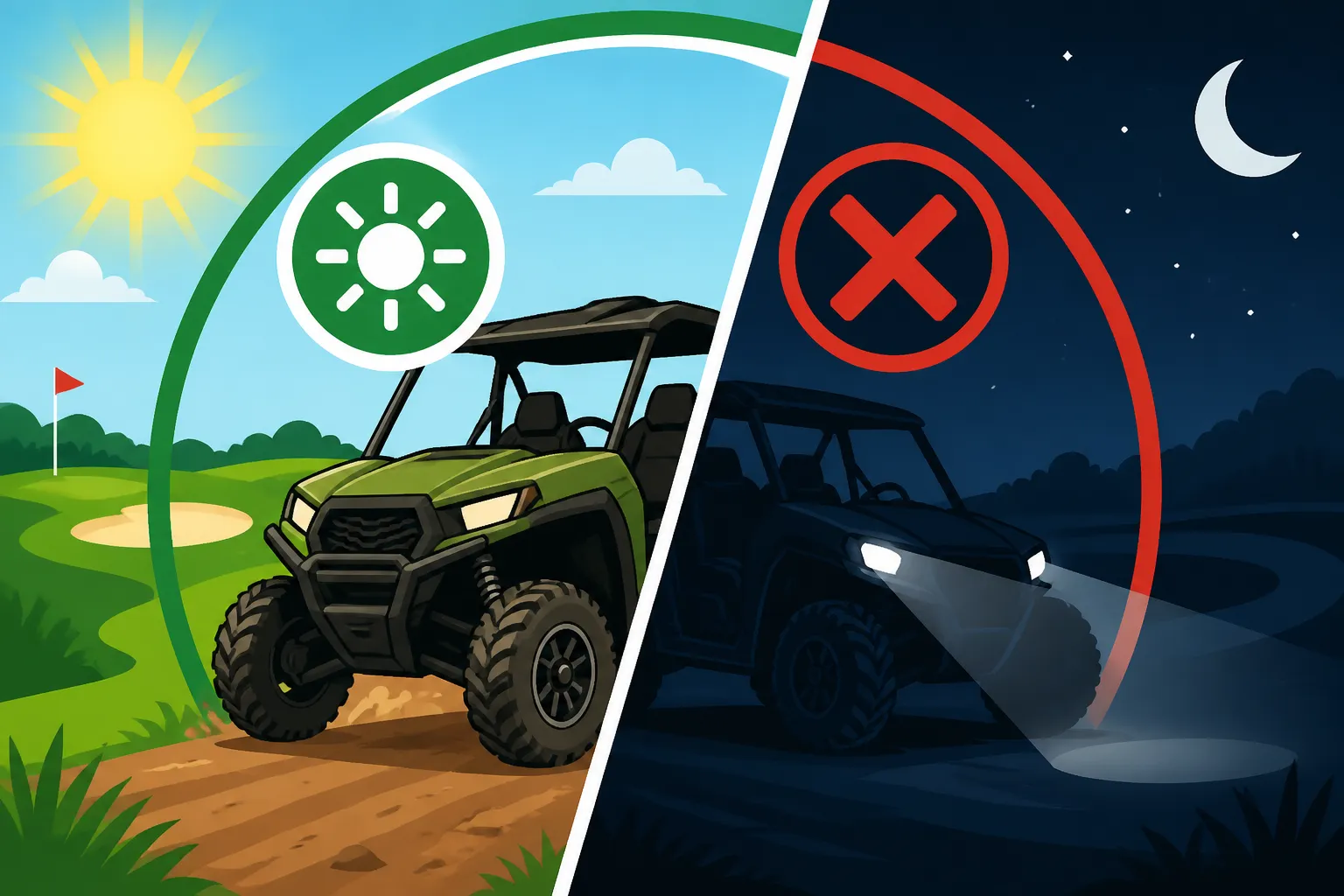
Daylight Only Under the Texas Golf Course Rule
It’s a frustrating reality for many ATV and UTV owners in Texas: you’ve got this incredible machine perfect for tackling rough terrain or getting chores done on the ranch, but the moment you think about taking it on a public road, a huge question mark hangs over your head. This guide is here to unravel the often confusing and frequently misunderstood rules surrounding off-highway vehicle (OHV) use on Texas roads, with a special focus on that specific "golf course rule" that offers a tiny sliver of access.
Understanding the Core Texas Road Ban for OHVs
Let's get this out of the way upfront: for the most part, your ATV or UTV is designed for off-road use, and Texas law reflects that. This isn't just some arbitrary rule; it's rooted in safety concerns and the fundamental design differences between an OHV and a vehicle built for highway speeds and conditions. It can be incredibly disappointing to invest in a fantastic machine, maybe even adding some cool aftermarket parts from companies like SuperATV, only to realize its road-going capabilities are severely limited.
Why Texas Will Not Register an OHV for the Road
One of the biggest stumbling blocks for OHV owners wanting to hit the pavement is the simple fact that Texas does not provide a mechanism to register ATVs, UTVs, or other off-highway vehicles as street legal. Unlike cars, trucks, or motorcycles, these machines are not built to meet federal motor vehicle safety standards for highway use. They lack many of the features deemed essential for road safety, such as proper crash protection, certain lighting requirements, and emissions controls that are standard on street-legal vehicles. This means you can't just walk into the county tax office with your title application and expect to get a regular license plate for your quad. The state is very clear: [Why Texas Will Not Register an ATV for the Road].
This lack of registration directly impacts your ability to drive on public roads. Without a state-issued license plate and registration, your OHV is essentially considered an unregistered vehicle if operated on a public highway, regardless of how safe you feel it is. Many owners feel this is unfair, especially when their UTVs might look like small cars, but the law draws a hard line based on how the vehicle is classified and manufactured. It's a source of real frustration when you see similar vehicles in other states driving around, but Texas has its own specific set of laws on this.
The General Rule: Off-Road Means Off-Road
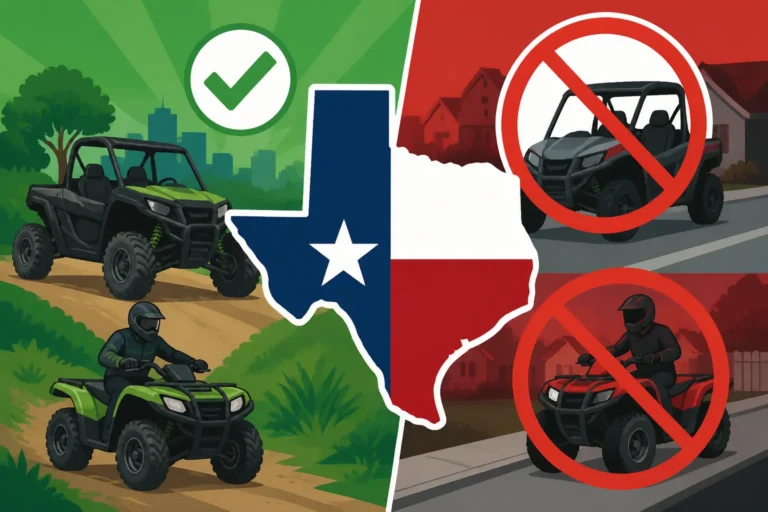
So, what's the general takeaway? If it's an ATV, a UTV, or another off-highway vehicle as defined by Texas law, its primary domain is off-road. This means private property, designated OHV parks, or specific trail systems. Public roads, streets, and highways are generally off-limits. This rule is designed to protect both OHV riders and other motorists who aren't expecting a smaller, often slower, and less visible vehicle on a high-speed roadway.
It's tempting to think that a quick hop across a street or a short drive down a quiet country lane won't hurt anyone, but the law doesn't make those distinctions easily. The definition of a "highway" or "public road" in Texas is broad and covers most thoroughfares that the public has a right to use, regardless of speed limit or traffic volume. Understanding this foundational principle is crucial before you even start looking at the exceptions; the exceptions are exactly that—exceptions to a very strict general rule.
Fines and Penalties for Illegal Road Use
Operating an OHV on a public road where it's not explicitly permitted can lead to some unwelcome consequences, typically in the form of fines and other penalties. Generally, this type of infraction falls under a Class C Misdemeanor, which means a fine rather than jail time for a first offense. However, those fines can add up quickly, and nobody wants to spend their hard-earned money on a ticket instead of on more riding gear or upgrades.
Beyond the financial hit, there's the inconvenience of dealing with law enforcement, potential towing of your machine, and the hassle of court dates. It's not just about the monetary cost; it's about the disruption to your life and the stress of a legal entanglement. Always remember, ignorance of the law is rarely a valid defense. So, while it's frustrating to be limited, knowing the rules helps you avoid these unpleasant situations entirely. [Texas Fines for Illegal ATV Road Use] outlines some of the potential costs.
The "Golf Course Rule" in Texas: A Closer Look
Now for one of the most specific, and sometimes confusing, exceptions: the "golf course rule." This isn't a blanket permission to drive your UTV to the grocery store if it happens to be near a golf course. It's a very narrow allowance tailored to a specific recreational activity, and it comes with strict conditions that must be met. Many people hear "golf course rule" and envision widespread freedom, but the reality is far more constrained.
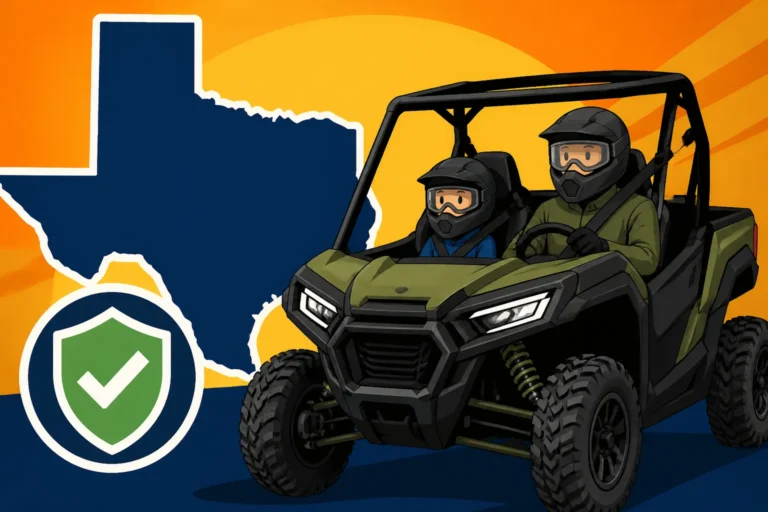
Daylight Only Under the Texas Golf Course Rule
One of the most critical restrictions under the golf course exception is that operation is permitted exclusively during daylight hours. This isn't a suggestion; it's a hard and fast rule. The logic behind this is likely tied to visibility; OHVs can be less visible than standard vehicles, and operating them during dusk, dawn, or nighttime hours significantly increases the risk of accidents with other traffic or pedestrians.
Imagine you've just finished a late afternoon round of golf, the sun is dipping below the horizon, and you decide to take your UTV back to your parking spot or home within the permitted radius. If it's getting dim, you could easily be cited. Even if your UTV has aftermarket lights that make it shine like a Christmas tree, the "daylight only" stipulation remains. This means planning your golf outings and UTV use around the sun's schedule, which can be an unexpected inconvenience for those used to driving cars whenever they please.
2 Miles From Where the Machine Is Parked: The Distance Limit
Another highly specific and often overlooked detail of the golf course rule is the distance limitation: you can only operate your OHV on a public street or highway within two miles of where it's lawfully parked. This isn't two miles from any part of the golf course; it's two miles from the specific spot where your machine is stowed. This means you can't just park it at one end of a five-mile long course and then drive it all the way to the other end on public roads.
This strict two-mile radius is designed to facilitate quick trips to and from parking areas, clubhouses, or perhaps a residence immediately adjacent to the course. It's not intended for extended travel or even for short errands unrelated to the golf course activity. This rule often catches people off guard who assume they have a bit more leeway, leading to tickets for exceeding what seems like a very minimal distance.
Driving a UTV to the Clubhouse and Back: Practical Application
In practical terms, the "golf course rule" primarily means you can use your UTV to travel between your home or a parking area immediately surrounding a golf course and the course itself, including the clubhouse or pro shop. This is incredibly convenient for residents of communities built around golf courses, allowing them to easily access the greens without needing to load their UTV onto a trailer or drive a regular car for a very short distance.
For example, if you live in a master-planned community where the golf course is a central feature, you might drive your UTV directly from your garage to the first tee. You can travel on neighborhood streets within that two-mile, daylight-only window to get your gear to the clubhouse or meet friends for a round. However, if that same clubhouse is more than two miles from your home, or if you attempt to use the UTV to run an errand to a store that's not part of the golf course property, you're likely violating the rule. It's a niche exception, for a niche scenario.
Navigating Other Limited Exceptions for OHV Road Use
While the golf course rule is one of the more unique exceptions, Texas law does provide a few other specific circumstances where OHVs can legally traverse public roads. It’s crucial to understand that these are exceptions, not general permissions, and each comes with its own set of conditions and limitations. Just like the golf course rule, these aren't loopholes for widespread road use but rather targeted allowances for specific needs.
Texas's 25 Mile Farm Road Rule: Agricultural Exemptions
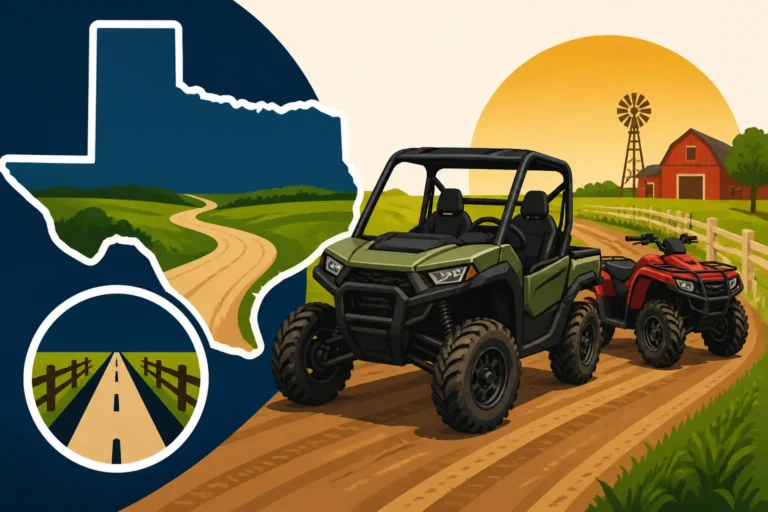
Texas law provides a significant exception for OHVs used in agricultural operations. If your ATV or UTV is being used for farming, ranching, or other agricultural purposes, you might be able to operate it on public roads. This isn't a free pass, though. The law typically specifies that the machine must be traveling no more than 25 miles from its point of origin to its destination. This 25-mile rule is designed to allow ranchers to move equipment between fields, haul feed, or check livestock on properties that might be bisected by public roads.
For instance, a farmer might use their UTV, perhaps equipped with accessories from SuperATV for utility tasks, to transport tools or materials from one part of their property to another, even if it requires a brief stint on a county road. The key here is the purpose of the trip—it must be directly related to the agricultural operation. This exemption is not for joyriding or commuting to town for non-farm-related activities. It's a pragmatic allowance for the realities of agricultural work in a large state like Texas. [Texas Agricultural Exemption for ATVs on Roads] delves deeper into this.
Roads Posted Thirty-Five or Less in Texas: Local Ordinances
Some local jurisdictions in Texas have the authority to create ordinances allowing OHVs on certain public roads within their boundaries. However, this power is typically limited to roads with a posted speed limit of 35 miles per hour or less. This means you won't generally find ATVs cruising down major state highways or busy thoroughfares, even if a city wanted to allow it. The state provides a framework, but the decision and the specific rules fall to the local city council or county commissioners.
It's vital to remember that these local ordinances are not universal. Just because one town in Texas allows OHVs on its low-speed streets doesn't mean the next town over does. As an OHV owner, it's your responsibility to check with local authorities—like the city hall or county clerk's office—before venturing onto any public road based on this potential exception. Failing to do so could easily lead to a ticket, as police officers enforce the specific rules of their jurisdiction. [What Texas Cities Can and Cannot Allow] is a helpful resource for understanding these limitations.
Crossing a Highway on an ATV in Texas: Brief Transits
There are also specific allowances for simply crossing a public road or highway, rather than driving on it. This is usually permitted when an OHV needs to move from one section of private property to another, and a public road lies in between. However, these crossings must be done safely and directly. You can't use the crossing exception as an excuse to drive down the road for a few hundred feet.
When crossing, the OHV must come to a complete stop, yield to all traffic, and proceed at a right angle to the road. This means you drive straight across, not diagonally or along the shoulder. The intent is to minimize the time the OHV is on the public road and reduce the potential for conflict with other vehicles. It’s a very limited allowance, designed for logistical necessity rather than convenience. [Crossing a Highway on an ATV in Texas] provides detailed instructions on how to do this legally.
Equipment and Safety Requirements for Permitted Road Use
Even when operating your ATV or UTV under one of the narrow road use exceptions in Texas, you're not exempt from all safety and equipment requirements. In fact, due to the inherent risks of mixing off-highway vehicles with road traffic, some specific items become mandatory to enhance visibility and safety for everyone involved. Don’t think that just because you have permission to cross or ride on a specific road that you can do so unprepared.
Headlights and Taillights in Daylight: Required Gear
One common misconception is that if you're riding during daylight hours, you don't need to worry about your lights. However, even under the "daylight only" golf course rule or for agricultural exemptions, Texas law often stipulates that OHVs must have their headlights and taillights on when operating on a public road, regardless of the time of day. This is a crucial safety measure to make your machine more visible to other drivers, even in bright sunshine.
Many ATVs and UTVs come with basic lighting systems, but some owners upgrade them, perhaps with brighter LED bars or additional auxiliary lights, for better trail visibility. While these aftermarket lights are great for off-road adventures, their primary purpose on the road is to ensure you are seen. It's not about lighting your path in the day; it's about making your presence undeniable to oncoming or following traffic. Always check your lights are in working order before venturing onto any public road, even for a short, permitted distance.
Goggles When There Is No Windscreen: Eye Protection
While many UTVs come with windscreens, some ATVs and even certain UTV models do not. For these machines, or if the windscreen is removed, Texas law requires the operator to wear eye protection when on a public road. This is incredibly important for safety, as debris, insects, or even just strong winds can impair your vision and lead to an accident. Imagine hitting a bee at 30 mph without eye protection—it's a recipe for disaster.
Even if you’re only going a short distance, a sudden gust of wind or a passing truck can kick up dust or small rocks that could seriously injure your eyes. Standard sunglasses might offer some protection, but impact-resistant goggles designed for riding are always the safest bet. They offer a wider field of vision and better protection against impacts. Don't skimp on eye protection; it's a simple, inexpensive way to prevent serious injury.
Texas Helmet Law for UTV Drivers: Roll Cages and Belts
Texas has specific helmet laws for motorcycle riders, and while OHVs are different, there are related safety considerations, especially for UTVs. For UTVs, if the vehicle has a roll cage and a properly functioning seatbelt for all occupants, the helmet requirement might be waived for adults. However, this is distinct from ATV riders, who typically face stricter helmet rules. [Texas Helmet Law for UTV Drivers] explains this in detail.
It’s crucial that if your UTV is equipped with a roll cage, that cage is in good condition and designed for occupant protection. Similarly, seatbelts must be worn by all occupants. These features are designed to work together to protect riders in the event of a rollover or collision. Many UTV owners consider aftermarket roll cages or harnesses from companies like SuperATV, which can offer enhanced safety beyond factory standards, but even then, always ensure you're complying with the letter of the law regarding their use on public roads.
Common Misconceptions and Legal Pitfalls
It’s incredibly easy to misunderstand Texas’s OHV laws, especially when trying to apply them to public roads. The nuances, exceptions, and strict interpretations often lead owners down paths they believe are legal, only to find themselves facing fines. Let’s tackle some of the most persistent myths and pitfalls that ensnare well-meaning riders.
Why an Altered Quad Still Cannot Be Plated: Modifying for Road Use
A common thought among ATV and UTV enthusiasts is, "If I just add turn signals, a horn, and mirrors, can I get it registered for the street?" Unfortunately, in Texas, the answer is almost universally no. Adding street-legal accessories, even high-quality ones that meet all federal requirements for regular vehicles, does not change the fundamental classification of your ATV or UTV as an off-highway vehicle. The state's stance is rooted in the vehicle's original manufacturer's designation and whether it meets the stringent federal motor vehicle safety standards (FMVSS) for on-road use.
This can be incredibly frustrating, especially for those who spend significant time and money upgrading their machines. You might have a UTV that, thanks to parts from SuperATV, is more robust and safer than some small cars, but legally, it's still not a street-legal vehicle. The law doesn't focus on what you add; it focuses on how the vehicle was originally manufactured and designed. [Why an Altered Quad Still Cannot Be Plated] dives deeper into why these modifications don't cut it.
Why Adding Lights and Mirrors Changes Nothing: Misguided Upgrades
Building on the previous point, simply bolting on a full array of lights, mirrors, and even a license plate bracket won't magically make your OHV street-legal in Texas. These accessories are excellent for safety on the trail, for permitted low-speed road use under specific exceptions, or to comply with local ordinances where allowed. However, they do not qualify your machine for general road registration.
The distinction is crucial: these upgrades improve safety and visibility, which are often requirements for the limited road use exceptions (like the golf course rule or agricultural exemption), but they do not change the vehicle's legal status as an off-highway vehicle. It's a classic case of having the right equipment for the wrong application, from a legal standpoint. Many riders mistakenly believe that if they just mimic a motorcycle or a car, they'll be good to go, but Texas law simply doesn't operate that way for OHVs.
What Texas Cities Can and Cannot Allow: Local Authority Limits
While Texas counties and cities do have some authority to regulate OHV use on certain low-speed roads (those 35 mph or less), their power is not unlimited. They cannot override the state's fundamental classification of an OHV or grant universal street-legal status. This means a city cannot, for example, declare that all ATVs are now street-legal within its city limits, nor can it allow OHVs on 45 mph state highways that pass through its jurisdiction.
This creates a patchwork of rules across the state, which is a major source of confusion for riders. You might be perfectly legal driving your UTV on the streets of one small town, but cross into the next county or city, and you could immediately be in violation. Always verify local ordinances with the specific municipal or county government where you intend to ride, keeping in mind that their authority is limited to low-speed roads and cannot circumvent state law regarding OHV registration. [Texas Cities That Ban ATVs on the Beach] is an example of local restrictions.
Here's a quick summary table of the key road-use exceptions and their conditions:
| Exception Type | Primary Use Case | Key Conditions | Common Restrictions |
|---|---|---|---|
| Golf Course Rule | Accessing golf courses from nearby parking/residence | Daylight only; within 2 miles of parked machine; on roads 35 mph or less | No general errands; strict distance/time limits |
| Agricultural Use | Farming, ranching, timber operations | Max 25 miles from origin/destination; directly related to ag work | No recreational riding; specific purpose only |
| Local Ordinances | City/County-specific allowances | Roads 35 mph or less; local government approval required | Not statewide; varies by jurisdiction; no major roads |
| Direct Crossing | Moving between private properties | Complete stop; yield to traffic; cross at 90-degree angle; lights on | No driving on the road; brief transit only |
Disclaimer
This article is for general informational purposes only and does not constitute professional advice. Laws, prices and regulations vary by location and change over time. Consult a qualified professional for guidance on your specific situation.