Which Texas Counties May Open Roads
It's incredibly frustrating, isn't it? You love your ATV or UTV and you just want to take it down the road for a quick trip to a neighbor's house, a local store, or to access another trail, but Texas law often feels like a brick wall. Most of us know the general rule that off-highway vehicles aren't street legal in our great state. But here's a glimmer of hope: certain Texas counties do have the power to open up their public roads to OHV traffic. This guide will walk you through exactly which counties have this ability, what criteria they must meet, and what that actually means for you as a rider.
The Default Rule: OHVs Are Not for Public Roads
Let's start with the baseline, because it's the source of so much confusion and disappointment for riders across Texas. Generally speaking, off-highway vehicles (OHVs) like ATVs, UTVs, and side-by-sides are simply not designed or permitted for use on public roads, streets, or highways in Texas. This isn't just a suggestion; it's enshrined in state law, specifically in the Transportation Code. The thinking behind this is primarily safety: these machines lack the safety equipment, crashworthiness, and signaling necessary for safe integration with conventional vehicle traffic.
This blanket prohibition can feel incredibly restrictive, especially for those of us living in rural areas where a quick hop down a county road would save a lot of trailering time and effort. You might look at your robust side-by-side, perhaps equipped with accessories from SuperATV like a full windshield or side mirrors, and think, "This is perfectly capable of driving slowly on a paved road!" And while it might feel that way, the law typically doesn't make exceptions for perceived capability. Instead, it creates clear categories for vehicles and their allowed uses. We've often discussed [Why Texas Will Not Register an ATV for the Road] in depth, and it really boils down to this fundamental classification.
The default rule means that if you're not in one of the specific exception scenarios, venturing onto a public road with your OHV could land you a Class C misdemeanor, along with fines and potential impoundment. It’s a harsh reality that many new riders learn the hard way. This general rule is why so many riders stick to private land or dedicated off-road parks. It’s crucial to understand this starting point before diving into the exceptions, because the exceptions are just that – narrow breaks in an otherwise firm rule.
The Legislature's Exceptions to the General Ban
While the general rule is clear, Texas isn't completely rigid. The state legislature has, over time, recognized specific geographic or demographic situations where allowing OHV use on certain public roads might be practical or beneficial, provided certain conditions are met. These aren't blanket permissions; they are powers granted to local governments to make their own decisions within specific legislative parameters. Think of it as the state giving a conditional "OK" for local control, rather than mandating it.
These exceptions are born out of unique local needs and characteristics. For instance, a small, sparsely populated county might have very different traffic patterns and community needs than a bustling urban center. Similarly, areas with unique natural features, like extensive riverbeds or barrier islands, present different transportation challenges and opportunities. Understanding these legislative carve-outs is the key to knowing whether your specific county even has the authority to consider opening roads. If your county doesn't fit into one of these legislative categories, then frankly, they don't have the power to open roads to OHVs, no matter how much they might want to.
It's important to differentiate these county-level exceptions from other specific allowances, such as limited agricultural use or crossing a road at a 90-degree angle. Those are specific actions permitted under certain circumstances, but they don't broadly open roads for general OHV travel. Here, we're talking about the ability for a county to proactively declare specific public roads open for OHV use, typically through a local ordinance.
Red River Counties and Their Unique Road Powers
One of the most distinct exceptions to Texas's OHV road ban applies specifically to counties bordering the Red River. This isn't just any river; the Red River forms a significant portion of the border between Texas and Oklahoma, and its unique geography, particularly the often-sandy riverbed and surrounding terrain, has long been a popular (and historically complicated) area for off-road recreation. The legislature recognized this unique situation and granted a special power to counties along its banks.
Specifically, the law allows a county bordering the Red River to, by official action, permit the operation of OHVs on a public road in the unincorporated area of the county. This is a pretty significant power, as it means these counties can essentially opt-in to allowing OHV use on their rural roads. The rationale often cited for this specific carve-out is the historical use of OHVs in these areas, particularly for accessing the riverbed itself, which is a common riding spot. For riders in these counties, it means their county commissioners' court has the power to make decisions that other counties simply cannot.
If you live in a Red River county, or plan to ride there, it's absolutely crucial to check with the county's commissioner's court or sheriff's office to see if such an ordinance has actually been passed. The state allows it, but doesn't mandate it. So, while the power exists, the county must actively choose to use it. When you're heading out for a ride, whether you have a stock machine or one upgraded with a full suspension kit from SuperATV, knowing the local rules for [Texas Rules for Riding a Red River County] is paramount to avoiding an unexpected ticket.
Why Red River Counties May Opt In
The special legislative provision for Red River counties stems from a combination of geographical factors and long-standing cultural practices. The riverbed itself, particularly during lower water levels, offers vast stretches of sandy terrain that are highly attractive to off-road enthusiasts. Accessing these areas often requires traversing short segments of county roads, and the previous blanket prohibition created significant practical challenges for local residents and visitors alike.
The economic impact of recreation is also a factor. Off-road tourism can bring significant revenue to these often-rural communities. By granting these counties the ability to open their roads, the state provides them with a tool to better manage and potentially capitalize on this recreational activity, while still giving local control over the specifics of road use. This local control means that ordinances can be tailored to address specific local concerns, such as speed limits, times of day for operation, or even specific roads that might be more suitable than others. It's a pragmatic approach to a unique regional issue.
However, even with this power, counties need to consider the implications. Opening roads to OHVs isn't just about recreation; it's about road maintenance, safety, and potential conflicts with traditional vehicle traffic. These are all factors a commissioner's court would weigh when deciding whether and how to implement such an ordinance. So, while the legislative door is open for them, the local decision-making process can be complex.
Guadalupe River Counties and the Barrier Island Test
Beyond the Red River counties, another specific legislative provision carves out an exception for counties that border the Guadalupe River and meet a particular geographical criterion related to barrier islands. This might sound a bit convoluted, but it's another example of the Texas legislature responding to unique local circumstances. The Guadalupe River system, particularly as it approaches the coast, presents different environmental and recreational dynamics compared to other parts of the state.
The law specifies that a county bordering the Guadalupe River may permit OHV operation on a public road in an unincorporated area if the county also contains a barrier island. This combination of river and coastal geography is quite specific, pointing to areas along the Texas Gulf Coast where river systems intersect with unique barrier island ecosystems. These areas often have distinct recreational uses, including beach driving and access to fishing or hunting grounds, where OHVs play a practical role.
Just like with the Red River counties, this is an enabling power, not a mandate. The county must still take official action to pass an ordinance allowing OHV use on specific roads. Riders often look to their UTVs, perhaps with heavy-duty bumpers from SuperATV to protect against brush, as ideal for navigating some of this coastal terrain. If you're riding in one of these specific counties, understanding [Guadalupe River Counties and the Barrier Island Test] is essential to determine if road access is a possibility.
Coastal Considerations and Local Control
The inclusion of barrier islands in this legislative exception highlights the unique challenges and opportunities of coastal regions. Barrier islands are dynamic environments, often with unpaved or sandy access roads, and they are frequently used for recreational activities like fishing, hunting, and beachcombing. OHVs can be particularly useful in these environments for navigating soft sand and accessing remote areas.
The legislative intent here seems to acknowledge that in these particular coastal-riverine landscapes, the practical utility of OHVs on certain local roads outweighs the general safety concerns, provided local authorities can regulate their use effectively. Local control allows these counties to enact ordinances that consider factors like seasonal tourism, environmental protection, and existing infrastructure. For instance, they might limit OHV use to certain times of the year, specific roads, or require particular safety equipment, all to balance recreation with local safety and environmental stewardship.
However, these counties face the same balancing act as their Red River counterparts. They must weigh the benefits of increased access for residents and tourists against potential impacts on public safety, road wear, and environmental concerns. The decision to open roads is not taken lightly and typically involves public hearings and careful consideration by the county commissioners' court.
Smaller Counties: Under 37,000 People
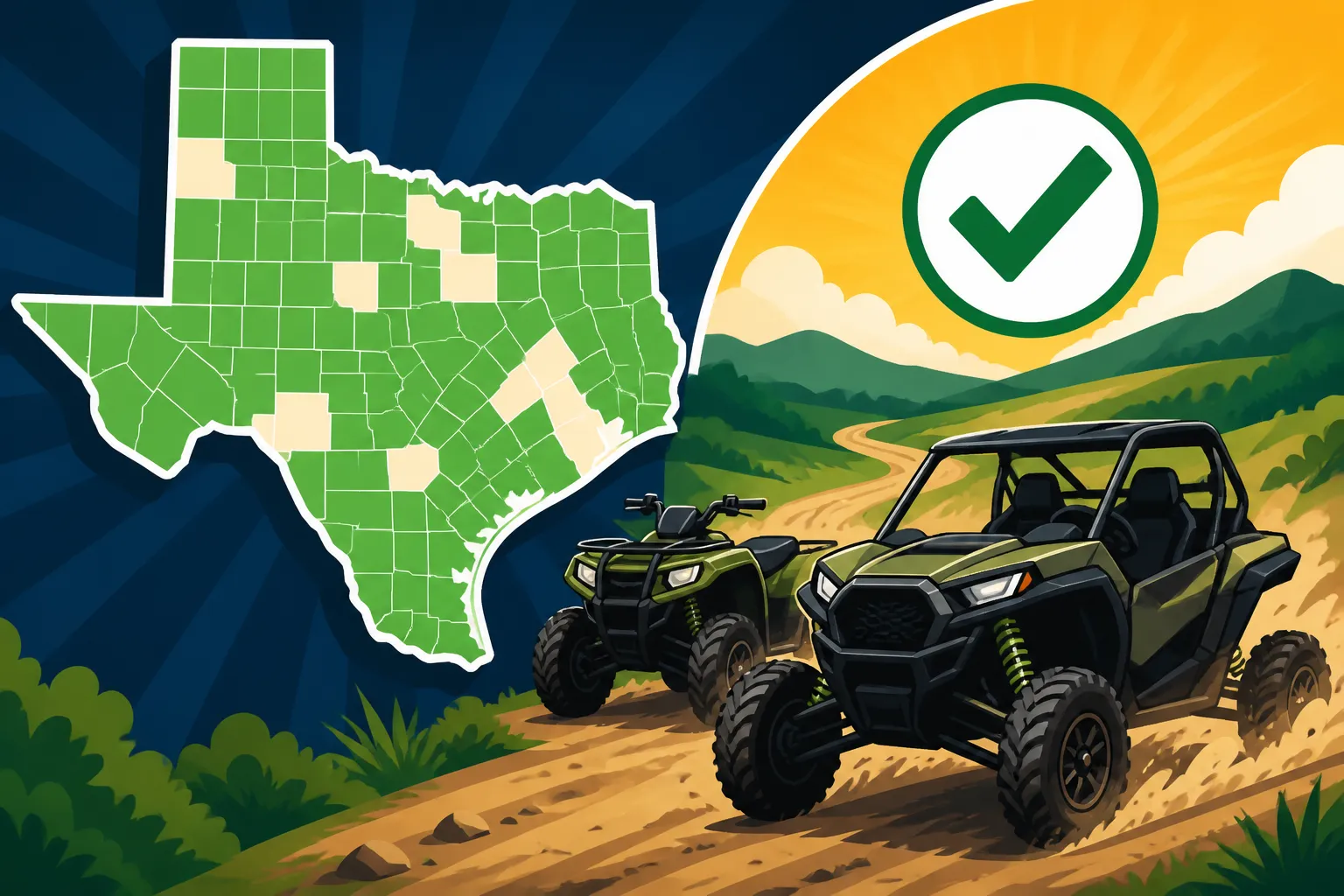
Perhaps the broadest exception, and one that applies to a significant number of Texas counties, is based purely on population size. The state legislature has granted counties with a population of less than 37,000 people the authority to permit OHV operation on public roads within their unincorporated areas. This recognizes that sparsely populated rural counties often have different traffic densities and community needs compared to more urbanized areas.
In these smaller counties, traffic volume is typically much lower, making the integration of OHVs onto certain roads a less significant safety concern. Many residents in these counties rely on OHVs for agricultural purposes, property maintenance, or simply navigating large rural properties, and the ability to use local roads for short distances can be a practical necessity rather than just a recreational desire. This provision offers a lot of flexibility to a large swath of Texas.
For those residing in or planning to ride in these less populated areas, checking the county's most recent population estimate and then inquiring about any local ordinances is the critical next step. The fact that a county can open roads doesn't mean it has. [Counties Under Thirty-Seven Thousand People] have this power, but they still need to act on it.
Why Population Matters for Road Access
The "under 37,000 people" threshold is a pragmatic legislative choice. It's a recognition that traffic patterns and infrastructure differ vastly between rural and urban settings. In a county with a small population, county roads often see minimal traffic, especially outside of main thoroughfares. This reduces the risk of collisions and makes it more feasible for OHVs to share the road safely, provided they operate responsibly.
Furthermore, many of these counties have economies heavily reliant on agriculture, ranching, or other rural industries where OHVs are essential tools. Allowing limited road access can significantly improve efficiency for farmers and ranchers who need to move between fields, access remote parts of their property, or transport small loads. This isn't about joyriding; it's about practical utility for residents.
Again, the power to open roads remains at the county level. A commissioners' court in a small county might decide to open all unincorporated roads, or only specific ones, or only during certain hours. They might also impose specific requirements on OHVs, such as requiring headlights, taillights, turn signals (which are often an aftermarket addition like those found at SuperATV), or flags, to enhance safety even in low-traffic environments. It's always about local context and local decision-making.
What "Open Roads" Actually Means for Riders
When a county decides to exercise its power and open certain roads to OHV traffic, it's not a free-for-all. The term "open roads" does not typically mean that OHVs can operate just like any other street-legal vehicle, nor does it typically extend to all roads within the county. Instead, it usually refers to specific, designated public roads, often within unincorporated areas, and under a strict set of conditions. Riders who assume a wide-open invitation might find themselves in legal trouble.
First and foremost, "public road" usually refers to county roads, not state highways or federal interstates, which remain strictly off-limits to OHVs regardless of county action. Even within county roads, the ordinance might specify particular routes or exclude highly trafficked ones. The idea is to provide practical access where it's most needed and safest, not to create new highway hazards. Secondly, there will almost certainly be specific equipment requirements, operating hours, and speed limits. These aren't optional; they are part of the privilege.
It's crucial to consult the actual county ordinance. Don't rely on hearsay or what a friend says is allowed. The fine print matters immensely. Understanding [Texas Rules for Riding a County Road] when it's open can prevent a lot of headaches and fines.
Limitations and Required Equipment
Even on roads that a county has opened, OHVs are rarely treated identically to cars or trucks. They are still fundamentally off-highway vehicles, and their operation will likely be subject to limitations. Common limitations include:
- Speed Limits: Often, OHVs are restricted to lower speeds, sometimes even below the posted limit for other vehicles, to ensure they can safely integrate with traffic or provide adequate stopping distance.
- Operating Hours: Some ordinances might restrict OHV use to daylight hours only, or prohibit it during peak traffic times.
- Road Types: As mentioned, state highways, farm-to-market roads (FM roads), and federal routes are almost always excluded. Open roads are typically limited to lesser-trafficked county roads.
- Safety Equipment: This is where aftermarket accessories often come into play. While your OHV might not be factory-equipped for the road, a county ordinance might require certain additions like:
- Headlights and taillights (operational even during the day)
- Brake lights
- Turn signals
- Rearview mirrors (often a must-have for situational awareness)
- A horn or audible warning device
- A parking brake
- A safety flag (especially in areas with obscured visibility)
These requirements are intended to bring the OHV closer to the safety standards of on-road vehicles, or at least make them more visible and predictable to other drivers. Adding these features, perhaps a complete street-legal kit from SuperATV, is a common step riders take when their county opens roads, even though [Why Adding Lights and Mirrors Changes Nothing] for state-level street legality, it matters for local ordinances. Failure to meet these specific equipment requirements, even on an "open" road, can still result in a citation.
The Role of Local Ordinances
The process of opening roads for OHV use falls squarely on the shoulders of the local county government, specifically the Commissioners' Court. The state provides the legislative framework and the power to act, but the Commissioners' Court is the body that must take the initiative, draft an ordinance, and formally adopt it. This is a critical distinction: the state law doesn't automatically open roads; it merely enables the counties to do so.
This means that even if you live in a qualifying county (Red River, Guadalupe River/barrier island, or under 37,000 population), you cannot assume that all or any roads are open to OHVs. The Commissioners' Court must have deliberated, often held public hearings, and then voted to enact a specific ordinance. This ordinance will detail exactly which roads are open, under what conditions, and with what restrictions.
Understanding this local legislative process is key to both knowing your rights and advocating for them. If your county qualifies but hasn't opened roads, you can approach your county commissioners and make a case for why they should consider it. If they have, then reading the precise language of the ordinance is your homework. We've previously discussed [What Texas Cities Can and Cannot Allow] regarding OHVs, and it's a similar principle here for counties.
How a County Actually Opens Roads
The process for a county to open roads to OHVs typically involves several steps:
- Identification of Need/Interest: This might come from residents, community groups, or the commissioners themselves recognizing a need for OHV access.
- Research and Draft: County attorneys or staff will research the state law (Transportation Code, Chapter 551A) to ensure the county qualifies and understand the scope of their authority. They will then draft a proposed ordinance outlining the specific roads, conditions, and requirements. This drafting stage is crucial, as it sets all the parameters.
- Public Hearings: Before a vote, the Commissioners' Court will typically hold public hearings to gather input from residents, law enforcement, and other stakeholders. This is where safety concerns, environmental impacts, and community support or opposition are voiced.
- Vote and Adoption: After public input, the Commissioners' Court will vote on the proposed ordinance. If it passes, it becomes law within that county's jurisdiction, specifically for its unincorporated areas.
- Signage and Enforcement: Once adopted, the county is responsible for communicating the new rules, often through signage on relevant roads, and for enforcing the ordinance. This means law enforcement officers in the county will then patrol and issue citations based on the specifics of this local law.
It's a deliberate process, designed to ensure that local decisions are made with public input and due consideration for safety and community well-being. A rider should always be able to get a copy of the specific ordinance from their county clerk's office.
Checking Before You Ride: Your Due Diligence
Given the patchwork nature of these rules – state law granting powers, and then individual counties deciding whether and how to use those powers – the responsibility ultimately falls on the rider to know the local rules. "I didn't know" is rarely an acceptable defense when facing a traffic citation. Before you load up your ATV or UTV and head out on any public road in Texas, especially one that isn't a designated OHV trail, you need to do your homework.
This is even more critical if you're traveling from one county to another. A road that's open in County A might be strictly prohibited in County B, even if both counties technically qualify under state law to open roads. Your personal machine, whether a basic quad or a fully customized side-by-side with an upgraded exhaust and lift kit, still falls under these rules. The burden of proof for legality rests with the operator.
Failing to verify local ordinances can lead to fines, inconvenience, and even impoundment of your machine. It's a real hassle to deal with, and it's easily avoidable with a little proactive research. Don't let a misunderstanding turn a fun ride into a costly lesson.
Practical Steps to Verify Road Legality
Here's a step-by-step approach to ensure you're riding legally on county roads:
- Determine if the County Qualifies: First, check if the county you plan to ride in is a Red River county, a Guadalupe River county with a barrier island, or has a population under 37,000. You can usually find county population data from the Texas Demographics Center or the U.S. Census Bureau. If it doesn't meet one of these criteria, then stop there – OHVs are almost certainly not permitted on public roads.
- Contact the County Clerk's Office or Commissioners' Court: If the county qualifies, your next step is to directly contact the county clerk's office. This is where official records, including ordinances, are kept. Ask specifically if there is an ordinance related to off-highway vehicle (OHV) or all-terrain vehicle (ATV/UTV) use on public roads in the unincorporated areas of the county.
- Request a Copy of the Ordinance: If an ordinance exists, request a copy. Read it carefully. Pay close attention to:
- Which specific roads are included: Is it all county roads, or only certain ones?
- Operating hours: Are there time restrictions?
- Speed limits: Are they different from the posted speed limit for cars?
- Required equipment: Does your machine have all the necessary lights, mirrors, horn, etc.?
- Any other conditions: Are there age restrictions for drivers, helmet requirements, or passenger rules?
- Check with Local Law Enforcement: It can also be a good idea to speak with the local sheriff's department or a county constable. They are the ones who will be enforcing the rules, so their interpretation of the ordinance is vital. Sometimes, local nuances or common practices aren't fully captured in the written law, and a quick conversation can clarify things.
- Look for Signage: While not always comprehensive, look for any signage posted by the county indicating permitted OHV use or restrictions on specific roads. This is a visual confirmation, but should never be your only source of information.
By following these steps, you empower yourself with the correct information and ensure your riding adventures stay on the right side of the law.
Comparative Overview of Texas County OHV Road Rules
To help visualize the different categories of Texas counties that may open roads, here's a summary:
| County Type | Primary Criteria | Key Authority | Typical Scope of Open Roads | Important Caveats |
|---|---|---|---|---|
| Red River Counties | Borders the Red River | County Commissioners' Court | Unincorporated county roads | Requires specific county ordinance; does not include state/federal highways. |
| Guadalupe River / Barrier Island | Borders Guadalupe River AND contains a barrier island | County Commissioners' Court | Unincorporated county roads (often coastal/riverine) | Requires specific county ordinance; focused on unique geographic needs. |
| Small Population Counties | Population under 37,000 | County Commissioners' Court | Unincorporated county roads | Requires specific county ordinance; traffic volume is a key factor. |
| Other Texas Counties | None of the above | N/A (No authority to open roads) | No public roads (except specific state-mandlevel exceptions) | Default state ban on OHVs on public roads applies strictly, with limited exceptions like Ag use or crossing. |
It’s clear from this table that the power to open roads is not universal. Most counties in Texas simply do not have this authority. This is why the default assumption should always be that OHVs are not permitted on public roads, unless you have confirmed an active and specific county ordinance that says otherwise, and your vehicle meets all its requirements. This table highlights why Which Texas Counties May Open Roads is not a simple yes or no answer for the entire state.
Navigating the Nuances of Permitted Road Use
Even when a county has opened roads, the specific rules and nuances can vary greatly, creating a complex landscape for riders. It's not just about getting permission; it's about understanding the exact terms of that permission. For instance, some ordinances might have stipulations about the time of day, perhaps allowing OHV use only during daylight hours, or prohibiting it during school bus routes. Others might have specific equipment requirements beyond what your machine already has, like an orange flag for visibility, or more robust lighting.
Another layer of complexity is the interplay between county roads and municipal streets. A county ordinance typically only applies to the unincorporated areas of the county. If you enter a city or town within that county, even a small one, that municipality will have its own set of rules, and they are generally much stricter. So, while you might be legally riding on a county road, the moment you cross into city limits, you could become illegal without realizing it. This is why knowing [Texas Rules for Riding a Subdivision Street] is a good idea.
This requires riders to be highly attuned to their location and the specific local laws. It means checking county lines and city limits on a map, and having a clear understanding of where your permitted riding area begins and ends.
Enforcement and Rider Responsibility
Ultimately, the responsibility for compliance rests with the rider. Law enforcement officers in these counties will be enforcing the local ordinances, and ignorance of the law is not a valid excuse. If you are stopped, you'll need to be able to demonstrate that your vehicle meets all required equipment standards and that you are operating within the stipulated conditions. This includes having a valid driver's license, even though OHVs typically don't require one for off-road use, it's a common requirement for any on-road operation, even under a local ordinance.
Consider the example of a rider who has diligently added all the necessary safety equipment to their UTV, from turn signals to a horn, even a custom roll cage from SuperATV for enhanced protection. They've read the county ordinance, confirmed the roads are open, and are following the speed limit. This rider is doing everything right. Compare this to someone who simply heard "roads are open" and ventured out without checking the specific ordinance or equipping their machine appropriately. The second rider is at a high risk of a citation, even if they are on a technically "open" road.
It's about being a responsible member of the riding community. When counties take the leap to open roads for OHVs, they are taking a chance, often based on trust that riders will adhere to the rules and prioritize safety. Abusing that privilege or neglecting the rules could lead to counties reversing their decisions or imposing even stricter limitations. So, for the sake of all riders, always do your homework and ride legally.
Looking to the Future of Texas OHV Road Access
The current landscape of OHV road access in Texas is a product of ongoing legislative debate, local advocacy, and practical considerations. As Texas continues to grow, and as OHVs become more versatile and popular, the discussions around their use on public roads will undoubtedly continue. While the state's default stance remains restrictive, the existing exceptions for Red River, Guadalupe River/barrier island, and smaller population counties demonstrate a willingness to adapt to specific local needs.
It's important for riders to stay informed about potential legislative changes and to engage with their local county officials. If you live in a qualifying county that hasn't opened roads, expressing your interest and making a reasoned case can be an important step. If your county already has an ordinance, ensuring you understand and comply with it is crucial for its continued success.
The trend for OHV enthusiasts is often towards making their machines more capable and safer, sometimes with extensive modifications. Many riders turn to aftermarket parts providers like SuperATV for upgraded axles, suspension components, or even full cab enclosures, enhancing their machines for any terrain. But these upgrades, while beneficial for off-road performance, don't automatically confer road legality. The core of street legality in Texas always comes down to specific state laws and, where applicable, carefully crafted local ordinances. Understanding this framework is the best way to enjoy your machine responsibly and legally in Texas.
The Dynamics of Local Advocacy
For those who wish to see more roads opened, or existing ordinances maintained, local advocacy is the most effective path. This involves:
- Attending Commissioners' Court Meetings: These meetings are open to the public, and you can often voice your opinions during public comment periods.
- Contacting Your County Commissioners: Write letters, send emails, or call your commissioners to explain your perspective, highlighting the economic benefits, practical uses, and responsible riding habits of OHV owners.
- Joining Local OHV Clubs: These clubs often have organized efforts to advocate for rider rights and safety, providing a stronger, collective voice to local governments.
- Presenting Solutions: Instead of just asking for access, consider presenting solutions to common concerns, such as proposals for specific safety equipment, designated routes, or educational programs for riders.
The conversation about [Texas Rules for Riding a County Road] is ongoing, and active, informed participation from the riding community is vital to shaping its future.
Disclaimer
This article is for general informational purposes only and does not constitute professional advice. Laws, prices and regulations vary by location and change over time. Consult a qualified professional for guidance on your specific situation.