Getting Ticketed Riding on a Gulf Coast Beach
There's nothing quite like the freedom of riding your ATV or UTV along a Texas Gulf Coast beach, with the salty air in your face and the vast expanse of sand and sea before you. It sounds like an idyllic dream for any off-road enthusiast. However, that dream can quickly turn into a frustrating and costly nightmare if you're not fully aware of the highly specific and often localized rules. Many riders have discovered, much to their dismay, that what looks like an open invitation to ride can lead to a hefty ticket, a ruined day, and a serious dent in their wallet. This guide will walk you through the complexities of beach riding along the Texas coast, helping you understand why tickets are issued, what to expect if you get one, and how to avoid the unwelcome surprise of a fine.
The Allure and the Trap: Why Beach Riding Draws Riders and Law Enforcement
The Texas Gulf Coast stretches for hundreds of miles, offering diverse landscapes from bustling tourist towns to remote, undeveloped stretches of sand. For many ATV and UTV owners, the sheer idea of cruising along the shoreline, far from crowded trails and dusty parks, is incredibly appealing. It feels like an open frontier, a natural playground just waiting to be explored. But this perception often clashes with reality, as many areas are either explicitly off-limits, or have regulations so nuanced they can easily trip up even well-intentioned riders.
The Misconception of Open Access
One of the biggest traps for riders is the assumption that if there's sand, it's fair game. This couldn't be further from the truth. Unlike some other states, Texas has a complex patchwork of land ownership and management along its coastline. Some beaches are private, some are managed by state parks, others by cities or counties, and a significant portion falls under the Public Beach Access statute, which ensures public access to the wet beach area. However, "public access" doesn't automatically mean "open to all vehicles." In fact, quite the opposite is often true, especially for ATVs and UTVs. These machines are often seen as more disruptive to the environment and other beachgoers than standard street-legal vehicles, leading to specific prohibitions.
Many riders, especially those visiting from inland Texas or out of state, simply aren't aware of these intricate rules. They might see a few pickup trucks driving on the sand and assume their UTV, which is also a vehicle, can join in. This oversight is a common reason for tickets. The sight of a fellow beachgoer in a four-wheel-drive might seem like validation, but pickups often have different regulations governing their use on beaches than off-highway vehicles. It's a key distinction that can cost you dearly.
Environmental and Safety Concerns Driving Regulations
Behind many of the "no ATV" signs are legitimate concerns for both the environment and public safety. Coastal ecosystems are incredibly fragile, home to nesting birds like the endangered Piping Plover, sea turtles, and delicate dune systems that protect the coastline from erosion. The heavy tires and quick movements of ATVs and UTVs can crush nests, destroy vegetation, and disturb wildlife. Law enforcement agencies, often working in conjunction with conservation groups, are vigilant about protecting these areas.
Furthermore, popular beaches are often packed with families, sunbathers, and children playing near the water. Introducing fast-moving off-highway vehicles into such a congested environment creates significant safety hazards. The potential for accidents is high, and local authorities are often proactive in preventing such scenarios by restricting or outright banning ATVs and UTVs. These regulations are not arbitrary; they are usually born out of a need to protect the natural beauty of the coast and ensure the safety of all its visitors.
Unpacking Texas Beach Riding Laws for OHVs
Navigating the legalities of riding your ATV or UTV on a Texas Gulf Coast beach requires a deep dive into state statutes and, perhaps even more importantly, local ordinances. What might be permissible in one county or city can be strictly forbidden just a few miles down the road. This local variation is the primary source of confusion and frustration for many riders.
State-Level Overview: Limited Opportunities
At the state level, the general rule is that ATVs and UTVs are not considered street-legal vehicles. This fundamental classification has significant implications for beach riding. Since many beach access points are considered public roads or extensions of them, an OHV's inability to be legally registered for road use often translates directly into its inability to be legally driven on many beaches. [Why Texas Will Not Register an ATV for the Road]
There are specific state statutes regarding public beaches, primarily the Open Beaches Act, which protects the public's right to access the area from the mean low tide line to the vegetation line. However, this act deals with access, not with vehicle type. It generally allows for vehicular access to certain designated beaches, but individual cities and counties retain the power to regulate which types of vehicles are allowed. This means that while the state might ensure you can get to the beach, it doesn't ensure you can ride your ATV there. You'll often find that the specific prohibition against ATVs and UTVs comes from a city council resolution or a county commissioner's court order.
Some of the very few exceptions to Texas's general ban on OHV road use, such as riding on certain low-speed roads or for agricultural purposes, rarely apply to recreational beach riding. Even if a county has opted into allowing OHV use on certain county roads, that typically doesn't extend to the beach itself unless explicitly stated in a local ordinance.
The Power of Local Ordinances: Cities and Counties Make the Rules
This is where the real complexity lies. Texas cities and counties have significant authority to pass their own ordinances regarding beach access and vehicle use. Some common examples include:
- Total Bans: Many popular tourist destinations, like Galveston, South Padre Island (for much of its developed areas), and Port Aransas, have outright bans on ATVs and UTVs on their beaches. They want to prioritize traditional beach activities and minimize conflicts.
- Restricted Zones: Other areas might allow street-legal vehicles but restrict OHVs to specific, less-trafficked zones or designated off-road areas, which are usually well-marked. These can sometimes be seasonal or time-of-day restrictions.
- Permit Requirements: Some counties or cities might require a special permit to drive any vehicle on the beach, and even then, ATVs/UTVs might still be excluded. For street-legal vehicles, you might need a beach parking permit, but these typically do not apply to or legitimize OHV use. You'll need to research [Texas Beach Driving License Requirement] for specific areas.
- Equipment Mandates: Even in places where some vehicular beach access is permitted, there might be requirements for safety flags, specific lighting, or other equipment. While a brand like SuperATV offers robust aftermarket lighting and safety accessories, these upgrades alone will not make an otherwise illegal ATV legal for beach use. They're more for ensuring safety and visibility in permitted off-road environments.
Before you even think about loading up your machine for a beach trip, you absolutely must check the specific city and county ordinances for your intended destination. This often means going to the city's official website, checking with the local police or sheriff's department, or contacting the county clerk's office. Don't rely on hearsay or what you saw someone else doing last year. Rules change, and enforcement priorities shift. For example, some counties along the Red River or certain barrier islands might have unique rules, but these are often very specific to those geographic circumstances and rarely translate to broad Gulf Coast beach access for OHVs. [Texas Rules for Riding a Beach]
Here's a quick look at how local rules can vary, illustrating why research is key:
| Location Example | Typical OHV Beach Status | Common Reason/Context |
|---|---|---|
| Galveston Island | Generally Prohibited | High tourist volume, environmental protection, safety for pedestrians. |
| South Padre Island | Prohibited in developed areas, some remote access with restrictions | Heavy tourism, conservation of nesting areas, public safety. |
| Port Aransas | Generally Prohibited | Family-friendly beaches, environmental concerns, local law enforcement focus. |
| Matagorda Beach | More Permissive (for vehicles) | Less developed, more focused on fishing and remote access; still has local restrictions. |
| Brazoria County | Varies by access point | Different segments of beach managed by various entities; check each specific access point. |
Disclaimer: This table provides general examples and is not a substitute for checking current local ordinances for your specific destination.
The Consequences: What Happens When You Get a Ticket
So, you've rolled the dice, or perhaps you genuinely didn't know the rules, and now you have a ticket in hand. What's next? Getting a citation for riding your ATV or UTV illegally on a Texas beach can be more than just a minor inconvenience; it can carry significant financial penalties and other legal headaches. It's crucial to understand the implications.
Fines and Court Appearances
Most violations for illegal ATV/UTV use on public land, including beaches, fall under the category of a Class C misdemeanor. In Texas, a Class C misdemeanor doesn't carry jail time, but it does come with a fine. While I can't give you exact dollar figures, these fines can range from a nominal amount to several hundred dollars, depending on the specific ordinance violated and the discretion of the issuing officer and the judge. Sometimes, there are additional court costs or administrative fees tacked on. [What a Class C Misdemeanor Costs a Rider]
When you receive a ticket, it will typically instruct you on how to respond – usually by mail, online, or by appearing in municipal or justice court by a certain date. Ignoring the ticket is never an option, as it can lead to additional penalties, including an arrest warrant for failure to appear, which escalates a simple fine into a much more serious legal problem.
Potential for Your Machine to Be Towed or Impounded
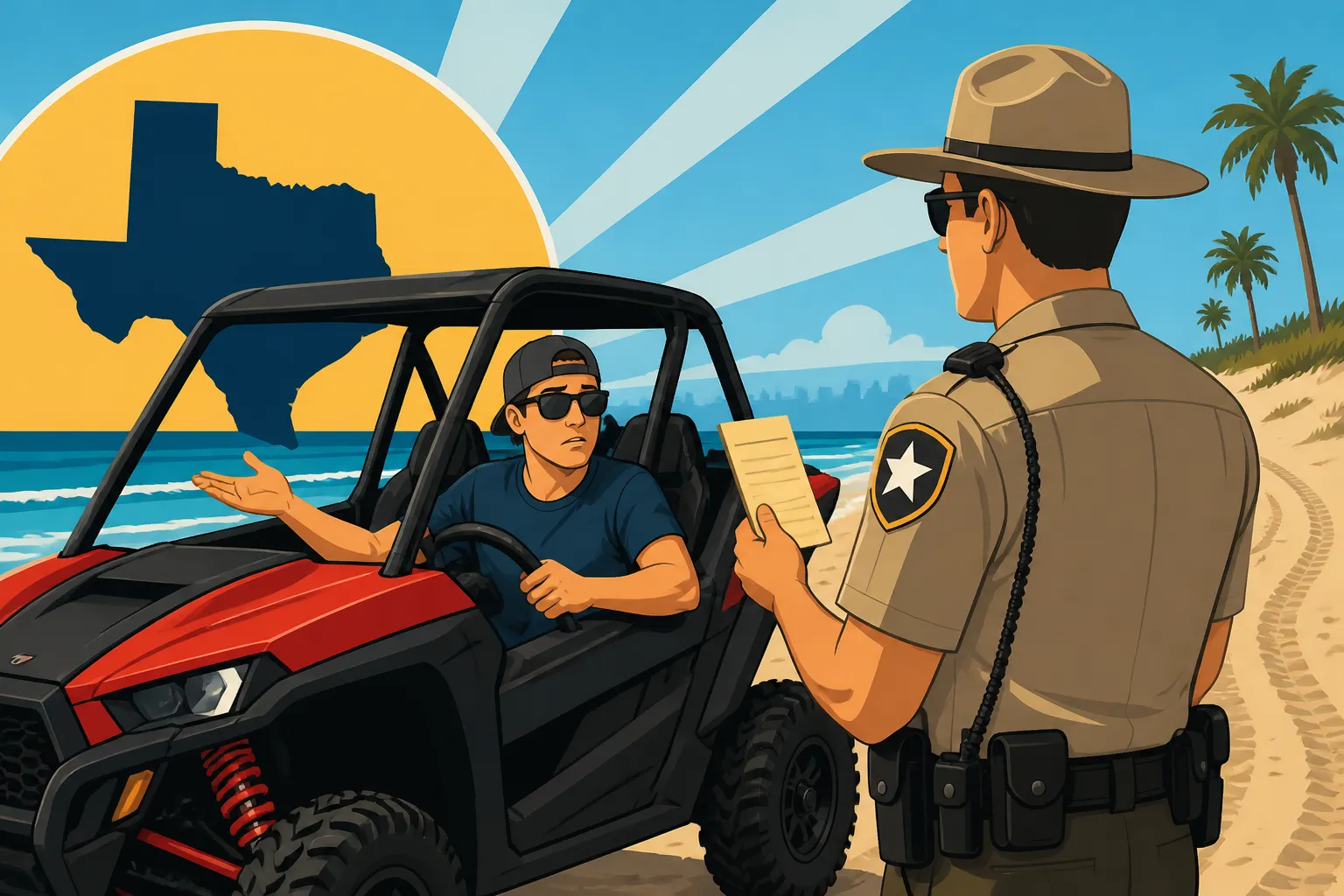
Beyond the monetary fine, there's always the risk of your ATV or UTV being towed and impounded. This is particularly true if you are found riding in a clearly marked "no vehicles" area, if your machine is deemed a significant hazard, or if you are uncooperative with law enforcement. Having your machine impounded adds a whole new layer of expense and hassle. You'll have to pay towing fees, daily storage fees, and potentially administrative release fees, all of which can quickly add up to hundreds of dollars on top of your original fine. This can turn a single beach ride into a financially crippling event.
Imagine you're out enjoying what you thought was a permissible ride, and suddenly, a sheriff's deputy pulls up. You're issued a citation, and then the tow truck arrives. You're left standing on the beach, watching your prized machine being loaded up, and now you have to figure out how to get back home, not to mention how to retrieve your ATV from impoundment, which often requires clearing all fines and fees first. It's a frustrating, embarrassing, and costly experience that can sour your entire perception of riding.
Other Potential Charges: Alcohol, Reckless Operation, and More
It's also important to remember that riding an ATV or UTV, especially in areas where it's already restricted, can open the door to other charges. If you're consuming alcohol while riding, or are found to be intoxicated, you could face charges for driving while intoxicated (DWI) even on an OHV, depending on the specific circumstances and location. [Texas DWI Rules for ATV Riders] Reckless operation, causing damage to property, or disturbing wildlife could also lead to additional, more severe citations or even criminal charges.
The officer has discretion, and if you're riding in a dangerous manner, ignoring commands, or behaving disrespectfully, they might be less lenient in how they issue citations. A simple beach riding violation could quickly multiply into several different offenses, each with its own fines and consequences. Always be polite, cooperative, and know your rights, but also know that your actions can have significant repercussions.
Avoiding a Beach Riding Ticket: Practical Steps and Alternative Adventures
The best way to deal with a beach riding ticket is to never get one in the first place. This requires proactive research, adherence to the rules, and a willingness to explore legal, designated riding areas instead of trying to push the boundaries on the coast.
Do Your Homework: Research Local Ordinances Meticulously
Before you ever put your ATV or UTV on a trailer heading towards the Texas Gulf Coast, make it your mission to find out the specific rules for your destination.
- Official City/County Websites: This is your first and best resource. Look for sections on parks, recreation, beach access, or local ordinances. Many will have FAQs or clear statements regarding vehicle types.
- Local Law Enforcement: Call the non-emergency line of the city police department or county sheriff's office. Explain what type of machine you have and where you intend to ride. They can often provide direct, current information.
- Park Rangers: If you're near a state park or a managed beach access point, contact the park rangers. They are usually very knowledgeable about local regulations and environmental sensitivities.
- Local OHV Forums/Groups: While online forums can offer anecdotal advice, always cross-reference it with official sources. Rules can change, and what one person got away with last year might get you a ticket today.
Remember, laws can change, sometimes without much public fanfare. What was allowed five years ago might be strictly forbidden now. It's your responsibility as a rider to know the rules before you go.
Embrace Designated Riding Areas: The Safer, Saner Option
Texas offers fantastic, legal off-highway vehicle parks and trails where you can ride without the constant worry of a ticket. These parks are designed specifically for ATVs and UTVs, often featuring diverse terrain, from sandy tracks to rocky climbs and muddy trails. Embracing these designated areas not only keeps you on the right side of the law but also provides a much richer and more secure riding experience.
Consider places like Barnwell Mountain Recreation Area in Gilmer, Hidden Falls Adventure Park in Marble Falls, or the Sam Houston National Forest near New Waverly. These locations are purpose-built for off-road fun, and while they might require a [Texas OHV Decal Cost] or a day-use fee, it's a small price to pay for legal, worry-free riding. Many riders outfit their machines with parts from SuperATV to enhance performance and durability specifically for these types of challenging terrains, ensuring their machines can handle anything from mud bogs to rock gardens, far away from beach patrol.
These parks often have specific rules for flags, helmets, and passenger safety, but these are clear and consistent, unlike the often murky waters of beach regulations. [Where to Ride an ATV in Texas] offers a much safer and more predictable environment for riders of all skill levels.
When Driving on the Beach Is Permitted for Other Vehicles
If you're dead set on experiencing the Texas coast, and your ATV or UTV simply isn't allowed, consider bringing a street-legal vehicle like a 4×4 truck or SUV to access designated driving beaches. Many stretches of the Texas coast do allow properly equipped street-legal vehicles. You can still enjoy the sand, sun, and fishing, even if your OHV has to stay on the trailer.
Ensure your street-legal vehicle has the necessary permits (like beach parking passes, if required), and always observe posted speed limits and restricted zones. Even with a street-legal vehicle, there are rules about staying off dunes, avoiding nesting areas, and respecting other beachgoers. The focus here is on enjoying the coastal environment legally and safely, even if it means leaving the specialized OHV at home for that particular trip.
By taking the time to understand the local regulations and choosing designated riding areas, you can ensure your Texas off-road adventures are filled with joy, not tickets. Remember, the goal is always to have a great time and make it home safely, with your machine and your wallet intact.
Disclaimer
This article is for general informational purposes only and does not constitute professional advice. Laws, prices and regulations vary by location and change over time. Consult a qualified professional for guidance on your specific situation.