Riding Double on a Single-Seat Quad
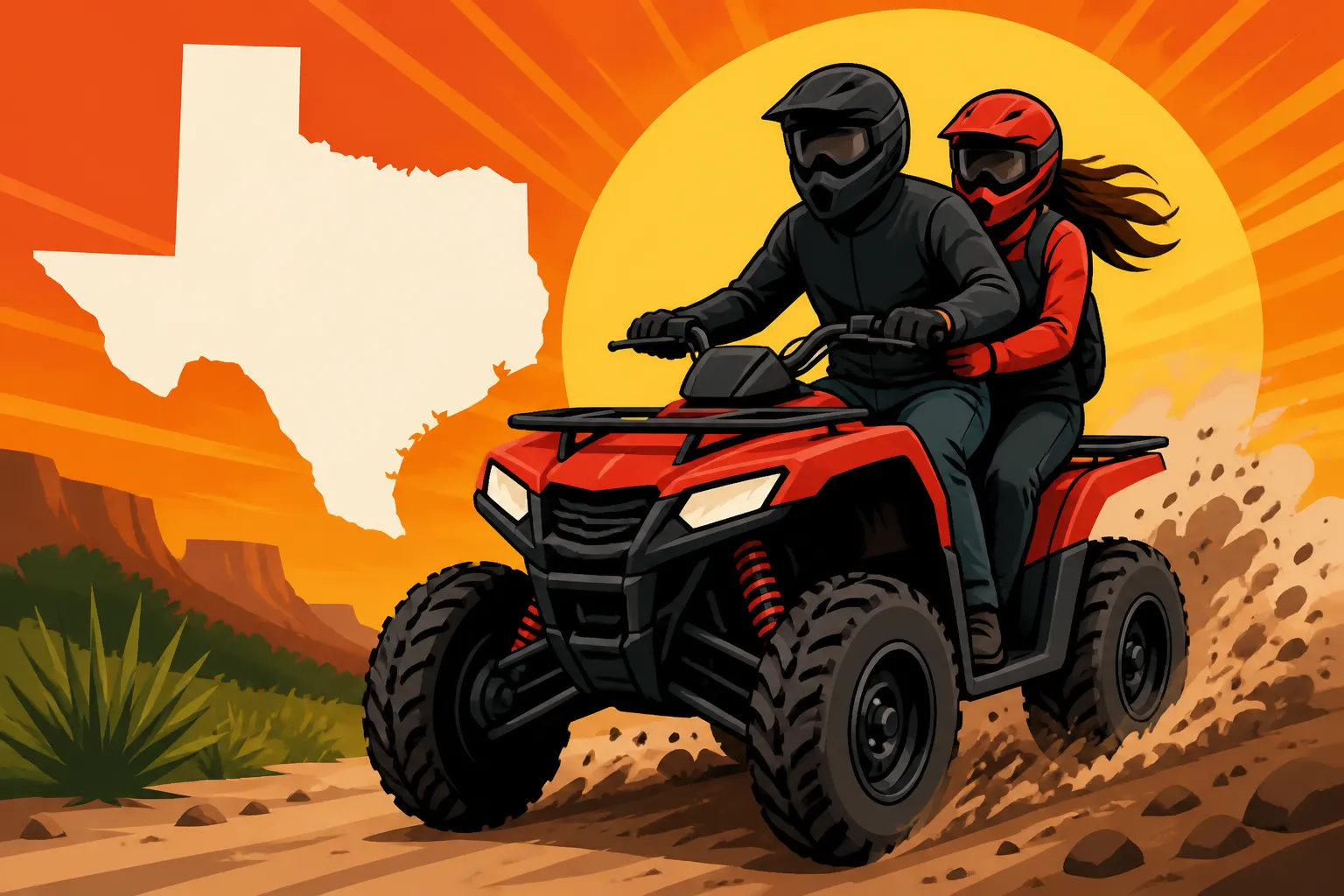
It’s a common scenario: you’ve got your trusty single-seat quad, and a friend, family member, or even a child wants to hop on for a ride. The idea of sharing the fun is totally understandable, but when it comes to riding double on a machine designed for one, the rules and safety concerns in Texas are pretty clear-cut, and honestly, a bit of a buzzkill for those spontaneous shared adventures. This guide will walk you through exactly why putting two people on a single-seat ATV is generally discouraged, what Texas law has to say about it, and safer alternatives for enjoying the trails with company.
Understanding Texas Law on ATV Passengers
When it comes to off-highway vehicles (OHVs) in Texas, the law prioritizes safety, and a big part of that is ensuring vehicles are used as they were intended. For ATVs, specifically, this often means adhering to the manufacturer's design regarding passenger capacity. You might assume that if there's enough room, or if someone can just squeeze on, it's fine. But the legal framework, and more importantly, the engineering behind these machines, tells a different story.
Manufacturer's Intent and Passenger Seating
Texas law, like that in many other states, doesn't explicitly lay out a detailed "thou shalt not carry a passenger on a single-seat ATV" clause in every single line item. However, it strongly relies on the manufacturer's design and recommendations. An all-terrain vehicle is engineered with a specific weight distribution and balance in mind, calibrated for a single rider. This design principle extends to the seating. If your ATV has a saddle-style seat that's clearly shaped and sized for one person, with foot pegs only for that rider, then it's a single-seat machine. Attempting to carry a passenger on such a setup instantly puts you at odds with the vehicle's intended use and design limits. [Texas Passenger Rules on an ATV] are pretty straightforward on this point, focusing on what the machine was built to do.
Imagine trying to drive a compact sports car with four people crammed into the two front seats – it’s not only uncomfortable but also unsafe and compromises the vehicle’s handling. The same principle applies here. When a machine is designated by the manufacturer as "single-rider," it means just that. Adding a second person, even a small child, changes the center of gravity, affects steering and braking, and puts undue stress on components not designed for the extra load. This isn't just about a potential ticket; it's about the fundamental safety of everyone involved.
Public Land Rules and Enforcement
While private land might have more lenient (or non-existent) enforcement of passenger rules, public riding areas in Texas, whether they are state parks, national forests, or local OHV parks, are much stricter. Rangers and park staff are typically well-versed in OHV safety regulations and will observe how vehicles are being operated. If you roll up to Barnwell Mountain Recreation Area or Hidden Falls Adventure Park with a passenger perched precariously on your single-seat quad, you're likely to be stopped.
These parks often have explicit rules prohibiting more riders than the manufacturer specifies. Violating these rules can lead to being asked to leave the park, or even a citation. The goal of these rules isn't to be killjoys, but to prevent accidents. A park might also have its own specific guidelines regarding [Texas Rules for Riding on Public Land], which will always reinforce safe operation according to manufacturer specifications. They want everyone to have a good time and go home safely, and riding double on a single-seat quad dramatically increases the risk of serious injury in the event of a roll-over or sudden stop.
The Serious Risks of Riding Double on a Single-Seat ATV
Beyond the legal implications and park rules, the most compelling reason to avoid riding double on a single-seat ATV boils down to pure physics and safety. These aren't toys; they are powerful machines, and their design dictates how they should be operated for maximum safety and control. Ignoring these design principles can lead to catastrophic consequences.
Compromised Stability and Handling
ATVs are designed to be ridden actively, meaning the rider shifts their weight constantly to control the machine through turns, over bumps, and on inclines. This active riding style is crucial for maintaining balance and preventing rollovers, especially on uneven terrain or during sudden maneuvers. When a second person is added, particularly on a machine built for one, this dynamic is completely undermined.
The extra weight, especially if it's not positioned correctly or cannot shift effectively with the driver, throws off the ATV's carefully engineered center of gravity. What might feel like a minor shift on a two-seater can become a critical imbalance on a single-seater. Turning corners becomes harder, as the ATV wants to push straight or tip over. Climbing hills can lead to the front end lifting too easily, or conversely, the rear losing traction. Descending can become terrifyingly unstable. The driver's ability to react quickly and shift their weight is severely hampered by the passenger, who often acts as dead weight, or worse, shifts their weight in opposition to the driver's intentions. It's a recipe for loss of control, and often, a rollover accident.
Increased Braking Distance and Reduced Control
Another critical safety concern when riding double is the impact on braking and overall control. ATVs, even smaller ones, can generate significant speed, and the ability to stop quickly and safely is paramount. The braking system, suspension, and tires are all designed for a maximum weight capacity, usually stated in the owner's manual. When you add a second person, you often exceed this capacity.
Exceeding the weight limit means the brakes have to work much harder to stop the increased mass, leading to longer stopping distances. In an emergency situation where split-second braking is needed, those extra few feet can be the difference between a near miss and a serious collision. Furthermore, the suspension might bottom out more easily, leading to a harsher ride and less control over rough terrain. The tires, designed for a certain load and grip, might also struggle to maintain traction. A quick maneuver to avoid an obstacle becomes far more difficult, as the machine feels sluggish, heavy, and unresponsive. This directly ties into the broader topic of [Texas Safety Apparel Rules for ATV Riders], as the risk of injury is so much higher when control is compromised, making proper gear even more critical.
Safer Alternatives for Carrying Passengers in Texas
So, if riding double on a single-seat quad is out, what are your options for sharing the off-road experience in Texas? Thankfully, the industry has evolved to provide purpose-built solutions for just this scenario, ensuring you can enjoy the trails with friends and family safely and legally.
Manufacturer-Designed Two-Up ATVs
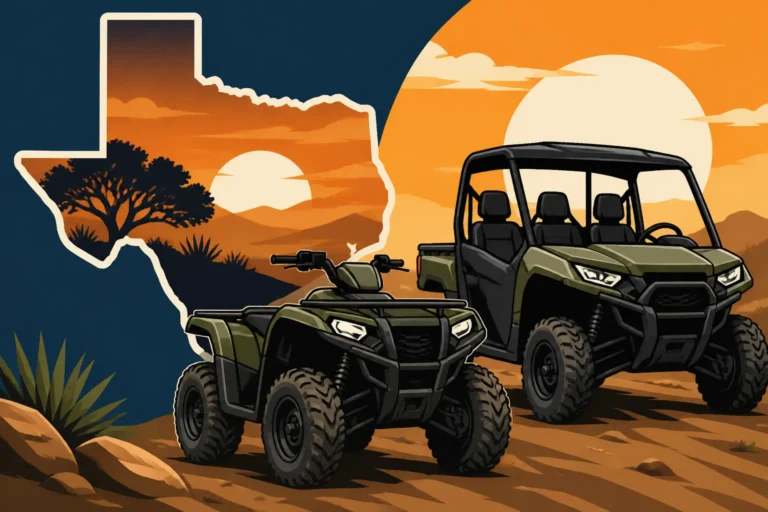
The simplest solution for carrying a passenger on an ATV is to purchase a machine specifically designed for it. Many manufacturers produce "two-up" or "2-rider" ATVs that feature an extended seat, proper passenger handholds, and separate footrests for the passenger. These machines are built with a longer wheelbase, heavier-duty suspension, and a chassis designed to safely accommodate the weight and dynamics of two riders.
When considering a two-up ATV, always look for models explicitly marketed for two riders. These are engineered from the ground up to handle the additional weight and altered center of gravity. For instance, a Polaris Sportsman Touring model or a Can-Am Outlander MAX are examples of ATVs designed for two. They offer a much more stable and comfortable experience for both the driver and passenger, significantly reducing the risks associated with riding double on a single-seat machine. This is a far cry from trying to make a single-seat quad work, which, no matter what aftermarket seat you add, cannot fundamentally alter the frame and suspension geometry.
Utility Task Vehicles UTVs
For families or groups wanting to ride together, Utility Task Vehicles (UTVs), also known as side-by-sides or ROVs (Recreational Off-Highway Vehicles), are an increasingly popular and often superior choice. UTVs are specifically designed to carry multiple passengers, typically in bucket seats with seatbelts, and often include a roll cage for enhanced protection. [Texas Rules for a Child in a Side-by-Side] generally require them to be properly secured with seatbelts, which highlights the safety focus of these machines.
UTVs come in various configurations, from two-seaters to four-seaters and even six-seaters, making them ideal for group outings. Their wider stance and lower center of gravity often provide much greater stability than an ATV, especially when navigating diverse terrain. Many UTVs also offer impressive cargo capacity, allowing you to bring along coolers, gear, or even tools for a day on the ranch. [ROVs and UTVs Under the Texas Definition] are clearly distinct from ATVs, and for good reason: they offer a fundamentally different, and often safer, way to enjoy the trails with company. Companies like SuperATV specialize in a vast array of accessories for UTVs, from windshields and roofs to cargo racks and lift kits, enhancing their utility and comfort for all occupants.
Here's a quick comparison of passenger-carrying options:
| Feature | Single-Seat ATV (Not for Passengers) | Two-Up ATV (Manufacturer-Designed) | UTV / Side-by-Side (Multi-Passenger) |
|---|---|---|---|
| Passenger Capacity | 1 (Driver Only) | 2 (Driver + 1 Passenger) | 2, 3, 4, or 6 (Driver + Passengers) |
| Seating Type | Saddle, designed for active riding | Extended saddle, dedicated passenger section | Bucket seats, bench seats |
| Footrests | Driver only | Dedicated for driver & passenger | Dedicated for all occupants |
| Handholds | Driver grips handlebars | Driver grips handlebars, passenger dedicated handholds | Steering wheel, grab handles for passengers |
| Safety Features | Rider active weight shift, helmet | Rider active weight shift, helmet, engineered stability | Seatbelts, roll cage, often doors, helmet optional on some public land (check specific rules) |
| Stability (with pass.) | Severely compromised | Designed for two | High, designed for multiple occupants |
| Control (with pass.) | Greatly reduced | Maintained for two | Excellent |
| Legal to Carry Pass. | No (on public land) | Yes | Yes |
When you realize a single-seat quad isn't the right tool for sharing the off-road experience, it's worth exploring these purpose-built alternatives. They might represent a larger initial investment, but the peace of mind knowing you're riding safely and legally with your loved ones is truly priceless. Brands like SuperATV also offer a wide range of parts and accessories for these larger, multi-passenger machines, allowing you to customize them for your specific needs, whether it's for ranch work or trail adventures.
Why Manufacturers Design Single-Seat Quads for One
It’s easy to look at a single-seat ATV and think, "there's clearly enough room for a second person, even if it's a bit snug." But this overlooks the deep engineering and rigorous testing that goes into making these machines safe for their intended use. The design isn't arbitrary; it's a careful balance of power, weight, and handling characteristics optimized for a single, active rider.
Engineering for Active Rider Control
A fundamental difference between a single-seat ATV and a multi-passenger vehicle is how the rider interacts with the machine. On a single-seat ATV, the rider is an integral part of the suspension and steering system. You lean into turns, shift your weight forward to climb, and back to descend. Your body movements are constantly working in concert with the machine to maintain balance and control, especially on challenging terrain. This "active riding" is not just a preference; it's a requirement for safe operation.
When a second person sits on a single-seat quad, they become a passive passenger. They cannot actively participate in the weight shifts necessary for control. In fact, their presence restricts the driver's ability to shift their own weight effectively. The machine's center of gravity shifts, often much higher and further back than intended, making it prone to tipping. This is especially true if the passenger instinctively leans the wrong way or reacts nervously to terrain changes. The manufacturer designs that single saddle seat and handlebar position to allow for maximum freedom of movement for the driver, ensuring they can pilot the machine safely. Anything that compromises that movement, like a passenger, directly impacts the ATV's inherent stability.
Weight Distribution and Suspension Load Limits
Every ATV has a specified Gross Vehicle Weight Rating (GVWR) and a maximum load capacity. These figures are not just suggestions; they are critical safety limits determined by the strength of the frame, the capacity of the suspension components, and the stopping power of the brakes. A single-seat ATV's suspension, for instance, is tuned for the weight of one adult rider plus a small amount of gear. [What a Texas ATV Costs to Own in Texas] includes understanding these limitations as part of the total cost.
When you add a second person, you often push the machine beyond its design limits. The suspension might sag excessively, reducing ground clearance and increasing the risk of bottoming out or damaging components. The tires, designed for a specific load, may deform more, reducing stability and increasing wear. Even the chassis itself can be stressed in ways it wasn't designed for, potentially leading to frame fatigue over time. While the immediate danger is a loss of control, prolonged overloading can contribute to component failure, which is a safety hazard in itself. The design of a single-seat quad, down to every bolt and weld, is predicated on the assumption of a single operator. To ignore that is to invite instability and risk.
Disclaimer
This article is for general informational purposes only and does not constitute professional advice. Laws, prices and regulations vary by location and change over time. Consult a qualified professional for guidance on your specific situation.