Why Rio Bravo Is Motorcycles Only
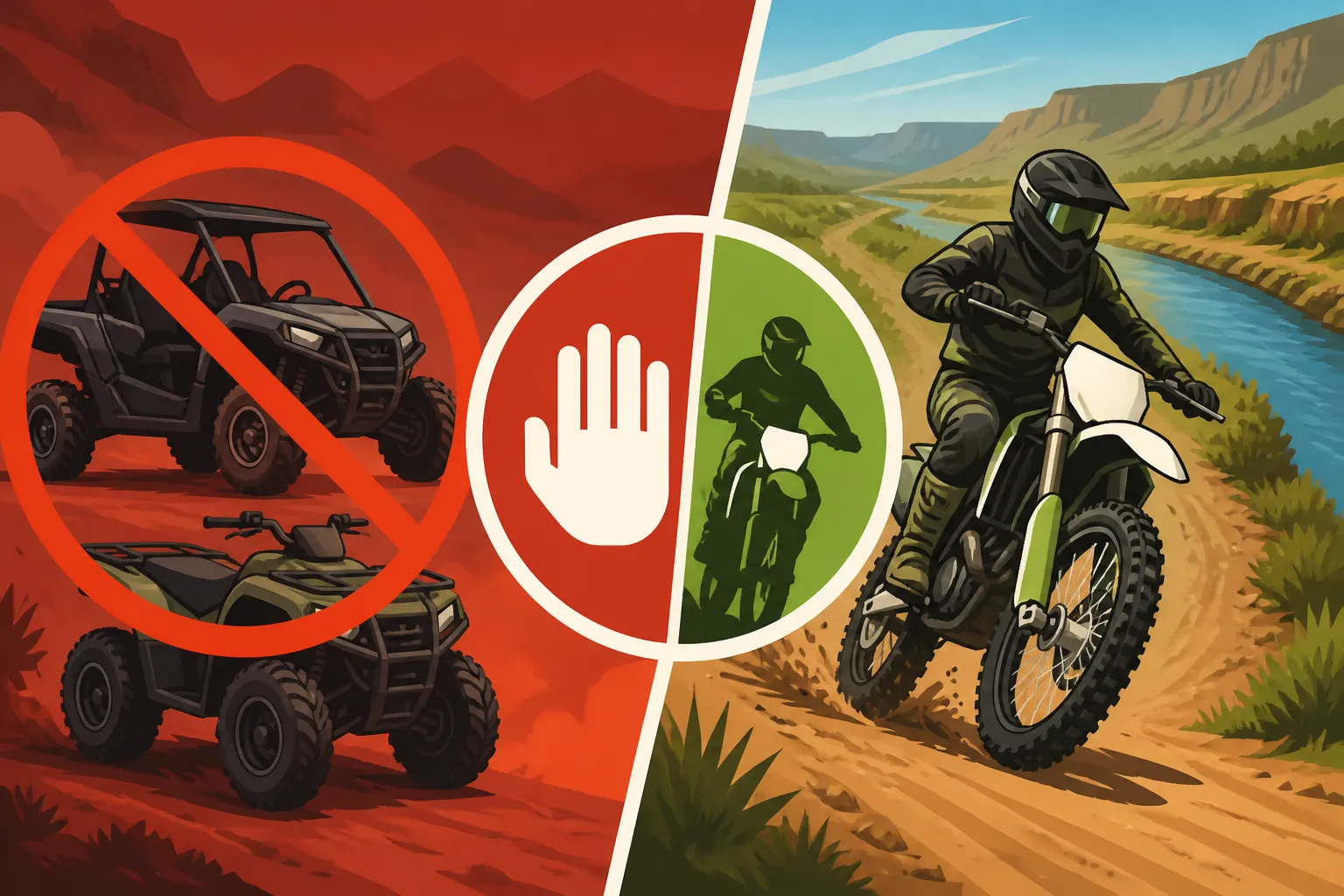
Rio Bravo is a motorcycle-focused motocross park, so an ATV or side-by-side owner can arrive with a trailer full of gear and still be turned away. The key point is that this is a park-use restriction, not a blanket Texas rule against riding ATVs. This guide explains why the distinction matters and how to find a suitable place to ride instead.
Why Rio Bravo Is Motorcycles Only
The park is built around motorcycle riding
Rio Bravo is known as a motocross facility, where the riding experience is organized around dirt bikes and motorcycle-style courses. Motocross tracks typically include features such as jumps, berms, turns, and rhythm sections designed for motorcycles. A quad or UTV handles those features differently, and a larger machine may need more room to turn or a different track layout.
That mismatch can affect more than convenience. If a track is designed for one type of vehicle, allowing another type could change how riders share the course, how traffic flows, and what safety risks operators need to manage. A policy limiting riding to motorcycles lets the park set its facilities, procedures, and expectations around a specific kind of machine.
It’s easy to assume that any off-road park will welcome every off-road vehicle. In practice, “off-road park” describes a broad category, not a promise that motorcycles, ATVs, and UTVs are all allowed at every property. A park can specialize in one vehicle type and exclude others.
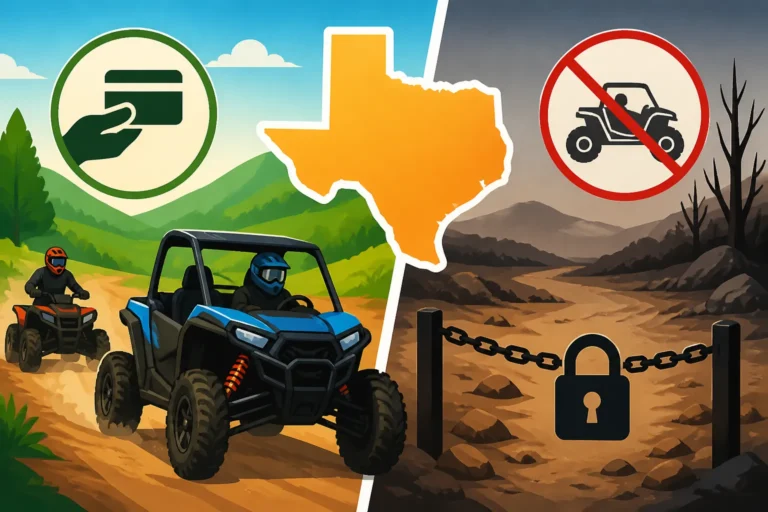
The restriction is a venue policy, not a Texas-wide ATV ban
A private riding facility can set rules about which vehicles may use its property. That is different from a state law that applies throughout Texas. Rio Bravo being motorcycles only does not mean ATVs and UTVs are prohibited from all Texas riding areas, nor does it determine what you can ride on your own land or on another park’s trails.
The distinction matters if you’re looking for a legal place to ride. You need to check both the park’s vehicle policy and the rules that apply to the land itself. A location may allow quads but require a decal, permit, safety certificate, or other steps. A public-land trail may have width or vehicle-class restrictions that don’t apply at a private park.
For broader options, start with Texas OHV Parks by Region or Best Places to Ride an ATV in Texas. Those overviews can help you compare areas, but always confirm a specific park’s current rules before loading up. Policies, schedules, and allowed vehicle types can change.
Do not assume a modification will get a quad admitted
Adding lights, mirrors, a windshield, or other accessories won’t turn a motorcycle-only track into an ATV facility. Those changes might affect how a vehicle is equipped, but they don’t override a park’s access policy. The same goes for calling a machine a “trail quad” or describing a UTV as a recreational vehicle: the operator decides which machines the facility accepts.
If the rules aren’t obvious, ask the park directly before you travel. Be specific about your machine: say whether it’s an ATV or UTV, provide its general size or width if relevant, and ask whether it’s permitted on the property and on the particular track or riding area you plan to use. A vague question like “Do you allow off-road vehicles?” may not get you a clear answer.
What to Check Before You Tow to a Riding Area
Confirm vehicle type, access, and schedule
Before setting out, verify that the location welcomes your exact type of machine. Some facilities allow ATVs but not UTVs; others may have separate areas, special event days, or restrictions tied to vehicle size. Even where a machine is allowed, a particular track or route might be off limits.
A quick pre-trip checklist can prevent a wasted drive:
- Confirm that the park permits your vehicle type.
- Ask whether any size, width, age, or equipment restrictions apply.
- Check the operating schedule and whether the area is open to individual riders on your planned day.
- Ask about required waivers, permits, decals, safety equipment, and rider qualifications.
- Confirm whether the park has separate rules for children, passengers, rentals, or groups.
- Save the park’s contact details and directions before you leave.
This is especially worthwhile if your ride depends on a particular machine. Imagine driving from Houston with a side-by-side, then discovering that the venue accepts dirt bikes and quads but not UTVs. A short call beforehand can spare you the fuel, loading, and disappointment.
Understand land rules and permit requirements
A park’s admission policy is only one piece of the puzzle. Riding on public land can involve separate requirements, and a permit or decal that applies in one place may not apply in another. Read [Texas Rules for Riding Public Land] and The Texas OHV Decal Explained if you’re comparing public trails with private parks.
Don’t assume that a Texas OHV decal guarantees entry everywhere. It doesn’t replace a land manager’s rules, and it won’t make a prohibited vehicle eligible to ride at a motorcycle-only facility. Likewise, a park’s own admission or waiver process doesn’t necessarily cover every requirement that may apply on public land.
For a first outing at a new venue, write down the requirements you’ve confirmed. That simple habit helps when you’re juggling helmets, tie-downs, fuel, paperwork, and a trailer. It also gives everyone in the riding group the same expectations before the trip starts.
Use maps for planning, then verify with the operator
Mapping tools can help you find candidate riding areas and plan the drive, but map results don’t establish that a particular vehicle is permitted. You can use onX Offroad to explore possible routes and riding areas, then check the park’s own information or contact the operator to confirm access. Treat map research as a starting point, not permission to ride.
This is particularly useful around a large metro area, where a search may turn up motocross tracks, private OHV parks, public trails, and general outdoor recreation sites together. Those categories can look similar on a map even though their vehicle rules are completely different. When you’re filtering options, the essential question is not just “Is this an off-road area?” but “Does it accept my machine, and may I ride it there on my chosen date?”
If you’re comparing places near the metro area, Texas OHV Parks Near Houston can help narrow your search. Then verify the vehicle policy directly. onX Offroad may help with route planning between locations, but the park or land manager remains the authority on admission and access.
Better Options for ATV and UTV Riders
Look for a facility that names your vehicle type
The easiest way to avoid a repeat of the Rio Bravo problem is to look for a riding location that explicitly lists ATVs or UTVs among its permitted machines. A park that welcomes “OHVs” may still have exclusions, so check the details rather than relying on a broad label.
Use a comparison like this when deciding where to call:
| What to check | Why it matters |
|---|---|
| ATV and UTV access | Some facilities allow one vehicle type but exclude the other |
| Width or size limits | Narrow trails may not accommodate wider machines |
| Riding area type | Motocross tracks, trails, and open riding areas have different demands |
| Permits and decals | A venue may require documentation beyond admission |
| Rider and passenger rules | Requirements can vary by machine and rider age |
| Hours and event schedule | Public riding access may differ from event days |
| Equipment requirements | Helmets, flags, lighting, or other gear may be required |
If you’re new to the area, Texas OHV Parks for Beginners can be a useful starting point for finding a place that better suits your experience level. If you have a wide side-by-side, pay particular attention to access and width limits; Texas Rules for a Machine Over 50 Inches explains why size can affect where a machine may ride.
Match the terrain to your machine
Even when a park allows your vehicle, the layout may not be a good fit for it. A tight, technical trail can be frustrating in a long UTV. A steep, rocky route may challenge a newer rider on a small quad. An open motocross course may be intended for motorcycles, while a trail system may have routes designed for four-wheelers.
Before choosing a park, consider who is riding, what they’re comfortable with, and how the machine handles. A family with a new youth quad may want a different setting from a group taking high-clearance UTVs onto rocky terrain. Look for trail descriptions and ask whether the park has beginner-friendly routes or areas appropriate for your machine.
It also helps to review Texas Trail Difficulty by Park. Difficulty descriptions can give you a better sense of whether a destination matches your group, but they don’t replace checking vehicle access. A trail can be beginner-friendly and still be closed to UTVs.
Rentals don’t automatically solve an access mismatch
Renting a machine can make sense if you don’t own the vehicle a particular park allows. But don’t assume every rental business offers ATVs or UTVs, or that a rented machine is allowed everywhere. Confirm what the business rents, where you’re permitted to ride it, and what safety or paperwork requirements apply. Texas Rules for a Rented Machine is a helpful place to start.
A rental facility may also limit riders by age, require a waiver, or impose rules for passengers. If you’re planning a family outing, ask about those details before booking and make sure the vehicle fits the rider. For a broader look at facilities that offer rentals, see Texas OHV Parks That Rent Machines.
onX Offroad can be useful while comparing candidate areas and planning a route, especially when you’re coordinating multiple stops. Still, check the park’s direct guidance for machine eligibility, operating conditions, and any special event restrictions. A route showing up in a mapping tool is not confirmation that a UTV or ATV may use it.
A Simple Plan for Avoiding a Wasted Trip
Make the vehicle the first filter
When searching for riding areas, start with your machine rather than with the closest park. Search specifically for ATV or UTV access, then rule out venues that are motorcycle-only. If you’re traveling with more than one vehicle type, confirm that the whole group can ride together; a park that accepts quads may still have different rules for side-by-sides.
Next, check whether your machine fits the area’s trails. Width, turning room, ground clearance, and rider experience all matter. If you’re unsure, describe the machine to the operator rather than asking only whether “ATVs” are allowed. In everyday conversation, people sometimes use ATV as a catch-all term, but parks may distinguish between a quad and a side-by-side.
Confirm the details close to your visit
Once you have a likely destination, verify the rules and schedule before you leave. Ask about machine eligibility, trail access, required gear, permits, and whether any temporary closures or event arrangements affect your plans. Keep the answer with your trip notes so you’re not relying on memory when you’re loading the trailer.
This small bit of preparation makes the ride easier for everyone. You can pack the correct equipment, set expectations with your group, and avoid discovering at the gate that your machine doesn’t fit the venue. Rio Bravo’s motorcycles-only policy is a useful reminder: an off-road setting is not automatically an all-vehicle riding area.
Disclaimer
This article is for general informational purposes only and does not constitute professional advice. Laws, prices and regulations vary by location and change over time. Consult a qualified professional for guidance on your specific situation.