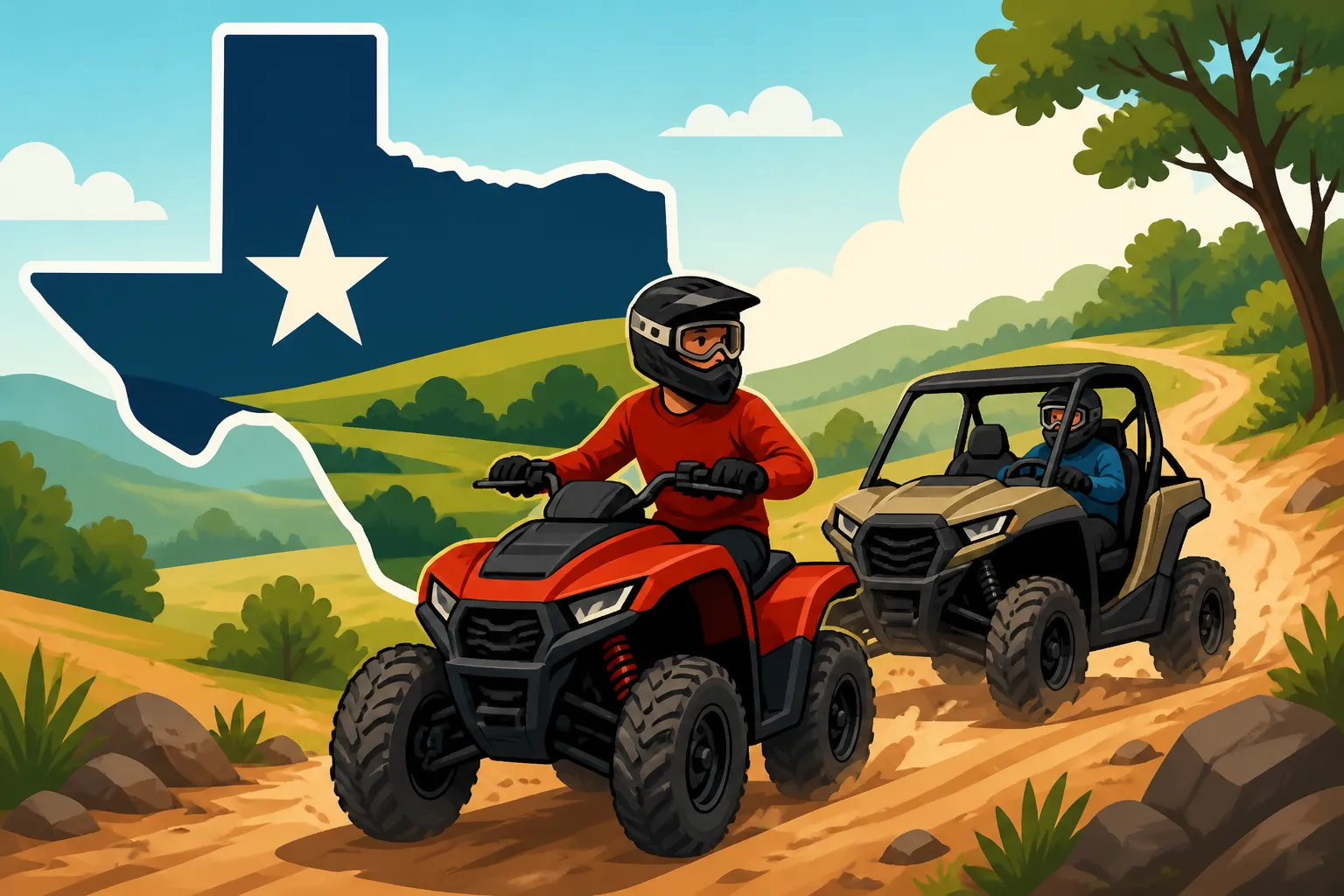
Texas OHV Parks for Beginners
A first Texas ATV or UTV ride can feel intimidating when a park map is full of unfamiliar trail names and difficulty ratings. The best beginner spot is not necessarily the flattest park; it is one where you can choose manageable routes, learn the terrain at your own pace, and check the rules before unloading.
Beginner-friendly Texas OHV parks to consider
Texas parks vary widely, and a “beginner-friendly” label does not mean every trail is easy. A park may have a few forgiving routes alongside steep climbs, rocks, mud, or narrow turns. Start by choosing an area that offers options, then confirm which trails suit your machine and experience.
| Riding area | Location | What may suit a beginner | What to check before going |
|---|---|---|---|
| Northwest OHV Park | Near Bridgeport in Wise County | A convenient option for riders in North Texas who want an organized riding area | Current trail access, machine rules, and conditions |
| Hidden Falls Adventure Park | Near Marble Falls in the Hill Country | A large area where riders can look for routes that match their comfort level | Trail difficulty, route access, and whether recent rain has changed conditions |
| Barnwell Mountain Recreation Area | Near Gilmer in East Texas | A varied trail system for riders who want to build skills gradually | Rocky or steep sections, current closures, and park requirements |
| Sam Houston National Forest OHV Trail | Near New Waverly | A marked public-land trail experience for riders whose machines meet the trail limits | Width restrictions, trail status, and separate access requirements |
Northwest OHV Park near Bridgeport
Northwest OHV Park is worth considering if you live around Dallas–Fort Worth or want to avoid making your first ride a long trip into unfamiliar terrain. As at any OHV park, the key is not to assume that the nearest trail is the easiest one. Look at the current map and ask park staff which routes are appropriate for a new rider and the type of vehicle you brought.
Before unloading, check whether the park has restrictions for ATVs, side-by-sides, motorcycles, or specific vehicle sizes. A route that feels comfortable on a narrow quad may be a poor choice for a wider UTV. If you are riding with someone more experienced, agree to regroup at trail junctions rather than having the faster rider disappear around a bend.
For more location details and planning considerations, see [Northwest OHV Park in Texas's Wise County]. Use a current park map, and do not treat a trail name or online post as a guarantee that a route is open or easy that day.
Hidden Falls near Marble Falls
Hidden Falls Adventure Park, near Marble Falls in the Hill Country, can work for a beginner who is willing to plan carefully and stay within their ability. Hill Country terrain may bring rocks, uneven ground, and slopes that feel very different from a smooth dirt road. A beginner should choose a route for control and visibility, not for the thrill of seeing how steep a climb looks.
A good first visit can be as simple as exploring a manageable section, taking breaks, and getting familiar with how the machine responds. Avoid following a group onto a route just because they make it look effortless. Their vehicle, tires, experience, and comfort level may be completely different from yours.
Read [Hidden Falls Adventure Park at Marble Falls] before planning a trip, then confirm operating details and trail conditions with the park. Bring a map you can use offline; onX Offroad can help you review routes and keep track of your location, but it should supplement—not replace—posted signs and park directions.
Barnwell Mountain near Gilmer
Barnwell Mountain Recreation Area is a popular East Texas destination with terrain that can challenge new riders. The area’s mix of trails means a beginner should be selective, especially if they are not yet comfortable with rocks, ledges, or changes in elevation. Starting with a conservative route is a better way to enjoy the park than trying to keep up with a more experienced group.
At a junction, pause and check the route information rather than making a quick turn based on what looks fun. If the trail becomes more difficult than expected, do not feel pressured to continue. Turn back when it is safe to do so, and ask for help if the route or conditions make that decision difficult.
Use [Barnwell Mountain Recreation Area] to get oriented, and review [Texas Trail Difficulty by Park] for broader planning ideas. Treat every difficulty description as a guide, not a promise: rain, traffic, erosion, and your machine’s setup can change how a trail feels.
How to choose a trail that matches your experience
Choosing a beginner-friendly park is only half the job. You also need to match the particular route to your experience, machine, passengers, and the conditions that day. It is perfectly reasonable to ride a short, easy section and call that a successful first outing.
Match the route to your machine
A trail suitable for a small ATV may not be a comfortable or safe choice for a full-size side-by-side. Width, turning radius, ground clearance, tires, and passenger setup all affect where you can ride. Do not assume that a UTV can fit through a route simply because the machine is allowed in the park.
Public trails can have additional size limits. For example, sections of the Sam Houston National Forest OHV Trail have a 50-inch width limit. Measure the machine as the rules specify instead of estimating from the seat or body panels. If your vehicle is too wide, do not try to squeeze through or ride outside the marked route. See [Texas's 50-Inch National Forest Width Limit] and [Machines Under 50 Inches for Texas Forest Trails] before choosing that trail.
It can also help to consider how your vehicle handles. A high-powered machine may be capable of more than a new rider should attempt, while a small youth quad may be poorly suited to rough, adult-oriented terrain. If you are still deciding what to buy, [Choosing a First Machine for Texas Trails] offers a useful starting point for thinking about size and intended use.
Use maps and park staff together
A map helps you plan, but it cannot tell you everything about a trail’s current surface or traffic. Ask park staff about recently affected areas, beginner routes, one-way sections, and places where vehicles of different sizes share space. When you arrive, read posted notices and obey signs even if your downloaded map suggests a route continues.
onX Offroad can be useful for reviewing route options and keeping track of where you are, especially when cell service is limited. Download the information you need before leaving home and carry a backup plan, such as a paper map or a screenshot of the park map. Do not rely on a phone screen while moving, and do not use an app to justify entering a closed trail or crossing private property.
If you are visiting a park with several connected routes, choose a simple out-and-back or short loop for the first ride. Tell someone in your group where you plan to go, agree on a meeting point, and make sure everyone knows how to stop safely if the group gets separated.
Prepare for the ride before you reach the trail
A little preparation can prevent the most common first-trip headaches: arriving without required paperwork, discovering the machine does not fit the trail rules, or realizing too late that the weather has changed the terrain.
Check permits, decals, and park rules
Different riding areas can have different access requirements. A private park may have its own entry process and safety rules, while public land can involve separate permits, fees, machine limits, or trail-status notices. Do not assume one sticker or pass covers every place you plan to ride.
The Texas OHV decal is relevant at certain public riding areas, but its applicability depends on the land and circumstances. Review [Where a Texas OHV Decal Is Required] and confirm the requirements for the specific destination. For a national forest ride, distinguish the OHV decal from any separate day-use or access requirement. Park staff and land managers can clarify which rules apply to the route you intend to use.
Check whether helmets, eye protection, flags, or other safety equipment are required. Also verify rules for passengers and young riders. Requirements can differ by location and machine type, so a helmet or passenger arrangement that is acceptable at one place should not be assumed acceptable everywhere. [Texas Rules for Riding Public Land] is a useful companion when your trip involves public land.
Check weather, trail status, and supplies
Rain can turn a trail that looked easy on a map into a slippery or deeply rutted route. In East Texas, soft ground and mud can be a concern; on rocky Hill Country trails, wet surfaces can reduce traction. After heavy rain, check for closures instead of driving to the gate and hoping for the best. A closure is there to protect riders, trails, and land.
Heat deserves equal attention. Bring more water than you expect to need, plan breaks, and consider riding earlier in the day during hot weather. Carry basic first-aid supplies, a charged phone, and any recovery equipment appropriate to your machine and route. Keep fuel and tools secured, and make sure your vehicle is in sound condition before leaving home.
Before heading out, check [Texas Trails After Heavy Rain] and [Texas Riding in Summer Heat]. If your trip includes a public trail, review [Texas Trail Closures to Check First] as close to departure as possible. onX Offroad may help you organize route information, but it is not a substitute for current closure notices from the land manager.
Ride confidently without pushing beyond your limits
The goal of a first ride is to finish with enough energy and confidence to want to come back. You do not need to tackle the hardest obstacle, ride the longest loop, or keep pace with someone who has years of experience. A deliberate, relaxed day is a good day on the trail.
Set a comfortable pace and communicate
Ride slowly enough to react to loose gravel, blind corners, unexpected dips, and other trail users. Leave space between vehicles so dust and sudden stops do not become a problem. On a group ride, establish simple signals for stopping, turning around, and asking for help before anyone starts the engine.
If a hill or obstacle makes you uneasy, stop somewhere safe and assess it. Look at the approach, surface, and exit. Ask an experienced rider for guidance, but make your own decision about whether you are comfortable continuing. There is no embarrassment in turning around. A trail becomes more difficult when riders feel rushed or try to copy someone else’s line without understanding the terrain.
Keep passengers in mind, too. A passenger can change the vehicle’s balance and handling. Use only seating designed for passengers, follow the vehicle manufacturer’s instructions, and confirm the park permits that setup. New riders should avoid carrying a passenger while they are still learning basic control.
Make the first trip a learning day
Think of the first visit as a chance to learn how the park works. Notice how trail markers are placed, where routes intersect, how quickly terrain changes, and how your machine responds to braking and steering. Take breaks to check your route and your group, not just when someone is exhausted.
After the ride, write down what worked and what you would change. Perhaps you needed more water, a better map, or a less ambitious route. Maybe your machine handled a particular surface well but struggled on loose rock. Those observations make the next trip easier to plan and help you build experience without taking unnecessary risks.
For ideas on selecting a destination by location, [Texas OHV Parks by Region] can help narrow the options. If you are choosing between the two well-known parks in East Texas and the Hill Country, [Barnwell Mountain or Hidden Falls for a Weekend] can help frame the comparison. Whichever park you choose, follow its current rules, stay on authorized routes, and let your comfort level set the pace.
Disclaimer
This article is for general informational purposes only and does not constitute professional advice. Laws, prices and regulations vary by location and change over time. Consult a qualified professional for guidance on your specific situation.