Taking a Course Under an Instructor
Taking a Course Under an Instructor in Texas means completing practical ATV training with a qualified instructor, not just watching a video. If you need a safety certificate or supervise a young rider, the key is knowing what the course covers, how to prepare, and what the certificate does—and does not—allow you to do.
What the instructor-led course is for
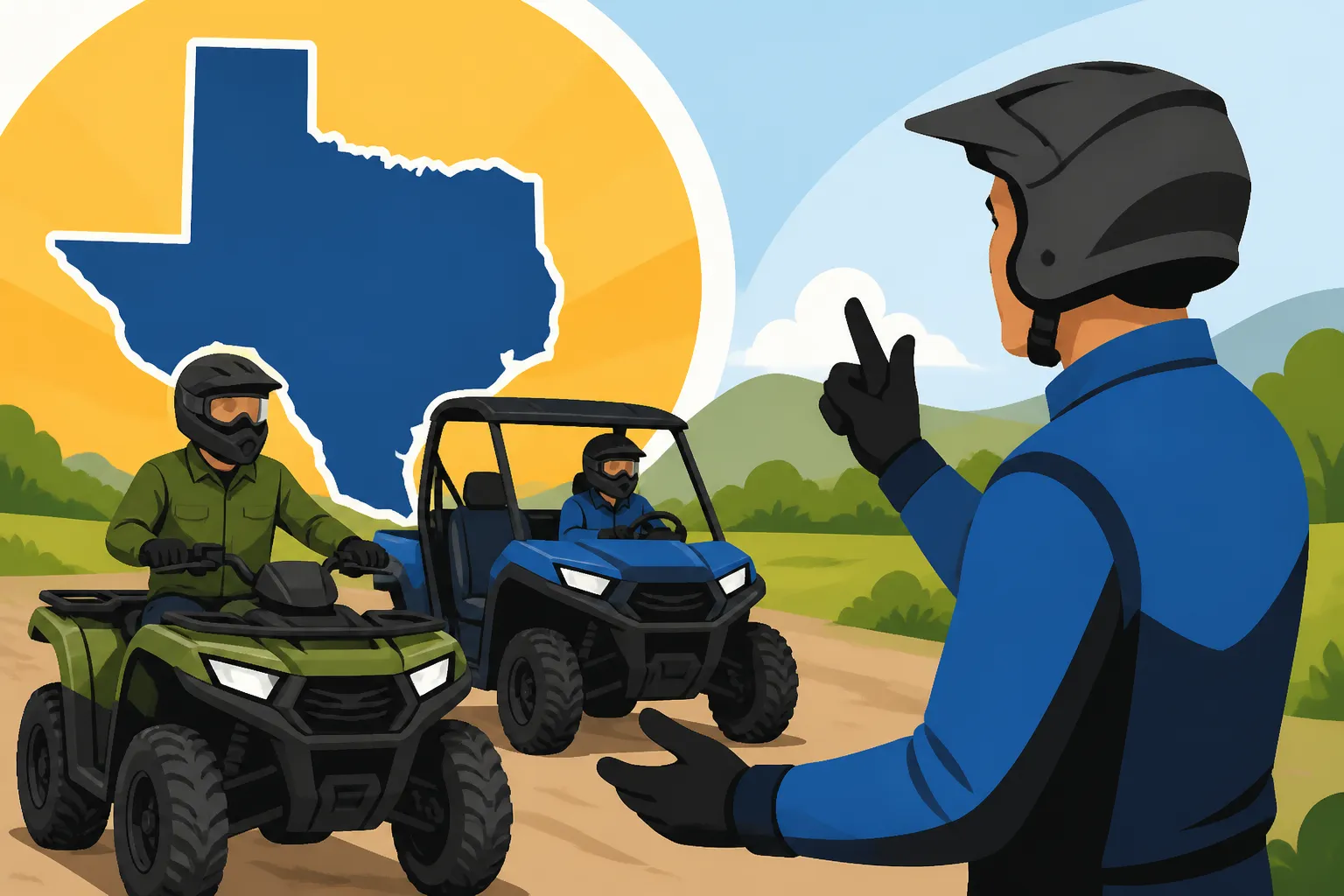
An instructor-led ATV RiderCourse combines safety instruction with practical riding skills. It is intended to help riders handle a machine responsibly, understand basic operating risks, and make safer decisions on a trail. It is different from a general online safety video: the course includes instruction and practice in person.
In Texas, ATV safety certificates and youth supervision requirements are especially relevant when riding in places where safety training is required, including certain public riding areas. The exact requirements can depend on the rider’s age and where the machine will be used. Before booking, confirm the current course and certificate requirements with the Texas Department of Licensing and Regulation, the course provider, and the land manager for your destination.
An instructor-led course may be useful if you:
- Need to earn a certificate for riding or supervising a young rider.
- Have limited experience and want coached practice before riding independently.
- Want to understand safe starting, stopping, turning, and braking.
- Are responsible for teaching a child or other new rider.
- Need to know how Texas treats certificates issued by another state.
The certificate is evidence that the holder completed the applicable safety training. It is not a license to ride anywhere, permission to use a closed trail, or a substitute for a park’s own rules. A rider still needs to follow applicable requirements for the machine, location, and activity. For the state’s broader certificate rules, see The Texas ATV Safety Certificate Explained.
Why hands-on instruction matters
ATVs can respond differently from a passenger vehicle, and riders need to learn how body position and speed affect control. A course gives students a chance to practice basic maneuvers in a controlled setting and get corrections from an instructor. That can be more useful than trying to learn solely from a manual or by following another rider.
The instructor can also explain why a technique matters, not just demonstrate it. For example, a turn that feels manageable on a flat practice area may become unsafe at higher speed, on loose ground, or with a different machine. Training can help students recognize those limits before they encounter them on a trail.
The course does not remove every risk. Conditions change, and a skill practiced on one surface may not transfer perfectly to another. A new rider should continue to ride cautiously, use appropriate protective gear, and choose terrain suited to their ability.
Who should enroll and what to check first
Before registering, make sure the class is appropriate for the rider and the certificate is the kind you need. A course provider can tell you its enrollment requirements, equipment expectations, schedule, and how it records successful completion. The state agency or the riding area can clarify whether that certificate meets a particular requirement.
Age matters. Texas does not issue the ATV safety certificate to children below the minimum age for certification. A child who cannot earn a certificate may still be able to ride under the applicable direct-supervision rules, but an adult’s certificate does not turn the child into a certified rider. Read What Texas Requires of Riders Under 14 and Texas Rules for Riders Under 14 before planning a ride with a young person.
| Situation | What to confirm | Practical point |
|---|---|---|
| Adult taking a course | Eligibility, class format, and certificate process | Ask whether the course is the recognized hands-on RiderCourse |
| Rider who is 14 or older | Whether certification is required for the planned location | Do not assume a certificate replaces park entry rules or permits |
| Child below the certification age | Who must supervise and what “direct supervision” means | The child’s age may affect where and how they can ride |
| Rider with an out-of-state certificate | Whether Texas accepts that certificate | Confirm the specific credential, not just that a course was taken |
| First-time student | Machine, clothing, and gear requirements | Ask the provider what to bring before traveling |
Check the location and the certificate
Not every place that offers ATV instruction necessarily provides the course or documentation you need. When you contact a school, ask:
- Is this an in-person, hands-on ATV RiderCourse?
- Is the course appropriate for my age and experience?
- What certificate or record is issued after successful completion?
- Does the course satisfy the requirement for the place where I plan to ride or supervise?
- What machine, protective gear, and identification should I bring?
- What happens if weather or another issue changes the class schedule?
If you are taking a course because you plan to ride a particular public area, contact that area as well. A certificate and an access permit are separate things. For example, a rider may need to meet safety requirements and also follow the riding area’s decal, fee, or equipment rules. See Texas Rules for Riding Public Land and Where to Buy a Texas OHV Decal for related requirements.
Out-of-state certificates
A rider who completed a course elsewhere should not assume that any training card automatically qualifies in Texas. The relevant question is whether Texas recognizes the specific certificate and whether it covers the requirement for the rider’s age and planned location.
Before traveling, provide the issuing state, course name, and certificate details to the appropriate Texas agency or riding area and ask for confirmation. For more detail, see Does Texas Accept an Out-of-State Safety Certificate? and Certificates Issued by Another State. Keeping a clear photo or copy of the credential can be useful, but check whether the place you visit requires the original or another form of proof.
How to prepare for the course
Preparation starts with registration. Instructor-led classes may have limited spaces, specific start times, or requirements for the machine and gear. Do not arrive expecting to borrow equipment unless the provider has confirmed that it is available.
Ask whether the course supplies an ATV or expects students to bring one. If you bring your own machine, confirm that it is suitable for the course and in safe working condition. Check the tires, controls, brakes, throttle, and any other items the provider identifies. A machine that is too large or powerful for a new rider can make learning harder, so mention the rider’s age, size, and experience when you register.
Bring the items the provider requests, which may include:
- Required protective equipment, such as a helmet and eye protection.
- Clothing suitable for outdoor practice and changing weather.
- Water and any personal items needed during the class.
- Identification or documents requested during registration.
- A correctly fitting machine if students are expected to supply one.
The precise equipment list can vary by school and course setting, so use the provider’s instructions rather than relying on a generic checklist. If you are choosing gear for a child, fit matters: a helmet that is loose or uncomfortable may not provide the protection or secure fit intended.
Try to arrive early enough to check in and ask questions before instruction begins. Tell the instructor about relevant experience, physical limitations, or concerns about operating the machine. That helps the instructor understand what support may be needed and gives the student a chance to clarify instructions before riding.
For families, be clear about who is enrolled and who is only observing. A parent or guardian may need to handle registration or consent for a minor, but that does not mean the adult is completing the course on the child’s behalf. If the child is below the certification age, review the supervision rules separately; the course cannot make a child eligible for a certificate they are too young to receive.
What happens during class and after completion
Course schedules and teaching methods vary, so follow the provider’s directions. An instructor may cover safety concepts before practical exercises, explain how to use controls, and demonstrate basic maneuvers. Students then practice under supervision and receive guidance on technique. Some courses may include an evaluation or other completion requirements; ask the provider what students must do to pass.
During the practical exercises
Listen carefully to the instructor’s directions and do not begin an exercise until told to do so. Each student should use a machine that suits their ability and follow the class’s rules for spacing, speed, and starting or stopping. If a maneuver feels uncomfortable, tell the instructor rather than trying to keep up with a more confident student.
The purpose is to practice safely, not to prove who can ride fastest. A good student asks questions, takes feedback, and pauses when they are uncertain. Do not treat successful completion as proof that every trail or machine is suitable for you. New riders should build experience gradually and stay within their skill level.
The class may address general safety topics as well as riding technique. Follow the instructor’s guidance, but remember that local requirements can add rules beyond what is covered in a course. A park may require a decal, restrict machine widths, close trails after wet weather, or set its own equipment requirements. Check the destination’s current rules before setting out.
After the course
Ask how completion is recorded and when you should expect the certificate or other proof. Make sure the name and identifying details on the record are correct. Keep the certificate in a safe place and find out whether you need to carry it, show it on request, or provide a copy when entering a riding area. Texas requirements may specify what proof a rider must have available; see Carrying the Certificate on a Texas Ride for related information.
If the certificate is delayed or you are unsure whether the course has been recorded, contact the provider before your ride. Do not assume that attending most of a class is enough. Ask what steps remain if a student misses an exercise, needs to reschedule, or does not meet the completion standard.
Once training is complete, plan the first ride conservatively. Choose a suitable place, check conditions, and review the rules for the machine and location. A safety certificate does not replace a Texas OHV decal when one is required, and it does not make a machine street-legal. For those separate issues, see Texas OHV Decal Requirement Explained and Why Texas Will Not Register an OHV for the Road.
For a young rider, the adult supervising should stay close enough to provide the direct supervision required by Texas rules. A certificate can qualify an adult to meet a training-related requirement, but it does not remove the adult’s responsibility to watch the child, choose appropriate terrain, and intervene when conditions become unsafe. The age and supervision rules are explained further in Texas Supervision Rules for Young Riders.
Disclaimer
This article is for general informational purposes only and does not constitute professional advice. Laws, prices and regulations vary by location and change over time. Consult a qualified professional for guidance on your specific situation.