Texas Rules for Riding a Water District Park
A water district park may look like public land, but that does not automatically make it open to ATVs or UTVs. Each district can set its own access rules, and a riding permit or Texas OHV decal does not override a site closure. Before loading up, confirm that motorized riding is allowed at that specific park, on the trails you plan to use, and for your type of machine.
First Confirm That the Park Allows ATV or UTV Riding
Water districts manage land for different purposes, including recreation, water supply, flood control and habitat protection. Some properties may have designated off-highway vehicle trails; others may allow only activities such as hiking, fishing or boating. A gate that is open to visitors does not mean every activity is permitted.
Start with the district that owns or manages the land. Look for current rules for the specific park or recreation area, then contact the office if the information is unclear. Ask directly whether ATVs and UTVs are permitted, which routes are open to motorized vehicles, and whether access is limited by vehicle type, width, season or operating hours.
| Question to ask | Why it matters |
|---|---|
| Is ATV or UTV use allowed at this specific property? | A district may permit riding at one site and prohibit it at another. |
| Which trails or roads are open to motorized vehicles? | Permission to enter the property does not mean you can ride off-route. |
| Are there restrictions by machine type or width? | A trail may be open to some OHVs but unsuitable or closed to wider vehicles. |
| Is a day-use fee, riding permit or reservation required? | Park entry and OHV access may be handled separately. |
| Does the site require a Texas OHV decal or safety certificate? | Requirements can depend on the land and the rider. |
| Are there temporary closures or special conditions? | Weather, maintenance, fire risk or water operations can affect access. |
Use the rules posted by the district or park operator as your starting point, not assumptions based on another public riding area. The broader principles in Texas Rules for Riding Public Land apply, but the land manager’s site-specific rules determine whether riding is allowed there.
If the district does not clearly authorize OHV use, do not treat silence as permission. Ask for confirmation before unloading. Riding on a closed property or outside approved routes can lead to removal, citations or other consequences, and it may create safety problems around water facilities, maintenance work or other visitors. The same caution applies to informal trails: a visible track or tire marks are not proof that the route is open.
Understand the Difference Between Park Access and Texas OHV Requirements
A water district’s approval answers one question: whether you may ride on that property under its rules. It does not automatically satisfy Texas requirements that may apply to the machine or rider. Conversely, having the required state decal or safety credential does not grant permission to enter a park that bans OHVs.
Ask whether a Texas OHV decal is required
Texas OHV decals are associated with riding on covered public OHV land, but not every publicly owned property is an OHV riding area. A water district park’s status and rules matter. Check with the district and consult The Texas OHV Decal Explained and Where a Texas OHV Decal Is Required to understand when the decal applies.
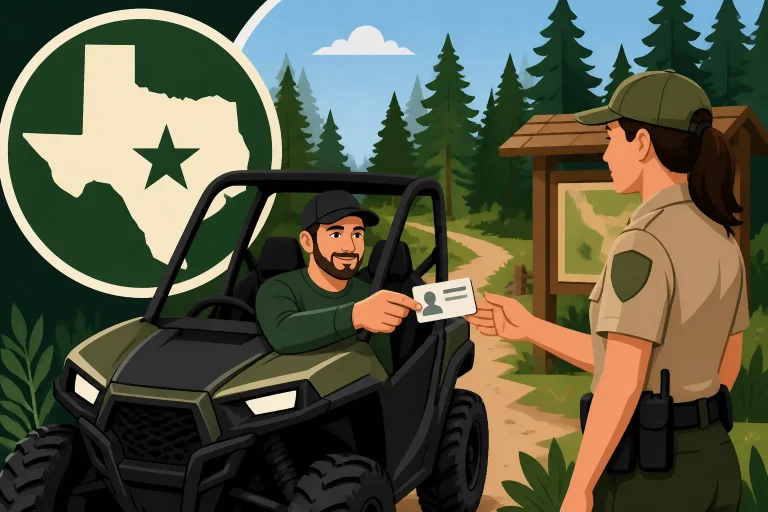
If the park says a decal is required, confirm that you have the right decal for the current riding period and that it is displayed as directed. A decal is not a substitute for a park permit, admission payment, reservation or trail pass. Those are separate requirements if the operator has them.
Do not assume a decal is unnecessary just because the property is managed locally, or that it is automatically required simply because the land is publicly owned. The relevant question is whether the specific area is open to OHV use under the applicable rules. When the district’s directions and state information seem to conflict, ask the operator which requirement applies at that location before riding.
Check rider age and safety credentials
Texas has OHV safety requirements that can depend on the rider’s age and the location. Review Texas OHV Safety Certificate Requirements before taking a young rider, and ask the park whether it has additional rules, such as requiring helmets for everyone or requiring adult supervision.
A certificate, when required, does not replace supervision rules or a park’s own safety conditions. Confirm whether the park accepts an out-of-state safety certificate if a rider trained elsewhere. Do not assume that a parent’s or companion’s certificate automatically covers another rider; check the applicable rule and the park’s instructions.
Keep park rules separate from road rules
Permission to ride a trail is not permission to ride on a public road to reach it. Many OHV parks require machines to be transported to the riding area or kept on designated off-highway routes. Road use is governed separately and is limited under Texas law, even if an ATV or UTV has lights, mirrors or other added equipment. For the broader legal distinction, see Why Texas Will Not Register an OHV for the Road.
Permits, Fees and Reciprocity: What to Verify Before You Go
A water district may use several kinds of access controls. A general park admission fee might cover entry but not OHV riding. A separate permit might authorize the machine to use designated trails, while a reservation could be needed to enter on a busy day. Some sites may have no special riding permit because they do not allow OHVs at all.
When asking about cost, avoid relying on an old post, map or social media comment. Fees and permit procedures can change. Check the district’s current information for what each payment covers, whether it is per person or per vehicle, and whether a permit must be displayed or carried. If the park uses an online reservation system, verify that the reservation is for motorized riding rather than general park entry.
Reciprocity is another area where assumptions can cause trouble. An out-of-state OHV decal, permit or safety card may not be treated the same way as a Texas credential, and a park can impose its own entry conditions regardless of what another state accepts. Ask the district whether it accepts your documents, then confirm any statewide requirement with the appropriate Texas agency. For safety credentials, Certificates Issued by Another State explains what to check before relying on training completed elsewhere.
Before leaving home, gather answers to these questions:
- Is the property open to ATV or UTV riding on your intended visit date?
- Which marked routes are open to your vehicle, including any width or machine restrictions?
- Do you need a park permit, reservation, admission payment or Texas OHV decal?
- What documents must each rider carry, and are out-of-state credentials accepted?
- Are helmets, eye protection, flags, spark arresters or other equipment required?
- Where may you park, unload, refuel and store a trailer?
- Are there weather-related closures or restrictions on riding after rain?
Keep confirmation details, permit receipts and any reservation information available during the visit. A phone screenshot can help, but it is not a replacement for a required physical permit or decal. If the park gives instructions at the entrance, follow the posted instructions even if they differ from an older webpage or map.
Ride Only Where the District Allows
Once you have permission and the required documents, stay on routes the operator has identified as open to OHVs. Do not widen a trail, cut around a barrier or use a maintenance road simply because it appears passable. A closed route may protect shoreline, water infrastructure, wildlife habitat or soil that is vulnerable to damage. Review [Texas Rules for Riding a Closed Trail] before assuming that a temporary barrier is optional.
Water district properties may also have boundaries that are difficult to see from a trail. A route may pass close to private land, a restricted facility or an area managed by another organization. Follow signs and maps, and turn around if the route is unclear rather than continuing into an unmarked area. A water’s edge or dry channel is not automatically a public riding route.
Be especially cautious after heavy rain. Soft ground can rut easily, and wet conditions may lead a district to close trails even if the park remains open to other visitors. Check the trail status shortly before departure and again at the entrance. If a route is closed, do not ride around the closure; Texas Trespass Rules for Riders offers more context on why property access and route permission matter.
At the park, keep speeds appropriate for visibility and surface conditions, yield to hikers and other visitors, and give maintenance vehicles room. Secure fuel and equipment in line with site rules, and take rubbish out with you. If riding with others, agree on a meeting point and keep the group together without blocking trails. The park may have additional requirements for organized rides, so review [Texas Rules for a Group Ride] if you are bringing a larger group.
A useful pre-trip routine is simple: confirm riding is allowed, verify the approved routes, check permit and decal requirements, and review closures and safety rules. If any part remains uncertain, contact the district before traveling. That small check can prevent a wasted trip and help keep riding areas open.
Disclaimer
This article is for general informational purposes only and does not constitute professional advice. Laws, prices and regulations vary by location and change over time. Consult a qualified professional for guidance on your specific situation.