Texas OHV Decal for a Rented Machine
Renting an ATV or UTV in Texas raises a practical question before you unload or head for a trail: does the machine need its own Texas OHV decal, or does the rental agreement cover it? The answer depends mainly on where you ride. Here’s how to check the machine, what to ask the rental company and what the decal does not cover.
When a rented machine needs a Texas OHV decal
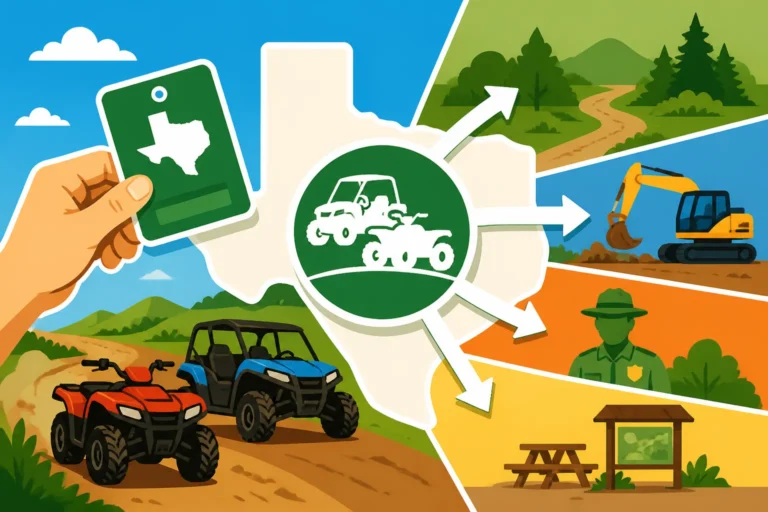
The Texas OHV decal is generally required for an off-highway vehicle used on qualifying public land in Texas. It is attached to the machine, not issued to a particular renter. That means a decal on one rental ATV does not cover another ATV in your group, and a rider’s personal decal does not replace the decal required for an eligible machine.
The key question is where the vehicle will be used. A ride on private property is different from a ride on public land or land where the decal requirement applies. A rental company may operate on private trails and handle access under its own arrangements, while another rental may allow you to take the machine to a public riding area. Don’t assume the same rule applies to both. For the broader requirements, see The Texas OHV Decal Explained and Where a Texas OHV Decal Is Required.
| Where you plan to ride | What to check about the decal |
|---|---|
| Private property, with the owner’s permission | A state OHV decal is generally not required solely because you are riding there. Confirm the property’s own rules. |
| Public OHV land or a qualifying public riding area | Check that the specific rental machine has a current Texas OHV decal if required for that location. |
| A rental company’s private course | Ask whether the course is private and whether its access rules require a decal. |
| Several rented machines in one group | Check every machine separately. A decal on one does not cover the others. |
| A machine with a decal from another state | Do not assume it substitutes for the Texas decal. Confirm the Texas requirement for the land you plan to use. |
A decal is not a general pass to ride wherever you like. It does not provide permission to enter a closed area, replace a park’s separate entry or day-use fee, or override restrictions on vehicle size, route, operating hours or equipment. Public land rules can vary by location, so check both the decal requirement and the riding area’s admission and operating rules. Texas Rules for Riding Public Land and Texas National Forest OHV Fee explain two related issues that are easy to mistake for the decal itself.
If you are visiting Texas from another state, don’t assume your home-state registration, sticker or permit is enough. Texas’s decal requirement is not automatically waived because the rider or rental company is based elsewhere. Check Texas Reciprocity and Why It Is One-Sided before relying on an out-of-state document.
What to ask the rental company before you leave
Start by asking whether the machine has a current Texas OHV decal for the exact place you intend to ride. Ask about the decal on the machine itself, not just whether the rental company generally offers “legal” vehicles. A clear answer should identify which vehicle is covered and whether the decal is current.
If you’re picking up several machines, check each one. The requirement is tied to each qualifying machine, not to the group as a whole. This matters when a company provides different models, substitutes a machine at pickup or divides a group across multiple vehicles. Every Machine in the Group Needs Its Own Decal covers that distinction.
Before departing, use this checklist:
- Name the riding area. Tell the rental company where you intend to ride, including the specific park, trail system or public-land area if you know it.
- Ask whether the machine has the Texas decal. If the company says it is included, ask them to point out the decal on the machine and confirm it is current.
- Check each vehicle. Match the decal to each rental ATV or UTV. Do not rely on a group booking or another rider’s paperwork.
- Confirm other access requirements. Ask whether the riding area charges a separate entry fee, requires a reservation or has a permit of its own.
- Ask who handles a missing decal. Settle this before the rental begins. Don’t assume you can borrow a decal or sort it out at the trailhead.
- Keep the rental paperwork accessible. It can help identify the vehicle and clarify what the company agreed to provide, though it is not a substitute for a required decal.
If the rental company says a decal is not necessary, ask why. The explanation may be that the machine will remain on private property, that the location has different requirements, or that the company has another arrangement for access. Those are not interchangeable answers. If you plan to leave the company’s property and ride public land, confirm the requirement for that specific land rather than relying on a statement about the rental company’s usual route.
A decal can be easy to miss, covered in dirt or attached somewhere that is not obvious at pickup. Ask the staff to show you its location. If it appears damaged, unreadable or out of date, ask for clarification or a different machine before setting out. The decal year runs on a set cycle, so check the current expiration rules at When a Texas OHV Decal Expires. Don’t judge validity only by the vehicle’s age or by the fact that it was rented recently.
Decals, rental fees and other riding requirements
A rental charge and the state OHV decal serve different purposes. The rental company’s fee pays for use of its machine under the rental agreement. A state decal is a separate program requirement for qualifying use. A park may also charge its own access fee. One payment should not be treated as proof that the other requirements are covered.
Ask for a clear breakdown if the rental company says the decal is included in the rental price. That does not mean the company must list it as a separate line item, but you should still know whether the machine carries the decal. If a decal must be purchased separately, use the current official information to confirm the process and amount; program details can change. See Where to Buy a Texas OHV Decal and Texas OHV Decal Cost for the buying and cost questions.
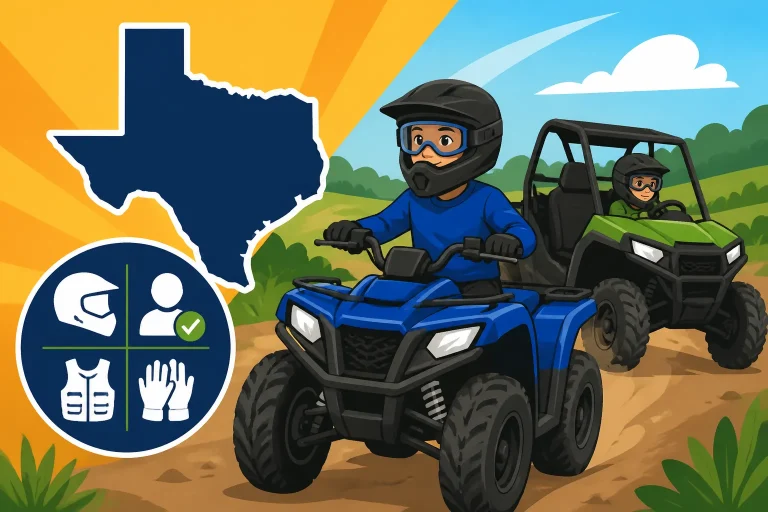
A decal also does not replace a safety certificate or satisfy every rule that applies to the rider. Texas has separate safety-certificate requirements for some riders on public land, including age-related rules. A rental company may have additional minimum-age, supervision, training or waiver conditions. Ask both the rental business and the land manager what applies to your ride. The vehicle’s decal does not make an underage rider eligible, and a certificate does not make an un-decaled machine compliant.
Other practical distinctions:
- The decal stays with the machine. It is not a transferable pass for the renter to take home or move to another vehicle.
- A decal is not a road-use permit. It does not make an ATV or UTV street legal or authorize ordinary road travel.
- A decal does not guarantee trail access. The riding area can limit vehicle width, close routes or require a separate permit.
- Rental paperwork is not a decal. A contract can show that you rented the vehicle, but it does not replace a required state decal.
- A private-land ride may still have site rules. The property owner or rental operator can set conditions even when a state decal is not required for that use.
The best approach is to sort out the decal before the machine leaves the rental lot. It is much easier to confirm the vehicle’s sticker and clarify access at pickup than to discover a problem at a trail entrance. If you will be riding at a particular park, check that park’s current requirements as well as the statewide decal rules. Turned Away at the Gate for No Decal explains why arriving without the required sticker can disrupt a ride.
If the rental machine has no decal
If your planned ride requires a Texas OHV decal and the rental machine does not appear to have one, pause before entering the riding area. Contact the rental company and ask it to resolve the issue. Depending on the circumstances, that could mean providing a properly decaled machine, confirming that the location does not require the decal, or directing you to the official purchase process if that option is appropriate.
Do not move a decal from another rental machine, borrow one from a friend or assume a receipt for a different vehicle will work. The decal applies to the machine, and a sticker on one vehicle does not cover the rest of the group. If the company cannot give you a clear answer, contact the land manager or the appropriate program office before riding.
For a short checklist, confirm these points before leaving:
- You know where you will ride.
- The rental company has identified the decal on the particular machine.
- Every vehicle in the group has been checked individually.
- You understand whether the riding site charges an additional fee or requires a separate permit.
- You have checked any rider age, safety-certificate, supervision and equipment rules that apply.
If you are only riding on private property, still confirm that the property owner allows the planned use and that you will not enter a public area where a different requirement applies. A change of route can change what you need. On the other hand, don’t buy a decal just because a machine is rented if the planned ride does not fall under the decal requirement; verify the location and use first.
The practical bottom line is simple: the renter’s name is not what determines whether a decal is needed. The riding location and the specific machine do. Before setting off, make sure each rental ATV or UTV carries the required current Texas decal for the land you intend to use, and treat park fees, safety rules and rental conditions as separate checks.
Disclaimer
This article is for general informational purposes only and does not constitute professional advice. Laws, prices and regulations vary by location and change over time. Consult a qualified professional for guidance on your specific situation.