Why Texas Does Not Require ATV Insurance
It can be incredibly confusing to navigate the world of off-highway vehicles (OHVs) in Texas, especially when you're used to the strict rules governing cars and trucks. Many new ATV or UTV owners, or those relocating to our great state, often scratch their heads wondering why they don't have to carry insurance for their beloved machine when it's absolutely mandatory for their pickup. This guide is here to unravel that mystery, explaining why Texas takes a different approach to ATV insurance and what that means for you as a rider.
The Unique Legal Status of ATVs in Texas
Texas has a unique way of classifying vehicles, and it's this fundamental difference that explains why your ATV doesn't require a state-mandated insurance policy like your everyday car. It’s not an oversight; it’s a deliberate distinction rooted in how these machines are intended to be used.
Why Texas Classifies ATVs Differently from Road Vehicles
Texas's legal framework for vehicles is quite distinct, and ATVs (All-Terrain Vehicles) and UTVs (Utility Terrain Vehicles) occupy a special niche. Unlike your truck or car, which are explicitly designed and regulated for public road use, OHVs are generally seen as recreational or utility machines primarily intended for private land or designated off-highway areas. This fundamental distinction is the bedrock of why insurance requirements differ. The state's primary concern for road-legal vehicles is public safety on shared roadways, and mandatory liability insurance is a cornerstone of that. Since ATVs aren't typically permitted on most public roads, the state's traditional auto insurance mandates simply don't apply to them in the same way.
Think about it: when you buy a car, you're immediately thinking about getting it insured, registered, and titled for the road. With an ATV, the process is different. You'll still need to deal with [Titling an ATV in Texas] at your county tax office, but the "registration" you might be thinking of for a road vehicle doesn't exist for an OHV. This separate legal category means that while a car driver is expected to carry liability insurance to cover potential damages to other vehicles or property on public roads, an ATV rider is generally operating in environments where that same public road exposure isn't presumed.
This isn't to say ATVs are unregulated; far from it. Texas has clear rules about where and how you can ride them, age restrictions, and safety requirements, especially on public lands. But the absence of a blanket mandatory insurance rule stems directly from their "off-highway" designation. It's a pragmatic approach, recognizing that most ATV use occurs on private property, lease land, or dedicated off-road parks, where the state's interest in mandatory financial responsibility for road accidents is less direct. It's a system designed to accommodate the unique nature of off-road recreation.
The "Off-Highway Use Only" Distinction
One of the most telling signs of an ATV's status in Texas is the "Off-Highway Use Only" remark you might find on its title. This isn't just a suggestion; it's a legal classification that dictates much of how the state views and regulates these machines. It explicitly flags the vehicle as not intended for general public road travel, which, in turn, influences what kind of taxes apply, what kind of plate (if any) it gets, and, yes, whether insurance is mandatory. This phrase serves as a constant reminder that these aren't street-legal vehicles and are not expected to interact with the traditional automotive insurance framework.
Because an OHV title in Texas often carries this specific remark, it reinforces the idea that the state doesn't expect it to be involved in the same types of incidents as a passenger car. The entire system is built around this premise. If you were to try and [Why Texas Will Not Register an ATV for the Road], you'd quickly hit a wall because of this core designation. It’s designed to keep these machines off roadways, making many of the laws governing road vehicles, including mandatory insurance, irrelevant to them by design. This classification helps clarify the primary intent and usage boundaries for [What Texas Counts as an Off-Highway Vehicle].
This distinction is crucial when you're considering your responsibilities as an OHV owner. While you don't have to carry liability insurance for your ATV in Texas, you also can't just drive it down Main Street. The "off-highway use only" stamp is part of a larger regulatory scheme that balances recreational and utility riding with public safety, but without imposing the full burden of road vehicle regulations where they don't logically apply. It saves you a mandatory insurance premium, but it also dictates where you can legally ride, reinforcing the need to understand your local county rules and designated riding areas.
Understanding Texas's Approach to Off-Highway Vehicles
The state's perspective on OHVs is largely influenced by the fact that they aren't part of the regular "motor vehicle" registration system. This has cascading effects on various regulations, including insurance.
No State-Mandated Registration for OHVs
It's a common point of confusion for new ATV owners or those moving to Texas: "Do I need to register my ATV?" The short answer, as it pertains to traditional vehicle registration like a car, is no. Texas does not have a statewide mandatory registration program for ATVs or UTVs in the same way it does for street-legal cars and trucks. This is a significant factor in why insurance isn't required. In many states, mandatory insurance is tied directly to vehicle registration, so if there's no registration, there's no automatic insurance mandate. This also means you won't face yearly renewal fees for registration, but you will still encounter [Texas ATV Title Cost] when initially securing ownership.
What Texas does require for many OHVs is a title, especially if you plan to sell it or prove ownership. You'll file [The Texas Title Application Every OHV Buyer Files] at your local county tax office. You can also obtain an optional [The Texas Off-Highway Vehicle License Plate] for certain uses, but this plate is distinct from a traditional vehicle registration and does not come with a mandatory insurance requirement. It merely serves as an identifier for specific, limited road uses permitted under certain circumstances, such as agricultural operations or crossing roads.
This lack of universal registration simplifies things in some ways for OHV owners but also puts the onus on them to understand the risks. Without a central database tying every ATV to a mandatory insurance policy, the state effectively leaves the decision of insuring your machine up to you, the owner. It highlights the freedom, but also the responsibility, that comes with owning an off-highway vehicle in the Lone Star State. It's a system built on the premise that these machines are primarily for private or designated off-road use, where the typical public road risks aren't present.
Limited Road Use and Exemptions
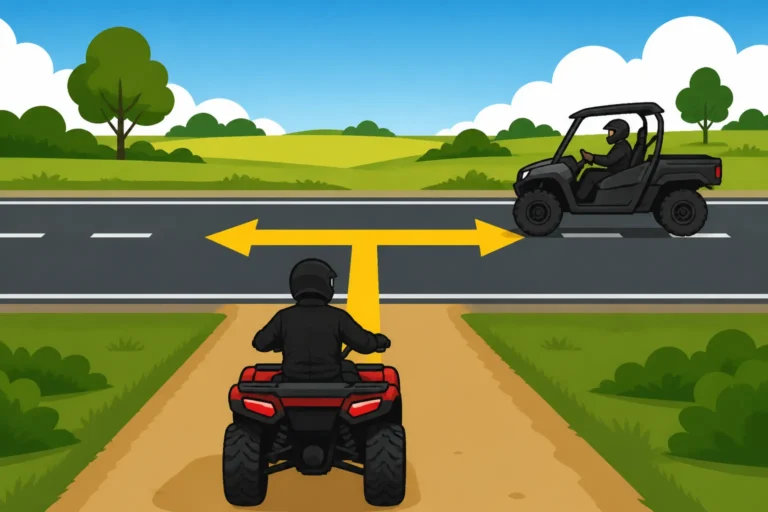
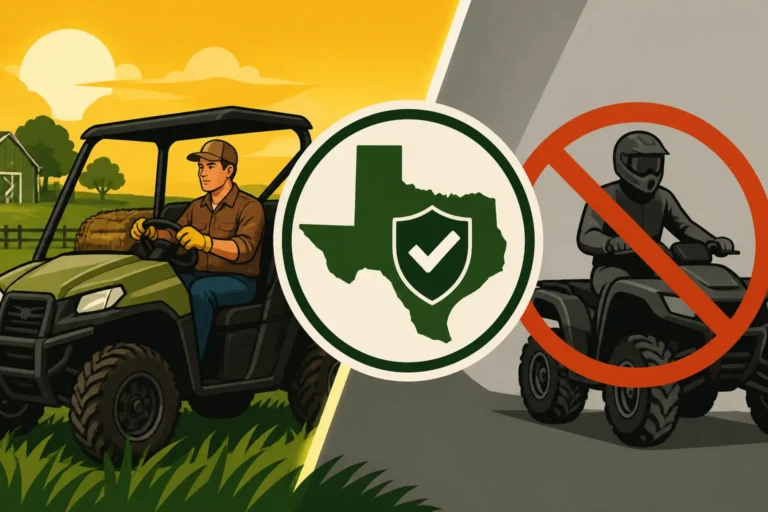
While ATVs are generally "off-highway use only," Texas law does provide for very specific, limited exceptions where they might briefly touch public roads. These aren't blanket permissions to cruise down highways; they are tightly regulated scenarios. For example, an ATV used for agricultural purposes on a farm might be allowed to cross a public road or even travel short distances on one under very specific conditions, such as during daylight hours, with an orange flag, and often within a certain mileage limit from the farm. Understanding [Texas Rules for Riding a Farm Road] can be crucial here.
Another instance might involve crossing a highway at an intersection, or traveling on certain low-speed county roads in specific areas that have opted-in to allowing such travel. These are distinct and narrow exceptions to the general rule that [Why Texas Will Not Register an ATV for the Road]. For instance, some counties allow limited operation on roads with speed limits of [Texas Rules for Riding on a 35 mph Road]. Because these road uses are so restricted and often involve lower speeds or specific safety equipment, the state hasn't deemed it necessary to impose the same mandatory liability insurance that applies to general road-going vehicles.
It's vital to remember that these exemptions do not make your ATV street-legal, nor do they trigger a mandatory insurance requirement. If you choose to utilize these limited road-use exemptions, you are still personally responsible for any damage or injury you might cause. The lack of mandatory insurance means you bear the full financial risk if something goes wrong during even these permitted uses. Always ensure you also adhere to safety standards, such as wearing a helmet, as per [Texas Helmet Law for ATV Riders], even on these limited road segments.
The Benefits and Risks of Optional ATV Insurance in Texas
Given that insurance isn't required, many riders wonder if it's truly necessary. While it's an optional expense, understanding the potential benefits and risks can help you make an informed decision that protects your finances and your passion.
Peace of Mind vs. Uncovered Risks
While Texas doesn't mandate ATV insurance, opting for a policy can offer significant peace of mind. Just because the state doesn't require it doesn't mean accidents don't happen, or that your expensive machine is immune to theft or damage. Imagine you're out riding at [Hidden Falls Adventure Park at Marble Falls] and you misjudge a turn, hitting a tree and flipping your UTV. Without collision coverage, you're looking at potentially thousands of dollars in repair costs out of your own pocket. If you damage someone else's property, like a fence on private land or another rider's machine, liability coverage would be your saving grace.
The risk of not having insurance is that every repair bill, every medical expense for an injured party, and every legal fee comes directly from your personal finances. For many riders, especially those with significant investments in their machines or who ride frequently, that's a gamble they're not willing to take. The cost of a good ATV can rival that of a used car, and few would drive a car uninsured, even if it were legal. The same logic often applies to valuable OHVs, especially when considering the robust aftermarket accessories from companies like SuperATV that can add substantial value to your machine.
Conversely, some riders might weigh the premium costs against their specific riding habits. If your ATV rarely leaves your securely fenced 50-acre ranch, and you're the only one who ever rides it, you might feel the risk is lower. However, even on private land, things can go wrong. A fire, a theft, or an unexpected mechanical failure leading to an accident can still result in substantial financial burdens. It's a personal risk assessment, but one where the potential financial hits can be severe, making the relatively modest annual cost of [Texas ATV Insurance Cost per Year] seem like a smart investment.
What ATV Insurance Typically Covers
ATV insurance policies, much like auto insurance, usually come with various coverage options designed to protect you, your machine, and others.
- Liability Coverage: This is probably the most crucial if you injure someone or damage their property while riding. If you accidentally hit another rider, a parked vehicle, or even property like a shed while maneuvering on a trail, liability coverage helps pay for the medical bills of the injured party or the repair costs of the damaged property.
- Collision Coverage: This protects your ATV. If you hit an obstacle, another vehicle, or even roll your machine, collision coverage will help pay for the repairs or replacement of your ATV, minus your deductible. This is invaluable for costly repairs after an accident, especially if you've invested in quality parts.
- Comprehensive Coverage: This steps in for non-collision events. Think theft, vandalism, fire, or damage from natural disasters like hail or floods. If your prized side-by-side gets stolen from your garage, comprehensive coverage is what you'd be leaning on.
- Uninsured/Underinsured Motorist: While less common for ATVs, some policies might offer this. It protects you if you're involved in an accident with another off-road vehicle whose operator has no insurance or insufficient insurance.
- Medical Payments/Personal Injury Protection: This covers medical expenses for you and your passengers, regardless of who was at fault in an accident.
Many riders, even if not required by law, find comfort in knowing these protections are in place. When you're spending good money on a machine, even if it's older, protecting that investment just makes sense. The monthly premium can feel like a small price to pay compared to the potential financial devastation of a major accident or theft, especially if your machine is equipped with top-tier accessories from a brand like SuperATV.
It's worth noting that some policies might have specific exclusions, such as racing or certain types of modifications, so always read the fine print. Discuss your riding habits and needs with an insurance agent to ensure you get the right blend of coverage for your specific situation.
| Coverage Type | What It Covers | Why It's Important |
|---|---|---|
| Liability | Damage to other people's property or injuries to others (e.g., another rider). | Protects your assets if you cause an accident with another person or their property, covering their medical bills or repair costs. |
| Collision | Damage to your ATV/UTV from an accident with an object (like a tree) or another vehicle. | Pays for repairs or replacement of your machine after a crash, even if you are found to be at fault, helping you get back on the trails. |
| Comprehensive | Damage to your ATV/UTV from non-collision events (theft, fire, vandalism, natural disasters like floods or hail). | Safeguards your significant investment from unexpected events beyond your control, such as theft from your property or damage from a severe storm. |
| Medical Payments | Medical expenses for you and your passengers, regardless of who was at fault in an accident. | Helps cover immediate medical costs for injuries sustained in an ATV/UTV accident, providing a crucial safety net for personal well-being. |
| Uninsured/Underinsured Motorist | Damage and/or injury if involved in an accident with another OHV operator who has no insurance or insufficient insurance. | Offers protection in scenarios where the other party lacks adequate coverage, preventing you from shouldering all the costs of their negligence. |
Scenarios Where Insurance Becomes Crucial
While the state doesn't mandate it, there are very real-world situations where having ATV insurance moves from "optional" to "absolutely vital." These are the moments you'll be glad you invested in that policy.
Accidents on Private Property or OHV Parks
The vast majority of ATV and UTV riding in Texas happens on private land, lease property, or at dedicated OHV parks like [Barnwell Mountain Recreation Area]. It’s easy to think that since you’re not on a public road, the risks are somehow diminished or that your homeowners' policy will magically cover everything. Unfortunately, that's rarely the case. While some homeowners' policies might offer very limited liability coverage for incidents occurring on your property, they almost never cover the physical damage to your ATV itself, nor will they typically extend to accidents that happen away from your home, such as at a riding park.
Consider a scenario: you're at a popular riding park, navigating a tricky section, and you lose control, colliding with another rider's brand-new side-by-side. Your homeowners' policy likely won't cover the damage to their machine, let alone yours. Without a dedicated ATV liability policy, you'd be personally on the hook for those repair costs, which can quickly add up to thousands of dollars. And if the other rider is injured, you could be facing medical bills and potential lawsuits. These are the uncomfortable truths that make riders pause and consider their options.
Even on your own property, if a guest is riding your ATV and gets injured, or accidentally damages a neighbor's fence while taking a joyride, your homeowners' insurance might deny the claim, citing the motorized vehicle exclusion. This is where a standalone ATV insurance policy truly shines, filling the gaps that other policies leave wide open and providing specific coverage tailored to the unique risks of off-road riding. It's a proactive step that can save you immense stress and financial hardship down the line, ensuring that your fun doesn't turn into a financial nightmare.
Theft, Fire, and Unforeseen Damages
Beyond riding accidents, ATVs and UTVs are unfortunately prime targets for theft. These machines are valuable, relatively easy to transport, and often stored in less secure locations than cars, like sheds, barns, or open trailers. If your machine is stolen, and you don't have comprehensive insurance, it's gone. Poof. Your investment, potentially tens of thousands of dollars, vanishes with it. Law enforcement will do their best, but recovery isn't guaranteed, and without insurance, there's no financial safety net. Even if your machine is outfitted with high-performance parts from SuperATV, adding to its value, that investment can be lost in an instant.
Fires are another real, albeit less common, risk. A mechanical failure, an electrical short, or even a carelessly discarded cigarette near your fuel tank could turn your pride and joy into a burnt-out shell. Natural disasters like floods, hailstorms, or falling trees can also inflict devastating damage. Standard property insurance often doesn't cover these types of risks for recreational vehicles not explicitly listed, leaving you with little recourse for an expensive loss.
This is precisely why even the most cautious riders, who stick to their own property, often opt for comprehensive coverage. It protects against those "what if" scenarios that have nothing to do with how well you drive, but everything to do with protecting your valuable asset. It's about hedging against the unpredictable elements of life that can impact your OHV, ensuring that a theft or a natural disaster doesn't completely derail your financial plans or your passion for riding. The peace of mind alone can be worth the premium.
Disclaimer
This article is for general informational purposes only and does not constitute professional advice. Laws, prices and regulations vary by location and change over time. Consult a qualified professional for guidance on your specific situation.