Texas Rules for Riding a County Road
It’s a common fantasy for many Texas ATV and UTV owners: just hop on your machine and cruise down that quiet county road to a neighbor's property, or perhaps to the general store for a cold drink. The reality, unfortunately, is often a far cry from this easy-going vision, riddled with frustrating rules and regulations that can leave you scratching your head. This guide is here to untangle the complexities of riding your off-highway vehicle (OHV) on Texas county roads, explaining exactly what the law says and when you might actually have an option.
The General Rule: Why Your OHV Isn't Meant for Texas County Roads
Let's be blunt right from the start: for the vast majority of Texans, riding an ATV, UTV, or any other off-highway vehicle (OHV) on a public road, including a county road, is simply against the law. This isn't just some local quirky rule; it's embedded in statewide statutes. Many riders feel frustrated by this, especially in rural areas where county roads often feel like extensions of private land, but the state sees things differently.
The Statewide Prohibition on Public Roadways
Texas law is pretty clear: a motor vehicle that's designed and manufactured for off-highway use only, which absolutely includes your typical ATV, UTV, or side-by-side, generally cannot operate on a public highway. And yes, for legal purposes, most county roads are considered public highways. This broad prohibition stems from the fundamental difference in how these machines are built and regulated compared to street-legal cars and trucks. Your OHV might be incredibly capable off-road, but it often lacks basic safety and signaling equipment required for street driving, like specific types of lights, turn signals, or even a full complement of mirrors. Trying to modify an ATV with aftermarket parts to make it "street legal" almost always runs into a wall because the underlying vehicle classification itself isn't recognized for road use. It's not about adding a blinker; it's about the machine's core design and certification. This is why when folks ask [Are ATVs Street Legal in Texas?], the short answer is usually "no." The state isn't trying to punish riders; it's trying to ensure public safety on roads where cars and trucks travel at much higher speeds.
Understanding the "Off-Highway Use Only" Designation
When you go through the process of getting a title for your ATV or UTV in Texas, you'll notice something important: the state issues titles for these machines, but it never registers them for road use. Instead, your title, or perhaps an earlier version of it, might even include a clear remark like [The Off-Highway Use Only Remark on a Texas Title]. This isn't just a suggestion; it's a legal classification that reinforces the machine's intended purpose.
What this means in practical terms is that your OHV is recognized as property by the state – hence the title – but it's explicitly not recognized as a vehicle suitable for general public road travel. This distinction is critical because it directly dictates where you can and cannot ride legally. You can't just slap a license plate on it and go, because the plate system used for cars and trucks isn't available for OHVs. The entire system is set up to ensure that vehicles on public roads meet specific safety and emissions standards, which off-highway vehicles, by their very nature, are not designed to meet. So, while you might own your machine outright with a clear title, that title itself acts as a reminder of its limitations regarding public road use. This is also why many riders scratch their heads asking [Why Texas Will Not Register an ATV for the Road].
The Exceptions: When a Texas County Road Might Be an Option
While the general rule is "no," Texas law does provide a few very specific scenarios where operating an OHV on a county road becomes permissible. These exceptions are carved out to serve practical needs, usually tied to agricultural work, essential services, or very localized conditions. It’s crucial to understand that these are exceptions, not broad permissions, and they come with their own set of rules.
Agricultural and Timber Operations
This is perhaps the most significant exception for many rural Texans. If you're using your ATV or UTV as part of a legitimate agricultural or timber operation, you may be allowed to operate it on a public road, including a county road, under certain conditions. Think about a rancher who needs to move from one pasture to another, separated by a county road, or a timber operator needing to access a different section of their land.
The law is designed to accommodate the realities of farm and ranch life. However, this isn't a free pass to joyride. The operation must genuinely be for an agricultural or timber purpose. This can include hauling feed, checking fences, moving equipment, or overseeing livestock. There are also specific limitations: you generally can't travel more than 25 miles from the point of origin, and you must be actively engaged in the agricultural or timber operation. For instance, cruising down the county road for a casual ride, even if you own a ranch, would not qualify. Additionally, there are equipment requirements, such as displaying an orange safety flag at least six feet above ground level, and having adequate lighting during certain times. This vital exemption is often detailed when discussing [Texas Agricultural Exemption for ATVs on Roads]. If you're a volunteer firefighter, there's also a specific, limited exemption for responding to emergencies, allowing you to use your OHV on public roads for up to 10 miles from where it's normally parked. This kind of specific rule is explored in [Volunteer Firefighters on a Texas ATV].
Utility Workers and Emergency Responders
Another set of exceptions applies to those performing essential services. Employees of public utility companies, such as electric, water, or gas providers, may operate an OHV on a public road if they are doing so in the course and scope of their employment and for the purpose of maintaining utility services. Similarly, certain emergency responders, like peace officers or authorized emergency vehicle operators, may use OHVs on public roads when performing their official duties. These are highly specific professional contexts and do not extend to the general public.
Local Ordinances in Small or Specific Counties
This is where things can get a bit more localized and require some diligent research on your part. Texas law allows certain counties to adopt local ordinances that permit the operation of OHVs on public roads within their jurisdiction. However, this isn't a blanket permission for all counties. Generally, this applies to counties with a population of less than 37,000 people, as well as specific counties that border the Red River or the Gulf Coast in barrier island areas (like certain Guadalupe River counties).
The key takeaway here is that these counties may adopt such ordinances; they are not required to, and many simply don't. Even if a county does adopt such an ordinance, it will likely come with its own specific set of rules, such as designated roads, speed limits, times of day, or specific equipment requirements. For example, a local ordinance might allow OHV use on unpaved county roads during daylight hours with a maximum speed of 20 mph. It is absolutely critical that you check with the specific county commissioner's office or sheriff's department in the area you intend to ride. Do not assume; verify. Understanding [Counties Under Thirty-Seven Thousand People] and their unique legislative powers is crucial here. If you are riding in a master-planned community, there might be specific rules as well, but these are often distinct from broader county road allowances.
Crossing a Public Road
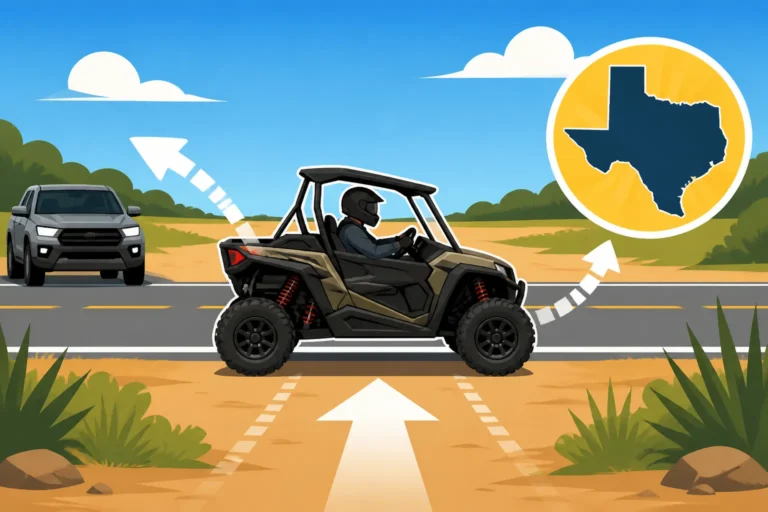
Even when riding down a county road is prohibited, simply crossing one is often permitted under very strict conditions. This exception is designed to allow OHV riders to move from one parcel of private land to another when a public road separates them.
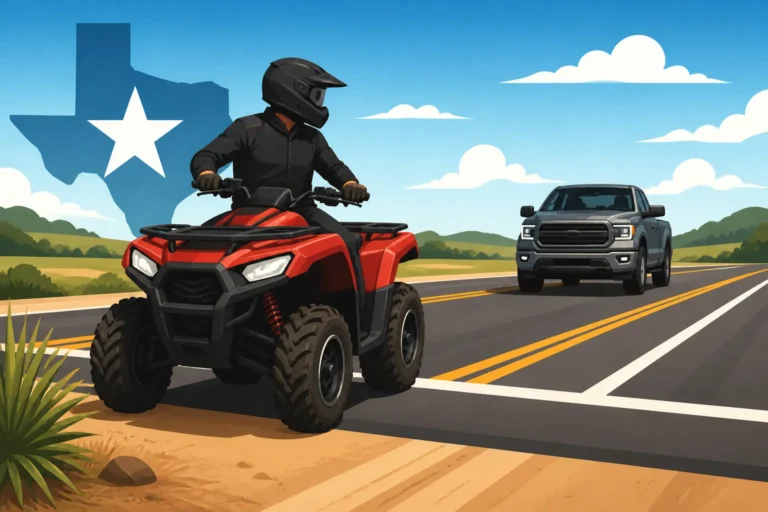
To legally cross a county road, you must do so safely, and typically directly across at a right angle (90 degrees) to the roadway. You must come to a complete stop before entering the roadway, yield to all traffic, and proceed only when it is safe to do so. You cannot ride along the shoulder or use the road as a shortcut for any significant distance. It's purely for the purpose of traversing the road from one side to the other. Think of it as crossing a busy street on foot – you stop, look both ways, and go straight across. This scenario is clearly laid out in discussions like [Crossing a Texas Road at an Intersection].
Essential Equipment and Safe Practices for Permitted Road Use
If you find yourself in one of the specific, narrow exceptions that allow you to operate your OHV on a county road, you’re not out of the woods yet. The law requires certain equipment and adherence to safety practices to minimize risks on shared roadways. Failing to meet these requirements, even if you’re otherwise legally allowed to be on the road, can still result in a citation or, worse, an accident.
Mandatory Safety Equipment
When an OHV is permitted on a public road under one of the exceptions, it's typically treated more like a traditional motor vehicle in terms of visibility and safety gear. While your machine might be perfectly fine for the trail as is, county road use demands more. You'll generally need:
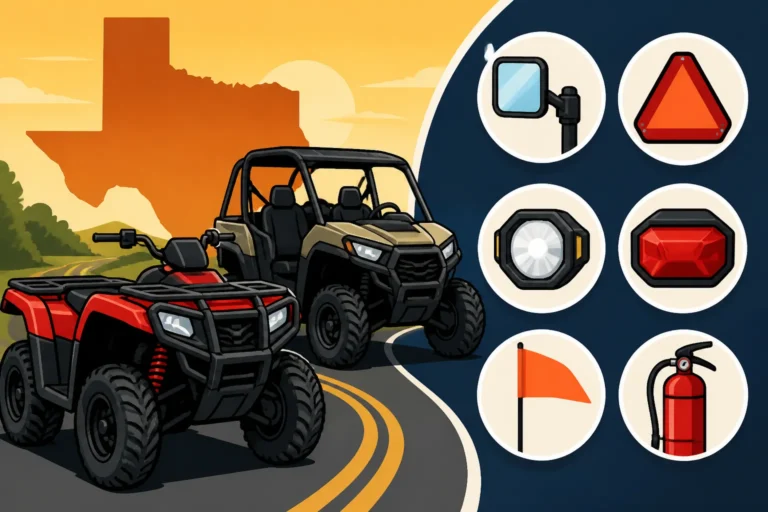
- Headlights and Taillights: These must be functional and illuminated, especially during low-light conditions or at night. Many factory OHV lights are sufficient, but if yours are dim or damaged, replacing them is crucial.
- Brake Lights: Essential for signaling your stopping intentions to other drivers.
- Reflectors: Often required on the front and rear to enhance visibility, even when your lights are on.
- Rearview Mirror: A crucial piece of equipment for seeing traffic approaching from behind. While many OHVs come with a small rearview mirror, a larger, more robust mirror might be a wise upgrade for better visibility on a county road.
- Slow-Moving Vehicle (SMV) Emblem or Orange Flag: For agricultural use, if you're not actively engaged in farming activities but merely moving between fields, an SMV emblem or a bright orange flag mounted at least six feet above the ground is often mandated. This warns faster-moving traffic of your presence.
For those looking to beef up their machine's road-readiness for these specific permitted uses, brands like SuperATV offer a wide array of aftermarket accessories. From robust rearview and side mirrors that provide a broader field of vision to complete turn signal kits (even if turn signals aren't explicitly required for all exceptions, they significantly enhance safety and communication on a public road), they can help riders meet or exceed these basic safety requirements. Upgrading your lighting with brighter LED options from SuperATV can also make a huge difference in how visible you are to oncoming traffic, especially on dusty rural roads. Additionally, ensure your machine has a spark arrester that's qualified by the U.S. Forest Service, which is a common requirement when operating in certain areas and prevents accidental fires, as detailed in [Spark Arresters Qualified by the Forest Service]. You can delve deeper into what is required in [Texas Equipment Rules for an ATV on a Road].
Helmet and Eye Protection Requirements
When it comes to helmets, Texas law has specific provisions, especially for younger riders. Anyone under the age of 18 operating an OHV on a public road, even under an exception, is generally required to wear a helmet. While adults 18 and over are not always legally mandated to wear a helmet for OHV operation, it is always, always recommended for safety. County roads, even quiet ones, can have unexpected hazards, and the risk of serious injury in an accident is substantial.
Eye protection is another non-negotiable item. Goggles or a face shield are essential to protect your eyes from dust, debris, insects, and even glare. If your machine doesn't have a full windshield, eye protection isn't just a good idea; it's a critical safety measure. For a comprehensive look at what Texas requires, check out [Texas Helmet Law for ATV Riders].
Driver Licensing and Insurance Considerations
Operating any motor vehicle on a public road in Texas, regardless of whether it's a car, truck, or an OHV operating under an exception, generally requires the operator to hold a valid driver's license. This means a standard Class C driver's license is typically sufficient, but you must have it with you and be legally authorized to drive.
Regarding insurance, Texas does not require OHV owners to carry liability insurance specifically for off-road use. However, if you are operating your OHV on a public road, even under an exception, the implications of an accident can be severe. While not always legally mandated for OHVs on roads, carrying liability insurance is a supremely wise decision. If you are involved in an accident and found at fault, you could be held personally liable for property damage, medical expenses, and other costs incurred by others. Your personal auto insurance policy likely won't cover an OHV being operated on a public road, so you might need a dedicated OHV policy. This is a topic explored more deeply in [Texas ATV Insurance Requirement]. It's always best to check with your insurance provider to understand your coverage limits and what scenarios are (or aren't) covered.
Consequences of Unauthorized County Road Riding
Ignorance of the law is rarely an excuse, and when it comes to riding your OHV on Texas county roads without explicit permission, the consequences can range from a costly headache to serious legal and financial liabilities. It's not just about a stern talking-to; there are real penalties involved.
Penalties and Citations
If a law enforcement officer catches you operating your ATV or UTV on a county road without meeting one of the legal exceptions, you're likely looking at a citation. In most cases, this would be classified as a Class C Misdemeanor. While Class C Misdemeanors are the lowest level of criminal offense in Texas, they are still a criminal offense.
The penalties for a Class C Misdemeanor can include a fine, which can range from $25 to $500, plus court costs. While it might not sound like a huge sum, it’s certainly more than you planned to spend on a casual ride. Furthermore, a conviction will appear on your criminal record. Depending on the circumstances and the officer's discretion, your OHV could also potentially be impounded, leading to additional towing and storage fees that quickly add up. Imagine needing to pay hundreds of dollars just to get your machine back from an impound lot, all because of a quick, unauthorized trip down a county road. For more details on these potential fines, check out [Class C Misdemeanors Under Texas OHV Law].
Insurance Implications and Liability
Beyond the immediate fines and legal troubles, operating an OHV illegally on a public road carries significant risks concerning insurance and civil liability. As mentioned earlier, while Texas doesn't require OHV insurance for off-road use, your standard auto insurance policy almost certainly will not cover your ATV or UTV if it's being operated on a public road.
If you are involved in an accident while illegally riding on a county road, and you cause damage or injury to another person or their property, you could be held personally liable for all costs. This could mean paying for vehicle repairs, medical bills, lost wages, and even pain and suffering. Without an insurance policy specifically designed to cover OHV road use (which is rare for unauthorized riding), these costs would come directly out of your pocket. This isn't just a few hundred dollars; it could easily be tens or hundreds of thousands of dollars, or even more, leading to financial ruin. The peace of mind that comes from knowing you're operating within the law, and that any permitted road use is appropriately covered, is invaluable. Always err on the side of caution when considering public road use for your OHV.
Permitted OHV Use on Texas County Roads: A Quick Look
Understanding the nuances of Texas law for OHV use on county roads can be tricky. This table summarizes the general stance and key considerations for different scenarios. Remember, always verify specific local ordinances, as they can vary.
| Use Case | General Legality on County Roads | Common Requirements & Conditions | Recommended Safety & Equipment | Potential Consequences (if unauthorized) |
|---|---|---|---|---|
| General Recreational | Generally Prohibited | None, as it's not a legal use. | N/A – Not permitted for general travel. | Class C Misdemeanor (fines up to $500), impoundment, personal liability in accident. |
| Agricultural/Timber | Allowed (Conditional) | Must be actively engaged in legitimate Ag/Timber operation. Limited distance (e.g., 25 miles from origin). May require slow-moving vehicle emblem or 6-foot orange flag. Cross at 90-degree angle if applicable. | Valid driver's license, helmet (under 18), eye protection. Headlights, taillights, brake lights, rearview mirror. Spark arrester. | Citation if conditions not met; liability. |
| Crossing a Roadway | Allowed (Conditional) | Must be safe, at 90-degree angle to roadway. Complete stop before entering. Yield to all traffic. Not to be used for traveling along the road. | Valid driver's license, helmet (under 18), eye protection. Functioning lights during low light/night. | Citation if conditions not met; liability. |
| Utility/Emergency | Allowed (Conditional) | Performing official duties in course of employment/service. Vehicle often marked. | Valid driver's license, helmet (under 18). Equipment as required by employer/agency (often full road lighting, warning signals). | N/A (assuming authorized and compliant). |
| Local Ordinance | Allowed (Conditional) | Varies greatly by county. Only specific counties (e.g., population < 37,000) may adopt. Rider MUST check local county laws for specific permitted roads, speed limits, times of day, and equipment requirements. | Valid driver's license, helmet (under 18), eye protection. Often requires specific street-legal accessories (mirrors, turn signals, proper lighting). May require specific liability insurance. | Class C Misdemeanor if local ordinance not followed; liability. |
Disclaimer
This article is for general informational purposes only and does not constitute professional advice. Laws, prices and regulations vary by location and change over time. Consult a qualified professional for guidance on your specific situation.