Why Passengers Need Manufacturer-Designed Seating
Navigating the world of ATVs and UTVs in Texas can sometimes feel like trying to untangle a particularly stubborn knot of fishing line, especially when it comes to who can ride where, and perhaps more importantly for families, how they can ride. One of the biggest points of confusion and frustration many riders encounter is around passenger seating—specifically, the strict requirement for manufacturer-designed seating. This isn't just a suggestion; it's a fundamental safety and legal guideline that can lead to unexpected fines or even serious accidents if overlooked. This guide is here to unravel that knot, explaining exactly why Texas law prioritizes manufacturer-designed seating, what that truly means for your machine, and how to ensure every ride with a passenger is both legal and as safe as possible.
The Core Requirement: Manufacturer-Designed Seating
It's a common scene: you've got your ATV or side-by-side, the sun is shining, and the kids or a buddy are eager to hop on for a ride. But before anyone swings a leg over, pause. Texas law, much like the laws in many other states, has very clear stipulations about how passengers can be carried on off-highway vehicles (OHVs). At the heart of it all is the mandate for "manufacturer-designed seating." This isn't about personal preference or clever modifications; it's about the fundamental engineering and safety standards built into your machine from the factory.
Defining "Manufacturer-Designed" for ATVs
When we talk about an ATV (All-Terrain Vehicle), we're generally referring to those machines where the rider straddles the seat, uses handlebars for steering, and operates footrests. Most ATVs are designed by the manufacturer for a single rider. That long, narrow seat might look like it could fit two, or even three, smaller individuals, but that's rarely its intended purpose. If your ATV came from the factory with only one seat, then it's designed for one rider. Adding a pillion pad, a storage box with a cushion, or a homemade seat behind the driver doesn't magically transform it into a multi-passenger vehicle in the eyes of the law or, more critically, in terms of safety. The manufacturer designs the frame, suspension, and balance for a specific weight distribution and rider capacity. Overloading it, even with a seemingly small passenger, can drastically alter its handling characteristics, making it prone to tipping, especially in turns or over uneven terrain.
UTVs and Their Multi-Passenger Design
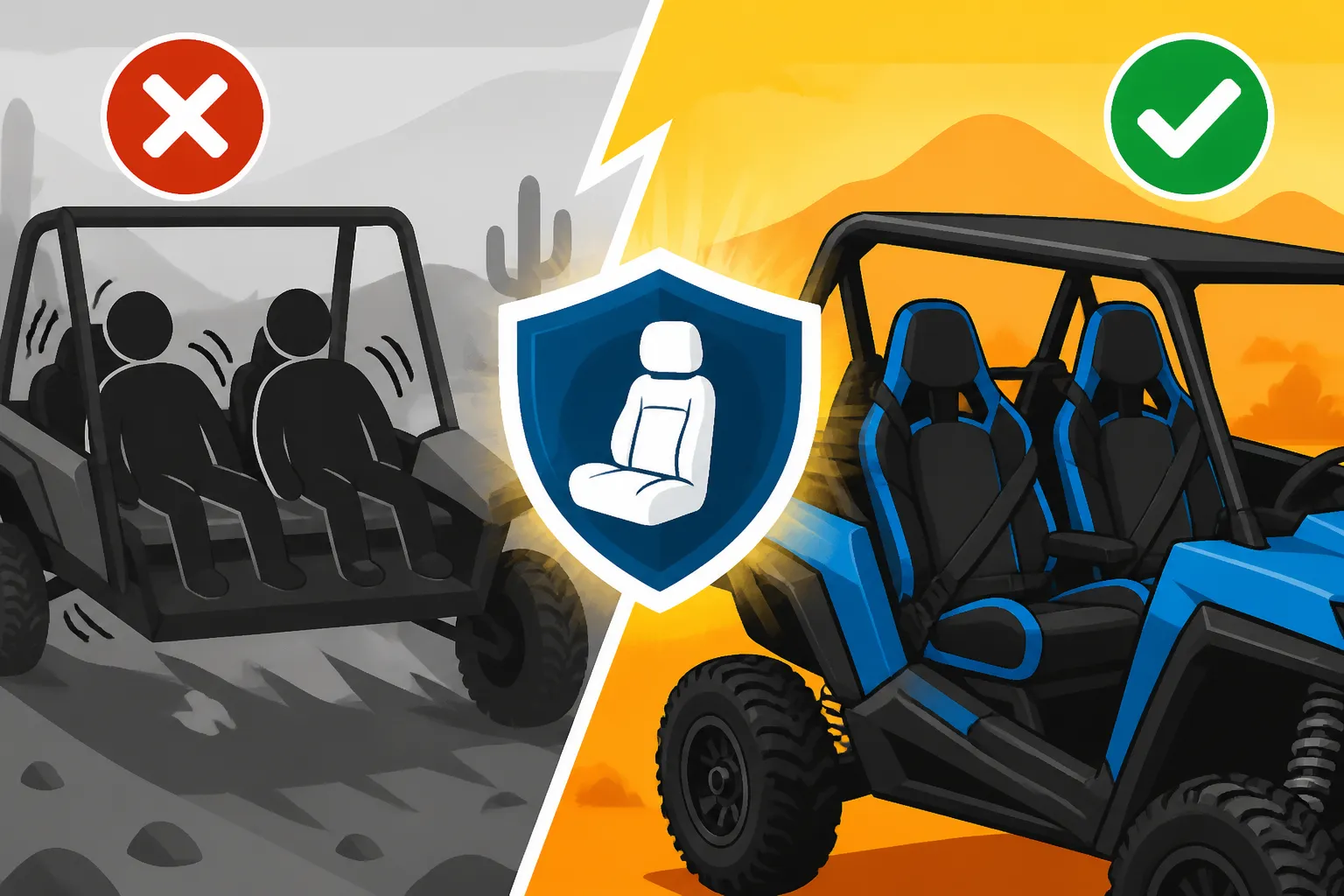
UTVs, or Utility Terrain Vehicles (often called side-by-sides), are a different beast altogether when it comes to passengers. These machines typically feature bucket seats or bench seats, steering wheels, and roll cages, resembling miniature cars. They are explicitly designed by manufacturers to carry multiple occupants, often two, four, or even six people, depending on the model. The key here is that the seating is integral to the original design of the vehicle. If your UTV has two factory-installed seats with seatbelts, then it's considered a two-passenger vehicle. If it has a factory bench seat for three, it’s a three-passenger vehicle. The distinction is crucial because the vehicle's entire design—its wider stance, heavier frame, and more robust suspension—is engineered to safely accommodate that additional weight and passenger count. You'll find that these machines often have specific safety features like robust roll-over protection systems (ROPS) and seatbelts for each designated seating position.
The Specifics of Texas Law
Texas law on OHVs, particularly Chapter 663 of the Transportation Code, is quite clear on the matter of passengers. It essentially states that an OHV may only be operated with passengers if the machine is "designed by the manufacturer to carry more than one person." This language isn't open to interpretation based on aftermarket modifications. It points directly to the vehicle's original factory configuration. So, if your ATV rolled off the assembly line as a single-rider quad, carrying a passenger on it, even on private land with specific exceptions for agricultural use or certain roadways, can put you in violation. For UTVs, the rules align with their multi-passenger design, requiring each passenger to occupy a designated, manufacturer-designed seat. Ignoring these specifics can lead to consequences ranging from citations to more severe legal issues in the event of an accident. We'll delve deeper into the specific [Texas Passenger Rules on an ATV] and [Texas Passenger Rules on a Side-by-Side] later in this guide.
Why Texas Law Emphasizes Factory Seating
The strict stance Texas takes on manufacturer-designed seating isn't just about making things difficult for riders; it's rooted deeply in safety, liability, and the inherent engineering of these powerful machines. When you consider the dynamic and often unpredictable environments where OHVs are operated, it becomes clear why such precise rules are necessary.
Safety Concerns and Engineering Standards
Every ATV and UTV is the product of extensive engineering, design, and testing. Manufacturers invest millions in ensuring their vehicles are as safe as possible when used as intended. This includes rigorous stability testing, crash simulations, and dynamic load assessments. When a manufacturer designs an ATV for a single rider, every aspect—from the frame geometry and suspension travel to the braking system and engine power—is calibrated for that single load and weight distribution. Adding a second person, even if they are small, fundamentally alters this balance. It raises the center of gravity, increases stopping distances, and reduces the vehicle's ability to absorb bumps and maintain traction. These changes can make an otherwise stable machine dangerously unstable, especially at speed or during quick maneuvers.
For UTVs, the multi-passenger design already incorporates these considerations, providing a wider stance, a lower center of gravity, and more robust components to handle the extra weight. Each factory seat is typically integrated into the vehicle's structure, often with its own safety harness or seatbelt and protected by a roll cage, enhancing occupant safety significantly. These are critical design elements that cannot simply be replicated with aftermarket add-ons.
Preventing Overloading and Instability
One of the most immediate dangers of adding extra, non-designed seating is overloading the vehicle. Every OHV has a maximum weight capacity specified by the manufacturer. Exceeding this limit, even by adding what seems like a small person, can lead to catastrophic mechanical failure or loss of control. The tires might be rated for a certain load, the suspension might bottom out, and the frame itself could be stressed beyond its design limits.
Think about traversing a steep incline or making a sharp turn on a rocky trail. With an overloaded or improperly balanced machine, the risk of a rollover skyrockets. Passengers who are not secured in a proper seat are far more likely to be ejected from the vehicle, leading to severe injuries. These scenarios are precisely what Texas law seeks to prevent by insisting on factory-engineered passenger accommodations. It's about ensuring the vehicle performs within its designed parameters, even under challenging off-road conditions.
Legal Liability and Insurance Implications
Beyond the immediate safety risks, there's a significant legal and financial aspect to consider. In the unfortunate event of an accident involving an OHV with improperly carried passengers, the operator faces potentially severe legal liability. Because the vehicle was not used as intended or modified in a non-compliant way, you could be deemed negligent. This can result in fines, legal battles, and substantial personal injury claims.
Furthermore, your insurance coverage might be jeopardized. Most insurance policies are written with the assumption that the vehicle will be operated according to manufacturer specifications and state laws. If an accident occurs while carrying passengers in non-manufacturer-designed seating, your insurer could deny coverage, leaving you personally responsible for all damages, medical bills, and legal fees. This financial burden alone is reason enough to adhere strictly to the rules. It’s also why many manufacturers, like those who provide [Texas ATV Title for a Youth Quad] or larger machines, will clearly state passenger limits in their owner’s manuals, covering their own liability.
Understanding "Manufacturer-Designed": What Qualifies and What Doesn't
The phrase "manufacturer-designed" might seem straightforward, but it often leads to questions from riders keen to maximize their machine's utility or share the fun with more people. Let's break down what truly meets this standard and what modifications, no matter how well-intended, fall short in the eyes of Texas law and safety.
Factory Seats Versus Aftermarket Add-ons
A factory seat is exactly what it sounds like: the seating that came with your ATV or UTV when it left the assembly line, as specified in the owner's manual and vehicle specifications. For UTVs, this means the integrated bucket seats or bench seats, complete with their mounting points, internal structure, and usually, corresponding seatbelts. For most ATVs, this means the single seat designed for the operator.
Aftermarket add-ons, while often marketed as "passenger seats" or "buddy seats," typically do not qualify. These might include bolt-on seat extensions, cargo boxes with padded lids, or even custom-fabricated seats. While some of these accessories from companies like SuperATV can significantly enhance the functionality or comfort of your machine in other areas (think upgraded suspension or storage solutions), when it comes to legally carrying passengers on public roads or designated OHV trails in Texas, they generally don't meet the "manufacturer-designed" standard. The reason is simple: these additions were not part of the original vehicle's safety certification and do not factor into the manufacturer's engineering for weight distribution, stability, or passenger protection. They often sit higher, are less securely mounted, and lack the integrated safety features of factory seating.
Common Modifications That Fall Short
Riders, being resourceful, often come up with creative ways to carry extra passengers. However, many common modifications, despite their ingenuity, fail to meet the legal and safety requirements in Texas:
- Rear Rack Pads/Seats: Adding a padded seat to the rear cargo rack of an ATV is a very common modification. While it provides a cushioned spot, it places the passenger far behind the rear axle, significantly shifting the center of gravity and making the ATV extremely front-light and prone to wheelies or rollovers, especially during acceleration or climbing. It also typically offers no footrests or handholds, making ejection highly likely.
- Custom Benches in UTV Beds: Some UTV owners might fabricate a bench seat in the cargo bed for additional passengers. While the bed itself is strong, these custom seats rarely have integrated seatbelts, proper roll-over protection, or secure mounting, making them incredibly dangerous in the event of a sudden stop, turn, or rollover. The bed is designed for cargo, not human occupants, and is usually outside the vehicle's primary occupant protection zone.
- "Stand-on" Passenger Platforms: Less common but still seen, these are platforms for passengers to stand on, sometimes with a grab bar. These are inherently unstable and offer no protection or securement, putting passengers at extreme risk of falling off.
None of these modifications, no matter how professionally installed or how comfortable they may appear, will be recognized as "manufacturer-designed seating" by law enforcement or insurance adjusters in Texas.
When to Consult the Owner's Manual and Dealer
The ultimate authority on your specific machine's passenger capacity and intended use is its owner's manual. This document, provided by the manufacturer, will explicitly state how many people your ATV or UTV is designed to carry. It will outline weight limits, safety precautions, and any specific instructions for passengers. If the manual says "single rider only" for your ATV, then that's the legal and safe limit, regardless of aftermarket accessories.
If you have any doubts, or if you're considering a new purchase, consult with a reputable dealer. They are familiar with the manufacturer's specifications and Texas OHV laws. They can help you understand which models are genuinely multi-passenger and which are not. For instance, if you're looking into something for a younger rider, they can explain specific models and any accompanying rules for a [Texas Rules for a Child in a Side-by-Side]. Relying on online forums or anecdotal advice can lead you down a risky path. Always go back to the original source—the manufacturer's documentation—for definitive answers regarding passenger capacity and safety.
Passenger Rules Beyond Seating: Age, Helmets, and More
While manufacturer-designed seating is paramount, carrying passengers on an ATV or UTV in Texas involves a broader set of rules. These guidelines are designed to create a comprehensive safety net, addressing not just where a passenger sits, but who that passenger is, and what protective gear they must wear. Ignoring these additional requirements can be just as risky and legally problematic as improper seating.
Minimum Age for Passengers in Texas
Texas law does not explicitly set a minimum age for passengers on OHVs. However, it does require that any person operating an OHV on public land must be at least 14 years old and, if between 14 and 18, must hold a safety certificate. While this doesn't directly apply to passengers, the absence of a specific passenger age limit doesn't mean "anything goes."
Common sense, manufacturer recommendations, and the general spirit of safety laws suggest that very young children, especially infants and toddlers, should never be passengers on OHVs. Their developing bodies are not equipped to handle the jolts, vibrations, and dynamic forces of off-road riding. They often lack the strength to hold on, and even in a secure seat, their heads and necks can be at risk. Many manufacturers recommend passengers be able to reach the handholds and footrests and follow instructions, typically implying a certain level of physical maturity and cognitive ability. For [Texas Rules for a Child in a Side-by-Side], even without a strict age, supervision and proper fit within the vehicle's restraints are crucial.
Helmet and Eye Protection for Passengers
This is one area where Texas law is quite explicit and unwavering: regardless of age, all riders and passengers on an OHV must wear a helmet that meets federal safety standards (such as DOT certification) if riding on public land. This requirement applies equally to the operator and any passenger, whether on a quad or a side-by-side. The only exception, as we'll discuss in [Why a Roll Cage Replaces the Helmet Requirement?], is often related to UTVs that meet specific criteria for having an enclosed cab or robust roll-over protection system, but even then, eye protection remains critical.
Beyond helmets, eye protection is also mandatory. Goggles, a face shield, or shatter-resistant glasses are essential to protect against dust, debris, insects, and low-hanging branches. Off-road environments are notoriously dusty and prone to flying objects, and losing vision, even for a split second, can lead to a serious accident. For passengers, who might be less aware of their surroundings or unable to react quickly, this protection is even more vital. Ensure both you and your passenger have properly fitting, approved safety gear before hitting any public trails.
Seatbelt Use in Side-by-Sides
For UTVs that are equipped with manufacturer-designed seatbelts (which most are), both the operator and all passengers are required to use them. This is not optional; it's a critical component of the vehicle's safety system. Seatbelts are designed to keep occupants securely within the vehicle's protective frame (the roll cage) in the event of a rollover or sudden impact, preventing ejection, which is often the cause of the most severe injuries in OHV accidents.
Always ensure seatbelts are properly fastened and adjusted for each occupant. They should be snug across the hips and chest, without slack. For smaller passengers, ensure they fit properly within the seatbelt system; if they are too small for the factory seatbelt to offer effective restraint, they may be too small to safely ride as a passenger, regardless of age. Checking these details is part of adhering to [Texas Seat Belt Rules in a Side-by-Side] and generally promoting a safe riding culture. Never allow a passenger to ride with a loose seatbelt or, worse, unbuckled.
The Risks of Modifying Seating for Extra Passengers
The temptation to squeeze in "just one more" can be incredibly strong, especially when you're out with friends or family. However, modifying your OHV to carry more passengers than it was designed for, or using non-manufacturer-designed seating, introduces a cascade of risks that far outweigh any perceived convenience. These risks aren't just theoretical; they contribute to a significant number of accidents and legal headaches every year.
Increased Rollover and Ejection Risk
As discussed, adding weight in an unintended location drastically alters an OHV's center of gravity. For an ATV, a passenger on the rear rack can make the front end light, reducing steering control and making the machine prone to flipping backward on inclines or during acceleration. Conversely, carrying a passenger on the tank can make the front end heavy and unstable, especially on descents. A higher center of gravity, common with aftermarket seats that perch passengers high, increases the likelihood of a rollover during turns or when traversing uneven terrain.
For both ATVs and UTVs, passengers in non-manufacturer-designed seating are at a much higher risk of ejection. Factory seats are often designed with contours, bolsters, and in UTVs, integrated seatbelts and doors, all working to keep occupants inside the protective zone of the vehicle. An aftermarket seat or an improvised seating arrangement usually lacks these critical retention features. During a sudden bump, a sharp turn, or an unexpected stop, an unsecured passenger can be thrown from the vehicle, often striking the ground, the machine itself, or nearby obstacles with tremendous force, leading to severe or even fatal injuries.
Penalties for Non-Compliance
Beyond the physical dangers, operating an OHV with improperly seated passengers in Texas can lead to legal penalties. While specific fines can vary by county and the discretion of the enforcing officer, violations of OHV passenger laws are typically considered Class C misdemeanors. These can carry fines that range from minor to significant, often between $25 and $500, plus court costs.
Consider a scenario where you're pulled over while riding on a designated county road that allows OHVs under certain conditions, and you have a child sitting on the rear rack of your single-rider ATV. Not only are you risking that child's safety, but you're also likely to receive a citation for improper passenger carriage. These fines can quickly add up, making a fun outing turn into a costly mistake. For a deeper understanding of potential consequences, you might want to look at [Texas Fines for Illegal ATV Road Use]. These penalties underscore the state's commitment to rider safety and the serious nature of these regulations.
Voiding Warranties and Insurance
Modifying your OHV, especially its structural components or intended design, can have significant repercussions for your warranty and insurance. Most manufacturer warranties explicitly state that they are voided if the vehicle is used in a manner inconsistent with its design or if unauthorized modifications are made. If your engine or frame suffers damage after being overloaded due to extra passengers on an aftermarket seat, the manufacturer may refuse to cover the repair under warranty.
Similarly, as mentioned earlier, your insurance policy could be at risk. In the event of an accident involving an improperly seated passenger, your insurance provider might deny coverage, arguing that the vehicle was not operated as intended or legally. This leaves you, the operator, solely responsible for all financial damages, including medical expenses for injured passengers, property damage, and legal defense fees. These costs can be astronomical and far exceed the price of any aftermarket seating you might have installed. It's a risk that financially, is simply not worth taking.
Navigating Different Riding Environments with Passengers
The rules surrounding passengers and manufacturer-designed seating aren't universal across all types of land in Texas. While the general safety principle always applies, the specific legal enforceability can vary depending on whether you're on public roads, designated OHV parks, or private property. Understanding these distinctions is key to responsible riding.
Public Roads and Approved Crossing Points
When it comes to public roads in Texas, ATVs and UTVs generally face significant restrictions. As a rule, OHVs are not street legal in Texas and cannot be registered for road use, as explored in [Why Texas Will Not Register an ATV for the Road]. There are, however, limited exceptions that allow OHVs to operate on certain public roads or to cross them. These exceptions often come with stringent conditions, including adhering to all safety laws, which absolutely include the manufacturer-designed seating rule.
For instance, if you're operating an OHV on a public road under an agricultural exemption, or crossing a highway at a designated point, any passengers must be in manufacturer-designed seating. A Texas Parks and Wildlife Department game warden or a county sheriff's deputy would enforce these rules just as strictly on a public road or right-of-way as on an OHV trail. The dangers of improper seating are amplified on public roads where you're sharing space with faster, heavier vehicles. The risk of ejection or rollover is compounded by the potential for high-speed collisions. Always assume that if you're on public land or a public thoroughfare, the strictest interpretation of the passenger seating law applies.
OHV Parks and Their Specific Rules
Texas boasts a number of excellent OHV parks, from Barnwell Mountain Recreation Area to Hidden Falls Adventure Park. These parks provide dedicated spaces for off-road enthusiasts to enjoy their machines. While these parks generally adhere to state OHV laws, many also have their own additional rules and regulations regarding passengers, safety gear, and vehicle modifications. It's common for parks to explicitly state that all passengers must occupy manufacturer-designed seating and wear appropriate safety gear, often including helmets regardless of vehicle type.
Before heading to any OHV park, it is crucial to check their specific guidelines, usually available on their website or posted at the entrance. Some parks might have particular restrictions for youth riders, or specific rules for certain types of trails. For example, some technical rock-crawling trails might discourage passengers or require specific types of UTVs due to the extreme terrain. These park-specific rules are often in place to protect riders and to help manage liability for the park operators. Failing to follow them could result in being turned away at the gate, or worse, being cited by park rangers.
Private Land Considerations
Riding on private land, such as your own ranch or property with explicit permission from the landowner, generally offers more leeway regarding OHV laws. State laws governing helmets, safety certificates, and even passenger seating are primarily enforced on public lands, public roads, and designated OHV trails. On your own private property, you are largely free from state intervention in these matters, as long as you're not creating a public nuisance or violating other general laws.
However, "legal" doesn't automatically mean "safe." Even on private land, the laws of physics still apply. An overloaded ATV or a UTV with passengers in an improvised cargo bed seat is just as prone to rollover or ejection on your ranch as it is on a public trail. The safety risks, potential for severe injury, and personal liability (especially if someone else is injured on your property) remain very real. Responsible riding dictates that even on private land, you should still prioritize safety. Adhere to manufacturer-designed seating, ensure all riders wear helmets and eye protection, and operate the machine within its intended capabilities. It’s always best to err on the side of caution when human lives are at stake, even if the law isn't directly looking over your shoulder.
Disclaimer
This article is for general informational purposes only and does not constitute professional advice. Laws, prices and regulations vary by location and change over time. Consult a qualified professional for guidance on your specific situation.