Which Gulf Beaches Stay Open to Vehicles
Texas Gulf beach vehicle access regulations, state laws, and local ordinances determine where off-highway vehicles can drive.
Legal here, illegal one county over.
What each state allows, the mirrors, horn and signals a conversion requires, and the county and city overrides that quietly change the answer.
Texas Gulf beach vehicle access regulations, state laws, and local ordinances determine where off-highway vehicles can drive.
Texas cities close coastal beaches to off highway vehicles for environmental protection, public safety, and erosion control.
Texas counties close public beaches to off-highway vehicles for safety and environmental protection, requiring pre-trip research.
Texas ATV and UTV drivers need a valid driver’s license on public beaches because authorities classify sand as public roadways.

Texas beach quad regulations and local ordinances dictate where off-highway vehicles can legally ride along the Gulf Coast.
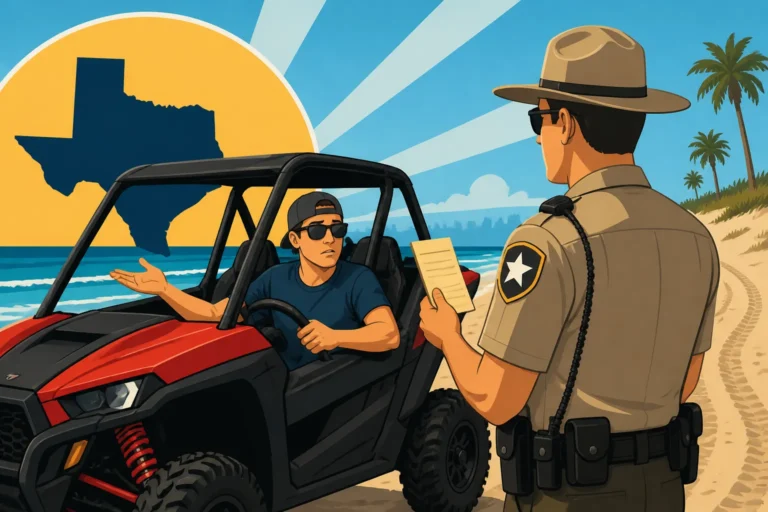
Texas Gulf Coast beach riding laws explain why ATV and UTV operators receive expensive tickets and fines for environmental and safety violations.

Texas Class C Misdemeanor costs for ATV and UTV riders include base fines, court fees, and administrative surcharges.
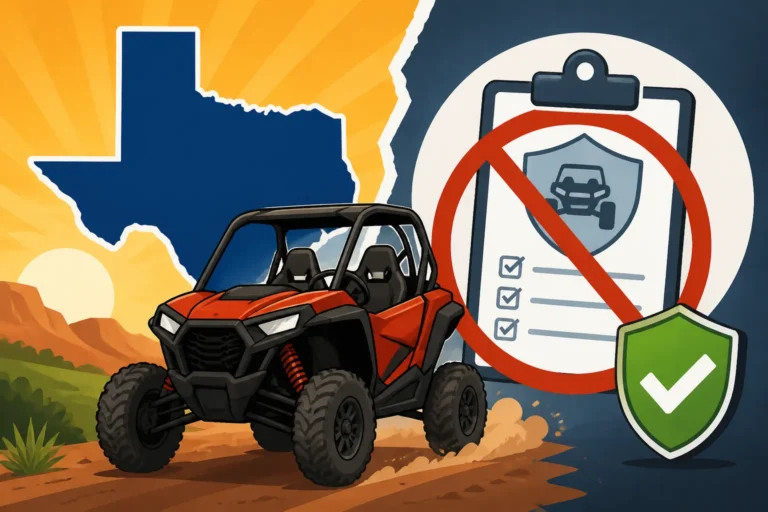
Texas ATV insurance rules stem from off-highway vehicle classifications that exclude recreational machines from public road mandates.

USFS spark arrester standards and approval processes help ATV and UTV riders prevent wildfires in national forests.
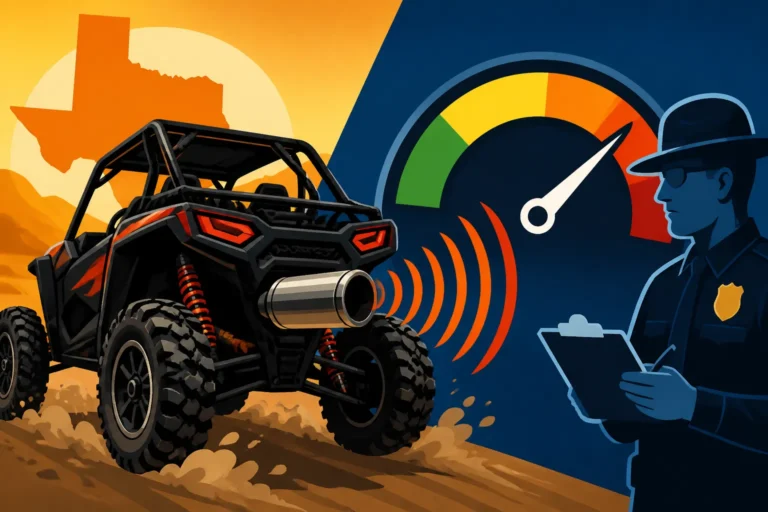
Texas off-highway vehicle exhaust noise regulations lack statewide decibel limits, but riders can face disturbing the peace citations.