Eisenhower State Park’s Quad-Only Trails
Eisenhower State Park’s quad-only trails can be a good fit for ATV riders near Lake Texoma, but the “quad-only” label matters: a trail suitable for a four-wheeler may not be open to a side-by-side. This guide explains how to plan your visit, check machine and rider requirements, and avoid arriving with the wrong vehicle or missing paperwork.
What quad-only trails mean at Eisenhower State Park
A quad is not the same as a side-by-side
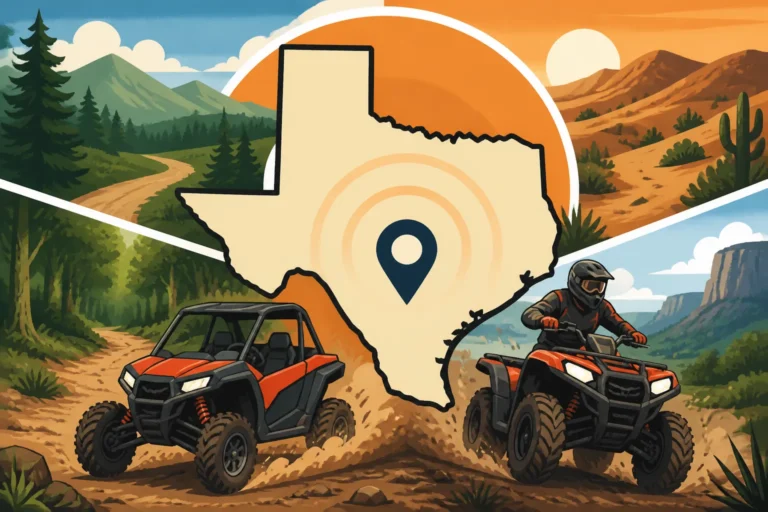
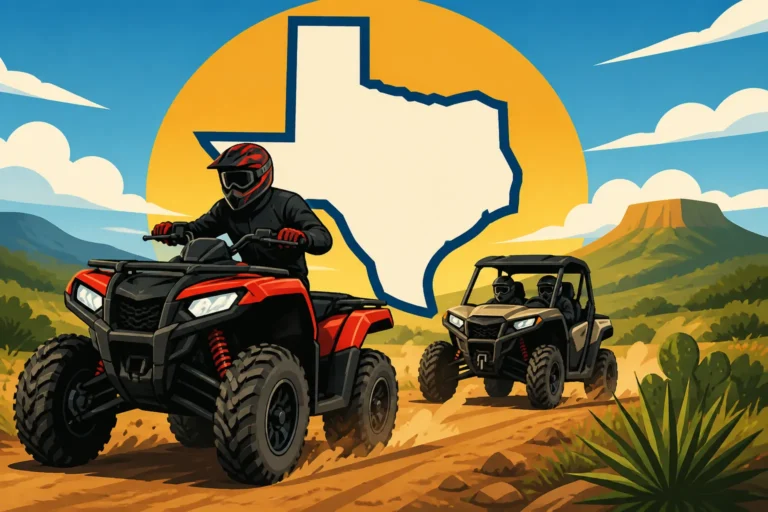
In everyday conversation, people often use “ATV” to mean almost any off-road machine. On a trail map, though, a quad usually means a four-wheeled ATV that the rider straddles. A UTV or side-by-side has a seat and steering wheel, and its wider body may not fit a route designated for quads.
That distinction is especially important when you are planning a family outing or hauling more than one machine. A trail labeled for quads should not be treated as permission for every off-road vehicle. Check the park’s current trail map and posted signs for the permitted vehicle type before unloading. If you ride a side-by-side, confirm directly with park staff whether it is allowed on any designated route.
The distinction is also relevant when comparing Eisenhower with other nearby riding areas. A park may welcome a particular class of machine on one trail while restricting it elsewhere. For a broader explanation of how Texas defines these vehicles, see What Texas Counts as an Off-Highway Vehicle and ROVs and UTVs Under the Texas Definition.
Why the trail designation matters
A narrow or winding route can be manageable on a quad but unsuitable for a wider machine. Trail designations help keep riders on routes that fit their vehicle, reducing conflicts and the temptation to squeeze around barriers or ride off the marked path. At a state park, signs and closures are part of the rules, not suggestions to interpret once you are already on the trail.
Treat a “quad-only” designation as a clear boundary. Don’t assume that a short wheelbase, lifted suspension, or other modification makes a UTV eligible. If your machine’s classification is unclear, ask the park before traveling. A phone call can save you from towing a machine all the way to the park only to learn that it cannot use the trail you came to ride.
It can help to keep a photo of your machine’s make, model, and overall width available when you ask. Park staff can give you a more useful answer when they know exactly what you plan to bring.
Planning a ride at Eisenhower State Park
Check trail access before you leave home
Trail access can change with weather, maintenance, special events, or other park conditions. Start with the park’s official information and confirm which routes are open to your vehicle on the day you plan to visit. Pay particular attention to any posted restrictions, riding hours, required equipment, and check-in procedures.
A route shown on a map does not necessarily mean it is open that day. Heavy rain can make trails vulnerable to damage, while a temporary closure can change your plan after you have packed. Check again shortly before setting out, especially if your drive to the park is long. If a trail is closed, stay off it even if the surface looks rideable from the entrance.
A digital mapping tool can be useful for preparing, and some riders use onX Offroad to review routes and organize a trip. Use it as a planning aid, not as the final word on access: map data may not reflect a current closure or a park-specific vehicle restriction. Confirm the route with the park and follow signs on the ground. For related local riding options, see Eisenhower State Park’s Trails in Texas and Texas OHV Parks by Region.
Plan for Lake Texoma conditions and a full day out
Eisenhower State Park sits on the Texas side of Lake Texoma near Denison, so your outing may involve more than a few trail laps. Think through the drive, parking and unloading, food and water, rest breaks, and where your group will meet if anyone gets separated. If you are riding with children or newer riders, agree on a pace and regrouping point before the machines start.
Weather deserves real attention. A hot, exposed ride can become draining quickly, and rain may affect both trail conditions and travel time. Carry enough drinking water for everyone, protect yourself from sun and dust, and avoid pushing the group to finish a route if riders are tiring. For practical seasonal preparation, Texas Riding Seasons and Heat offers more context on planning around Texas conditions.
If you are using a phone-based map, download or save the information you need before leaving a reliable connection. Keep your phone protected from dust and vibration, and don’t rely on it as your only way to navigate or contact someone. onX Offroad can help you organize a route plan, but park signs and staff instructions take priority if they differ from what appears in an app.
Requirements to check before riding
Confirm park entry, decal, and trail procedures
Before you arrive, check what the park requires for entry and for riding an off-highway vehicle. These are separate questions: a park-entry process does not automatically tell you whether an OHV decal, trail check-in, or other riding requirement applies to your machine. Requirements can depend on where you ride and the rules in force at the particular site.
Review the park’s current guidance for any required permits or decals, and confirm whether you need to display anything on the machine. If you are unsure, ask before the trip rather than trying to resolve it at the trail entrance. The general background is covered in The Texas OHV Decal Explained and [Texas Rules for Riding Public Land].
Bring any documents or proof the park tells you to carry, and make sure you know where the riding area begins and ends. Stay within the designated route. An OHV decal or park admission does not grant permission to ride wherever there is open ground.
| Before the trip | What to confirm |
|---|---|
| Vehicle type | Whether the trail is open to your quad, and whether your side-by-side or other machine is excluded |
| Trail status | Which routes are open and whether weather or maintenance has changed access |
| Entry and riding requirements | Park admission, any required OHV decal or permit, and check-in procedures |
| Rider requirements | Safety certificate rules for younger riders, supervision, and required safety gear |
| Machine preparation | Brakes, tires, controls, lights where applicable, and any equipment listed by the park |
| Day plan | Water, fuel, communication, weather, and a meeting point for your group |
Prepare riders and machines, not just the trailer
Do a basic inspection before you head out. Check tire condition and pressure, brakes, throttle response, steering, and any loose fasteners. Look for leaks and make sure the machine is appropriate for the rider’s size and experience. A beginner who is still learning throttle control may have a much better day on a familiar, manageable quad than on a powerful machine they have barely ridden.
Make sure each rider has a properly fitting helmet and other protective gear suited to the conditions. Review the park’s requirements rather than assuming that the equipment rules at one riding area are identical to another’s. If children are coming along, check the applicable age, supervision, and safety-certificate rules before you travel. The details are covered in Texas OHV Safety Certificate Requirements.
A short briefing can prevent small problems from turning into stressful ones. Agree that riders will stay on marked routes, keep a safe distance, slow down when visibility is limited, and stop if someone needs help. If one rider has to pull over, the group should know where to wait and how to communicate.
Making the ride safer and more enjoyable
Match the route to the least experienced rider
It is tempting to plan around the most confident person in the group, especially when everyone has driven a long way. A better approach is to choose a pace and route plan that the least experienced rider can manage comfortably. That does not mean the outing has to be dull. It means the group is less likely to split up, rush, or put pressure on someone who is still learning.
Before starting, explain how the group will handle stops and turns. Keep enough room between machines to react to dust, sudden braking, or an obstacle. If a rider is unsure about a section, let them pause and assess it. Don’t make anyone feel they have to follow another machine through a spot they cannot safely handle.
A useful plan is to designate a lead rider and a sweep rider who stays behind the group. Agree on a simple signal for stopping and regrouping, and make sure everyone knows the meeting point if the group becomes separated. For younger riders, follow the applicable supervision rules and keep them within the level of oversight the park requires.
Respect closures, signs, and other park visitors
Stay on the marked trail and obey signs, barriers, and staff directions. Riding around a closure can damage soil and vegetation, create a hazard for someone working in the area, and put your group on a route that is not approved for your machine. If the trail appears blocked or conditions look unsafe, stop and check with park staff instead of improvising a detour.
Keep speed appropriate to visibility and trail conditions. Dust, blind turns, uneven ground, and other visitors can all reduce the time you have to react. Give other riders space, and be courteous when passing or meeting someone on a narrow section. A ride feels a lot less relaxing when the group is trying to manage avoidable close calls.
Also remember that off-road riding access does not make nearby public roads part of the trail system. A quad-only trail designation is about the approved riding route; it does not make an ATV or UTV street legal. For the broader road-use rules, see Are ATVs Street Legal in Texas?.
Keep a backup plan for a changed day
Sometimes the most useful part of planning is knowing what you will do if your intended ride is unavailable. A closure, a vehicle restriction, or an unexpected issue with your machine may mean changing the day’s plan. Decide in advance whether your group will choose another park activity, reschedule the ride, or visit another riding area that confirms access for your vehicle.
If you are considering a different location, verify its rules separately. An area that allows one type of ATV may restrict UTVs, require a different permit, or have its own safety procedures. Don’t assume that a Texas OHV decal, a trail map, or a previous visit answers every question for a new site.
onX Offroad may be helpful for keeping alternate routes and trip notes together, but use official park information to check whether a specific route is open and permitted. A little flexibility makes it easier to enjoy the day without feeling pushed to ride a closed or unsuitable trail just because you came prepared for it.
Disclaimer
This article is for general informational purposes only and does not constitute professional advice. Laws, prices and regulations vary by location and change over time. Consult a qualified professional for guidance on your specific situation.