Texas Parks That Fill Up on Holidays
A holiday ride can go sideways before the engine even starts: the park is crowded, camping is full, or a wet trail has closed after you’ve driven for hours. This guide explains which Texas OHV areas are most likely to feel busy on holiday weekends, how to plan around crowds, and what to check before loading your ATV or UTV.
Texas OHV parks most likely to feel busy on holiday weekends
Holiday crowds tend to gather where riders can camp, ride a variety of terrain, or reach the park from a major population center. That doesn’t mean a particular park will always be full. Weather, trail conditions, special events, and the holiday itself all affect attendance. But if your plans depend on a campsite, a long day of riding, or a particular trail area, assume that other riders may have the same idea and plan early.
| Riding area | Why it can draw holiday traffic | What to plan for |
|---|---|---|
| Barnwell Mountain Recreation Area near Gilmer | A well-known East Texas destination with extensive trails and camping options | Check park access, camping arrangements, and trail conditions before traveling |
| Hidden Falls Adventure Park near Marble Falls | A popular Central Texas destination with varied terrain and access from the Austin area | Confirm operating details and camping availability directly with the park |
| Sam Houston National Forest trail near New Waverly | A public-land riding option within reach of the Houston area | Check trail status, width requirements, and required permits before setting out |
| Northwest OHV Park near Bridgeport | A North Texas option that can appeal to riders around the Dallas–Fort Worth area | Verify current access and park-specific rules, especially if traveling with a full-size UTV |
| Trophy Club Park near Grapevine Lake | A convenient outing for some Dallas–Fort Worth riders | Review the park’s rules and availability before making it the centerpiece of a holiday trip |
Barnwell Mountain Recreation Area near Gilmer
Barnwell Mountain is a natural candidate for a holiday weekend because it offers a destination-style ride in East Texas, with varied trails and camping options. For a rider coming from Dallas, Tyler, or another part of the region, the appeal is obvious: make the drive, set up camp, and spend more than a few hours on the trails.
That same appeal is why it’s sensible to treat holiday lodging and access as limited until confirmed. Don’t assume a campsite will be available just because the park has camping, and don’t assume that a familiar trail will be open after heavy rain. Check the park’s current information before you leave, especially if your trip hinges on staying overnight. The guide to [Texas OHV Parks With Camping] can help you compare the kinds of overnight options available around the state.
If Barnwell is your main destination, make a backup plan before packing. You might choose a different weekend, arrange an alternate place to stay nearby, or make the trip a day ride if the park’s camping is unavailable. For a closer look at how a weekend there compares with another Central Texas destination, see [Barnwell Mountain or Hidden Falls for a Weekend].
Hidden Falls Adventure Park near Marble Falls
Hidden Falls can attract holiday riders looking for a Central Texas outing, particularly people traveling from Austin and nearby communities. The combination of a well-known off-road destination and a manageable drive for many area riders can make popular weekends feel especially busy.
Before committing to a particular day, confirm the park’s current hours, access rules, and overnight arrangements. Those details can shape the whole trip. If you’re towing a UTV, for instance, it’s frustrating to arrive and discover that the plan you had in mind doesn’t match the park’s current entry or camping requirements.
It also helps to decide whether you’re going for a full weekend or just a day. A day trip may avoid the stress of finding a place to stay, but it still requires checking whether the park is open and what conditions are like. If you’re comparing options from the Austin area, [Texas OHV Parks Near Austin] offers a useful starting point.
Public trails and closer-to-home parks
Not every busy holiday ride is a destination park with campsites. A public trailhead or local OHV park can get crowded because it is close to a large city, even if riders are only planning a few hours on the trail. The Sam Houston National Forest trail near New Waverly, for example, may be a convenient choice for Houston-area riders, but convenience can bring more vehicles to the same access points on popular weekends.
Northwest OHV Park near Bridgeport and Trophy Club Park near Grapevine Lake may also appeal to North Texas riders who want to avoid a longer trip. For these closer options, check operating information and park rules before loading up. If your machine is a wide side-by-side, confirm that the route or park accommodates it rather than assuming every trail is open to every vehicle.
Public-land access can work differently from a privately managed park. You may need to confirm trail status and permits separately, and riding access can depend on conditions. For additional context, see [Texas Public Land Riding Areas] and [Texas National Forest Permits].
Why holiday weekends get crowded and what that means for your ride
Holiday traffic isn’t just a matter of more riders on the trail. A crowd can affect the whole day: vehicle lines at the entrance, busy parking areas, limited camping, slower travel on narrow routes, and less flexibility if weather or closures change your plans.
The calendar matters, but so do conditions
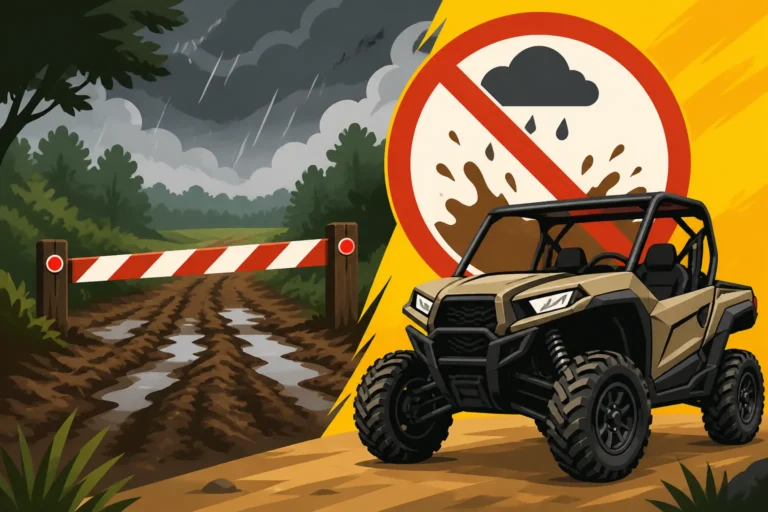
Three-day weekends and school breaks are obvious high-demand periods, but a holiday doesn’t guarantee a crowded park. Rain can reduce turnout or close trails, while a stretch of pleasant weather can draw riders who were waiting for a good weekend. Special events, local travel patterns, and the park’s own capacity also make a difference.
That uncertainty is a good reason not to rely on old social posts or a friend’s experience from a previous season. Confirm conditions and access close to your trip, then check again before leaving home. A trail that was open when you began packing may not be open after a storm. For a deeper look at weather-related changes, read [Texas Riding After Heavy Rain] and [Texas Trail Closures to Check First].
Crowds change the pace and the riding experience
A busy park can feel very different from a quiet weekday outing. You may need to wait at a staging area, ride more cautiously around other groups, or adjust your route when a narrow trail is backed up. Dust can hang in the air on dry days, and wet or muddy spots can create bottlenecks where machines slow down or need assistance.
If you’re riding with children or newer riders, build in extra time and keep the day flexible. Choose a route that matches the least experienced person in your group rather than letting the busiest moment push everyone toward terrain they aren’t comfortable with. Review [Texas OHV Parks for Beginners] when you’re selecting a destination for a mixed-skill group.
Crowds can also make basic communication harder. Agree on a regrouping spot before you start, keep your group together, and don’t assume everyone will have reliable phone service in the riding area. Download or carry the information you need before setting out.
How to plan a holiday ATV or UTV trip
A little preparation can save a long drive, especially when your group is hauling machines, camping gear, and food. The goal isn’t to predict exactly how busy a park will be. It’s to make sure your plan still works if the easiest option is unavailable.
Confirm access, camping, and rules before you tow
Start with the park or land manager’s own information. Confirm whether the riding area is open, whether access is affected by weather, and whether overnight stays require advance arrangements. Ask about vehicle size restrictions, safety equipment, permits, check-in procedures, and any rules that apply to passengers or children.
Then confirm the details for the machine you’re bringing. A route that works for a narrow ATV may not be appropriate for a wider UTV. Some areas have specific width limits, and rules can vary between parks and public trails. Don’t treat “ATV-friendly” as proof that every side-by-side can ride every route.
For navigation, a tool such as onX Offroad can help you review mapped routes and orient yourself while planning. Still, a digital map is not a substitute for current closure notices, land-manager rules, or permission to ride. Check the official information for your destination, and be cautious about relying on user-created route details as proof that a trail is open.
Build a backup plan that is actually usable
A backup destination should be more than a name saved on your phone. Check whether it allows your type of machine, whether it is open on your planned day, and how far it is from your primary choice. A park in the opposite direction may not be a realistic fallback once you have driven several hours with a trailer.
If you’re traveling with a group, agree on the backup before departure. Decide who will check for changes, how you’ll share updates, and whether the group is willing to switch to a day ride if camping is unavailable. That conversation is much easier at home than in a parking area with tired kids and a loaded trailer.
You can use onX Offroad to orient yourself around riding areas and routes, but keep a second source of information for park hours and access. Save addresses and contact details, and download any maps you may need before you reach a spotty-signal area. The trip-planning overview at [Texas Riding Areas Within Two Hours of a City] may also help you identify a closer alternative.
A practical holiday-weekend checklist
When a ride is important to your family or group, the final checks matter as much as choosing the park. A checklist helps prevent the small oversights—expired paperwork, missing safety gear, or an unconfirmed campsite—that can turn a planned weekend into a frustrating drive home.
The week before your trip
Confirm the park is open and review its latest trail or weather notices. Recheck camping or lodging arrangements, entry requirements, and any permits that apply to the land. If you’re planning a public-forest ride, don’t assume the process is the same as a private OHV park.
Make sure every machine is suitable for the route you intend to ride. Check tires, brakes, lights, belts, fluids, and tie-downs. For a UTV, verify that everyone has the appropriate seating and restraint setup, and make sure your trailer and tow vehicle are ready for the drive. Carry the safety gear required by the park or applicable rules; [Texas Parks That Require Helmets at All Times] is a useful reminder that park policies may be stricter than riders expect.
Use onX Offroad or another mapping tool to review your route and identify the general area, but save the park’s official directions and access details separately. Keep a paper or offline backup if cell coverage is uncertain.
The day before and the morning you leave
Check the forecast and the trail status again. If rain has moved through, ask whether trails remain open rather than guessing based on the weather at home. Make sure the group knows the departure time, meeting point, and backup plan. If one vehicle is delayed, everyone should know whether the rest of the group will wait or proceed.
Pack water, food, basic tools, first-aid supplies, and any required permits or proof of payment. Keep the essentials accessible rather than buried under camping gear. Before pulling away, do a final walk-around of the trailer and confirm that all machines are secure.
If the entrance is crowded or the trail conditions differ from what you expected, don’t feel obligated to force the original plan. A shorter route, a later start, or a different day may be the safer and more enjoyable choice. For families still weighing destinations, [Texas OHV Parks With Overnight Camping] can help narrow options, while [Texas OHV Parks Near Dallas] may be useful for riders looking for a North Texas outing.
Disclaimer
This article is for general informational purposes only and does not constitute professional advice. Laws, prices and regulations vary by location and change over time. Consult a qualified professional for guidance on your specific situation.