Sight Lines Before You Cross
We've all been there, out on the trails or tending to ranch duties, when suddenly you realize the most direct path to your next destination involves crossing a public road. It feels like such a simple act – just a quick dash across the asphalt – but this moment is fraught with some of the highest risks an ATV or UTV rider faces in Texas. It's not just about what you can see in front of you; it's crucially about what you can't see and what approaching drivers can't see until it’s too late. This guide is all about honing your awareness and giving you the tools to confidently navigate those tricky road crossings, making sure you have the best possible Sight Lines Before You Cross and understand the critical steps to ensure everyone's safety.
Understanding the Danger: Why Clear Sight Lines Matter When Crossing Texas Roads
Crossing a road on your ATV or UTV in Texas might seem like a minor inconvenience, a brief interlude in your off-road adventure or workday. But that brief moment is statistically one of the most dangerous situations you can encounter. Unlike a car driver who is accustomed to road speeds and traffic patterns, you, the off-road operator, are making a quick transition from a different environment, and often, with a machine that isn't designed for high-speed maneuvering or braking on asphalt. The biggest culprit in these incidents? Poor sight lines – both yours and those of the oncoming traffic.
The Hidden Hazards of Limited Visibility
Imagine you're pulling out from a dusty ranch road, heading towards a county thoroughfare. The tall mesquite bushes line both sides, creating a tunnel effect. You inch forward, straining to see around the bend, but all you catch are glimpses of fence posts and distant sky. This is a classic example of limited visibility, and it's a recipe for disaster. The problem isn't just that you can't see the approaching car; it's that the driver of that car might not see your smaller, slower-moving machine until it's directly in their path. The speed differential between an off-road vehicle and typical road traffic is immense, meaning reactions must be instant, and often, they simply aren't fast enough.
Furthermore, our ATVs and UTVs are often lower to the ground, especially older models or those without significant lifts. This can make them incredibly hard to spot over rises in the road, behind parked vehicles, or even through the glare of the sun. The sound of your engine might be swallowed by the wind or other traffic noise, eliminating another critical warning sign for drivers. When you're dealing with blind spots and obstructed views, it's not a matter of "if" something will go wrong, but "when" if you don't take proactive measures. This challenge is magnified on rural roads where speed limits are higher, and drivers might be less accustomed to looking out for slower-moving off-road vehicles.
The Stakes Are High: Preventing Collisions and Injuries
Let's not sugarcoat it: a collision between an ATV or UTV and a passenger vehicle often has catastrophic consequences for the off-road rider. These machines offer far less protection than a truck or SUV. While you might wear a helmet and other safety gear – and you absolutely should, as we discuss in [Texas Safety Apparel Rules for ATV Riders] – your machine itself isn't built to absorb the impact of a 4,000-pound vehicle traveling at 55 mph. Injuries can range from severe fractures to life-altering trauma, or worse. Beyond the immediate physical danger, there are legal ramifications. Understanding Texas law regarding road crossings, such as those covered in [Crossing a Texas Road at an Intersection] or [Crossing a Texas Road Away From an Intersection], is paramount. Ignoring these safety principles can lead to citations, heavy fines, and even criminal charges if negligence is proven in an accident. The financial burden of medical bills, vehicle damage, and potential lawsuits can easily exceed the cost of your machine multiple times over. It's a sobering thought, but one that underscores the absolute necessity of prioritizing clear sight lines every single time you approach a public road.
Mastering the Art of the Scan: How to Safely Assess Your Sight Lines
Before you even think about putting a tire on the asphalt, you need to become a master of observation. Assessing your sight lines isn't a quick glance; it's a deliberate, methodical process that becomes second nature with practice. This involves not only looking but also listening, and critically, understanding what you're actually seeing – or not seeing.
The 360-Degree Look and Listen Protocol
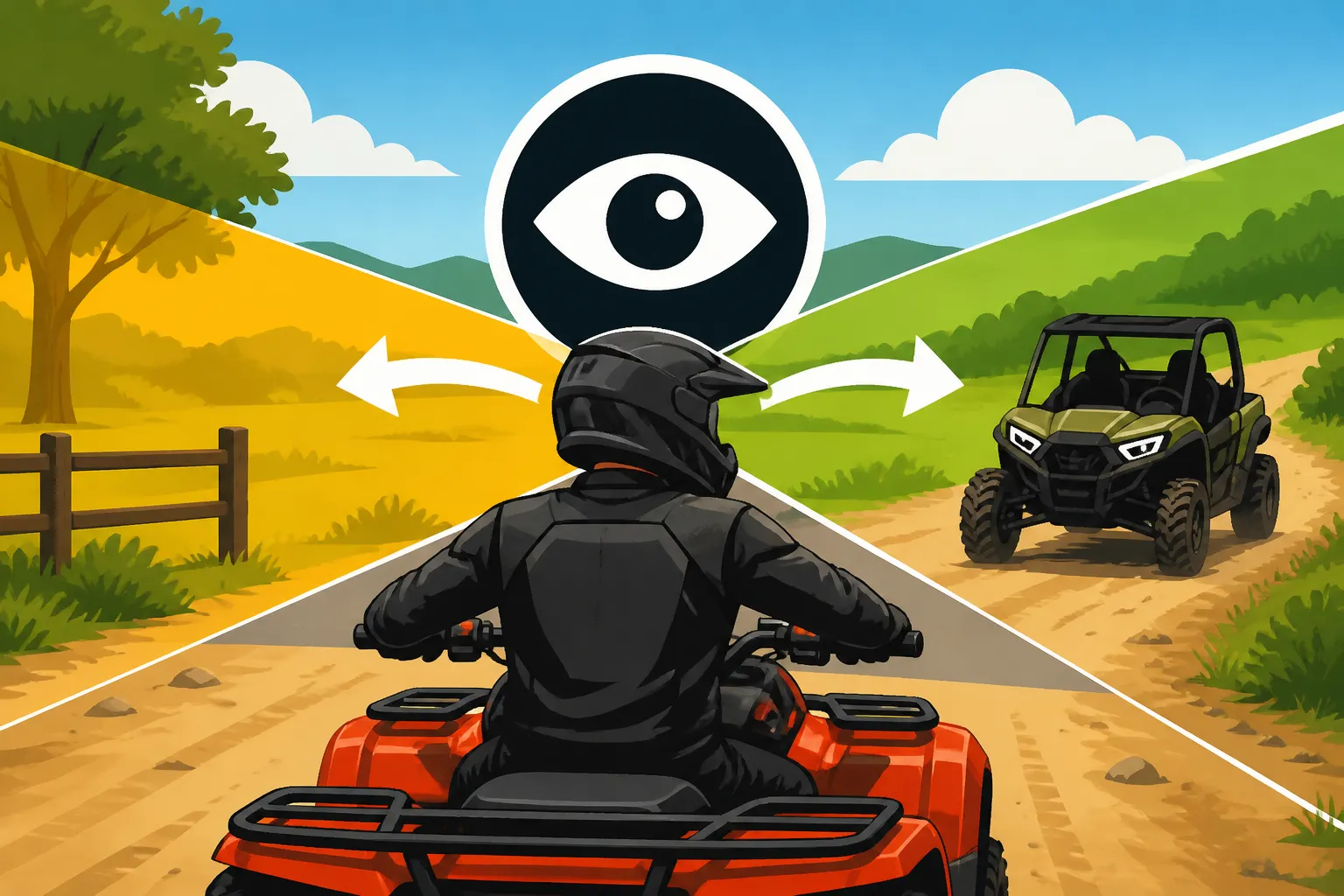
Before you make any move towards the road, bring your machine to a complete stop. This isn't just about adhering to the [Ninety Degrees and a Full Stop in Texas] rule; it's about giving yourself the dedicated time and stillness required to properly assess your surroundings. Turn off any loud music or communication systems that might interfere with your hearing. Now, execute a slow, deliberate 360-degree scan.
Start by looking left, then right, then left again. But don't just sweep your eyes; really look. Are there any vehicles approaching from a distance? Are there driveways or hidden entrances nearby that another vehicle might suddenly emerge from? Pay attention to any visual cues: dust clouds on a gravel road, sunlight glinting off a windshield, or even the subtle sway of trees that might indicate a large vehicle passing. Simultaneously, engage your hearing. Can you hear the distinct hum of tires on asphalt, the rumble of a diesel engine, or the whine of a motorcycle? Sound travels, and often, you'll hear a vehicle before you see it, especially around blind corners or crests. If you're on a ranch or an expansive property, you might hear the vehicle approaching long before it's a factor, allowing you to prepare.
Identifying and Mitigating Obstructions
Once you've done your initial scan, it's time to identify any potential obstructions. These could be anything from tall grass and overgrown hedges to parked vehicles, buildings, or even changes in terrain like hills or dips. For example, if you're attempting to cross a county road that crests a hill just a hundred yards to your left, you have a severe blind spot. No matter how hard you strain, you won't see a vehicle approaching from over that crest until it's practically on top of you. In such a scenario, inching forward very slowly, with your brake foot ready, might be your only option, even then, only if you're sure you can clear the immediate lane before traffic appears.
Another common obstruction might be a large truck or RV parked on the shoulder, completely blocking your view. Never assume that because one lane is clear, the other is too, or that you can simply "see around" a large obstruction. Sometimes, the best solution is to find an alternative crossing point with better visibility, even if it means a slightly longer route. If no better option exists, and you must cross, you will need to approach with extreme caution, inching your machine forward incrementally, constantly scanning, and being prepared to stop immediately. This is where a partner can be invaluable; having someone spot for you from the roadside can literally be a lifesaver, flagging you when clear and warning of traffic.
Practical Steps to Ensure Safe Crossings: Maximizing Visibility
Knowing the dangers and how to scan is vital, but action is what truly keeps you safe. There are tangible steps you can take to not only improve your own ability to see but also increase the chances of other drivers seeing you.
Strategic Positioning and Incremental Movement
When you approach a road you intend to cross, your position is everything. Don't just pull up to the edge and stop. Aim to stop where you have the clearest, unobstructed view of both directions, even if it means pausing slightly back from the very edge of the road. This might mean stopping with your front tires still on private property or the shoulder, ensuring you're not protruding into the traffic lane. From this vantage point, you can then begin your incremental movement.
Think of it like peeling back an onion, layer by layer. Inch forward just enough to extend your line of sight. Stop. Scan both ways again, listening intently. If clear, inch forward a bit more. Repeat this process until you have a full, unobstructed view of the road in both directions. This cautious, stop-and-go approach is especially critical on roads with blind corners or crests. It gives you precious milliseconds to react if an unseen vehicle suddenly appears. This also ties into the concept of [Stopping Before You Leave the Shoulder], ensuring you don't inadvertently enter the flow of traffic before it's safe. It may feel tedious, but those few extra seconds can prevent an accident.
Enhancing Your Machine's Visibility
While you can't control what other drivers see or how attentive they are, you can take steps to make your ATV or UTV more visible. One of the simplest and most effective is lighting. Even in broad daylight, having your headlights and taillights on can significantly increase your presence, especially for oncoming drivers. This is why [Lights On While You Cross] is often recommended. If your machine is equipped with aftermarket LED lights, even better – their brighter, distinct glow can catch attention more readily than standard halogen bulbs.
Consider also adding high-visibility flags or whip lights, particularly if you ride in areas with tall crops, sand dunes, or dense brush that might obscure your machine. A bright orange flag mounted six feet above the ground, often required in certain riding areas, can make a huge difference. Reflective tape on your machine's frame or fenders can also improve visibility, especially during dawn, dusk, or in low-light conditions when natural light is fading. For those with UTVs, additional side mirrors can greatly expand your rearward and peripheral vision. Many aftermarket companies, like SuperATV, offer a range of durable mirrors and lighting upgrades specifically designed for off-road vehicles that can significantly enhance your ability to see and be seen. Think about upgrading your stock mirrors to a wider angle set or installing auxiliary lighting bars for improved situational awareness.
Texas Laws and Best Practices for Road Crossings: Keeping it Legal and Safe
While safety is paramount, you also need to operate within the bounds of Texas law when it comes to crossing public roads. Ignoring these rules not only puts you at risk but can also lead to legal trouble. Texas has specific stipulations, even if they sometimes feel restrictive for off-road enthusiasts.
Legal Requirements for Crossing Public Roads
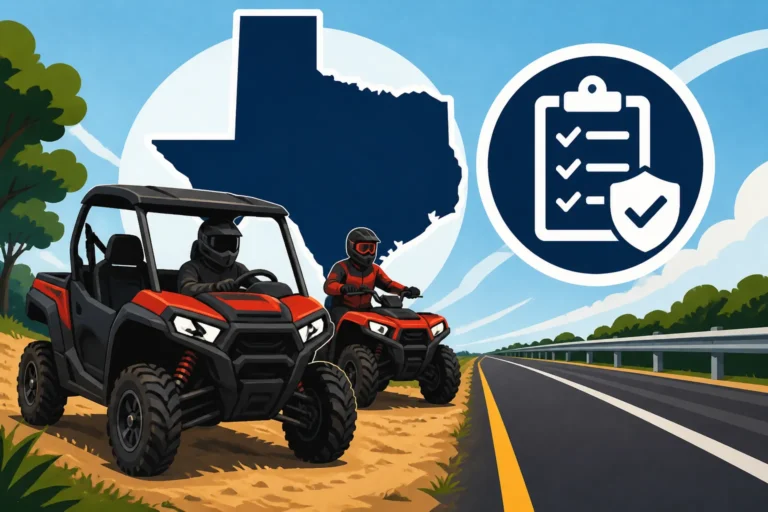
Texas law is pretty clear: ATVs and UTVs are generally not street legal. However, the law does provide specific, limited exceptions for crossing public roads. The general rule is that you must cross at a right angle to the road and only when it's safe to do so. This means avoiding diagonal crossings or riding down the shoulder to find a "better" spot. You must come to a complete stop before entering the roadway, just as you would at a stop sign. This "full stop" is critical for assessing your Sight Lines Before You Cross thoroughly.
For example, [Texas Rules for Getting Across a Road] explicitly state that an OHV may cross a public road, highway, or street that is not an interstate highway or limited-access highway if the operator stops and yields to all oncoming traffic. The crossing must be made at an angle of approximately 90 degrees to the roadway. If you are crossing a divided highway, the rules for [Divided Highways and Where You May Cross] are even more stringent, often requiring you to treat each section as a separate road crossing. It's not a free-for-all; these crossings are exceptions, not permissions to treat public roads as an extension of the trail. Always assume you are the less visible, less protected vehicle and act accordingly.
Best Practices Beyond the Bare Minimum
While adhering to the letter of the law is necessary, true safety often means going above and beyond the minimum requirements. Consider every road crossing as a potential hazard. This means always wearing your helmet, eye protection, and appropriate riding gear – even for a quick hop across a county road. Even if not legally mandated for such a short duration, it's a critical safety measure.
Another best practice is to signal your intentions, if possible. If you have hand signals you can safely use while maintaining control of your machine, do so. Make eye contact with any approaching drivers you can see, ensuring they acknowledge your presence. Don't assume that because a driver should see you, they will. Act defensively. If there's any doubt about the safety of a crossing, wait. Pull over, dismount if necessary, and get a better view on foot if the terrain allows. Patience is a virtue, especially when your safety is on the line.
Finally, think about your machine's setup. If you frequently cross roads for agricultural or ranching purposes, ensuring your mirrors are properly adjusted and clean can make a real difference. For some utility applications, adding a small flag to the back, perhaps even one from SuperATV's utility accessory line, can make your machine more noticeable to traffic approaching from behind as you prepare to cross. Every little bit of added visibility stacks up to make you safer.
Here’s a quick overview of common sight line challenges and proactive measures:
| Obstruction Type | Description | Impact on Sight Lines | Proactive Safety Measures | Relevant Texas Law/Practice |
|---|---|---|---|---|
| Vegetation | Tall grass, bushes, trees at road edge | Blocks view of approaching vehicles until very close | Inch forward slowly, use spotter, consider alternative crossing, add whip flag | [Stopping Before You Leave the Shoulder] |
| Terrain (Hills/Dips) | Crests of hills, dips in the road | Creates blind spots where vehicles suddenly appear | Extreme caution, inching, listen for engine noise, avoid crossing near blind crests if possible | [Ninety Degrees and a Full Stop in Texas] |
| Parked Vehicles/Buildings | Large vehicles, structures near intersections/driveways | Obscures vision of traffic, especially smaller OHVs | Incrementally advance, use high-visibility lighting, choose less obstructed crossing points | [Crossing a Texas Road at an Intersection] |
| Weather Conditions | Fog, heavy rain, dust clouds, glare from sun | Reduces overall visibility for both OHV rider and other drivers | Delay crossing if possible, activate all lights, increase following distance of other vehicles before crossing, wear eye protection | [Lights On While You Cross] |
| Divided Highways | Roads with a median separating traffic flows | Requires separate assessment for each direction of travel | Treat each side as a distinct crossing; be aware of differing speeds and traffic patterns | [Divided Highways and Where You May Cross] |
By integrating these best practices and understanding the critical importance of clear sight lines, you'll be well-equipped to make those necessary road crossings as safe as possible, allowing you to get back to the trails or work with peace of mind.
Disclaimer
This article is for general informational purposes only and does not constitute professional advice. Laws, prices and regulations vary by location and change over time. Consult a qualified professional for guidance on your specific situation.