Riding Roads in a Red River County
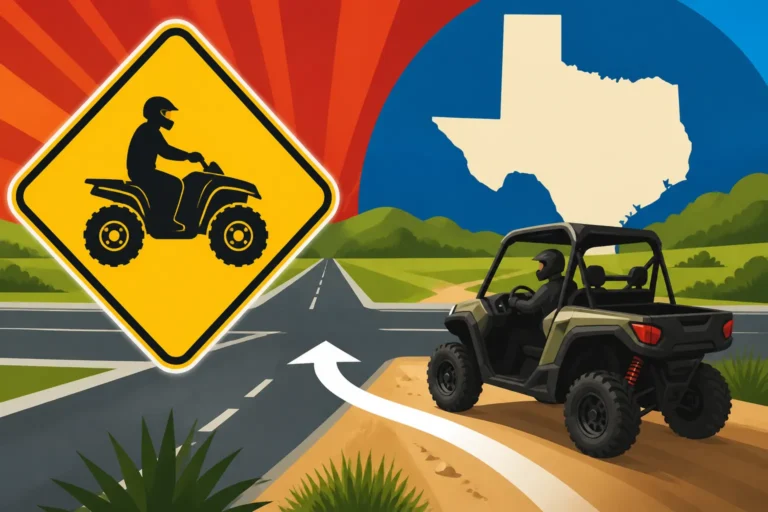
Oh, the dream of just hopping on your ATV or UTV and cruising down a country road, maybe to a friend's house or the local feed store, without having to load it onto a trailer! For most of us Texans, that’s a pipe dream, a frustrating fantasy because our off-highway vehicles (OHVs) simply aren't street legal. But there's a little corner of the Lone Star State where things are different, a unique exception for counties bordering the Red River. This guide is going to walk you through exactly what those special rules are, what you need to know, and how to stay on the right side of the law if you’re riding roads in a Red River County.
Understanding the Texas Statewide Ban on OHVs on Roads
Let's be real, the vast majority of Texas is a no-go zone for riding ATVs and UTVs on public roads. You bought that machine for the trails, for ranch work, for hunting leases – not for a quick trip to the grocery store. This often comes as a shock to folks moving from other states where street-legal conversions or less restrictive local laws might be common. Here in Texas, the rules are pretty clear-cut, and they're designed to keep traffic flowing safely on our highways and city streets.
The Core Rule and Its Rationale
The fundamental principle in Texas is that an off-highway vehicle, by its very definition, is built for off-highway use. It lacks many of the safety features, like sealed beams, turn signals, and sometimes even proper braking distances, that regular street-legal vehicles are required to have. This isn't just some arbitrary rule; it's rooted in concerns for public safety. Picture a slow-moving ATV trying to keep up with highway traffic or navigate a busy intersection. It's a recipe for disaster. Texas law, specifically, defines what an OHV is and then restricts its operation on public roads and highways. You can find more detail on this in [What Texas Counts as an Off-Highway Vehicle] and [Why Texas Will Not Register an ATV for the Road]. There are, of course, very limited exceptions for agricultural use or crossing roads, but these are highly conditional and not a blanket permission to joyride.
Think about it from a lawmaker's perspective: they're balancing the recreational freedom of riders with the safety of everyone else on the road. The design of many ATVs and UTVs, with their high center of gravity, knobby tires, and lack of traditional passenger compartments, simply isn't suited for pavement at higher speeds or in dense traffic. While some aftermarket accessories from companies like SuperATV can enhance visibility and protection, they don't fundamentally change the vehicle's classification or overcome the state's blanket prohibition.
The Frustration for Rural Riders
This statewide ban can be incredibly frustrating, especially for those living in rural areas. Imagine your sprawling ranch or your deer lease, where you use your UTV all day long. The closest gas station or hardware store might be just a mile or two down a quiet county road. Having to load your machine onto a trailer for such a short hop feels incredibly inefficient and, frankly, a bit ridiculous when there's barely any traffic. Many rural Texans wish for a more practical solution, something that acknowledges the unique needs of their lifestyle.
It's a common lament around campfires and coffee shops: "Why can't I just take my side-by-side down to the mailbox?" This isn't about wanting to commute to Dallas on an ATV; it's about common-sense access for short, necessary trips in areas where the roads are practically private. This frustration is perfectly valid, and it's precisely why certain exceptions, like the one for Red River counties, exist. The general sentiment is that the law often doesn't differentiate enough between a busy highway in a metropolitan area and a dusty, low-traffic farm-to-market road in the middle of nowhere.
What Makes a Red River County Different?
Now, let's get to the good stuff – the specific carve-out that offers a glimmer of hope for some Texas OHV enthusiasts. Texas law, in its effort to address the unique needs of certain border communities, provides a limited exception for counties that border a river that forms part of the state boundary. While this applies to other rivers too, the Red River is the most prominent example for OHV use.
The Legislative Carve-Out for Border Counties
This exception isn't new, but it's often misunderstood. The state legislature recognized that communities along certain border rivers have specific economic and logistical needs. For instance, many properties might span both sides of a low-traffic county road, or small towns might rely heavily on OHVs for local commerce or transportation where distances are short and traffic is minimal. The law allows these counties, under specific conditions, to enact ordinances that permit OHV operation on certain public roads. This isn't a free-for-all; it's a carefully worded allowance that puts the decision-making power in the hands of the local county commissioners' court. For a related discussion on broader county powers, you might look at [Counties Under Thirty-Seven Thousand People].
The key here is that the state doesn't automatically make OHVs street legal in these counties. Instead, it grants the county commissioners the authority to pass their own local ordinances. This means that even if you're in a Red River county, you can't just assume you can ride anywhere. You absolutely have to check if the county has actually exercised this authority and, if so, what specific restrictions they've put in place. This local control aspect is crucial and often overlooked by riders who hear about the "Red River exception" and think it's a blanket permission.
Identifying Red River Counties and Their Authority
So, which counties are we talking about? Generally, any county that directly borders the Red River, which forms a significant portion of the northern boundary of Texas, could potentially have such an ordinance. This includes counties like Montague, Cooke, Grayson, Fannin, Lamar, Red River County (the actual county name!), Bowie, and others. However, as mentioned, merely being a Red River county isn't enough. The local county commissioners' court must pass an ordinance specifically allowing it.
How do you find out if your particular Red River county has such an ordinance, and what it says? Your best bet is to contact the county clerk's office or the county sheriff's department. They can direct you to the county's codified ordinances or explain the local rules. Don't rely on hearsay or what "everyone else is doing." Law enforcement in these areas will enforce their local ordinances, and ignorance of the law is never an excuse. Always verify the current rules before you trailer up and head out. Some counties may have restrictions on certain roads, specific times of day, or types of OHVs.
Specific Rules for Riding Roads in a Red River County
Once you've confirmed that your chosen Red River county has an ordinance allowing OHVs on some public roads, you absolutely must understand the specific rules that come with it. These aren't just suggestions; they are legal requirements designed to ensure safety and order. Neglecting any of these could result in a citation or, worse, an accident.
Speed Limits and Road Types
One of the most common restrictions you'll encounter in Red River county ordinances is related to speed limits and the types of roads you can ride on. Generally, these ordinances limit OHV use to roads with speed limits of 35 mph or less. This aligns with the understanding that OHVs are not designed for high-speed travel and are safer on slower, less-trafficked routes. You might also find that certain major state highways or farm-to-market roads are excluded, even if their speed limit is 35 mph or less, due to higher traffic volumes or specific state jurisdiction. Riding Roads in a Red River County goes into more depth on this particular aspect of the law.
Always pay attention to posted speed limits. Even if your UTV from a brand like SuperATV is capable of going faster, you must adhere to the road's posted limit or the county's OHV-specific limit, whichever is lower. It's not about what your machine can do, but what the law says it must do. Disregarding speed limits not only puts you at risk but also contributes to negative perceptions of OHV riders, which could lead to tighter restrictions or the repeal of existing ordinances. Stick to the paved or unpaved county roads, and avoid state highways unless explicitly permitted, which is rare.
Required Equipment and Safety Gear
Even with a county ordinance, your OHV isn't suddenly a car. You'll still need specific equipment and safety gear to operate it legally on public roads. While the exact list can vary slightly by county ordinance, generally you should expect requirements similar to those for low-speed vehicles or golf carts operating on roads. This often includes:
- Headlights and Taillights: Operational headlights and taillights are crucial, especially if you're riding near dawn, dusk, or in low visibility. Some ordinances might require them to be on at all times.
- Brake Lights: Functioning brake lights are non-negotiable for safety, signaling your intentions to other drivers.
- Turn Signals: While many ATVs don't come stock with turn signals, UTVs often do. If your county ordinance requires them, you'll need to ensure they are installed and working. Aftermarket kits are readily available to convert an ATV to include these features.
- Horn: A working horn is necessary for signaling in emergencies or to alert others.
- Reflectors: Additional reflectors might be required on the front, rear, and sides of your machine for increased visibility.
- Side and Rearview Mirrors: At least one rearview mirror is typically required, sometimes two side mirrors. These are critical for being aware of traffic around you.
- Safety Belts/Restraints: If your UTV has factory-installed seatbelts, you and your passengers must wear them.
- Brakes: Your braking system must be in good working order.
- Windshield: Some ordinances may require a windshield, especially for UTVs. If yours doesn't have one, consider aftermarket options.
- Whip Flag: In some areas, or for certain types of vehicles (like sand rails), a whip flag might be required for visibility, especially if you're near trails or off-road areas where they are common.
As for safety gear for riders, [Texas Helmet Law for UTV Drivers] offers guidance for UTVs, and similar rules often apply to ATVs. While Texas's general helmet law for OHVs has some exemptions for agricultural use, when you're on a public road, even a low-speed one, you should prioritize safety. Helmets and eye protection are highly recommended, if not outright required by local ordinance. Companies like SuperATV offer a range of accessories like windshields, mirrors, and light kits that can help you meet these local requirements.
Here's a quick comparison of general Texas OHV rules versus what you might expect in a Red River County:
| Feature | General Texas OHV Rules (Public Roads) | Red River County OHV Ordinance (Typical) |
|---|---|---|
| Road Access | Generally prohibited; limited exceptions for agriculture/crossing | Permitted on specific roads (often <= 35 mph) if ordinance exists |
| Speed Limit | N/A (not permitted) | Often capped at 35 mph or less |
| Headlights/Taillights | Not explicitly required for all general use | Required; often must be on during operation |
| Turn Signals | Not typically required | Often required by local ordinance |
| Brake Lights | Not typically required | Often required by local ordinance |
| Horn | Not typically required | Often required by local ordinance |
| Mirrors | Not typically required | Often required (rearview, sometimes side mirrors) |
| Seatbelts | Recommended if equipped | Required if equipped |
| Helmet | Required for riders under 15, or without enclosed cab in certain cases | Highly recommended; may be required by local ordinance |
| Title | Required for ownership | Required for ownership and operation |
| Registration | Not available for OHVs | Not available for OHVs (still no state registration) |
| OHV Plate | Optional for off-road use | Required for road use in some county ordinances |
| Insurance | Not state-mandmandated | Not state-mandated; highly recommended for road use |
Decals, Titles, and Other Paperwork
You'll still need to ensure your OHV is properly titled in Texas. [Titling an ATV in Texas] is a good resource for this. While Texas doesn't register ATVs or UTVs for road use in the traditional sense, you might find that some Red River county ordinances require you to obtain an Off-Highway Vehicle (OHV) license plate. This is the special blue and white plate that Texas issues for off-road machines, and while it doesn't make your machine street legal statewide, some counties might mandate it for local road use to help identify machines operating under their ordinance. [The Texas Off-Highway Vehicle License Plate] explains what this plate is all about.
Additionally, always carry your proof of ownership (title or copy) and your driver's license. While Texas doesn't require insurance for off-highway vehicles, if you're going to be operating on public roads, even under a special county ordinance, getting liability insurance is an incredibly wise decision. Accidents can happen, and you want to be protected. Don't forget your [Texas OHV Decal Explained] if you plan to hit any public OHV trails in the state, as that's a separate requirement.
Practical Considerations and Local Nuances
Navigating these special rules requires more than just knowing they exist. It demands proactive research and a commitment to safe, respectful riding. Ignoring these practical considerations can quickly turn a fun outing into a frustrating, and expensive, legal headache.
Checking Local Ordinances (County vs. City)
Here’s where it gets really granular, and it’s critical. Even if a Red River county has an ordinance allowing OHVs on some of its roads, a specific city within that county might have its own, more restrictive, rules. Just because you can ride your UTV down a county road doesn't mean you can drive it through the heart of Paris, Texas, or Honey Grove. Municipalities often have their own local laws that can supersede or add to county regulations, especially concerning traffic and vehicle operation within city limits.
Before you plan any trip, especially if it involves entering a town, do your homework. Check the city's municipal code, or call the city police department or city hall. A friendly phone call beforehand can save you a lot of trouble. You might find that cities have entirely banned OHV use on their streets, or they might have even stricter equipment requirements. For instance, a county might allow your ATV on a 35 mph road, but a city within that county might require additional lighting or a certain type of insurance if you drive it on their streets, even if those streets are also 35 mph. This layered legal landscape is exactly why thorough research is non-negotiable.
The Importance of Safe and Respectful Riding
Whether you're allowed on the road by a special ordinance or simply crossing a highway for agricultural purposes, operating an OHV on any public road demands a heightened sense of awareness and respect for other drivers. Your off-highway vehicle is inherently different from a car or truck, and other drivers may not anticipate its presence or handling characteristics.
- Visibility: Make yourself as visible as possible. Wear bright clothing, use your headlights and taillights, and consider adding aftermarket flags or lights, especially if you're running a larger UTV from a brand like SuperATV that might be less nimble than a compact car.
- Yield to Traffic: Always assume you are the less-privileged vehicle. Yield to cars and trucks, and be extra cautious at intersections, driveways, and when turning. Don't expect other drivers to understand your machine's capabilities or limitations.
- Ride Responsibly: Avoid any aggressive or reckless driving. No wheelies, no speeding, no weaving. Every time an OHV rider acts irresponsibly on a public road, it creates a negative impression that can jeopardize the limited privileges that exist for everyone. You are an ambassador for the OHV community.
- Minimize Disturbances: Keep noise to a minimum, especially in residential areas. Many aftermarket exhausts can be quite loud, which might be fine on the trails but can quickly annoy residents on a quiet street.
By adhering to these principles, you not only ensure your own safety but also help maintain the goodwill that allows these special Red River county ordinances to continue. Respect the privilege, and everyone benefits.
Disclaimer
This article is for general informational purposes only and does not constitute professional advice. Laws, prices and regulations vary by location and change over time. Consult a qualified professional for guidance on your specific situation.